
FRIEDKIN UNCUT director Francesco Zippel and producer Federica Paniccia will participate in a Q&A moderated by Steve Barton of Dreadcentral.com following the 7:00 pm show on Friday, 8/30.
EASY RIDER 50th Anniversary Screening and Tribute to Peter Fonda
Laemmle Theatres and the Anniversary Classics Series present a tribute to the late Peter Fonda with a screening of his landmark movie, EASY RIDER on Saturday, September 7th at the Ahrya Fine Arts in Beverly Hills.
When the movie opened to huge grosses in the summer of 1969, it changed the course of Hollywood, setting the entire industry on a quest for films that would appeal to the same younger generation that had embraced the ultimate motorcycle movie made by Fonda and director Dennis Hopper. It is a film that many have cited as their inspiration for getting their own motorbike, some going as far as to get it transported to them across the country with CarsArrive Auto Relocation and similar services. That’s the sway that the movie has. Easy Rider, produced and co-written by Fonda, was made for less than $400,000 and grossed $60 million, a feat that no other youth movie was ever able to match. It also earned two Academy Award nominations, for the original screenplay by Fonda, Hopper, and Terry Southern, and a best supporting actor nod for Jack Nicholson, an actor in B-movies who was propelled to the A-list as a result of Easy Rider.
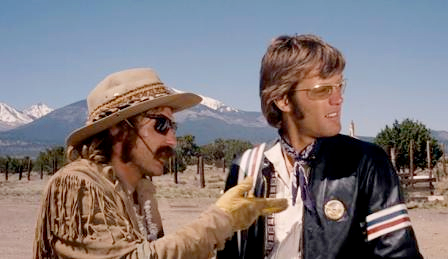
Fonda, Hopper, and Nicholson knew each other from the low-budget movies made by Roger Corman and American International Pictures in the late 1960s. Hopper co-starred with Fonda in Corman’s The Trip, a movie about an LSD trip which was written by Nicholson. Peter had the idea of taking the character of the motorcycle-driving outlaw that he had played in Corman’s The Wild Angels and inserting him into a major studio film. Nevertheless, Columbia Pictures was nervous about financing Easy Rider and only got fully behind the film after it premiered at the Cannes Film Festival and began to generate box office heat.
The picture is essentially a road trip movie, in which Hopper’s Billy and Fonda’s Wyatt (also known as Captain America) ride their motorcycles from California to New Orleans, where they hope to celebrate Mardi Gras. They finance the trip by selling cocaine, a detail that suggests the film was far from an idealized portrayal of rebellious American youth. On their travels they spend time on a Southwestern farm as well as a hippie commune. They meet a young lawyer played by Nicholson when they are all jailed in a Southern town. He agrees to join them on their motorcycle journey, which takes a darker turn as they encounter Southern bigots who disapprove of the young heroes’ freewheeling style.
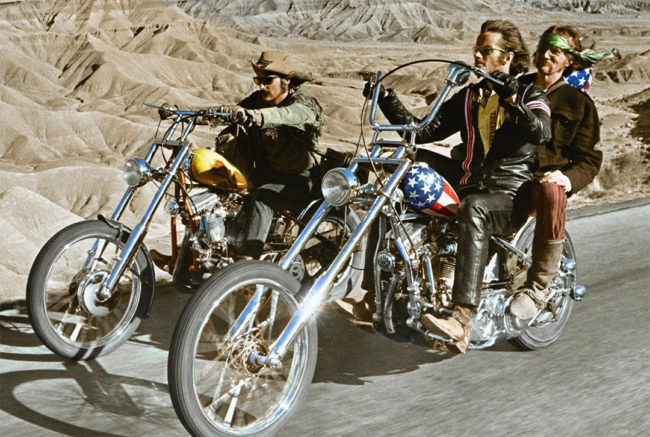
The supporting cast includes Karen Black, Toni Basil, Luke Askew, and Robert Walker Jr. Up-and-coming cinematographer Laszlo Kovacs helped to create the vivid images of rural Americana, and the groundbreaking rock score incorporated songs by The Band, the Byrds, Steppenwolf, and Jimi Hendrix. Editor Donn Cambern had put together the rough cut of the film to many of those songs, and the filmmakers retained many of them in the final cut.
Although the film enshrines the young heroes, it is not uncritical. Their use of marijuana and LSD is honestly depicted, and when Fonda’s Wyatt sums up their journey near the end of the film, he offers a memorably hard-edged judgment: “We blew it.” Nevertheless, the darkest forces in the film are the rednecks who resent the freedom of these easy riders. Writing at the time, John Mahoney of The Hollywood Reporter said, “Easy Rider is very likely the clearest and most disturbing presentation of the angry estrangement of American youth to be brought to the screen.” Writing several decades later, Chuck Bowen of Slant drew a connection to the present: “This legendary tale of a motorcycle odyssey gone wrong remains timeless for its diagnosis of the early stages of a social ennui that has now fully bloomed.”
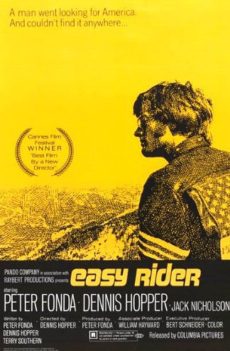
Most reviews in 1969 were enthusiastic. Life magazine’s Richard Schickel called the film “a loose, lovely-to-look-at, often laughing, often lyric epic.” Charles Champlin of the Los Angeles Times added, “Fonda and Hopper give immense performances.” The film was added to the National Film Registry of the Library of Congress in 1998.
Join us for our 50th anniversary screening and tribute to Peter Fonda at 7:30pm on Saturday, September 7th at the Ahrya Fine Arts in Beverly Hills. Special guests to be announced. Tickets are available here.
Format: DCP
LAEMMLE LIVE presents: Street Symphony September 15
RSVP ON EVENTBRITE
This is a Free Event
Please join us for a very special event as LAEMMLE LIVE presents the Street Symphony String Quartet, featuring a string quartet written by Director of Community Engagement, Ben Shirley and music by Reena Esmail.
Street Symphony places social justice at the heart of music making by creating authentic, powerful engagements between professional and emerging artists and communities disenfranchised by homelessness and incarceration in Los Angeles County. They believe all people deserve access to a creative and expressive life. Founded in 2011, Street Symphony has presented nearly 400 free, world-class musical engagements for severely disenfranchised communities affected by homelessness and incarceration in Los Angeles County. Comprised of a grassroots community of over 70 world class musicians, Street Symphony ensembles present regular monthly programs at Skid Row shelters and county jails.
Since 2015, Street Symphony has presented a yearly performance of The Messiah Project, a nationally acclaimed community performance of excerpts of Handel’s Messiah at The Midnight Mission in Skid Row, featuring stories and performances from people affected by and recovering from homelessness in LA County. In 2017, supported by a generous grant from the S. Mark Taper Foundation, Street Symphony launched the Daniel Chaney Teaching Artist program, pairing professional artists with members of the homeless community in an effort to amplify the voices and artistry of the Skid Row community.
Street Symphony
Vijay Gupta: Founder and Artistic Director/Violin
Ben Shirley: Director of Community Engagement
RSVP USING EVENTBRITE
This is a Free Event
Sunday, September 15, 2019
11:00 AM
Monica Film Center
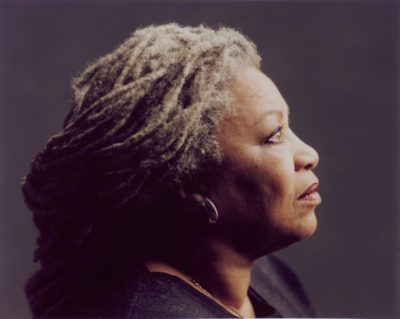
Return Engagements of TONI MORRISON: THE PIECES I AM
On August 5 we lost one of our most brilliant writers and thinkers, Nobel Laureate and Pulitzer Prize winner Toni Morrison. As it happens, an acclaimed biographical documentary, Toni Morrison: The Pieces I Am, came out this summer and in light of her passing Laemmle Theatres will return the film to theaters starting Friday at the Music Hall in Beverly Hills and Saturday at the Playhouse and Claremont. If you haven’t yet seen it, please consider doing so. Writing in the New York Times, A.O. Scott said “The Pieces I Am offers something else, as a dividend yielded by [Morrison’s] achievements and her years on the earth: the profound pleasure of her company.” Joe Morgenstern of the Wall Street Journal wrote that the film “reminds us how long she had to wait for the recognition she so richly deserved, and what a distinctive, generous, funny, astute, self-doubting, unstoppable and formidable figure she was along the way.”
L.A. Times entertainment reporter Christie D’Zurilla published this interview with the director of Toni Morrison: The Pieces I Am, Morrison’s longtime photographer-turned-friend, Timothy Greenfield-Sanders. The headline: “Filmmaker says Toni Morrison was wickedly funny and made a mean carrot cake.”
“Novelist and book editor Toni Morrison was a private person who never wrote a memoir and turned away biographers, according to her friend Timothy Greenfield-Sanders. But she did allow the photographer-director to interview her extensively for the documentary “Toni Morrison: The Pieces I Am,” which explored her life as well as elements of black history.
“After Morrison died late Monday at 88, Greenfield-Sanders — who was also the writer’s “photographer of choice” for her book jackets and publicity shots — opened up to The Times exclusively via email about his memories of her. He remembers her as a woman who saw the big picture and, even in dark times, “managed to be philosophical.”
“For those who missed the Oscar-buzzy documentary the first time around, encore screenings of “Toni Morrison: The Pieces I Am” are being held for a week beginning Aug. 16 at the Laemmle Music Hall in Beverly Hills and Aug. 17 and 18 at Laemmle’s Claremont 5 in Claremont and Playhouse 7 in Pasadena.
“Here are some of Greenfield-Sanders’ memories from his decades-long friendship with the Nobel Prize winner.”
Q: Describe the type of friendship you had with Toni Morrison. What was it like?
A: I first met Toni Morrison 38 years ago, in the winter of 1981, when she came to my East Village studio for a Soho Weekly News cover portrait. She wore a dark suit with a white blouse and smoked a pipe. (Many years later she told me that Angela Davis had gotten her “into pipes.”) I was a young photographer and Toni had just finished her fourth novel, “Tar Baby.” I was impressed by her confidence on the set. Toni liked my work and we became friends … and I eventually became her photographer of choice, for book jackets, publicity photos and the like. Her trust in me began way back then.
Q: Can you share something that most people don’t know about her?
A: Did you know Toni makes the world’s greatest carrot cake? Ask anyone who has tasted one of her carrot cakes and they will tell you. In the film, author Paula Giddings shares that during her early days working in the secretarial pool at Random House, Toni asked her to do some typing for her first novel, “The Bluest Eye.” As a thank you, Toni baked her a carrot cake.
Q: What is the most profound or useful thing you learned from her over the course of your friendship?
A: Toni had a way of looking at the big picture. Even in dark times she managed to be philosophical.
Q: Talk a little about the things you filmed during your documentary interview that didn’t make the cut.
A: In creating “Toni Morrison: The Pieces I Am,” the most difficult challenge was cutting it down to a two-hour film. We had to edit out a riveting section about Morrison on Shakespeare and her play “Desdemona,” wonderful insights into her father and his influence on her, and an emotional piece about the death of writer Toni Cade Bambara. When Bambara died with an unfinished book, Toni [Morrison] devoted a year to finishing it so it could be published posthumously for her dear friend.
Q: What did you learn about her legacy in researching the film?
A: At the beginning of the film, Toni remarks that she learned early on in life that “words have power.” As we’ve taken the film out, I’ve been able to see the depth of gratitude for her words. Her writing has empowered and nourished so many around the world … to heal, to imagine, to develop their own voices. Toni was a pioneer — taking her hard-earned place alongside the white men who had dominated the publishing establishment. Her ascent to the literary canon was a significant breakthrough that allowed other women and African Americans to be seen and heard.
Q: Some people don’t like to have their picture taken. What was it like to photograph her? How was it the same as or different from filming her?
A: Toni’s strength and confidence were part of her DNA, and both were particularly evident when she was in front of the camera. I think she had a profound understanding of portraiture and her image in the world. Our photo sessions were not only quite fun over the years but also resulted in big ideas for my own career. It was during a lunch break in 2005 that Toni proposed a book on “Black Divas”… we were shooting portraits for her opera, “Margaret Garner.” That idea morphed into my film series on identity, starting with “The Black List: Volume 1,” focusing on the African American community. Toni was the first to sit for that film.
Q: Did she make you laugh?
A: Toni had a world-class sense of humor. Being with Toni was a lot of fun. Many people who only know her through her books and interviews don’t realize how much Toni loved to laugh. She was wickedly funny in addition to being such a profound, philosophical and visionary thinker.
Philippe de Broca’s THAT MAN FROM RIO 55th Anniversary Screenings in Glendale, Pasadena, and West LA.
Laemmle Theatres and the Anniversary Classics Series present this month’s installment in our Anniversary Classics Abroad program: one of the most popular and entertaining foreign films of the 1960s, Philippe de Broca’s action romp, THAT MAN FROM RIO.
De Broca, the director of intimate, character-driven films like The Five-Day Lover, shifted gears with this bigger-budget comic thriller. Two top stars of French cinema, Jean-Paul Belmondo and Francoise Dorleac (the sister of Catherine Deneuve who died tragically in an auto accident just three years later), added to the film’s allure.
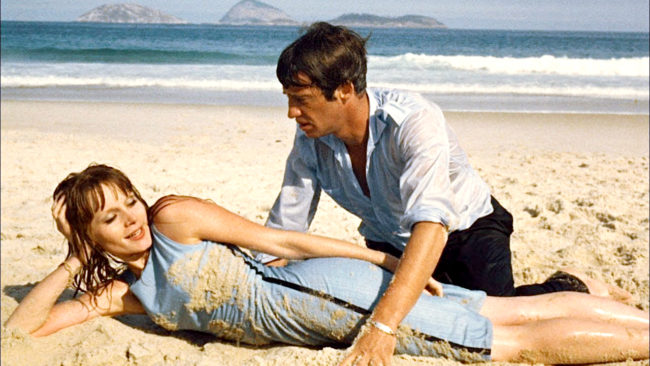
The action begins when Dorleac is kidnapped as part of a museum heist of a valuable statuette, and Belmondo follows her kidnappers to Brazil to save her life and find the treasure. There he battles international criminals, assassination attempts, and even a hungry crocodile on the Amazon.
The film was designed in part as a spoof of the James Bond movies that were catching fire all around the world. De Broca’s tongue-in-cheek approach to the genre, along with a series of spectacular action set-pieces, led to box office success wherever the film was shown. The film was also nominated for the Oscar for Best Original Screenplay. De Broca wrote the script with Jean-Paul Rappeneau, Ariane Mnouchkine, and Daniel Boulanger. Veteran actors Jean Servais and Adolfo Celi co-star.
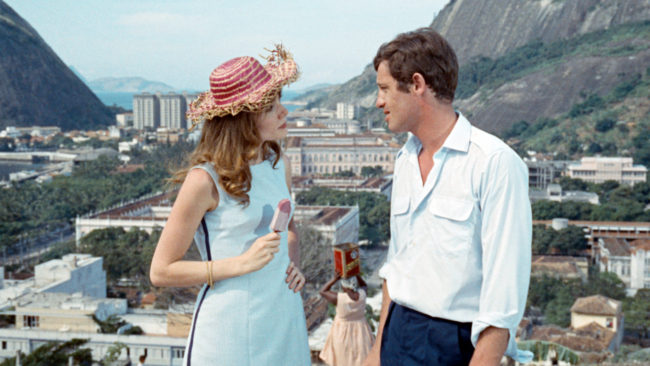
Along with the wit of the script and the skill of the performers, the film benefited from lush cinematography (by Edmond Sechan) of Paris, Rio, Brasilia, and other South American locations. The New York Times’ Bosley Crowther acknowledged the film’s homage to silent comedy: “Jean-Paul Belmondo is dandy as a fast, fearless modern-day Harold Lloyd.” He added that de Broca “uses the actual locations so vividly and artistically that they generate a kind of excitement that blends superbly with the dazzle of the plot.”
The New Republic’s Stanley Kauffmann also praised de Broca: “he has wit, tenderness, dexterity, a superb eye for composition and color, a prodigious sense of rhythm and movement, a perfect command of the medium.” Time magazine noted that the film was “shrewdly calculated to make the customer laugh out loud at all the lousy movies he has ever seen and at the same time have a wild and wonderful time watching them again.”
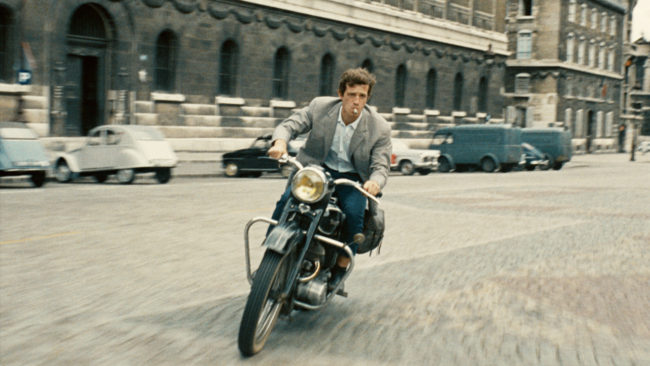
Join us for a perfect piece of lighthearted summertime entertainment with two of the most engaging international stars ever to grace the screen. Belmondo remained at the center of French film culture for decades, and de Broca went on to direct one of the most popular of all arthouse movies, King of Hearts.
Our 55th anniversary presentation of THAT MAN FROM RIO screens on Wednesday, August 21st at 7pm in Glendale, Pasadena, and West LA. Click here for tickets.
Format: DCP
ODE TO JOY Q&A with Cast & Crew Opening Weekend at the Monica Film Center.
ODE TO JOY Q&A with director Jason Winer, actress Melissa Rauch and writer Max Werner following the 7:10 pm show on Saturday, 8/10.
JAY MYSELF Q&A’s with Filmmaker Opening Weekend at the Royal.
JAY MYSELF filmmaker Stephen Wilkes will participate in Q&A’s following the 7:40 pm show Friday, 8/16 and Saturday, 8/17 and after the 1:00 pm show on Sunday, 8/18.
THIS CHANGES EVERYTHING Q&A with Geena Davis on Opening Night at the Monica Film Center.
THIS CHANGES EVERYTHING Geena Davis and Jackie Cruz will participate in a Q&A moderated by Madeline DiNonno following the 7:00 pm show on Friday, 8/9.
- « Previous Page
- 1
- …
- 88
- 89
- 90
- 91
- 92
- …
- 281
- Next Page »