The Official Blog of Laemmle Theatres.

Laemmle Theatres

Film Reviews & Previews

  • All
  • Theater Buzz
    • Claremont 5
    • Glendale
    • Newhall
    • NoHo 7
    • Royal
    • Santa Monica
    • Town Center 5
  • Q&A’s
  • Locations & Showtimes
    • Claremont
    • Glendale
    • NewHall
    • North Hollywood
    • Royal (West LA)
    • Santa Monica
    • Town Center (Encino)
  • Film Series
    • Anniversary Classics
    • Culture Vulture
    • Worldwide Wednesdays
  • Facebook
  • Instagram
  • TikTok
  • YouTube

You are here: Home / Theater Buzz / Santa Monica

Where Myth Takes Wing: The Quiet Brilliance of The Tale of Silyan

November 25, 2025 by Lamb Laemmle Leave a Comment

In The Tale of Silyan, filmmaker Tamara Kotevska—whose Honeyland helped redefine what nonfiction storytelling can look like—returns to a landscape shaped by absence. Economic migration has emptied much of rural North Macedonia, leaving behind scattered farmhouses, aging villagers, and the yawning silence of futures deferred. Into that void, she places a story that is part-documentary, part-fable, and wholly grounded in the stubborn beauty of a man who refuses to leave his land behind.

Catch The Tale of Silyan in theaters beginning Friday, December 5th at the Laemmle Monica Film Center, followed by a Q&A with Tamara Kotevska and cinematographer Jean Dakar after the 7:30 p.m. showing on Saturday, December 6th.

Where Myth Takes Wing: The Quiet Brilliance of The Tale of Silyan

The film follows Nikola, a middle-aged farmer whose family has left for better prospects abroad. He stays—out of duty, love, and something older and harder to name—until one day he finds a wounded stork amid piles of landfill debris. He carries the bird home, tending to it with a patience that seems almost anachronistic, and names it Silyan, invoking a local folktale about a boy transformed into a stork. What follows is both mythic and matter-of-fact; a braiding of the imagined with the palpably real.

Kotevska’s filmmaking is light on exposition, trusting instead in textures: Nikola’s hands repairing improvised splints, fields washed in early-morning color, the slow choreography of a stork relearning balance. The camera often lingers longer than expected, inviting viewers to inhabit the rhythms of a place where time moves unevenly, marked not by fickle human whims but by the return of birds, the passing of seasons, and the persistent hum of a changing climate.

Where Myth Takes Wing: The Quiet Brilliance of The Tale of Silyan

What emerges is a portrait of interdependence that extends beyond the sentimental. In caring for the stork, Nikola locates a purpose that keeps the encroaching loneliness at bay; in responding to his presence, Silyan becomes a living reminder that the natural world still holds capacity for renewal, even as its fragility grows increasingly apparent. Their relationship is never anthropomorphized, merely observed: two beings sharing space, negotiating trust, and building the kind of bond that can only develop when no one is trying to manufacture meaning.

And yet meaning accumulates. The Tale of Silyan exists in a Europe increasingly shaped by departures: the departure of people from rural regions, of species whose habitats have been reshaped or erased, and of traditions that once anchored entire communities. Through Nikola’s perseverance and Silyan’s tentative recovery, the film rejects the overly simplistic narrative of accepting the inevitable; instead, it asks whether tending to even one fragile thing—a bird, a home, a story—might still matter in a world ruled by indifference.

“An excellent documentary that also happens to be a ravishing work of poetry.” – Christian Blauvelt, IndieWire

“Part nature film, part parable, part ground-level snapshot of downward-spiraling economies.” – Sheri Linden, The Hollywood Reporter

Leave a Comment Filed Under: Filmmaker in Person, Santa Monica

Bearing Witness: Put Your Soul on Your Hand and Walk

November 11, 2025 by Lamb Laemmle Leave a Comment

In Put Your Soul on Your Hand and Walk, Iranian-born director Sepideh Farsi and Palestinian photographer Fatma Hassona craft a documentary of haunting immediacy. Through more than 200 days of video calls, the film charts Hassona’s life under siege in Gaza from 2024–25, capturing the everyday resilience of a young photojournalist who insists on maintaining her ideals even as bombs fall and hope frays.

Tune into Inside the Arthouse to hear Farsi discuss her revolutionary project with co-hosts Greg Laemmle and Raphael Sbarge ahead of its impending run at the Laemmle Monica and Glendale theaters beginning November 14th.

Bearing Witness: Put Your Soul on Your Hand and Walk

The filmmaking is itself quietly radical. Farsi, barred from Gaza, connects remotely via smartphone, creating a frame-within-a-frame aesthetic that reflects the imposed distances and filtered visibility of war. Critics have noted the film’s stripped-back style (mostly buffer-laden FaceTime footage, interrupted calls, and pixelated images) that tastes of unmediated reality and sorrow, making the viewer feel even more intimately involved in the events being depicted on the screen.

Through it all, Fatma Hassona emerges as the film’s beating heart: always cheerful, even when surrounded by rubble, shortage, and grief. She shares her world with a quiet strength and surprising humor, discussing photography, music, and the simple joy of eating chips while bombs echo outside. Yet in April 2025, mere weeks after the film was selected for Cannes’ prestigious ACID sidebar, Hassona and several members of her family were killed in an Israeli airstrike. Her death casts a permanent shadow over the documentary, leaving behind a chilling statement about what it costs to look.

Bearing Witness: Put Your Soul on Your Hand and Walk

For all its opportunity, the documentary refuses easy distance or objective coldness. Instead, it lingers on the interruptions—the frozen frames, the dropped calls, the unedited glitches—so that viewers can feel even a shred of what it means to live under siege. It asks what form seeing takes when the camera, the connection, and even one’s body are all vulnerable. And though the film documents devastation, it refuses to devolve into either reductionism or the fetishization of victimhood; after all, Hassona is not a number. She is smiling, stubbornly alive, a human face among many, and the film dutifully preserves her voice.

For viewers drawn to documentaries that fuse intimacy and urgency, Put Your Soul on Your Hand and Walk stands as a testament not just to loss, but to persistence. Perhaps its greatest superpower lies in juxtaposing life’s ordinary moments—calls about electricity, photos shared with friends abroad—with the extraordinary circumstances that turn them into daring acts.

“A moving monument to this young woman and countless others like her—lovers of life who refused to be quiet as they were swept into the dehumanizing machinery of war.” – Eli Friedberg, Slant Magazine

“Farsi’s film does not necessarily expose the morbid reality of Gaza as much as it reveals what it would be like to survive through it.” – Akash Despande, High On Films

“[The film] exudes character from every frame.” – Landon Defever, In Session Film

Leave a Comment Filed Under: Monica Film Center, Glendale, Santa Monica

Schindler Space Architect: A Maverick Revisited

November 5, 2025 by Lamb Laemmle Leave a Comment

Schindler Space Architect is an independently produced documentary examining the works and life of a pioneer of modern architecture, R.M. Schindler, narrated by Meryl Streep and Udo Kier, and featuring testimonials by renowned architects Frank Gehry, Steven Holl, Thom Mayne, and Ray Kappe, among many others.

Having already enjoyed an August run as part of our Culture Vulture series, Schindler Space Architect is now returning to the big screen as regular engagement beginning Friday, November 7th at the Laemmle Monica Film Center in order to qualify for the Oscars’ Best Documentary race. So come check out this fascinating tale of one of architecture’s most impactful (if forgotten) revolutionaries before it’s too late. Click here for tickets.

Schindler Space Architect: A Maverick Revisited

Message from the producer/director:

“Werner Herzog once said “Every man should pull a boat over a mountain once in his life.” This has been my boat and it has taken twelve years to complete the mission.

  1. M. Schindler’s life story is very close to my heart. He is the quintessential underdog: bohemian, rebel, working outside the mainstream, on a path of his own, unsung and quite often misunderstood. And yet, Schindler is the early modernist architect who fundamentally changed how people live, breaking the barriers between “inside” and “outside”, his architecture grew from the land and it was always in dialogue with Nature. Schindler experimented and invented over a period of thirty years, suffering the ups and downs of his creative genius, forging his own vision he left a well of inspiration. I was determined to put the spotlight on, to make a wrong right. As a first-time female filmmaker working outside the mainstream industry I had to overcome many challenges along the way. Wearing all kinds of hats: producer, researcher, writer, director, editor, to name a few, but I kept going, tirelessly fundraising, forging my own vision and attracting along the way collaborators that were inspired by Schindler and contributed their best. So, we end up with a film made with a lot of love and respect for a man who was a true original.

– Valentina Ganeva

“Viennese-born Rudolf Schindler transformed Los Angeles architecture with buildings shaped by space, light and interconnection with nature. In Schindler Space Architect, director Valentina Galena draws on rich archival material, cinematography and interviews to vividly tell the story of Schindler’s ideas, life, loves, and his complicated relationship with L.A.’s other founding Austrian modernist, Richard Neutra. Fascinating.” – Frances Anderton

“Turns basic assumptions about the birth of modern architecture upside down.” – Alan Hess, architect and historian

Leave a Comment Filed Under: Awards, Monica Film Center, Santa Monica

The Art of the Slow Heist: Kelly Reichardt’s The Mastermind

October 21, 2025 by Lamb Laemmle Leave a Comment

In The Mastermind, acclaimed filmmaker Kelly Reichardt ventures into the familiar terrain of the heist movie… and then quietly rewrites its rules. Set in early 1970s Massachusetts, the film follows Josh O’Connor as J.B. Mooney, a once-aspiring architect turned husband and amateur criminal who hatches a plan to steal abstract paintings from a local art museum. But this isn’t Ocean’s Eleven: the glamour is stripped away, the stakes feel muted, and the aftermath is as mild and inconspicuous as the heist itself.

Catch The Mastermind in theaters beginning Friday, October 24th at the Laemmle Glendale, Town Center, Monica, Claremont, and NoHo 7.

The Art of the Slow Heist: Kelly Reichardt’s The Mastermind

Reichardt, whose past work has often focused on the imperceptible leaps of its lead characters—on a road trip, in a forest, in a lapsed mechanic’s shop, etc.—now applies that same contemplative lens to a genre whose mechanics have traditionally demanded speed and spectacle. She directs the film with her signature minimalism: restraint in gesture, economy in dialogue, and an eye trained on the void behind ambition for ambition’s sake. As in Showing Up and First Cow, the roar of a larger world remains just off-screen, yet its presence is felt in every muffled scene or stray whorl of cigarette smoke.

What distinguishes The Mastermind is that the so-called heist barely registers as its focus. The robbery unfolds almost incidentally, stripped of both glamour and tension. Instead, Reichardt lingers on the quiet details: the faint clink of museum glass being lifted, the awkward thud of stolen chairs crammed into a car, the weary stillness of J.B. returning home, where he drifts through the world of his judge father and socialite mother like an unmoored ship, steered by forces outside his reckoning. The film’s true intrigue lies not in the crime, but in its aftermath; the emotional debris left behind once that initial thrill has already faded.

The Art of the Slow Heist: Kelly Reichardt’s The Mastermind

O’Connor delivers an unexpectedly subdued performance. His J.B. has zero swagger, simply a quiet entitlement and a suggestion that he deserves something for nothing. Surrounding him are rich supporting performances from Alana Haim (his wife), Bill Camp (his father), and Hope Davis (his mother), each anchoring the film’s emotional weight without stepping into melodrama. Reichardt’s long-time cinematographer Chris Blauvelt and composer Rob Mazurek combine to deliver a vintage jazz score, each sax note and 16-mm texture suggesting more than what’s actually shown.

If The Mastermind feels slow, starved of the genre’s usual arrests, explosions, and triumphant escapes, that’s precisely the point. Reichardt aims to observe a man who planned to rob a museum and ultimately robbed himself. What remains is the humdrum tragicomedy of a life unraveling. And yet, in its stillness, the film finds its own power exploring such ideas as privilege, desperation, and craft hovering in the background of a genre made for thrill.

“A masterclass in the director’s own unique philosophical take on life.” – Amelia Harvey, ThatHashtagShow.com

“Reichardt has unerringly located the unglamour in the heist.” – Peter Bradshaw, The Guardian

Leave a Comment Filed Under: Glendale, Claremont 5, NoHo 7, Santa Monica, Town Center 5

Unraveling Intimacy: How Mistress Dispeller Redefines the Marriage Drama

October 21, 2025 by Lamb Laemmle Leave a Comment

In Mistress Dispeller, director Elizabeth Lo ventures into a genre of her own creation. Her follow-up to the acclaimed Stray (2020) presents an unsettling and intimate docudrama set in mainland China, where the peculiar profession of “mistress dispelling” is now part of a booming market. The film peers behind the scenes of a marriage, an affair, and the intervention of a professional named Wang Zhenxi, offering a quietly compelling exploration of love, loyalty, and control.

Catch Mistress Dispeller in theaters beginning Friday, October 24th at the Laemmle Monica Film Center and NoHo 7.

Unraveling Intimacy: How Mistress Dispeller Redefines the Marriage Drama

Lo’s vision is unmistakably her own. Where Stray focused on abandoned dogs and human neglect in Istanbul, here she turns her lens to human relationships in crisis—not through sensational extremes, but with a restrained, observational calm. She and her cinematographer team let the camera linger on nuanced interpersonal dynamics: a wife’s anxious shopping trip, a husband’s distracted gaze, the mistress’s self-awareness as she negotiates a role she didn’t ask for. In the final analysis, Mistress Dispeller is not about spectacle, but the subtle clashing between confrontation and conformity.

The film introduces us to Mrs. Li, who quietly recruits Teacher Wang to dismantle the connection between her husband and the woman he’s been seeing on the side, Fei Fei. Lo captures this unorthodox dynamic with a humane detachment, refusing to vilify any participant. Even as cultural norms and power imbalances become visible, empathy remains the guiding light. What emerges is a portrait of a marriage not collapsing, but recalibrating, and of people not defeated, but learning to endure.

Unraveling Intimacy: How Mistress Dispeller Redefines the Marriage Drama

Though the subject matter could easily slip into tabloid territory, Lo’s filmmaking resists such banal classification. There are no confessions in stormy rooms, no sensational betrayals caught mid-explosion. Instead, there are conversations in soft tones, eyes averted, secrets kept because silence is part of the contract, and it is in such understatement that the film’s power ultimately resides. The subject feels somehow unadorned, authentic, but also strange and slightly off-kilter in a way that unsettles our own assumptions about fidelity and intervention.

Mistress Dispeller blossoms as a subtle investigation of what it means to stay married when the rules never quite fit you. Lo confronts the idea of agency under imposed systems—Chinese or otherwise—and asks: What is the cost of preserving appearances, resisting corrosion, and keeping a marriage intact? The film’s reward lies less in clear resolutions than in the ambiguous space between duty, love, and desire.

“Teacher Wang gradually morphs into… a Chinese Esther Perel, a relationship therapist tasked with getting severely private people to recognize their true feelings, amid a culture that hasn’t necessary [sic] trained them for ‘self-care’.” – Tomris Laffly, Variety

“[T]he innate goodness and human vulnerability of these people shines through.” – Leslie Felperin, The Guardian

Leave a Comment Filed Under: News, NoHo 7, Santa Monica

In Eleanor the Great, Scarlett Johansson makes her directorial debut with a film that straddles that delicate line, balancing dark comedy, emotional drama, and pointed moral questions.

September 25, 2025 by Lamb Laemmle 1 Comment

True stories and small deceptions often live closer together than we’d like to admit. In Eleanor the Great, Scarlett Johansson makes her directorial debut with a film that straddles that delicate line, balancing dark comedy, emotional drama, and pointed moral questions.

Come see Eleanor the Great in theatres, beginning Friday, September 26th at the Laemmle Royal, Claremont, Town Center, Glendale, NoHo, and Newhall.

The story follows Eleanor Morgenstein (brilliantly played by Academy Award nominee June Squibb), a sharp-tongued nonagenarian enjoying her Florida retirement alongside her best friend, Bessie. But when Bessie dies, Eleanor’s carefully maintained world begins to crumble. Moving north to live with her daughter and grandson, she finds herself sidelined in her own family and adrift in a city she once called home. Left at the local JCC, Eleanor accidentally wanders into a meeting of Holocaust survivors. When the group mistakes her for one of their own, she chooses not to correct them—and begins retelling Bessie’s life story as her own.

At its heart, Eleanor the Great is less about deception than about the emotional currents that carry Eleanor into it. Squibb delivers a performance of rare complexity, portraying a woman who is both caustic and vulnerable, driven by a need for connection that she cannot always admit to herself. Ultimately, it is Eleanor’s bond with Nina (Erin Kellyman), a journalism student grappling with her own grief, that becomes the film’s emotional hinge. What begins as a misunderstanding grows into a tentative friendship, each woman learning to navigate absence, longing, and the fragile ways that stories can substitute for the connections we’ve lost.

Johansson and screenwriter Tory Kamen deftly steer this relationship into morally charged territory without losing sight of the characters’ underlying humanity. The ethical questions remain thorny—Can a lie born of loneliness still hold meaning? How about connections born of a lie?—but the film resists easy answers, instead allowing its characters to stumble through contradictions much like real people do. With Hélène Louvart’s luminous cinematography giving Squibb ample space to reveal flashes of mischief, regret, and desire, Eleanor the Great becomes as much a study of performance as it is of grief.

Ultimately, Johansson’s first film as a director is both tender and unsettling. Anchored by Squibb’s distinguished performance, Eleanor the Great is less about a lie than about the longing that fuels it, and the ensuing connections that make it impossible to undo.

“Eleanor the Great may not always live up to the hyperbole of the title, but it’s still worth admiring… there’s quite a bit here that truly is pretty great.” – Jason Gorber, Collider

“June Squibb is quietly powerful and touching…” – Pete Hammond, Deadline

“Johansson’s direction is assured here, establishing the intimacy between these two older women with the kind of endearing eye usually reserved for stories about girlhood.” – Lovia Gyarkye, The Hollywood Reporter


1 Comment Filed Under: Theater Buzz, Claremont 5, Films, Glendale, Newhall, NoHo 7, Royal, Santa Monica, Town Center 5

The History of Sound, Oliver Hermanus’s latest queer period romance.

September 16, 2025 by Lamb Laemmle Leave a Comment

Rarely does a film carry the quiet anticipation that surrounds The History of Sound, Oliver Hermanus’s latest queer period romance. Hermanus—already celebrated for works like Beauty (2011), Moffie (2019), and Living (2022)—has built a reputation for telling intimate stories with hefty moral weight, exploring identity, repression, and the varied textures of longing. In The History of Sound, he turns his gaze from South Africa to early 20th-century America to examine how love and music intertwine when both must be framed in shadow.

Catch The History of Sound in theaters beginning September 19th at the Laemmle NoHo, Glendale, Claremont, Town Center, and the Monica Film Center.

The History of Sound, Oliver Hermanus’s latest queer period romance.

The film begins in 1917, with America on the brink of entering the First World War. In Boston, the New England Conservatory of Music buzzes with disciplined energy, its classrooms and practice halls filled with young musicians devoted to mastering their craft. It is here that Lionel Worthing (Paul Mescal), a shy, musically gifted farm boy from Kentucky, first encounters David White (Josh O’Connor), a more worldly and charismatic student whose flair for piano and song draws immediate attention, thus marking the beginning of their deep, unconventional bond.

Leaving behind the conservatory’s structured walls, the story advances to the rolling backwoods of Maine, where the two men embark on a summer expedition to record local folk music on wax cylinders. Camping under the stars, both Lionel and David relax into a profound intimacy born as much from their shared sensibilities and musical devotion as from romantic desire. In this transitional era, where the old world’s simplicity meets the looming pressures of a global conflict, it is ironically such intangibles as love, art, and music that the film holds up as unlikely exemplars of consistency and groundedness.

The History of Sound, Oliver Hermanus’s latest queer period romance.

Ultimately, The History of Sound is an intimate character study of two men brought together by music, intellect, and the rare alignment of sensibilities. Some critics have drawn comparisons to Brokeback Mountain, noting the restrained, repressed tone and the early 20th-century setting, but the resemblance stops at this superficial level. For where Ang Lee’s film dramatized social pressure and the peril of being discovered, Hermanus’ work is far more concerned with the private, almost sacred interiority of desire than with overt drama or societal conflict. The war looms, but the heart of the film lies in what’s preserved: love, song, memory, and the myriad fruits of their timeless intermingling.

“[A] meditative tale about longing and the connection that music, as well as other art forms, can create between people.” – Ben Rolph, Discussing Film

The History of Sound is a work willing to live and die by its emotional heft.” – Will Bjarnar, In Session Film

“A slow-burn kind of picture.” – Mike McGranaghan, The Aisle Seat

Leave a Comment Filed Under: Claremont 5, Glendale, NoHo 7, Santa Monica, Town Center 5

In her latest documentary Democracy Noir (2024), Oscar-nominated director Connie Field turns her lens on various resistance movements against Hungarian Prime Minister Viktor Orbán and his ruling Fidesz party.

September 4, 2025 by Lamb Laemmle Leave a Comment

In her latest documentary Democracy Noir (2024), Oscar-nominated director Connie Field turns her lens on various resistance movements against Hungarian Prime Minister Viktor Orbán and his ruling Fidesz party.

Tune into Inside the Arthouse to hear Field discuss her latest project with co-hosts Greg Laemmle and Raphael Sbarge ahead of its release in NYC on September 5th and Los Angeles on September 19th.

In her latest documentary Democracy Noir (2024), Oscar-nominated director Connie Field turns her lens on various resistance movements against Hungarian Prime Minister Viktor Orbán and his ruling Fidesz party.

Field—who rose to prominence following the release of her acclaimed 1980 documentary, The Life and Times of Rosie the Riveter—returns to guide viewers from Orbán’s initial rise to power in 2010 to the grassroots protests of 2023, exploring how autocrats secure power within democratic systems while demonstrating in real time the crucial role of resistance.

In her efforts to ground this story in the here and now, Field skillfully intertwines the stories of three Hungarian women activists: Tímea Szabó, a prominent opposition leader; Nikoletta Antal, a passionate young protest organizer and nurse; and Babett Oroszi, an award-winning journalist who’s been silenced by Orbán’s totalitarian control over the media. While the documentary never shows these women interacting, it transitions seamlessly from one to the next, highlighting the overlapping nature of their struggles.

Ultimately, the film manages to avoid reducing Orbán’s regime to a simple good vs. evil narrative, offering a sharp critique of Orbán and his party while refraining from demonizing his supporters en masse. This nuanced approach is reflected in the personal stories of the activists, whose political lives are more complicated than one might expect. Antal, for instance, is fiercely anti-Orbán, yet her mother sees Orbán’s policies as a source of security. Similarly, Oroszi, who initially voted for Orbán in 2010, interviews rural Fidesz supporters, trying to understand their motivations while also confronting homophobic attacks on herself and her wife. These personal narratives enrich the film, offering poignant depictions of the political divisions that can run through families—not just in Hungary, but all the world over.

Through these diverse perspectives, Democracy Noir paints a grim yet resonant picture of how Orbán’s government undermines Hungary’s democratic institutions. Rather than focusing on overt acts of violence or authoritarian crackdown, the film shows how the government gradually erodes democratic structures: rewriting the constitution, stacking the Constitutional Court with loyalists, and consolidating control over the media—subtle, systemic manipulations that often go unnoticed by Orbán’s most devout supporters. For many (if not most) Hungarians, life goes on as usual.

This film is not a how-to manual for resisting autocracy, particularly in the context of the U.S. Nevertheless, Democracy Noir offers an essential, firsthand look at how democracy can backfire, making it a crucial watch for anyone invested in the future of democratic societies.

“This documentary immerses you in a profoundly moving struggle against the tide of authoritarianism led by a trio of extraordinary women.” – Chris Jones, Overly Honest Reviews

In her latest documentary Democracy Noir (2024), Oscar-nominated director Connie Field turns her lens on various resistance movements against Hungarian Prime Minister Viktor Orbán and his ruling Fidesz party.

Leave a Comment Filed Under: News, Director's Statement, Featured Films, Filmmaker's Statement, Films, Press, Santa Monica, Theater Buzz

  • 1
  • 2
  • 3
  • …
  • 76
  • Next Page »

Search

Instagram

You heard the man! bazluhrmann says "Go see a movi You heard the man! bazluhrmann says "Go see a movie with theatre owners that care! Go see it at a Laemmle!"

🎟️🎟️
@LaemmleMonicaFilmCenter (Santa Monica)
@Laemmle_Royal (West Los Angeles)
@LaemmleGlendale (Glendale)
@LaemmleNoHo (North Hollywood)
@LaemmleClaremont (Claremont)
@LaemmleNewhall (Newhall)
@LaemmleTownCenter (Encino)
🎟️🎟️

🎬 From the director of Moulin Rouge! and Elvis, Baz Luhrmann has a new documentary: "EPiC: Elvis Presley in Concert." Catch it at a Laemmle Theatre in February!

#laemmlelove #laemmle #arthouse #tishlaemmle @greglaemmle
OG video from TishLaemmle
Part of the #WorldwideWednesday Series! 🎟️ laem.ly Part of the #WorldwideWednesday Series! 🎟️ laem.ly/4lT0rcd
#TheDialoguePolice
In Sweden, people have a right to freedom of expression, and the dialogue police are there to protect that right. Created in the wake of 2001 anti-EU protests in Gothenburg, where police shot three protesters, the unit is tasked with managing relationships with demonstrators to prevent violence (rather than reacting to it) and to de-escalate effectively, when necessary.
Part of the #WorldwideWednesday Series! 🎟️ laem.ly Part of the #WorldwideWednesday Series! 🎟️ laem.ly/3JCaLYV
#UnderTheFlagsTheSun
Unearthed secrets of Stroessner's 35-year Paraguayan reign. Never-before-seen footage exposes a brutal dictatorship's lasting impact.  #documentary #history #Paraguay #dictatorship #Stroessner.
🍿 EXCLUSIVE POPCORN BUCKET GIVEAWAY! 👉 ENTER IN B 🍿 EXCLUSIVE POPCORN BUCKET GIVEAWAY! 
👉 ENTER IN BIO!

Two paths. One epic conclusion. Return to Oz!

🎟️ GET TICKETS:  IN BIO!
Follow on Instagram


Laemmle Theatres

Laemmle Theatres
Tickets: http://laemmle.com/film/artfully-united | Subscribe: http://bit.ly/3b8JTym | ARTFULLY UNITED is a celebration of the power of positivity and a reminder that hope can sometimes grow in the most unlikely of places. As artist Mike Norice creates a series of inspirational murals in under-served neighborhoods in and around Los Angeles, the Artfully United Tour transforms from a simple idea on a wall to a community of artists and activists coming together to heal and uplift a city.

Tickets: http://laemmle.com/film/artfully-united

RELEASE DATE: 10/17/2025
Director: Dave Benner
Cast: Mike Norice

-----
ABOUT LAEMMLE: Since 1938, Laemmle [Theatres] has been showing the finest independent, arthouse, and international films.

Subscribe to Laemmle's E-NEWSLETTER: http://bit.ly/3y1YSTM
Visit Laemmle.com: http://laemmle.com
Like LAEMMLE on FACEBOOK: http://bit.ly/3Qspq7Z
Follow LAEMMLE on TWITTER: http://bit.ly/3O6adYv
Follow LAEMMLE on INSTAGRAM: http://bit.ly/3y2j1cp
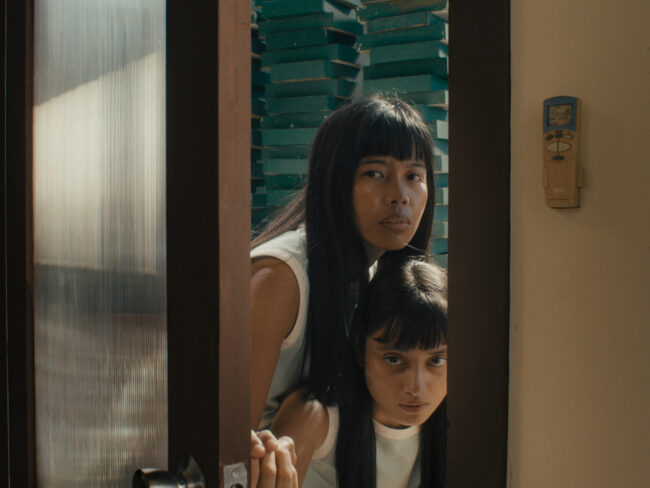
Tickets: http://laemmle.com/film/brides | Subscribe: http://bit.ly/3b8JTym | Nadia Fall's compelling debut feature offers a powerful and empathetic look into the lives of two alienated teenage girls, Doe and Muna, who leave the U.K. for Syria in search of purpose and belonging. By humanizing its protagonists and exploring the complex interplay of vulnerability, societal pressures, and digital manipulation, BRIDES challenges simplistic explanations of radicalization.

Tickets: http://laemmle.com/film/brides

RELEASE DATE: 9/24/2025
Director: Nadia Fall

-----
ABOUT LAEMMLE: Since 1938, Laemmle [Theatres] has been showing the finest independent, arthouse, and international films.

Subscribe to Laemmle's E-NEWSLETTER: http://bit.ly/3y1YSTM
Visit Laemmle.com: http://laemmle.com
Like LAEMMLE on FACEBOOK: http://bit.ly/3Qspq7Z
Follow LAEMMLE on TWITTER: http://bit.ly/3O6adYv
Follow LAEMMLE on INSTAGRAM: http://bit.ly/3y2j1cp
Tickets: http://laemmle.com/film/writing-hawa | Subscribe: http://bit.ly/3b8JTym | Afghan documentary maker Najiba Noori offers not only a loving and intimate portrait of her mother Hawa, but also shows in detail how the arduous improvement of the position of women is undone by geopolitical violence. The film follows the fortunes of Noori’s family, who belong to the Hazaras, an ethnic group that has suffered greatly from discrimination and persecution.

Tickets: http://laemmle.com/film/writing-hawa

RELEASE DATE: 10/8/2025

-----
ABOUT LAEMMLE: Since 1938, Laemmle [Theatres] has been showing the finest independent, arthouse, and international films.

Subscribe to Laemmle's E-NEWSLETTER: http://bit.ly/3y1YSTM
Visit Laemmle.com: http://laemmle.com
Like LAEMMLE on FACEBOOK: http://bit.ly/3Qspq7Z
Follow LAEMMLE on TWITTER: http://bit.ly/3O6adYv
Follow LAEMMLE on INSTAGRAM: http://bit.ly/3y2j1cp
Load More... Subscribe

Recent Posts

  • Laemmle Holiday Gifts: Wear Your Love of Cinema (Literally)
  • Resurrection: Inside Bi Gan’s Cinematic Dreamscape
  • Anniversary Classics Presents: Power, Politics, and Passion in Nixon and Doctor Zhivago

Archive

Featured Posts

An “embrace of what makes us unknowable yet worthy of forgiveness,” A LITTLE PRAYER opens Friday at the Claremont, Newhall, Royal and Town Center.

Leaving Laemmle: A Goodbye from Jordan