The Official Blog of Laemmle Theatres.

Laemmle Theatres

Film Reviews & Previews

  • All
  • Theater Buzz
    • Claremont 5
    • Glendale
    • Newhall
    • NoHo 7
    • Royal
    • Santa Monica
    • Town Center 5
  • Q&A’s
  • Locations & Showtimes
    • Claremont
    • Glendale
    • NewHall
    • North Hollywood
    • Royal (West LA)
    • Santa Monica
    • Town Center (Encino)
  • Film Series
    • Anniversary Classics
    • Culture Vulture
    • Worldwide Wednesdays
  • Facebook
  • Instagram
  • TikTok
  • YouTube

You are here: Home / Archives for documentary

No Silence, No Sponsors: Amy Goodman and ‘Steal This Story, Please!’

April 15, 2026 by Lamb Laemmle Leave a Comment

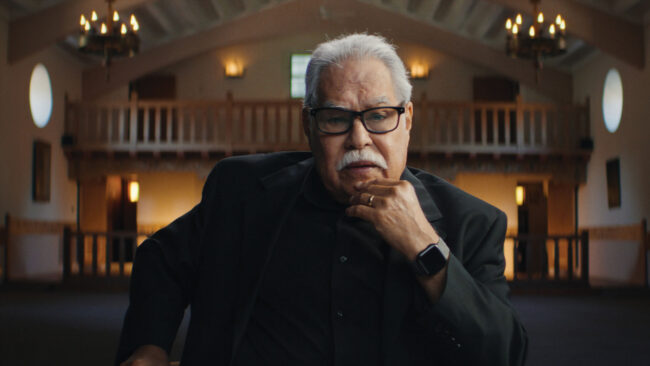
At a moment when the boundaries of journalism feel increasingly unstable, Steal This Story, Please! makes a compelling case for returning to the fundamentals. The documentary follows Amy Goodman across decades of reporting, but it resists the familiar arc of a career retrospective. Instead, it focuses on the daily discipline of the work itself: the persistence required to ask difficult questions, to verify what others would rather obscure, and to keep attention fixed where it is most needed. Directors Carl Deal and Tia Lessin frame their subject not as an outlier, but as a practitioner, someone committed to a method in a media landscape that often rewards speed over substance.

Amy Goodman in Steal This Story, Please!

Tune into Inside the Arthouse to catch Amy Goodman and co-directors Carl Deal and Tia Lessin discuss their latest work with co-hosts Greg Laemmle and Raphael Sbarge, or come see it live beginning April 15-17th at the Laemmle NoHo, Royal, and Glendale theaters, kicked off by a series of post-viewing Q&As.

What distinguishes the film is its emphasis on process. Rather than assembling a greatest-hits reel, it lingers on how reporting actually gets made: the calls, the research, the careful construction of segments piece by piece. This attention to labor grounds the film, turning “independent media” from an abstract label into something concrete and observable. Through archival footage and present-day scenes, the documentary collapses time, suggesting that the pressures journalists face—political, corporate, cultural, and more—are less cyclical than continuous.

The portrait that emerges is neither hagiographic nor detached. Goodman’s on-air clarity is paired with glimpses of the toll such work can take: the physical risks of field reporting, the emotional weight of bearing witness, the constant recalibration required to maintain focus in a shifting news environment. Yet the film also makes space for the little moments of humor, collaboration, and shared purpose that sustain such work over time. The newsroom is not presented as a platform for a single voice, but as a collective effort shaped by many hands.

Amy Goodman in Steal This Story, Please!

Running beneath it all is a larger argument about what journalism is for. The film challenges the notion that neutrality requires distance, instead suggesting that rigor and empathy can (and perhaps must) coexist. By centering those most affected by policy and power, Goodman’s approach offers a different kind of orientation, one that prioritizes context over spectacle and accountability over access.

If the title carries a note of provocation, the film earns it. Steal This Story, Please! is less concerned with ownership than with circulation, an insistence that information only matters if it continues to move, to be tested, and (ideally) to ripple outward. In that sense, the documentary functions as both portrait and invitation: a reminder that the work of journalism is ongoing, collective, and, at its best, indispensable.

“A profile in courage, presenting Goodman as an unrelenting voice of the voiceless who is never afraid to get arrested or make an enemy in her pursuit of telling her truth.” – Christian Zilko, IndieWire

“Steal This Story, Please!… builds a convincing case for the ability of dogged, courageous reporting to mobilise pressure against injustice and effect change.” – Lee Marshall, Screen Daily

Leave a Comment Filed Under: Filmmaker in Person, Glendale, Greg Laemmle, Inside the Arthouse, NoHo 7, Royal Tagged With: Amy Goodman, Carl Deal, documentary, Greg Laemmle, Inside the Arthouse, political, Raphael Sbarge, Steal this Story Please, Tia Lessin

The Future Is Thinking: ‘The AI Doc’ and the Anxiety of Our Moment

March 25, 2026 by Lamb Laemmle Leave a Comment

If there’s a defining anxiety of the present moment, it may be this: We are building something we do not fully understand. The AI Doc: Or How I Became an Apocaloptimist, directed by Daniel Roher and Charlie Tyrell, begins from that uneasy premise and refuses to resolve it into something comforting. Instead, it becomes a wide-ranging, often disorienting attempt to map the emotional and intellectual terrain of artificial intelligence at a moment when even the experts can’t agree on where we’re headed.

The Future Is Thinking: 'The AI Doc' and the Anxiety of Our Moment

Catch The AI Doc: Or How I Became an Apocaloptimist in theaters beginning March 27th at the Laemmle Noho 7 and Monica Film Center.

Roher, coming off his Oscar-winning Navalny, positions himself not as an authority but as a stand-in for the audience—curious, overwhelmed, and increasingly uneasy. As he and his wife prepare to welcome their first child, a looming question takes hold: What kind of world is he bringing this child into? AI, once an abstract concept, suddenly feels immediate and consequential. The film uses that tension as its narrative spine, turning a global technological shift into an intimate, almost existential dilemma.

From there, The AI Doc expands outward, assembling a striking range of voices across the AI spectrum. On one end are the so-called “doomers,” who warn that the development of artificial general intelligence (AGI) could lead to catastrophic outcomes, including the possibility—however speculative—of human extinction. Their arguments are not framed as fringe paranoia but as serious, technically grounded concerns: systems growing beyond human comprehension, incentives misaligned with human survival, and a pace of development that far outstrips our ability to comprehend (much less regulate) it.

On the other side are the optimists, those who see AI not as a threat but as a once-in-history opportunity. In their view, the same technology that inspires fear could unlock solutions to some of humanity’s most intractable problems: curing disease, transforming education, addressing climate challenges, and reducing global inequality.

The Future Is Thinking: 'The AI Doc' and the Anxiety of Our Moment

What makes the film compelling is not that it chooses between these camps, but that it refuses to. Roher oscillates between perspectives, absorbing each argument only to have it unsettled by the next. The result is a kind of intellectual whiplash that mirrors the broader cultural conversation around AI: every confident claim met with an equally persuasive counterpoint. Even basic questions—what AI actually is, how it works, where it’s going, etc.—prove surprisingly difficult to answer in any definitive way.

By the closing act, the term “apocaloptimist” emerges as a kind of uneasy compromise, a recognition that AI holds both extraordinary promise and profound danger. The film doesn’t argue for a single path forward so much as it insists on the urgency of pondering the question: How do we navigate between those extremes? It’s a question that extends beyond engineers and executives to anyone living through what may one day be called the “Age of AI.”

“Director Daniel Roher makes a good-faith effort to engage with a topic whose potential impact only gets bigger the closer you look at it.” – Christian Zilko, IndieWire

“The type of documentary vital for someone who needs a streamlined explainer of the concerns and hopes around artificial intelligence.” – John Dotson, InSession Film

Leave a Comment Filed Under: Featured Films, Films, NoHo 7, Santa Monica Tagged With: Charlie Tyrell, Daniel Rober, documentary, Navalny, The AI Doc

Living With the Volcano: Rosi’s Mesmerizing ‘Pompei: Below the Clouds’

March 4, 2026 by Lamb Laemmle Leave a Comment

Nearly two thousand years after Mount Vesuvius buried Pompeii in ash, the volcano remains, less a relic than a constant, ambient presence. In Pompei: Below the Clouds, director Gianfranco Rosi turns his gaze toward the modern communities that live in Vesuvius’ shadow, culminating in a study of daily life shaped by history, haunted by catastrophe, and suspended between past and present.

Pompei: Below the Clouds

Catch Pompei: Below the Clouds in theaters beginning March 13th at the Laemmle Royal.

Rosi is no stranger to immersive, place-based filmmaking. The Golden Lion-winning Sacro GRA and the Golden Bear recipient’s Fire at Sea established him as one of contemporary cinema’s greatest observers, an artist whose documentaries feel at once intimate and planetary. Shot over three years in and around Naples, Pompei: Below the Clouds may be among his most humane works, yet it hums with unease. Vesuvius does not dominate the frame; instead, it lingers in the background, a calm but potentially devastating fact of life.

Working in luminous black-and-white cinematography, Rosi captures a Naples veiled in silvery cloud and sea mist. Fumaroles exhale pale steam near the volcano’s summit while, down below, the city exhales its own brands of smoke: industrial plumes, street fires, and the everyday combustion of urban existence. The threat of disaster, natural or human-made, never quite recedes.

Pompei: Below the Clouds

Elsewhere, archaeologists carefully brush dirt from newly unearthed bones in Pompeii’s ruins, while police pursue tomb robbers tunneling through the storied soil. In a museum basement, a curator tends to long-buried statues and fragments as if they were old friends. “Time destroys everything, but it also preserves everything,” one historian reflects, a sentiment that becomes the film’s quiet thesis.

With its spare, tactile soundscape—blending music with the subterranean murmurs of earth and water—Pompei: Below the Clouds listens as much as it observes. Rosi isn’t interested in spectacle; he’s attentive to rhythms, textures, and the fragile balance between endurance and collapse. The film ultimately suggests that living beneath Vesuvius is less about fearing apocalypse than about negotiating coexistence with it. Past and present aren’t opposites here but layers, compacted together like geological strata. In patiently recording how people work, worry, study, remember, and simply pass the time, Rosi masterfully paints a portrait of a community suspended between memory and possibility, where history is not a distant chapter but a daily companion.

“An intensely disquieting, utterly distinctive film and a superb final panel to his [Italy-focused] triptych.” – Peter Bradshaw, The Guardian

“As a filmmaker, Rosi acts as both guide and preservationist, making movies that may one day be uncovered like statues below ground, dug up by future archeologists trying to grasp how we lived.” – Jordan Mintzer, The Hollywood Reporter

“There are many ways to live around an active volcano, and this humming, keen-eyed film is interested in all of them.” – Guy Lodge, Variety

Leave a Comment Filed Under: Featured Films, Royal Tagged With: documentary, Gianfranco Rosi, Italian, Pompei: Below the Clouds

From ‘Cutting Through Rocks’ to ‘Come See Me in the Good Light’: Two Oscar-Nominated Portraits of Courage and Willpower

February 24, 2026 by Lamb Laemmle Leave a Comment

Two of this year’s Oscar nominees for Best Documentary Feature could hardly be more different in setting or scale—one unfolding in a remote Iranian village, the other in the intimate spaces of a Colorado home—yet both pulse with urgency, personality, and the stubborn insistence on living fully.

From 'Cutting Through Rocks' to 'Come See Me in the Good Light': Two Oscar-Nominated Portraits of Courage and Willpower

Tune into Inside the Arthouse to hear directors Mohammadreza Eyni, Sara Khaki, and Ryan White discuss their latest films with co-hosts Greg Laemmle and Raphael Sbarge, or catch them in person when Cutting Through Rocks returns to the Laemmle Royal on February 26th, kicked off by a live Q&A with Eyni after the 7 p.m. showing, followed by Come See Me in the Good Light on February 28th, beginning with a pair of Q&As featuring Ryan White following the Saturday night and Sunday matinee showings at the Laemmle Noho.

Sara Khaki and Mohammadreza Eyni’s Cutting Through Rocks introduces us to Sara Shahverdi, a headscarf-clad former midwife in northwest Iran who opens the film wrestling a metal door back into place with a buzzsaw. It’s an image that doubles as a thesis, as Shahverdi has spent her life defying expectations: riding motorcycles, working construction, advocating for girls’ education, and pushing back against child marriage in a deeply conservative region. When she runs for village council, hoping to become its first elected councilwoman, the film embeds with her over several years, capturing both the grassroots thrill of her campaign and the backlash that follows.

Shahverdi is no abstract symbol; she’s charismatic, funny, impatient, and strategic. She rallies women in living rooms, challenges men in council chambers, and leverages her past as a midwife into political capital. The result is a rousing, clear-eyed portrait of incremental revolution, proving Shahverdi’s own personal mantra that, sometimes, one small step can make all the difference in the world.

From 'Cutting Through Rocks' to 'Come See Me in the Good Light': Two Oscar-Nominated Portraits of Courage and Willpower

If Cutting Through Rocks is about carving space within rigid systems, Come See Me in the Good Light turns inward, illuminating the interior landscape of love and mortality. Directed by Ryan White, the film follows celebrated spoken word poet Andrea Gibson and their longtime partner writer Megan Falley after Gibson is diagnosed with incurable ovarian cancer. Yet what might sound like familiar “cancer documentary” terrain quickly becomes something far more singular: funny, profane, luminous, and fiercely alive.

Gibson, once a touring poet who commanded stages like a rock star, meets their illness not with platitudes but with radical candor. The film moves between chemotherapy appointments and kitchen-table laughter, between whispered fears and bawdy jokes. The lovers measure life in three-week increments between blood tests, yet refuse to surrender their intrinsic biases toward joy. White interweaves archival performance footage with scenes of present-day intimacy, building toward a final public reading that lands with the emotional force of a championship game.

Taken together, these two nominees remind us not only of the documentary genre’s extraordinary range, but of the commonalities that unite us from across the world. Catch these Oscar-nominated documentaries back on the big screen at Laemmle Theatres and see for yourself why they’re among the year’s most celebrated nonfiction films.

Leave a Comment Filed Under: Awards, Filmmaker in Person, Filmmaker Interviews, Greg Laemmle, Inside the Arthouse, NoHo 7, Royal Tagged With: Come See Me in the Good Light, Cutting Through Rocks, documentary, Greg Laemmle, Inside the Arthouse, Oscar nominees, Raphael Sbarge

‘Starman’ and the Case for Cosmic Curiosity

February 10, 2026 by Lamb Laemmle Leave a Comment

Robert Stone’s documentary Starman is a reflective, wonder-driven journey through the history of space exploration, scientific imagination, and one of humanity’s most enduring questions: Are we alone? Rather than building a conspiracy or chasing sensational revelations, the film takes a more intimate and philosophical route, centering on one remarkable figure—NASA engineer, mission planner, and science-fiction collaborator Gentry Lee—and using his life and outlook as a guide through decades of cosmic discovery.

Gentry Lee in Starman

Tune into Inside the Arthouse on February 11th to hear Gentry Lee and Robert Stone discuss their mind-expanding documentary with co-hosts Greg Laemmle and Raphael Sbarge, or come to the Laemmle Glendale for a series of post-viewing Q&As running February 13-16th.

Now in his eighties, Lee proves an unexpectedly magnetic on-screen presence. Sharp, funny, and visibly thrilled by the prospect of the unknown, he serves as the film’s narrator and emotional anchor. His career connects him directly to many of NASA’s landmark achievements, including the Viking missions to Mars and the Galileo mission to Jupiter, as well as creative collaborations with Carl Sagan and Arthur C. Clarke. Through Lee, the film links the technical realities of planetary science with the imaginative power of science fiction, showing how each has fueled the other’s progress across the generations.

Starman unfolds largely through extended conversations with Lee, interwoven with rich archival footage and a wide-ranging visual collage: historic NASA imagery, cultural touchstones from classic science-fiction films, television broadcasts, and deep-space photography. The result is less a straight chronological history than a flowing meditation on curiosity, ambition, and perspective. The documentary repeatedly returns to the emotional impact of first contact with cosmic imagery: the transformative power of seeing Earth from afar, the shock of planetary landscapes, and the strange mix of triumph and anticlimax that followed the initial moon landing.

'Starman' and the Case for Cosmic Curiosity

At its most interesting, Starman wrestles with ambiguity. Lee openly embraces uncertainty about extraterrestrial life, arguing that the absence of proof is not a disappointment but rather a motivation to continue searching. One of his recurrent ideas—that advanced civilizations may be rare not because they never arise, but because they don’t last—gives the film a quiet philosophical edge. Space exploration, in this view, becomes a mirror held up to Earth: a reminder of our fragility, responsibility, and intrinsically shared fate.

Gentler and more personal than most modern space documentaries, Starman aims less to dazzle than to rekindle, inviting viewers not just to look outward, but to rediscover the nearly forgotten thrill of simply looking up.

“Full of extraordinary footage, Robert Stone’s blissed-out mind-bender of a movie meditates on the possibilities of life in the universe.” – Owen Gleiberman, Variety

“[Gentry Lee] commands the screen every time he is on it telling stories about his involvements with the space program as well as his associations with some of the greatest scientific and science fiction writers of all time.” – Dan Pal, PalCinema

Leave a Comment Filed Under: Filmmaker in Person, Glendale, Greg Laemmle, Inside the Arthouse, Q&A's Tagged With: documentary, Gentry Lee, Greg Laemmle, Inside the Arthouse, NASA, Raphael Sbarge, Robert Stone, Starman

Search

Instagram

☘️ WEAR GREEN ☘️ $AVE GREEN ☘️ $2 OFF your concess ☘️ WEAR GREEN ☘️ $AVE GREEN ☘️ $2 OFF your concessions order!

⭐ St. Patrick's Day! Tuesday March 17th Only!

-Movie ticket purchase not required
-Like and show this post!
🎟️ laemmle.com/discounts
🚀 PROJECT HAIL MARY, AN EPIC PRIZE PACK GIVEAWAY! 🚀 PROJECT HAIL MARY, AN EPIC PRIZE PACK GIVEAWAY!
👉 ENTER in BIO!

#ProjectHailMary — starring Academy Award® nominee Ryan Gosling and directed by Academy Award®-winning filmmakers Phil Lord & Christopher Miller. Based on Andy Weir's New York Times best-selling novel.

🎟️ GET TICKETS in BIO!
For the 21st consecutive year, Laemmle will be scr For the 21st consecutive year, Laemmle will be screening the Oscar-Nominated Short Films, opening on Feb. 20th. Showcasing the best short films from around the world, the 2026 Oscar®-Nominated Shorts includes three feature-length programs, one for each Academy Award® Short Film category: Animated, Documentary and Live Action.

ANIMATED SHORTS: (Estimated Running Time: 83 mins)
The Three Sisters
Forevergreen
The Girl Who Cried Pearls
Butterfly
Retirement Plan
 
LIVE ACTION SHORTS (Estimated Running Time: 119 minutes)
The Singers
A Friend Of Dorothy
Butcher’s Stain
Two People Exchanging Saliva
Jane Austin’s Period Drama

DOCUMENTARY SHORTS (Estimated Running Time: 158 minutes)
Perfectly A Strangeness
The Devil Is Busy
Armed Only With A Camera: The Life And Death Of Brent Renaud
All The  Empty Rooms
Children No More: “Were And Are Gone”

Please note that some films may not be appropriate for audiences under the age of 14 due to gun violence, shootings, language and animated nudity.
❤️ Laemmle be your Valentine ❤️ and enjoy a FREE S ❤️ Laemmle be your Valentine ❤️ and enjoy a FREE Sweet Treat 🍭 on Valentine's Day! Like this post and show at the concessions stand for One Free Candy w/purchase of any combo! (2/14 only)
For Tickets and Locations 🎟️ laemmle.com
Follow on Instagram


Laemmle Theatres

Laemmle Theatres
Tickets: http://laemmle.com/film/artfully-united | Subscribe: http://bit.ly/3b8JTym | ARTFULLY UNITED is a celebration of the power of positivity and a reminder that hope can sometimes grow in the most unlikely of places. As artist Mike Norice creates a series of inspirational murals in under-served neighborhoods in and around Los Angeles, the Artfully United Tour transforms from a simple idea on a wall to a community of artists and activists coming together to heal and uplift a city.

Tickets: http://laemmle.com/film/artfully-united

RELEASE DATE: 10/17/2025
Director: Dave Benner
Cast: Mike Norice

-----
ABOUT LAEMMLE: Since 1938, Laemmle [Theatres] has been showing the finest independent, arthouse, and international films.

Subscribe to Laemmle's E-NEWSLETTER: http://bit.ly/3y1YSTM
Visit Laemmle.com: http://laemmle.com
Like LAEMMLE on FACEBOOK: http://bit.ly/3Qspq7Z
Follow LAEMMLE on TWITTER: http://bit.ly/3O6adYv
Follow LAEMMLE on INSTAGRAM: http://bit.ly/3y2j1cp
Tickets: http://laemmle.com/film/brides | Subscribe: http://bit.ly/3b8JTym | Nadia Fall's compelling debut feature offers a powerful and empathetic look into the lives of two alienated teenage girls, Doe and Muna, who leave the U.K. for Syria in search of purpose and belonging. By humanizing its protagonists and exploring the complex interplay of vulnerability, societal pressures, and digital manipulation, BRIDES challenges simplistic explanations of radicalization.

Tickets: http://laemmle.com/film/brides

RELEASE DATE: 9/24/2025
Director: Nadia Fall

-----
ABOUT LAEMMLE: Since 1938, Laemmle [Theatres] has been showing the finest independent, arthouse, and international films.

Subscribe to Laemmle's E-NEWSLETTER: http://bit.ly/3y1YSTM
Visit Laemmle.com: http://laemmle.com
Like LAEMMLE on FACEBOOK: http://bit.ly/3Qspq7Z
Follow LAEMMLE on TWITTER: http://bit.ly/3O6adYv
Follow LAEMMLE on INSTAGRAM: http://bit.ly/3y2j1cp
Tickets: http://laemmle.com/film/writing-hawa | Subscribe: http://bit.ly/3b8JTym | Afghan documentary maker Najiba Noori offers not only a loving and intimate portrait of her mother Hawa, but also shows in detail how the arduous improvement of the position of women is undone by geopolitical violence. The film follows the fortunes of Noori’s family, who belong to the Hazaras, an ethnic group that has suffered greatly from discrimination and persecution.

Tickets: http://laemmle.com/film/writing-hawa

RELEASE DATE: 10/8/2025

-----
ABOUT LAEMMLE: Since 1938, Laemmle [Theatres] has been showing the finest independent, arthouse, and international films.

Subscribe to Laemmle's E-NEWSLETTER: http://bit.ly/3y1YSTM
Visit Laemmle.com: http://laemmle.com
Like LAEMMLE on FACEBOOK: http://bit.ly/3Qspq7Z
Follow LAEMMLE on TWITTER: http://bit.ly/3O6adYv
Follow LAEMMLE on INSTAGRAM: http://bit.ly/3y2j1cp
Subscribe

Recent Posts

  • All the Right Notes: ‘Two Pianos’ and the Music of Complicated Love
  • A Life Unfiltered: ‘I Swear’ and the Story of John Davidson
  • Laemmle Theatres Reacquires the NoHo 7, Securing the Future of Independent Film in North Hollywood

Archive

Featured Posts

An “embrace of what makes us unknowable yet worthy of forgiveness,” A LITTLE PRAYER opens Friday at the Claremont, Newhall, Royal and Town Center.

Leaving Laemmle: A Goodbye from Jordan