The Official Blog of Laemmle Theatres.

Laemmle Theatres

Film Reviews & Previews

  • All
  • Theater Buzz
    • Claremont 5
    • Glendale
    • Newhall
    • NoHo 7
    • Royal
    • Santa Monica
    • Town Center 5
  • Q&A’s
  • Locations & Showtimes
    • Claremont
    • Glendale
    • NewHall
    • North Hollywood
    • Royal (West LA)
    • Santa Monica
    • Town Center (Encino)
  • Film Series
    • Anniversary Classics
    • Culture Vulture
    • Worldwide Wednesdays
  • Facebook
  • Instagram
  • TikTok
  • YouTube

You are here: Home / Archives for Inside the Arthouse

No Silence, No Sponsors: Amy Goodman and ‘Steal This Story, Please!’

April 15, 2026 by Lamb Laemmle Leave a Comment

At a moment when the boundaries of journalism feel increasingly unstable, Steal This Story, Please! makes a compelling case for returning to the fundamentals. The documentary follows Amy Goodman across decades of reporting, but it resists the familiar arc of a career retrospective. Instead, it focuses on the daily discipline of the work itself: the persistence required to ask difficult questions, to verify what others would rather obscure, and to keep attention fixed where it is most needed. Directors Carl Deal and Tia Lessin frame their subject not as an outlier, but as a practitioner, someone committed to a method in a media landscape that often rewards speed over substance.

Amy Goodman in Steal This Story, Please!

Tune into Inside the Arthouse to catch Amy Goodman and co-directors Carl Deal and Tia Lessin discuss their latest work with co-hosts Greg Laemmle and Raphael Sbarge, or come see it live beginning April 15-17th at the Laemmle NoHo, Royal, and Glendale theaters, kicked off by a series of post-viewing Q&As.

What distinguishes the film is its emphasis on process. Rather than assembling a greatest-hits reel, it lingers on how reporting actually gets made: the calls, the research, the careful construction of segments piece by piece. This attention to labor grounds the film, turning “independent media” from an abstract label into something concrete and observable. Through archival footage and present-day scenes, the documentary collapses time, suggesting that the pressures journalists face—political, corporate, cultural, and more—are less cyclical than continuous.

The portrait that emerges is neither hagiographic nor detached. Goodman’s on-air clarity is paired with glimpses of the toll such work can take: the physical risks of field reporting, the emotional weight of bearing witness, the constant recalibration required to maintain focus in a shifting news environment. Yet the film also makes space for the little moments of humor, collaboration, and shared purpose that sustain such work over time. The newsroom is not presented as a platform for a single voice, but as a collective effort shaped by many hands.

Amy Goodman in Steal This Story, Please!

Running beneath it all is a larger argument about what journalism is for. The film challenges the notion that neutrality requires distance, instead suggesting that rigor and empathy can (and perhaps must) coexist. By centering those most affected by policy and power, Goodman’s approach offers a different kind of orientation, one that prioritizes context over spectacle and accountability over access.

If the title carries a note of provocation, the film earns it. Steal This Story, Please! is less concerned with ownership than with circulation, an insistence that information only matters if it continues to move, to be tested, and (ideally) to ripple outward. In that sense, the documentary functions as both portrait and invitation: a reminder that the work of journalism is ongoing, collective, and, at its best, indispensable.

“A profile in courage, presenting Goodman as an unrelenting voice of the voiceless who is never afraid to get arrested or make an enemy in her pursuit of telling her truth.” – Christian Zilko, IndieWire

“Steal This Story, Please!… builds a convincing case for the ability of dogged, courageous reporting to mobilise pressure against injustice and effect change.” – Lee Marshall, Screen Daily

Leave a Comment Filed Under: Filmmaker in Person, Glendale, Greg Laemmle, Inside the Arthouse, NoHo 7, Royal Tagged With: Amy Goodman, Carl Deal, documentary, Greg Laemmle, Inside the Arthouse, political, Raphael Sbarge, Steal this Story Please, Tia Lessin

François Ozon’s Cool, Unsettling ‘The Stranger’

April 7, 2026 by Lamb Laemmle Leave a Comment

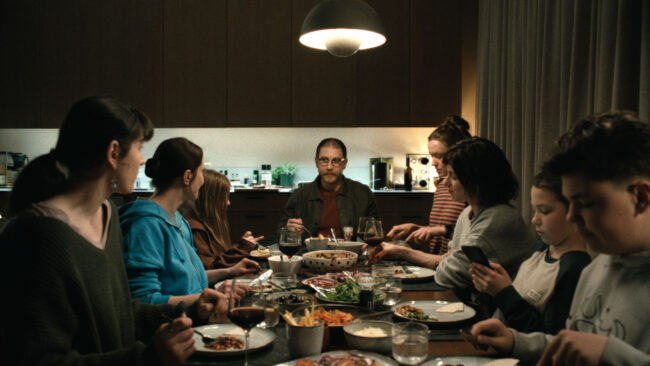
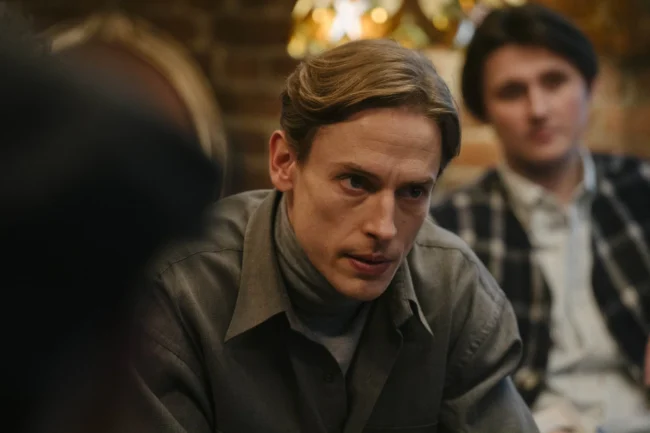
What does it mean to bring The Stranger—a novel defined by absence, detachment, and interiority—into a medium built on appearances? In his new adaptation of Albert Camus’s 1942 classic, François Ozon approaches that challenge not by radically reimagining the text, but by making its silences visible. The result is a film that feels at once faithful and interpretive, attuned to both the enduring power of Camus’s text and the historical context it left largely unspoken.

François Ozon’s Cool, Unsettling 'The Stranger'

Tune into Inside the Arthouse to hear Ozon discuss his latest film with co-hosts Greg Laemmle and Raphael Sbarge, or catch it in theaters beginning April 10th at the Laemmle Royal, Glendale, and Town Center theaters.

Set in 1930s Algiers under French colonial rule, the film follows Meursault (Benjamin Voisin), a clerk whose emotional detachment shapes every aspect of his life. He receives news of his mother’s death with little visible reaction, carrying out the rituals of mourning with a kind of mechanical precision. In Ozon’s retelling, it’s as if Meursault has only just arrived in the world at that moment: unformed, unmoored, and curiously untouched by the social expectations that surround him.

That sense of dislocation extends into his relationships. He begins an affair with Marie (Rebecca Marder), responds to her questions with indifference, and drifts into the orbit of his volatile neighbor Raymond (Pierre Lottin). Meursault rarely initiates; he responds. Yet this passivity proves deceptive as he repeatedly declines to perform basic gestures that would mark him as a passable member of society while simultaneously slipping into patterns of behavior that align him with its ugliest assumptions.

Ozon captures this tension with remarkable precision. Shot in crisp black-and-white, the film emphasizes texture and physical sensation: sunlight on skin, the rhythm of breath, the weight of heat pressing down on bodies. These tactile details root us in Meursault’s immediate experience even as his inner life remains opaque. Voisin’s performance is key here: controlled, watchful, and withholding, he becomes a figure defined as much by what he doesn’t express as by what he does.

François Ozon’s Cool, Unsettling 'The Stranger'

At the same time, Ozon subtly expands the frame of Camus’ story. Where the novel treats its colonial setting as a given, the film foregrounds it, allowing the social and political tensions of French Algeria to register more clearly. The people who exist at the margins of Meursault’s awareness take on a greater presence, not through overt revision but through subtle shifts in emphasis. The result is a quiet but meaningful rebalancing, one that reframes Meursault’s indifference as something shaped not only by temperament but by environment.

As perhaps the quintessential work of existentialist fiction, The Stranger endures not because it offers answers, but because it resists them. Ozon’s adaptation honors that resistance, even as it invites us to look more closely at the world surrounding it, and at what it means to move through that world without fully engaging with it.

“The Stranger, it turns out, is a story for our times, which makes this lovely new version doubly welcome.” – Bilge Ebiri, Vulture

“Ozon’s The Stranger keeps the spirit of its source material alive as a timeless warning in a modern world of stark polarization, ongoing colonialism, and plenty of Meursaults ignoring the suffering of others.” – Monica Castillo, The AV Club

Leave a Comment Filed Under: Featured Films, Films, Glendale, Greg Laemmle, Inside the Arthouse, Royal, Town Center 5 Tagged With: Albert Camus, François Ozon, French, Greg Laemmle, Inside the Arthouse, International Cinema, literary adaptation, Raphael Sbarge, The Stranger

Babysitting the Void: Stalled Adulthood in ‘Fantasy Life.’

March 31, 2026 by Lamb Laemmle Leave a Comment

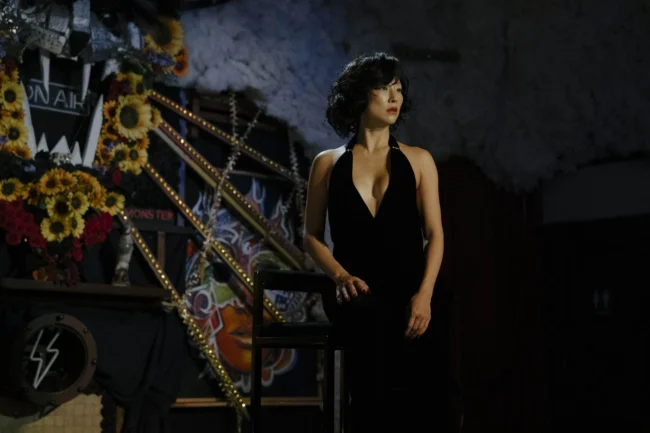
Matthew Shear’s Fantasy Life is the kind of modest, perceptive character piece that sneaks up on you: initially breezy, even familiar, before revealing a deeper ache beneath its carefully arranged surfaces. A lightly comic drama about stalled adulthood and second acts, Fantasy Life centers on Sam (Shear), an anxious, recently laid-off paralegal whose life has quietly collapsed. Through a combination of desperation and social proximity, Sam takes a babysitting job for a wealthy, creatively inclined couple, David and Dianne, and finds himself drawn into their fragile domestic ecosystem.

Amanda Peet and Matthew Shear in Fantasy Life

Tune into Inside the Arthouse to hear Matthew Shear discuss his directorial debut with co-hosts Greg Laemmle and Raphael Sbarge, or come see it at the Laemmle Royal, NoHo, Glendale, or Town Center theaters beginning April 3rd.

The premise has the makings of farce, but the film resists easy escalation. Instead, Shear builds a tone of low-key, accumulating discomfort, where every interaction feels slightly off-balance. Sam’s crippling anxiety isn’t played for charm; it’s awkward, limiting, and at times frighteningly disruptive. Yet it also becomes the unlikely bridge between him and Dianne, a former actress who now drifts through her own life with a kind of numbed disillusionment. Their connection—tentative, intimate, and ethically precarious—forms the film’s emotional core, less a conventional romance than a mutual recognition between two people who feel they’ve missed their moment.

It’s here that Amanda Peet delivers what many have called a career-best turn. As Dianne, she is at once brittle and luminous, exuding the residual magnetism of someone who once commanded attention while allowing the cracks in that persona to show. There’s no vanity in her performance: Peet leans entirely into Dianne’s dissatisfaction and flashes of need, and the result is both funny and devastating. In the context of Peet’s long absence from major film roles, the performance carries an added resonance; a meta-textual echo of the character’s own sidelined career. That poignancy deepens further given Peet’s recently disclosed breast cancer diagnosis, lending her return an added layer of vulnerability that subtly accentuates the film’s themes of resilience and reinvention.

Amanda Peet and Matthew Shear in Fantasy Life

Shear, pulling from a historied lineage of New York-based neurotic comedies, crafts dialogue that feels lived-in and unforced, with a sharp ear for the rhythms of privileged but emotionally adrift lives. The ensemble, anchored by Alessandro Nivola’s charmingly self-involved musician, creates a dense social web where everyone seems both deeply connected and fundamentally alone. The stakes are, on paper, relatively small, but Shear understands that for his characters, these life developments and emotional entanglements feel seismic. Ultimately, the film is less about dramatic transformation than about the stories we tell ourselves to get through the day, and the uneasy realization that those stories might be all we have.

In that sense, Fantasy Life more than lives up to its title. It’s about the gap between the lives we imagine and the ones we inhabit, and the strange, fleeting moments when those two begin, however imperfectly, to overlap.

“Shear eloquently portrays the ways that near-misses can still feel like cataclysmic life events.” – Christian Zilko, IndieWire

“The kind of quiet film about life’s little moments, insecurities, and challenges that we rarely see… Peet reminds us that she is a bona fide star.” – Phil Walsh, Geek Vibes Nation

Leave a Comment Filed Under: Featured Films, Films, Glendale, Greg Laemmle, Inside the Arthouse, NoHo 7, Royal, Town Center 5 Tagged With: Alessandro Nivola, Amanda Peet, black comedy, comedy, Fantasy Life, Greg Laemmle, Inside the Arthouse, Matthew Shear, New York, Raphael Sbarge, romantic comedy

‘Charliebird’: When the Music Doesn’t Fix Everything

March 4, 2026 by Lamb Laemmle Leave a Comment

How do you make space for joy inside a children’s hospital? In Charliebird, winner of the 2025 Tribeca Film Festival’s US Narrative Feature Prize, the answer is neither grand nor sentimental. It’s a ukulele carried from room to room, a pop song request taken seriously, or a willingness to sit beside someone who doesn’t feel like singing.

Samantha Smart in Charliebird

Tune into Inside the Arthouse to hear director Libby Ewing discuss her new hit film with co-hosts Greg Laemmle and Raphael Sbarge, or come see Ewing, lead actors Samantha Smart and Gabrielle Ochoa Perez, and production designer Emily Li participate in live Q&As following the film’s one-night stay at the Laemmle Royal on March 5th, or to kick off its theatrical run at Glendale beginning March 6-8th.

Charliebird centers on Al (Smart), a music therapist working with seriously ill young patients. Her job description ranges from lullabies for restless five-year-olds to tracking down the right track to coax a guarded teenager into cracking a smile. It’s delicate work—sometimes playful, sometimes devastating—yet the film resists any temptation to frame it as miraculous. Music here doesn’t cure; it connects.

That connection proves hardest to forge with Charlie (Perez), a sharp, funny seventeen-year-old who has spent years in and out of hospitals. Convinced that adults are shielding her from the truth about her condition, Charlie has little patience for forced cheer. What unfolds between her and Al is not a tidy inspirational arc but a gradual, hard-earned friendship. They talk about sex and regret, about fear and boredom, about the awkwardness of being young in a body that won’t cooperate. Their conversations are by turns irreverent and raw, sidestepping clichés about generational divides or saintly caregivers.

Samantha Smart in Charliebird

The film’s power lies in that restraint. Rather than building toward sweeping melodrama, Charliebird offers glimpses: a Snow White costume that doesn’t quite land, a hospital corridor that feels too narrow, a moment of laughter that catches both women off guard. Cinematographer Luca Del Puppo shoots in an unusual, vertically compressed frame that at first feels constricted, then intimate, as though we’re being invited into a private space. This visual approach mirrors the story itself: focused, uncluttered, attentive to faces.

Smart’s performance as Al reveals a woman whose devotion to her patients coexists with her own unresolved struggles. Perez, meanwhile, delivers a breakout turn, allowing Charlie’s sarcasm to soften into vulnerability without losing her edge.

Ewing makes bold choices in the film’s second half, embracing ambiguity instead of easy answers. Not every question is resolved. Not every outcome is spelled out. The film trusts its audience to sit with uncertainty—much as its characters must.

Ultimately, Charliebird argues for the value of presence over perfection. It suggests that even when one’s circumstances can’t be changed, a shared joke, an honest confession, or a song played slightly off-key can resonate the longest.

“An emotional roller coaster that will inspire viewers to cherish every day.” – Thomas Duffy, Film Book

“A simple, elegant look at friendship and finality.” – Christian Zilko, IndieWire

Leave a Comment Filed Under: Actors in Person, Featured Films, Filmmaker in Person, Glendale, Royal Tagged With: Charliebird, Gabrielle Ochoa Perez, Greg Laemmle, Inside the Arthouse, Libby Ewing, Raphael Sbarge, Samantha Smart

From ‘Cutting Through Rocks’ to ‘Come See Me in the Good Light’: Two Oscar-Nominated Portraits of Courage and Willpower

February 24, 2026 by Lamb Laemmle Leave a Comment

Two of this year’s Oscar nominees for Best Documentary Feature could hardly be more different in setting or scale—one unfolding in a remote Iranian village, the other in the intimate spaces of a Colorado home—yet both pulse with urgency, personality, and the stubborn insistence on living fully.

From 'Cutting Through Rocks' to 'Come See Me in the Good Light': Two Oscar-Nominated Portraits of Courage and Willpower

Tune into Inside the Arthouse to hear directors Mohammadreza Eyni, Sara Khaki, and Ryan White discuss their latest films with co-hosts Greg Laemmle and Raphael Sbarge, or catch them in person when Cutting Through Rocks returns to the Laemmle Royal on February 26th, kicked off by a live Q&A with Eyni after the 7 p.m. showing, followed by Come See Me in the Good Light on February 28th, beginning with a pair of Q&As featuring Ryan White following the Saturday night and Sunday matinee showings at the Laemmle Noho.

Sara Khaki and Mohammadreza Eyni’s Cutting Through Rocks introduces us to Sara Shahverdi, a headscarf-clad former midwife in northwest Iran who opens the film wrestling a metal door back into place with a buzzsaw. It’s an image that doubles as a thesis, as Shahverdi has spent her life defying expectations: riding motorcycles, working construction, advocating for girls’ education, and pushing back against child marriage in a deeply conservative region. When she runs for village council, hoping to become its first elected councilwoman, the film embeds with her over several years, capturing both the grassroots thrill of her campaign and the backlash that follows.

Shahverdi is no abstract symbol; she’s charismatic, funny, impatient, and strategic. She rallies women in living rooms, challenges men in council chambers, and leverages her past as a midwife into political capital. The result is a rousing, clear-eyed portrait of incremental revolution, proving Shahverdi’s own personal mantra that, sometimes, one small step can make all the difference in the world.

From 'Cutting Through Rocks' to 'Come See Me in the Good Light': Two Oscar-Nominated Portraits of Courage and Willpower

If Cutting Through Rocks is about carving space within rigid systems, Come See Me in the Good Light turns inward, illuminating the interior landscape of love and mortality. Directed by Ryan White, the film follows celebrated spoken word poet Andrea Gibson and their longtime partner writer Megan Falley after Gibson is diagnosed with incurable ovarian cancer. Yet what might sound like familiar “cancer documentary” terrain quickly becomes something far more singular: funny, profane, luminous, and fiercely alive.

Gibson, once a touring poet who commanded stages like a rock star, meets their illness not with platitudes but with radical candor. The film moves between chemotherapy appointments and kitchen-table laughter, between whispered fears and bawdy jokes. The lovers measure life in three-week increments between blood tests, yet refuse to surrender their intrinsic biases toward joy. White interweaves archival performance footage with scenes of present-day intimacy, building toward a final public reading that lands with the emotional force of a championship game.

Taken together, these two nominees remind us not only of the documentary genre’s extraordinary range, but of the commonalities that unite us from across the world. Catch these Oscar-nominated documentaries back on the big screen at Laemmle Theatres and see for yourself why they’re among the year’s most celebrated nonfiction films.

Leave a Comment Filed Under: Awards, Filmmaker in Person, Filmmaker Interviews, Greg Laemmle, Inside the Arthouse, NoHo 7, Royal Tagged With: Come See Me in the Good Light, Cutting Through Rocks, documentary, Greg Laemmle, Inside the Arthouse, Oscar nominees, Raphael Sbarge

‘Starman’ and the Case for Cosmic Curiosity

February 10, 2026 by Lamb Laemmle Leave a Comment

Robert Stone’s documentary Starman is a reflective, wonder-driven journey through the history of space exploration, scientific imagination, and one of humanity’s most enduring questions: Are we alone? Rather than building a conspiracy or chasing sensational revelations, the film takes a more intimate and philosophical route, centering on one remarkable figure—NASA engineer, mission planner, and science-fiction collaborator Gentry Lee—and using his life and outlook as a guide through decades of cosmic discovery.

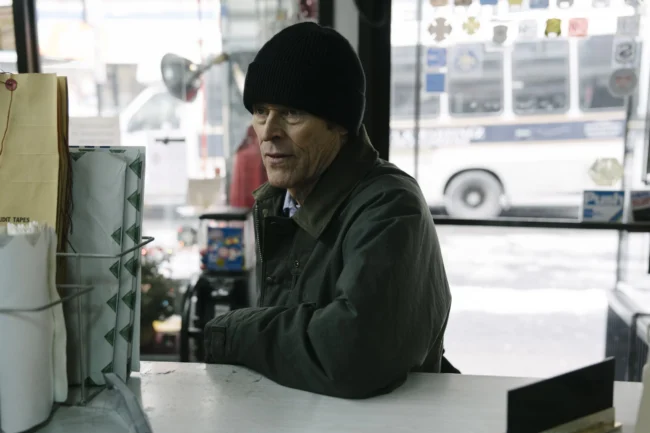
Gentry Lee in Starman

Tune into Inside the Arthouse on February 11th to hear Gentry Lee and Robert Stone discuss their mind-expanding documentary with co-hosts Greg Laemmle and Raphael Sbarge, or come to the Laemmle Glendale for a series of post-viewing Q&As running February 13-16th.

Now in his eighties, Lee proves an unexpectedly magnetic on-screen presence. Sharp, funny, and visibly thrilled by the prospect of the unknown, he serves as the film’s narrator and emotional anchor. His career connects him directly to many of NASA’s landmark achievements, including the Viking missions to Mars and the Galileo mission to Jupiter, as well as creative collaborations with Carl Sagan and Arthur C. Clarke. Through Lee, the film links the technical realities of planetary science with the imaginative power of science fiction, showing how each has fueled the other’s progress across the generations.

Starman unfolds largely through extended conversations with Lee, interwoven with rich archival footage and a wide-ranging visual collage: historic NASA imagery, cultural touchstones from classic science-fiction films, television broadcasts, and deep-space photography. The result is less a straight chronological history than a flowing meditation on curiosity, ambition, and perspective. The documentary repeatedly returns to the emotional impact of first contact with cosmic imagery: the transformative power of seeing Earth from afar, the shock of planetary landscapes, and the strange mix of triumph and anticlimax that followed the initial moon landing.

'Starman' and the Case for Cosmic Curiosity

At its most interesting, Starman wrestles with ambiguity. Lee openly embraces uncertainty about extraterrestrial life, arguing that the absence of proof is not a disappointment but rather a motivation to continue searching. One of his recurrent ideas—that advanced civilizations may be rare not because they never arise, but because they don’t last—gives the film a quiet philosophical edge. Space exploration, in this view, becomes a mirror held up to Earth: a reminder of our fragility, responsibility, and intrinsically shared fate.

Gentler and more personal than most modern space documentaries, Starman aims less to dazzle than to rekindle, inviting viewers not just to look outward, but to rediscover the nearly forgotten thrill of simply looking up.

“Full of extraordinary footage, Robert Stone’s blissed-out mind-bender of a movie meditates on the possibilities of life in the universe.” – Owen Gleiberman, Variety

“[Gentry Lee] commands the screen every time he is on it telling stories about his involvements with the space program as well as his associations with some of the greatest scientific and science fiction writers of all time.” – Dan Pal, PalCinema

Leave a Comment Filed Under: Filmmaker in Person, Glendale, Greg Laemmle, Inside the Arthouse, Q&A's Tagged With: documentary, Gentry Lee, Greg Laemmle, Inside the Arthouse, NASA, Raphael Sbarge, Robert Stone, Starman

‘The Love That Remains’: Comedy, Melancholy, and the Strange Work of Letting Go

February 3, 2026 by Lamb Laemmle Leave a Comment

With The Love That Remains, Hlynur Pálmason shifts gears from the icy severity of Godland and the simmering grief of A White, White Day to deliver a warm yet quietly devastating portrait of a family learning how to (co-)exist after a marriage ends. Set against Iceland’s imposing yet luminous landscapes, the film follows a separated couple and their three children across the uneasy months following their split, blending domestic realism with eccentric surrealism to capture the strange emotional limbo that follows love’s collapse. Both gently comic and deeply melancholic, the film becomes less about the breakup itself than about what persists in the wake of its dissolution: habit, tenderness, resentment, and the stubborn bonds that refuse to vanish on schedule.

The Love That Remains

Tune into Inside the Arthouse on February 4th to hear Pálmason discuss his latest work with co-hosts Greg Laemmle and Raphael Sbarge ahead of its debut at the Laemmle Royal and Glendale theaters beginning February 6th.

Rather than tracing a traditional narrative arc, Pálmason presents a series of vignettes that drift between everyday routine and flights of imagination. Magnus, or Maggi (Sverrir Gudnason), works long stretches aboard a fishing trawler, returning home to a family life that no longer fully includes him. His estranged wife Anna (Saga Garðarsdóttir), an artist attempting to push her work into larger spaces, appears steadier but no less burdened, balancing her creative ambitions with the emotional labor of parenting children still adjusting to their new reality.

Their interactions carry an awkward familiarity: shared meals, casual conversations, lingering frustrations, and moments when their prior intimacy briefly resurfaces. But Pálmason repeatedly interrupts these naturalistic scenes with flashes of surreal humor and dreamlike invention: a monstrous rooster stalks Magnus’s nightmares, an art-world charlatan meets an exaggerated fate, and a medieval sword drops inexplicably from the sky beside the children’s play area. These moments lighten the film’s tone while also underscoring the emotional chaos lurking beneath its surface, reflecting how heartbreak rarely unfolds in tidy, realistic beats.

The Love That Remains

Shot by Pálmason himself on richly textured film stock, the Icelandic landscapes become more than mere scenic backdrops, but dynamic entities that mirror the characters’ emotional isolation while offering tantalizing glimpses of calm and continuity. Everyday play, family pets, and the rhythms of work and weather continue even as adult relationships falter.

What makes The Love That Remains so affecting is its refusal to offer easy resolution. Instead, Pálmason captures the uncomfortable truth that love does not simply disappear—It mutates, lingers, and occasionally resurfaces in unexpected forms. The result is a film that is tender, odd, and quietly profound, finding humor and grace in the messy process of learning how to live with the fractured pieces of our best-laid plans.

“There’s a deceptive sweetness to [its] simple, hypnotic rhythms.” – Clint Worthington, RogerEbert.com

“Pálmason’s fourth feature is an album of achingly felt, morbidly funny and increasingly haywire scenes from a marriage.” – Guy Lodge, Variety

Leave a Comment Filed Under: Films, Glendale, Greg Laemmle, Inside the Arthouse, Royal Tagged With: Greg Laemmle, Hlynur Pálmason, Iceland, Inside the Arthouse, Raphael Sbarge, The Love That Remains

A Private Life: Rebecca Zlotowsky’s Unlikely Psychological ‘Whodunit’

January 13, 2026 by Lamb Laemmle Leave a Comment

Rebecca Zlotowski’s A Private Life, a delightfully hard-to-classify mystery-thriller starring actress Jodie Foster in her most significant French-language role in decades, offers a uniquely human story of doubt, memory, and emotional reckoning. Set largely in Paris, the movie follows Lilian Steiner, an American psychoanalyst whose ordered professional life begins to unravel after the unexpected death of one of her long-term patients. What unfolds is less a conventional mystery than a richly layered exploration of how we process loss, guilt, identity, and the private truths we carry inside us.

Jodie Foster in A Private Life

Tune into Inside the Arthouse to hear Zlotowski discuss her latest work with co-hosts Greg Laemmle and Raphael Sbarge ahead of its opening at the Laemmle Royal on January 16th.

The narrative begins with Lilian’s professional and personal worlds colliding when her patient is pronounced dead by suicide. Convinced that there’s more to the story, she launches an investigation that moves from psychological inquiry to sleuthing through records, recordings, and personal interactions.

Foster’s performance is central to the film’s distinctive tone. While A Private Life marks her first French-language leading role, it builds on a long (if intermittent) history of working in French cinema, including smaller but memorable appearances in the likes of Jean-Pierre Jeunet’s A Very Long Engagement (2004). That experience shows in the ease and precision of her delivery here, grounding Lilian’s twitchy intelligence, emotional restraint, and gradual unraveling in a performance that feels fully at home in its Parisian setting. Daniel Auteuil complements her with a weathered, effortless presence as Gabriel, a foil and ex-partner whose familiarity with Lilian underscores the film’s thematic interests in memory, connection, and the stories we tell ourselves about the people we once loved.

Jodie Foster and Daniel Auteuil in A Private Life

Zlotowski’s direction embraces a playful ambiguity: flirting with Hitchcockian suspense, nodding at noir tropes, and even indulging in quirky dreamlike sequences that blur the boundary between reality and invention. Yet the heart of the film remains firmly in the relationships at its core, particularly the tentative reconnection between Lilian and Gabriel, as well as Lilian’s growing self-awareness as she interrogates what motivates her own desperate search for truth.

Both visually and tonally, the film feels Parisian in spirit: elegant stairwells, warm café interiors, and a palette that supports both the introspective melancholy and the lighter, more compassionate moments shared between its characters. With its distinctive blend of mystery, comedy, drama, and character study, A Private Life offers audiences something all-too-uncommon: a story that entertains while inviting reflection on how the inner lives we guard shape the lives we live.

“A throwback to the sort of character-driven dramas that defined Foster’s early career.” – Peter Debruge, Variety

“A genial, preposterous psychological mystery caper.” – Peter Bradshaw, The Guardian

Leave a Comment Filed Under: Films, Greg Laemmle, Inside the Arthouse, Royal Tagged With: A Private Life, Daniel Auteuil, Greg Laemmle, Inside the Arthouse, Jodie Foster, Raphael Sbarge, Rebecca Zlotowski

  • 1
  • 2
  • Next Page »

Search

Instagram

☘️ WEAR GREEN ☘️ $AVE GREEN ☘️ $2 OFF your concess ☘️ WEAR GREEN ☘️ $AVE GREEN ☘️ $2 OFF your concessions order!

⭐ St. Patrick's Day! Tuesday March 17th Only!

-Movie ticket purchase not required
-Like and show this post!
🎟️ laemmle.com/discounts
🚀 PROJECT HAIL MARY, AN EPIC PRIZE PACK GIVEAWAY! 🚀 PROJECT HAIL MARY, AN EPIC PRIZE PACK GIVEAWAY!
👉 ENTER in BIO!

#ProjectHailMary — starring Academy Award® nominee Ryan Gosling and directed by Academy Award®-winning filmmakers Phil Lord & Christopher Miller. Based on Andy Weir's New York Times best-selling novel.

🎟️ GET TICKETS in BIO!
For the 21st consecutive year, Laemmle will be scr For the 21st consecutive year, Laemmle will be screening the Oscar-Nominated Short Films, opening on Feb. 20th. Showcasing the best short films from around the world, the 2026 Oscar®-Nominated Shorts includes three feature-length programs, one for each Academy Award® Short Film category: Animated, Documentary and Live Action.

ANIMATED SHORTS: (Estimated Running Time: 83 mins)
The Three Sisters
Forevergreen
The Girl Who Cried Pearls
Butterfly
Retirement Plan
 
LIVE ACTION SHORTS (Estimated Running Time: 119 minutes)
The Singers
A Friend Of Dorothy
Butcher’s Stain
Two People Exchanging Saliva
Jane Austin’s Period Drama

DOCUMENTARY SHORTS (Estimated Running Time: 158 minutes)
Perfectly A Strangeness
The Devil Is Busy
Armed Only With A Camera: The Life And Death Of Brent Renaud
All The  Empty Rooms
Children No More: “Were And Are Gone”

Please note that some films may not be appropriate for audiences under the age of 14 due to gun violence, shootings, language and animated nudity.
❤️ Laemmle be your Valentine ❤️ and enjoy a FREE S ❤️ Laemmle be your Valentine ❤️ and enjoy a FREE Sweet Treat 🍭 on Valentine's Day! Like this post and show at the concessions stand for One Free Candy w/purchase of any combo! (2/14 only)
For Tickets and Locations 🎟️ laemmle.com
Follow on Instagram


Laemmle Theatres

Laemmle Theatres
Tickets: http://laemmle.com/film/artfully-united | Subscribe: http://bit.ly/3b8JTym | ARTFULLY UNITED is a celebration of the power of positivity and a reminder that hope can sometimes grow in the most unlikely of places. As artist Mike Norice creates a series of inspirational murals in under-served neighborhoods in and around Los Angeles, the Artfully United Tour transforms from a simple idea on a wall to a community of artists and activists coming together to heal and uplift a city.

Tickets: http://laemmle.com/film/artfully-united

RELEASE DATE: 10/17/2025
Director: Dave Benner
Cast: Mike Norice

-----
ABOUT LAEMMLE: Since 1938, Laemmle [Theatres] has been showing the finest independent, arthouse, and international films.

Subscribe to Laemmle's E-NEWSLETTER: http://bit.ly/3y1YSTM
Visit Laemmle.com: http://laemmle.com
Like LAEMMLE on FACEBOOK: http://bit.ly/3Qspq7Z
Follow LAEMMLE on TWITTER: http://bit.ly/3O6adYv
Follow LAEMMLE on INSTAGRAM: http://bit.ly/3y2j1cp
Tickets: http://laemmle.com/film/brides | Subscribe: http://bit.ly/3b8JTym | Nadia Fall's compelling debut feature offers a powerful and empathetic look into the lives of two alienated teenage girls, Doe and Muna, who leave the U.K. for Syria in search of purpose and belonging. By humanizing its protagonists and exploring the complex interplay of vulnerability, societal pressures, and digital manipulation, BRIDES challenges simplistic explanations of radicalization.

Tickets: http://laemmle.com/film/brides

RELEASE DATE: 9/24/2025
Director: Nadia Fall

-----
ABOUT LAEMMLE: Since 1938, Laemmle [Theatres] has been showing the finest independent, arthouse, and international films.

Subscribe to Laemmle's E-NEWSLETTER: http://bit.ly/3y1YSTM
Visit Laemmle.com: http://laemmle.com
Like LAEMMLE on FACEBOOK: http://bit.ly/3Qspq7Z
Follow LAEMMLE on TWITTER: http://bit.ly/3O6adYv
Follow LAEMMLE on INSTAGRAM: http://bit.ly/3y2j1cp
Tickets: http://laemmle.com/film/writing-hawa | Subscribe: http://bit.ly/3b8JTym | Afghan documentary maker Najiba Noori offers not only a loving and intimate portrait of her mother Hawa, but also shows in detail how the arduous improvement of the position of women is undone by geopolitical violence. The film follows the fortunes of Noori’s family, who belong to the Hazaras, an ethnic group that has suffered greatly from discrimination and persecution.

Tickets: http://laemmle.com/film/writing-hawa

RELEASE DATE: 10/8/2025

-----
ABOUT LAEMMLE: Since 1938, Laemmle [Theatres] has been showing the finest independent, arthouse, and international films.

Subscribe to Laemmle's E-NEWSLETTER: http://bit.ly/3y1YSTM
Visit Laemmle.com: http://laemmle.com
Like LAEMMLE on FACEBOOK: http://bit.ly/3Qspq7Z
Follow LAEMMLE on TWITTER: http://bit.ly/3O6adYv
Follow LAEMMLE on INSTAGRAM: http://bit.ly/3y2j1cp
Subscribe

Recent Posts

  • All the Right Notes: ‘Two Pianos’ and the Music of Complicated Love
  • A Life Unfiltered: ‘I Swear’ and the Story of John Davidson
  • Laemmle Theatres Reacquires the NoHo 7, Securing the Future of Independent Film in North Hollywood

Archive

Featured Posts

An “embrace of what makes us unknowable yet worthy of forgiveness,” A LITTLE PRAYER opens Friday at the Claremont, Newhall, Royal and Town Center.

Leaving Laemmle: A Goodbye from Jordan