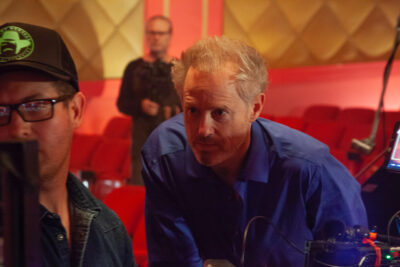
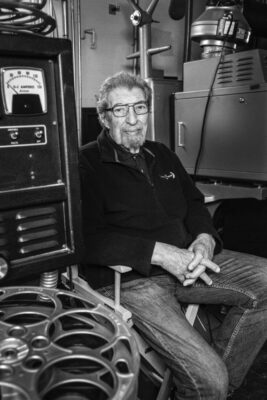
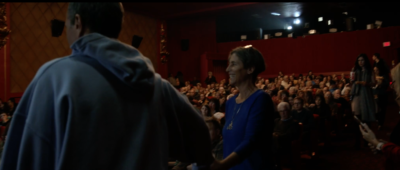
REEL TALK WITH STEPHEN FARBER moves to Laemmle’s Monica Film Center.
Laemmle Theatres is pleased to announce that veteran film critic Stephen Farber’s popular REEL TALK WITH STEPHEN FARBER screening series is moving to Laemmle’s Monica Film Center this fall! See a variety of outstanding films from the U.S. and around the world, including many top awards contenders. Then meet the filmmakers for provocative and revealing discussions led by Stephen. The first screening — CALL JANE — will be October 17 and special guests will be announced soon. Visit laemmle.com/reeltalk for updates.
Recent films and speakers at Reel Talk have included:
MRS. HARRIS GOES TO PARIS, with director Anthony Fabian;
THE PHANTOM OF THE OPEN, with actors Christian Lees and Jonah Lees;
HAPPENING, with director Audrey Diwan and actress Anamaria Vartolomei;
THE UNBEARABLE WEIGHT OF MASSIVE TALENT, with director/co-writer Tom Gormican and co-writer Kevin Etten;
OPERATION MINCEMEAT, with screenwriter Michelle Ashford;
FIDDLER’S JOURNEY TO THE BIG SCREEN, with producer Sasha Berman and co-writer Michael Sragow;
AS THEY MADE US, with writer-director Mayim Bialik.
Vincent D’Onofrio in Person for FULL METAL JACKET 35th Anniversary Screening Sept. 13
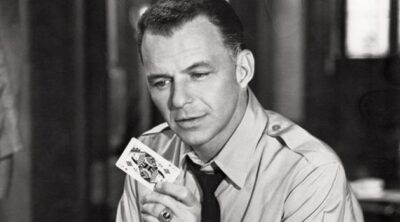
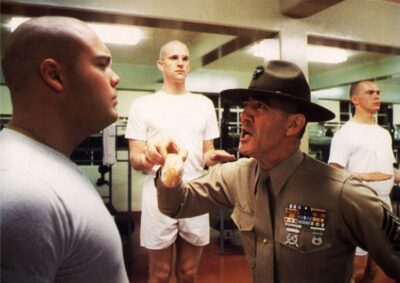
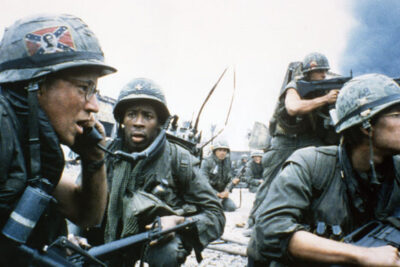
Laemmle Theatres and the Anniversary Classics Series present a 35th anniversary screening of Stanley Kubrick’s savage anti-war drama Full Metal Jacket, which scored a box office success in 1987 and also earned an Oscar nomination for Best Adapted Screenplay. Kubrick, celebrated Vietnam author Michael Herr, and Gustav Hasford adapted Hasford’s 1979 novel, The Short-Timers. The acclaimed cast includes Matthew Modine, Vincent D’Onofrio, Adam Baldwin, Dorian Harewood, and R. Lee Ermey. D’Onofrio will join for a Q&A after the 7 PM screening at the Royal on Tuesday, September 13.

Kubrick came late to the Vietnam war movie cycle, after such Oscar-winning films as Coming Home, The Deer Hunter, and Platoon. But he added his own sardonic and biting slant to his dissection of the terrible war. One of Kubrick’s early celebrated movies was his 1957 drama Paths of Glory, set during World War I. And his 1964 Oscar nominee, Dr. Strangelove, took a unique black comic approach to the terrifying subject of nuclear annihilation. Some of the same dark humor freshens Full Metal Jacket, though it also contains deadly serious depictions of brutal basic training as well as the horrors of a misguided, doomed war.

The first section of the film dramatizes the basic training of a platoon of Marine recruits at Parris Island, South Carolina. Former real-life drill instructor R. Lee Ermey portrays the savage sergeant in charge of the soldiers’ training. Ermey improvised much of the scathing and scatological dialogue, based on his own personal experience as a sergeant during the Vietnam War. He bullies and brutalizes all of the recruits but takes special pleasure in tormenting the overweight soldier played by D’Onofrio, whom he nicknames Gomer Pyle. Modine tries to protect D’Onofrio, with little success.

When the action shifts to Vietnam during the Tet offensive, it retains its hard-edged, nihilistic spirit. The entire film was actually shot in England, but Kubrick and his technical crew did an extraordinary job of recreating an American military base and the cities and jungles of Southeast Asia without ever leaving the English countryside.
Critical reactions to the film were very strong. Gene Siskel called Full Metal Jacket “a great piece of filmmaking.” The Los Angeles Times’ Sheila Benson wrote, “Aiming for minds as well as hearts, Kubrick hits his target squarely.” The Chicago Reader’s Jonathan Rosenbaum raved, “This is the most tightly crafted Kubrick film since Dr. Strangelove, as well as the most horrific.” The New York Times’ Vincent Canby called it “a film of immense and very rare imagination.” Canby’s Times colleague Janet Maslin added, “No one who sees Full Metal Jacket will easily put the film’s last glimpse of D’Onofrio, or a great many other things about Kubrick’s latest and most sobering vision, out of mind.”
After his breakthrough performance in Full Metal Jacket, D’Onofrio went on to co-star in such films as Mystic Pizza, JFK, The Player, Ed Wood, The Whole Wide World, Men in Black, Jurassic World, and Steal This Movie, in which he played Abbie Hoffman. He had a ten-year run in Law and Order: Criminal Intent. More recently he has appeared in the series Daredevil, Godfather of Harlem, and Ratched. Last year he had a major role as Jerry Falwell in the Oscar-winning The Eyes of Tammy Faye.
“Death will cease to be absolute.” THREE MINUTES: A LENGTHENING opens August 19 with the director in person.
The beautiful new documentary feature Three Minutes: A Lengthening is based on a mere three minutes of footage, shot by David Kurtz in 1938, that are the only moving images remaining of the Jewish inhabitants of Nasielsk, Poland before the Holocaust. Director Bianca Stigter takes those three minutes and expands and explores them to create “an original and incisive meditation on history, memory, memorials and the very nature of celluloid.” (Alissa Simon, Variety) We open the film August 19 at the Royal and August 26 at the Town Center. The August 16 at the Royal will be hosted by the Los Angeles Jewish Film Festival and followed by a discussion with Ms. Stigter and author Glenn Kurtz. Scholar Michael Berenbaum of American Jewish University will moderate.
Director Bianca Stigter’s statement:
“As a child, David Kurtz emigrated from Poland to the United States. In 1938 he returned to Europe for a sightseeing trip and whilst there he visited Nasielsk, the town of his birth. Specifically for this trip, he bought a 16mm camera, then still a novelty rarely seen in a small town never visited by tourists. Eighty years later his ordinary pictures, most of them in color, have become something extraordinary. They are the only moving images that remain of Nasielsk prior to the Second World War. Almost all the people we see were murdered in the Holocaust.

“On Facebook, I stumbled upon a book written about this film, Three Minutes in Poland by Glenn Kurtz. The title fascinated me. I ordered the book and watched the footage, which can be found on the website of the United States Holocaust Memorial Museum. While watching, I wondered: could you make those three minutes last longer, to keep the past in the present?
“For this film essay, I examined the footage in the fullest detail, to see what the celluloid would yield to viewers almost a century later. The footage is treated as an archaeological artifact to gain entrance to the past.

“I contacted Glenn Kurtz, traveled to Nasielsk to see if any traces remained from the past, and went to Detroit to speak with survivor Maurice Chandler and his family.
“After this extensive research, I edited the footage in different ways to bring to life as many of the facts and stories about Nasielsk as possible. A few seconds of the recording of a café becomes a dance scene, a single shot of the market square tells the story of the deportation of its Jewish citizens. All the faces that appear in the film are singled out and magnified to pay homage to the people of Nasielsk. The old images of the Polish town are combined with the way Nasielsk sounds today, creating a tense fusion of the past and the present.

“Three Minutes: A Lengthening is an experiment that turns scarcity into a quality. Living in a time marked by an abundance of images that are never viewed twice, we do the opposite here: circle the same moments again and again, convinced that they will give us a different meaning each time. The film starts and ends with the same unedited found footage, but the second time you will look at it quite differently.
“Three Minutes: A Lengthening investigates the nature of film and the perception of time. Through the act of watching, the viewers partake in the creation of a memorial.”
“When apparatuses like these are available to the public, when everyone can photograph those who are dear to them, not only their posed forms but their movements, their actions, their familiar gestures, with words at the tip of their tongues, death will cease to be absolute.’’ ~ The French newspaper La Poste, 30 December 1895, after the Lumières’ first public showing of a film in Paris.
“A gorgeous clarion call for our young Black girls, heralding the community, creativity and confidence that is the pride of our culture.” ~ Ava DuVernay on ALMA’S RAINBOW, opening August 9.
A coming-of-age comedy-drama about three Black women living in Brooklyn, Ayoka Chenzira’s 1993 film Alma’s Rainbow explores the life of teenager Rainbow Gold, who is entering womanhood and navigating conversations and experiences around standards of beauty, self-image, and the rights Black women have over their bodies. We are thrilled to open the film next Friday, August 12 at the Monica Film Center.
Victoria Platt, who starred as Alma, will participate in a Q&A after the evening screening on Saturday, August 13th, exact showtime TBA.
All screenings of Alma’s Rainbow will be preceded by Ms. Chenzira’s 10-minute animated short film Hair Piece: A Film for Nappy Headed People (1984).

“With a whole lot of heart and humor, Ayoka Chenzira’s Alma’s Rainbow is a stunning exploration of Black identity and the dynamism of Black women’s lives.” – Maya Cade, Black Film Archive creator
“The matter of matriarchy within families is close to my heart. I think of my great-grandmother, my grandmother, my mother, and my aunts who all had a firm, beautiful hand in raising me. I long for more representations of these generational villages on screen, like those we experience in Ayoka Chenzira’s work. Ms. Chenzira’s Alma’s Rainbow is a gorgeous clarion call for our young Black girls, heralding the community, creativity and confidence that is the pride of our culture.” —Ava DuVernay, producer-director

“I am delighted to have this opportunity to join you in presenting Dr. Ayo Chenzira’s first feature film. As you know, Alma’s Rainbow was one of the first full length dramatic narrative films produced and directed by an African American woman in the 20th century. Chenzira’s much celebrated and award winning early work is essential viewing today as much as it was when first released in 1994.” —Julie Dash, filmmaker

Director’s Statement: “I could write a book on the response to Alma’s Rainbow. The film took a long time to make. I raised all the money independently. Distributors came and looked at the film, and there was a real split between what the men thought about it and what the women thought about it. The response by women has been overwhelmingly positive. The response by men, who write the checks, was that it was not an action piece. There was no Black pathology; there was no movie point of reference for three Black women driving a story. They also see that it is not a linear narrative in the tradition of exposition, climax and resolution. The editing and storytelling are based on the emotions of the characters. This is something that women understood and men did not.

“We found a distributor who was not interested in selling it only to twenty-something White guys in the suburbs. Unfortunately, the arrangement with the distributor and our company did not work out; we did get the film back, however, unencumbered. This film grows out of mothers being afraid of their daughters’ own budding sensuality.” – Ayoka Chenzira, Ph.D.
Jewish Journal: “MY NAME IS SARA Depicts Jewish WWII Refugee in Ukraine.”
This Friday at the Royal and Town Center, we open My Name is Sara, a drama based on a true story from the Second World War about a young Polish Jew who survived by taking refuge with farmers and passing as a Christian. The director, Steven Oritt, and leading actress Zuzanna Surowy will participate in Q&As Friday, July 22 after the 7 PM at the Royal; Saturday, July 23 after the 4 PM show at the Royal and after the 7:10 PM show in Encino; and on Sunday, July 24, after the 1:10 PM in Encino and the 4 PM show at the Royal. Executive producer Mickey Shapiro (the real-life Sara’s son) will join them for the Friday Q&A.

The filmmaker recently spoke with Brian Fishbach of the Jewish Journal:
Three dead people hang from a tree with a sign that reads “We hid Jews.” It’s a scene that encapsulates the fear tactics the Nazis used to deter anyone from assisting the Jewish people during World War II.
The film My Name Is Sara tells the true and arduous story of a Jewish girl who survived by pretending not to be Jewish. It shows how Sara Góralniak (Zuzanna Surowy), a 12-year-old living in Poland, took refuge on a farm in Ukraine for two years while hiding every aspect of her Jewish identity. Every second that she was there she knew that if she were found, she and the family that protected her would be murdered.

“She was constantly living on eggshells that entire time, which is an obviously awful environment to have to live under,” said director Steven Oritt.
Throughout the film, Sara endears herself to the family who allows her to work on their farm: Pavlo (Eryk Lubos), his wife Nadya (Michalina Olszańska) and their two young sons. Sara proves herself to be a capable farmhand and a non-Jew by reciting the Lord’s Prayer, eating pork, saying she’s 14 and even assuming a new name. She endures skepticism from the family that has taken her in, while also slowly proving herself useful and not threatening their safety.

There are scenes of animals being slaughtered, as is normal on any farm. But there’s humanity in those moments, which is in contrast to the graphic and sadistic threats and murders of the townspeople at the hands of the Nazis.
The ensemble is strong, making every peril Sara and the family confront vivid and poignant, their eyes and body language expressing the characters’ fear and determination. No moment illustrates this better than Sara, riding a horse drawn buggy into town with Pavlo and Nadya’s family, sees three townspeople hanging from a tree for hiding Jews. Both Nadya and Sara cover the two little boys’ eyes. Sara’s dreams of reuniting with her family turn to nightmares when their reunion is discovered by Nazis.

Surprisingly, the starring role of Sara was Surowy’s first time acting. Thrust into a movie set and working in English, which is not her first language, Surowy’s experience mirrors Sara’s. There’s a fear, a wariness, to her performance, that’s most effective when Sara, who had never worked on a farm or been away from her family, is forced to adapt to her new world.
“We weren’t going to make the film if we didn’t find somebody that we felt as though could pull it off,” said Oritt.
While the two previous films he directed were documentaries, this is the first scripted film Oritt’s directed. “When I first interviewed [the real] Sara, the first question I asked was ‘How does a child, a 12-year old, survive such a thing?’ Because it was an unimaginable event. How could she do this constantly, making the right choice happen? And she said immediately, ‘by listening and not talking.’”
Read the full piece on the Jewish Journal site.
“Why would I add anything? It will not improve the wine.” Meet the organic vinters of LIVING WINE.
Living Wine follows the journeys of natural winemakers in Northern California, during the largest wildfire season on record. Equal parts farmer, winemaker, and artist, they stay true to their ideals of creating exceptional wines made through innovative sustainable and regenerative farming and without chemical additives. Eschewing the industrial agricultural practices of the corporate wine industry – our winemakers are healing the very environment they are surviving, i.e., a changing climate marked by rising temperatures, shorter growing seasons, and more frequent and virulent wildfires.

We delve into farming techniques, philosophies, and spirituality: Darek has developed a unique form of compost which eliminates the need for irrigation and commercial fertilizers, while capturing carbon and increasing crop output. Megan farms and makes wine from lesser-known materials not pushed by the corporate industrial wine complex, and we see Gideon teach and make wine with a group of interns, as he is devoted to passing his knowledge and craft onto the next generation. All three find spiritual meaning through their work – through farming the land and making a product with a greater purpose.

As summer and harvest arrives, conditions take a dangerous turn. Following a damaging heatwave, fire erupts throughout Northern California, the result of record high temperatures and unending drought. All of our winemakers are forced to harvest early under difficult conditions. As they pick grapes from sunrise to sunset, and throughout the night to avoid smoke taint and remove grapes before they “raisin” too early, we feel their exhaustion and determination. After harvesting, they stomp, taste, press, and taste again, and we witness both the joy and heartbreak of making wine the all-natural way.

Living Wine is virtual only starting Friday, but we’ll also screen it at the Monica Film Center July 22-28 with the filmmaker in person for Q&As on the 23rd and 24th.

The New York Times wine critic recently published a piece about the film headlined “In ‘Living Wine’ Documentary, Natural Wine Transcends the Clichés: Forget funkiness. The focus here is farming, culture, the environment, climate change and, yes, great-tasting wine.” Here are the opening paragraphs:
“When the polarizing subject of natural wine arises, the discussion generally spirals to the stereotypes: flawed and funky wines, hippie producers and the debate over definitions. But a new documentary film, Living Wine, hopes to change that trite discussion.

“The film, which opens in selected theaters July 15, focuses on a small group of natural wine producers in California. It examines, with far more nuance than is typical, the myriad reasons they choose to work in natural wine, along with the many rationales for consumers to drink it.
“In this context, natural wine is presented neither as a trend nor a generational emblem. Involvement is a conscious choice. Though their reasons may overlap, each of the producers in the film has a different point of emphasis.
“Gideon Beinstock and Saron Rice of Clos Saron in the Sierra Foothills make wine without additives because they believe that method makes the best wines and offers the best expression of their vineyard.
“’The fact that we don’t add anything is not because it’s natural,’ Mr. Beinstock said. ‘It’s because, why would I add anything? It will not improve the wine.’”
EatDrinkFilms also posted two terrific articles about the film, Living Wine – Land to Bottle by Risa Nye and Deep Diving into Living Wine by Fred Swan.
‘1982,’ a love story set during the Israeli invasion of Lebanon, opens June 24 at the Royal.
1982 is a life-affirming coming-of-age tale set at an idyllic school in Lebanon’s mountains on the eve of a looming invasion. It unfolds over a single day and follows an 11-year-old boy’s relentless quest to profess his love to a girl in his class. As the invasion encroaches on Beirut, it upends the day, threatening the entire country and its cohesion. Within the microcosm of the school, the film draws a harrowing portrait of a society torn between its desire for love and peace and the ideological schisms unraveling its seams.

In his debut feature, director Oualid Mouaness delivers an ode to innocence in which he revisits one of the most cataclysmic moments in Lebanon’s history through the lens of a child and his vibrant imagination. The film demonstrates the complexities of love and war, and the resilience of the human spirit.

1982 won the Cannes Film Festival’s youth sidebar CANNES CINÉPHILES prize PRIX CANNES ECRANS JUNIORS 2021, the Toronto International Film Festival’s NETPAC AWARD, a FIPRESCI International Critics Prize at El-Gouna International Film Festival, and the UNICEF 2021 prize among numerous others. It was also Lebanon’s official submission to the 92nd Academy Awards and holds the Murex D’Or, Lebanon’s Best Feature Film honor of the last two years.

NPR just interviewed Mouaness about 1982:
| Mouaness will participate in Q&As after the 7:20 PM screenings at the Royal Friday-Sunday, June 24-26, Tuesday, June 28, and Thursday, June 30. Director Aya Tanimura will moderate on the 25th, journalist Seth Abramovitch on the 26th, director Natalie Jones on the 28th, and producer Sara Mohazzebi on the 30th. |
- « Previous Page
- 1
- …
- 15
- 16
- 17
- 18
- 19
- …
- 141
- Next Page »