The Official Blog of Laemmle Theatres.

Laemmle Theatres

Film Reviews & Previews

  • All
  • Theater Buzz
    • Claremont 5
    • Glendale
    • Newhall
    • NoHo 7
    • Royal
    • Santa Monica
    • Town Center 5
  • Q&A’s
  • Locations & Showtimes
    • Claremont
    • Glendale
    • NewHall
    • North Hollywood
    • Royal (West LA)
    • Santa Monica
    • Town Center (Encino)
  • Film Series
    • Anniversary Classics
    • Culture Vulture
    • Worldwide Wednesdays
  • Facebook
  • Instagram
  • TikTok
  • YouTube

You are here: Home / Theater Buzz / Royal

From ‘Cutting Through Rocks’ to ‘Come See Me in the Good Light’: Two Oscar-Nominated Portraits of Courage and Willpower

February 24, 2026 by Lamb Laemmle Leave a Comment

Two of this year’s Oscar nominees for Best Documentary Feature could hardly be more different in setting or scale—one unfolding in a remote Iranian village, the other in the intimate spaces of a Colorado home—yet both pulse with urgency, personality, and the stubborn insistence on living fully.

From 'Cutting Through Rocks' to 'Come See Me in the Good Light': Two Oscar-Nominated Portraits of Courage and Willpower

Tune into Inside the Arthouse to hear directors Mohammadreza Eyni, Sara Khaki, and Ryan White discuss their latest films with co-hosts Greg Laemmle and Raphael Sbarge, or catch them in person when Cutting Through Rocks returns to the Laemmle Royal on February 26th, kicked off by a live Q&A with Eyni after the 7 p.m. showing, followed by Come See Me in the Good Light on February 28th, beginning with a pair of Q&As featuring Ryan White following the Saturday night and Sunday matinee showings at the Laemmle Noho.

Sara Khaki and Mohammadreza Eyni’s Cutting Through Rocks introduces us to Sara Shahverdi, a headscarf-clad former midwife in northwest Iran who opens the film wrestling a metal door back into place with a buzzsaw. It’s an image that doubles as a thesis, as Shahverdi has spent her life defying expectations: riding motorcycles, working construction, advocating for girls’ education, and pushing back against child marriage in a deeply conservative region. When she runs for village council, hoping to become its first elected councilwoman, the film embeds with her over several years, capturing both the grassroots thrill of her campaign and the backlash that follows.

Shahverdi is no abstract symbol; she’s charismatic, funny, impatient, and strategic. She rallies women in living rooms, challenges men in council chambers, and leverages her past as a midwife into political capital. The result is a rousing, clear-eyed portrait of incremental revolution, proving Shahverdi’s own personal mantra that, sometimes, one small step can make all the difference in the world.

From 'Cutting Through Rocks' to 'Come See Me in the Good Light': Two Oscar-Nominated Portraits of Courage and Willpower

If Cutting Through Rocks is about carving space within rigid systems, Come See Me in the Good Light turns inward, illuminating the interior landscape of love and mortality. Directed by Ryan White, the film follows celebrated spoken word poet Andrea Gibson and their longtime partner writer Megan Falley after Gibson is diagnosed with incurable ovarian cancer. Yet what might sound like familiar “cancer documentary” terrain quickly becomes something far more singular: funny, profane, luminous, and fiercely alive.

Gibson, once a touring poet who commanded stages like a rock star, meets their illness not with platitudes but with radical candor. The film moves between chemotherapy appointments and kitchen-table laughter, between whispered fears and bawdy jokes. The lovers measure life in three-week increments between blood tests, yet refuse to surrender their intrinsic biases toward joy. White interweaves archival performance footage with scenes of present-day intimacy, building toward a final public reading that lands with the emotional force of a championship game.

Taken together, these two nominees remind us not only of the documentary genre’s extraordinary range, but of the commonalities that unite us from across the world. Catch these Oscar-nominated documentaries back on the big screen at Laemmle Theatres and see for yourself why they’re among the year’s most celebrated nonfiction films.

Leave a Comment Filed Under: Awards, Filmmaker in Person, Filmmaker Interviews, Greg Laemmle, Inside the Arthouse, NoHo 7, Royal Tagged With: Come See Me in the Good Light, Cutting Through Rocks, documentary, Greg Laemmle, Inside the Arthouse, Oscar nominees, Raphael Sbarge

Summer, Youth, and Self-Discovery: Rediscovering Satyajit Ray’s ‘Days and Nights in the Forest’

February 24, 2026 by Lamb Laemmle Leave a Comment

A journey into the countryside becomes something far richer in Days and Nights in the Forest, the quietly radiant 1970 film from Indian master Satyajit Ray. Long regarded as one of Ray’s foremost (if relatively underappreciated) achievements, this film serves as a reminder of why he remains one of world cinema’s most revered humanists—a filmmaker of uncommon grace, wit, and emotional intelligence.

Satyajit Ray's Days and Nights in the Forest

Catch the newly restored Days and Nights in the Forest beginning February 6th at the Laemmle Royal, or February 13th at Glendale.

On the surface, the premise is simple: Four young professionals from Kolkata escape the pressures of city life for a few carefree days in the forests of eastern India. They arrive with cigarettes, bravado, and a pocketful of assumptions. They bribe a caretaker to secure lodging they never reserved. They drink too much. They talk too loudly. They treat the rural landscape as backdrop to their own amusement. Ray sketches these early episodes with a light touch that feels almost casual, airy, even playful. But a closer inspection reveals that what seems effortless is in fact exquisitely composed.

Ray builds the film from contrasts: urban and rural, privilege and poverty, men and women, innocence and experience. His camera often frames characters in medium groupings, encouraging us to observe them in relation to one another rather than as isolated heroes. There is no single protagonist here; instead, we’re invited to study a small social ecosystem. Time passes gently. Conversations drift. Meaning accumulates.

Satyajit Ray's Days and Nights in the Forest

When two women vacationing nearby, Aparna and Jaya, enter the men’s orbit, the film’s tone subtly shifts. Banter gives way to vulnerability; posturing reveals insecurity. Ray’s women, clear-eyed and self-possessed, register the men’s arrogance with bemusement rather than outrage. The flirtations and conversations that follow are modest on their face—a walk, a game of badminton, shared laughter—yet they carry the quiet charge of lives tilting off course.

The film’s most celebrated sequence arrives during a picnic, when the six characters play a memory game, each adding the name of a famous figure to an ever-growing list. It might sound inconsequential, but in the rhythms of hesitation and recall, in the glances exchanged and the names chosen, whole inner worlds flicker into view. Ray orchestrates the scene with the delicacy of chamber music. Nothing is underlined; everything resonates.

What makes Days and Nights in the Forest endure is its refusal of easy symbolism or tidy moralizing. Ray does not punish his characters, nor does he absolve them. He simply watches with compassion, irony, and patience as they brush up against their own limitations. The revelations are often small, but they linger. Only after viewing the entire film do you realize just how much it has revealed: about class and conscience, about love and pride, and about the uneasy passage from youth toward self-knowledge.

Leave a Comment Filed Under: Anniversary Classics, Cinematic Classics, Films, Royal Tagged With: Days and Nights in the Forest, India, rereleases, restorations, Satyajit Ray

Roommates, Revolution, and Reverie: Rediscovering Visconti’s ‘Conversation Piece’

February 17, 2026 by Lamb Laemmle Leave a Comment

This month, a revival worth savoring is headed back to the big screen: Conversation Piece, the late-period chamber drama from acclaimed Italian filmmaker Luchino Visconti, returns in a new 4K restoration courtesy of Kino Lorber. If you’ve never encountered this strange, elegant, faintly scandalous film, this theatrical reissue is the ideal way to step inside its rarefied, decaying world.

Roommates, Revolution, and Reverie: Rediscovering Visconti’s 'Conversation Piece'

Catch Conversation Piece in its much-anticipated re-release beginning February 20th at the Laemmle Royal.

Set almost entirely inside a grand Roman apartment—a practical concession to Visconti’s waning health—the film unfolds like a live-in painting: fitting, since its unnamed protagonist, a retired American professor played by Burt Lancaster, specializes in collecting “conversation pieces,” those intimate group portraits of domestic life. His own life, however, is all but sealed off: books, art, routine, and a heavy dose of solitude. That carefully controlled environment is suddenly upended when the Countess Bianca Brumonti (played with Circean glamour by Silvana Mangano) bullies her way into renting the upstairs flat, bringing along her daughter, her daughter’s boyfriend, and her volatile young lover Konrad, portrayed by longtime Visconti muse Helmut Berger.

What follows is less a traditional narrative than an all-out invasion, as noise, sex, politics, emotional turbulence, and generational upheaval flood the professor’s cloistered existence. Renovations begin without permission; parties erupt; strangers roam the halls. The professor protests (albeit mildly), yet inexorably finds himself drawn into their disorder, especially toward Berger’s Konrad, whose swaggering vulgarity and wounded intelligence combine to create a dangerous gravitational pull.

Roommates, Revolution, and Reverie: Rediscovering Visconti’s 'Conversation Piece'

Visconti, working after a debilitating stroke and reportedly directing portions of the film from his wheelchair, turns such limitations into style. The film’s confined setting becomes a pressure cooker of class tension, erotic charge, and ideological debate. At times it plays like tragic farce, at others like philosophical confession, resulting in a tonal high-wire act—stately composition colliding with emotional disarray—that gives the movie its peculiar, lingering power.

Lancaster’s casting is part of the fascination. Long associated with physical dynamism and outward force, here he is turned inward: restrained, observant, aching. Whether you view the performance as daringly subdued or intriguingly misaligned, it’s impossible to look away. Berger, by contrast, is all sharp edges and dangerous charm, strutting and smirking through the film like a beautiful provocation.

Conversation Piece is about aging, envy of youth, sexual politics, class hypocrisy, and the uneasy coexistence of radical ideas with decadent taste. It’s also, not incidentally, wickedly funny in stretches, with Visconti allowing the absurdity of his characters’ self-justifications to show through the gilt frame.

Seeing this film restored in 4K reveals the tactile richness of its interiors—fabrics, paintings, skin, candlelight—while accentuating the painterly intent behind every composition. Like the artworks the professor cherishes, this restoration rewards close viewing and theatrical scale.

In short: a film about people who shouldn’t live together, restored so beautifully that you’ll be very glad they do.

(At least for two hours.)

Leave a Comment Filed Under: Anniversary Classics, Cinematic Classics, Featured Films, Films, Repertory Cinema, Royal Tagged With: Burt Lancaster, Conversation Piece, Luchino Visconti

Fathers, Sons, and a Broken Election: Inside ‘My Father’s Shadow’

February 10, 2026 by Lamb Laemmle Leave a Comment

Akinola Davies Jr.’s My Father’s Shadow, the first-ever Nigerian film to be recognized among the Cannes Film Festival’s Official Selection, plays like a remembered daydream stretched across a political fault line. Set during Nigeria’s fraught 1993 presidential election crisis, the film filters national upheaval through the perspective of two young brothers who’ve been granted a rare day with their mostly absent father. The result is both a coming-of-age story and an act of cinematic reclamation: personal memory reframed as national history.

Fathers, Sons, and a Broken Election: Inside 'My Father’s Shadow'

Catch My Father’s Shadow in theaters beginning February 13th at the Laemmle Royal.

Told from the perspective of eight-year-old Akin and his older brother Remi (played by real-life siblings Godwin Chiemerie and Chibuike Marvelous Egbo), the film begins in a rural village where routine boredom is broken by the sudden return of the boys’ father, Folarin (Sope Dirisu). Charismatic, imposing, and emotionally opaque, he arrives without explanation and impulsively decides to take the boys with him to Lagos. Their mother is absent; the boys readily obey.

Folarin’s mission is simple: collect months of unpaid wages before the country’s political uncertainty curdles into chaos. But the errand swiftly becomes a wandering circuit. The boys encounter men who treat Folarin with peculiar deference, calling him “boss” and “leader.” They are told to show respect to strangers presented as quasi-uncles. Davies smartly keeps exposition thin; political crisis is not explained, but is overheard, glimpsed, felt.

What gives the film its emotional core is the gradual reshaping of the boys’ image of their father. Folarin begins as a near-mythic figure: commanding, sharply dressed, unquestionable. Over the course of the day, however, he becomes both more human and more contradictory. He is strict, evasive, possibly unfaithful, and frequently distracted, yet he is also attentive in bursts, showing them city landmarks, recounting his courtship of their mother, teaching Akin to swim, and bending rules to let them explore forbidden spaces. His philosophy of adulthood—that everything is sacrifice, and one must pray not to sacrifice the wrong thing—lands with tragic force in the context of both family and nation.

Fathers, Sons, and a Broken Election: Inside 'My Father’s Shadow'

The film’s governing question emerges when one of the boys repeats his mother’s strange dictum: that their father’s absence is proof of love, because he is away earning money for them, just as God, who also loves them, remains unseen. Is absence love? The film does not provide an easy answer, but lets the question echo against images of political upheaval, paternal limitation, and inherited memory.

By its end, My Father’s Shadow has outgrown its original container as a story about one family on one day into an ambitious exploration about how children assemble identity from partial knowledge, how nations fracture private lives, and how cinema can serve as an instrument of emotional archaeology. It turns political rupture into family myth—and family myth into something like scripture.

“British-Nigerian film-maker Akinola Davies Jr makes a strong directorial debut with this deft and intriguing tale of an absent father briefly reunited with his two young sons.” – Peter Bradshaw, The Guardian

“Akinola Davies Jr. announces himself as a major cinematic voice.” – Murtada Elfadl, Variety

“The historic crisis [of Nigeria’s annulled 1993 election] makes the personal tale reverberate with an inner immensity.” – Richard Brody, The New Yorker

Leave a Comment Filed Under: Awards, Featured Films, Films, Royal Tagged With: Akinola Davies Jr., Awards, Cannes, International Cinema, My Father's Shadow, Nigeria

‘The Love That Remains’: Comedy, Melancholy, and the Strange Work of Letting Go

February 3, 2026 by Lamb Laemmle Leave a Comment

With The Love That Remains, Hlynur Pálmason shifts gears from the icy severity of Godland and the simmering grief of A White, White Day to deliver a warm yet quietly devastating portrait of a family learning how to (co-)exist after a marriage ends. Set against Iceland’s imposing yet luminous landscapes, the film follows a separated couple and their three children across the uneasy months following their split, blending domestic realism with eccentric surrealism to capture the strange emotional limbo that follows love’s collapse. Both gently comic and deeply melancholic, the film becomes less about the breakup itself than about what persists in the wake of its dissolution: habit, tenderness, resentment, and the stubborn bonds that refuse to vanish on schedule.

The Love That Remains

Tune into Inside the Arthouse on February 4th to hear Pálmason discuss his latest work with co-hosts Greg Laemmle and Raphael Sbarge ahead of its debut at the Laemmle Royal and Glendale theaters beginning February 6th.

Rather than tracing a traditional narrative arc, Pálmason presents a series of vignettes that drift between everyday routine and flights of imagination. Magnus, or Maggi (Sverrir Gudnason), works long stretches aboard a fishing trawler, returning home to a family life that no longer fully includes him. His estranged wife Anna (Saga Garðarsdóttir), an artist attempting to push her work into larger spaces, appears steadier but no less burdened, balancing her creative ambitions with the emotional labor of parenting children still adjusting to their new reality.

Their interactions carry an awkward familiarity: shared meals, casual conversations, lingering frustrations, and moments when their prior intimacy briefly resurfaces. But Pálmason repeatedly interrupts these naturalistic scenes with flashes of surreal humor and dreamlike invention: a monstrous rooster stalks Magnus’s nightmares, an art-world charlatan meets an exaggerated fate, and a medieval sword drops inexplicably from the sky beside the children’s play area. These moments lighten the film’s tone while also underscoring the emotional chaos lurking beneath its surface, reflecting how heartbreak rarely unfolds in tidy, realistic beats.

The Love That Remains

Shot by Pálmason himself on richly textured film stock, the Icelandic landscapes become more than mere scenic backdrops, but dynamic entities that mirror the characters’ emotional isolation while offering tantalizing glimpses of calm and continuity. Everyday play, family pets, and the rhythms of work and weather continue even as adult relationships falter.

What makes The Love That Remains so affecting is its refusal to offer easy resolution. Instead, Pálmason captures the uncomfortable truth that love does not simply disappear—It mutates, lingers, and occasionally resurfaces in unexpected forms. The result is a film that is tender, odd, and quietly profound, finding humor and grace in the messy process of learning how to live with the fractured pieces of our best-laid plans.

“There’s a deceptive sweetness to [its] simple, hypnotic rhythms.” – Clint Worthington, RogerEbert.com

“Pálmason’s fourth feature is an album of achingly felt, morbidly funny and increasingly haywire scenes from a marriage.” – Guy Lodge, Variety

Leave a Comment Filed Under: Films, Glendale, Greg Laemmle, Inside the Arthouse, Royal Tagged With: Greg Laemmle, Hlynur Pálmason, Iceland, Inside the Arthouse, Raphael Sbarge, The Love That Remains

A Poet: A Darkly Comic Fable About Art, Failure, and the Cost of Belief

January 21, 2026 by Lamb Laemmle Leave a Comment

Simón Mesa Soto’s A Poet is a caustic, unexpectedly tender portrait of artistic failure and the uneasy hope that comes with believing in someone else. Set in Medellín, the film follows a middle-aged, alcoholic poet whose early promise has long since calcified into bitterness and artistic paralysis. When he encounters a gifted teenage student from a working-class background, he seizes the chance to reinvent himself as a mentor, projecting his lost ambitions onto her raw natural talent. What unfolds is a sharply observed fable about ego, exploitation, and the uneasy line between nurturing one’s art and using it as a lifeline.

Ubeimar Rios in A Poet

Catch A Poet in theaters beginning January 30th at the Laemmle Royal, or at Glendale beginning February 6th.

Oscar Restrepo (portrayed by newcomer Ubeimar Rios with remarkable authenticity) is introduced as a man at war with the world and himself. He drinks too much, picks arguments about poetry with strangers, and torpedoes rare professional opportunities through self-sabotage and disdain. Yet Soto never treats Oscar as a punchline alone. His failures are rendered with specificity and compassion, revealing a man who grasps the general shape of the life he wanted, even as he proves incapable of living it. Oscar’s volatility is inseparable from his sincerity; his tragedy is not that he lacks talent, but that he cannot reconcile art with adulthood.

The film’s emotional axis shifts when Oscar begins teaching at a public high school and encounters a student, Yurlady (Rebeca Andrade), whose writing displays clarity, intelligence, and an unvarnished sense of voice. Unlike Oscar, she approaches art pragmatically, weighing its value against economic reality and familial obligations. Their relationship is neither inspirational nor redemptive in the traditional sense: Oscar is an erratic, often irresponsible guide, while his protégée resists being molded into a passive, yielding symbol. Their bond is defined less by uplift than by friction, an uneasy negotiation between belief and self-preservation.

Ubeinar Rios and Rebecca Andrade in A Poet

A Poet sharpens its satire as the pair enter elite literary spaces, where well-funded institutions eagerly embrace the young writer as a marketable emblem of authenticity. Here, Soto skewers the art world’s hunger for narratives that flatter its own virtue, exposing a system in which mentorship, patronage, and diversity often function as performance. The film’s critique is pointed but never smug, grounded in lived contradiction rather than broad caricature.

Shot on grainy 16mm, A Poet has a tactile, slightly unmoored quality that suits its blend of farce and melancholy. Bursts of music heighten the absurdity of Oscar’s misadventures while allowing moments of genuine tenderness to land unforced. In charting the gap between artistic idealism and material reality, Soto delivers a film that is funny, bruising, and quietly devastating—a story not about succeeding in art, but about what it costs to keep believing in it at all.

“Rios is so believable as Oscar, you’d think this film was a documentary of his life.” – Murtada Elfadl, Variety

Leave a Comment Filed Under: Featured Films, Films, Glendale, Royal Tagged With: A Poet, Rebeca Andrade, Simón Mesa Soto, Ubeimar Rios

A Private Life: Rebecca Zlotowsky’s Unlikely Psychological ‘Whodunit’

January 13, 2026 by Lamb Laemmle Leave a Comment

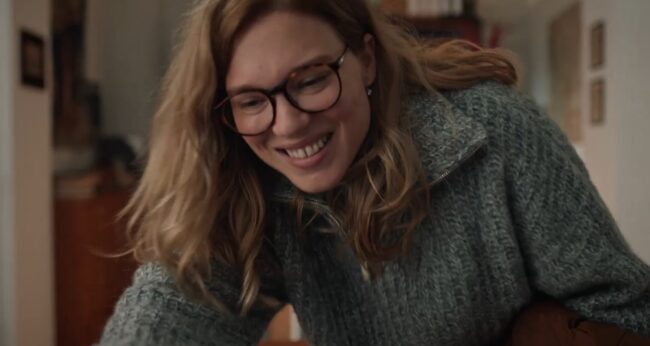
Rebecca Zlotowski’s A Private Life, a delightfully hard-to-classify mystery-thriller starring actress Jodie Foster in her most significant French-language role in decades, offers a uniquely human story of doubt, memory, and emotional reckoning. Set largely in Paris, the movie follows Lilian Steiner, an American psychoanalyst whose ordered professional life begins to unravel after the unexpected death of one of her long-term patients. What unfolds is less a conventional mystery than a richly layered exploration of how we process loss, guilt, identity, and the private truths we carry inside us.

Jodie Foster in A Private Life

Tune into Inside the Arthouse to hear Zlotowski discuss her latest work with co-hosts Greg Laemmle and Raphael Sbarge ahead of its opening at the Laemmle Royal on January 16th.

The narrative begins with Lilian’s professional and personal worlds colliding when her patient is pronounced dead by suicide. Convinced that there’s more to the story, she launches an investigation that moves from psychological inquiry to sleuthing through records, recordings, and personal interactions.

Foster’s performance is central to the film’s distinctive tone. While A Private Life marks her first French-language leading role, it builds on a long (if intermittent) history of working in French cinema, including smaller but memorable appearances in the likes of Jean-Pierre Jeunet’s A Very Long Engagement (2004). That experience shows in the ease and precision of her delivery here, grounding Lilian’s twitchy intelligence, emotional restraint, and gradual unraveling in a performance that feels fully at home in its Parisian setting. Daniel Auteuil complements her with a weathered, effortless presence as Gabriel, a foil and ex-partner whose familiarity with Lilian underscores the film’s thematic interests in memory, connection, and the stories we tell ourselves about the people we once loved.

Jodie Foster and Daniel Auteuil in A Private Life

Zlotowski’s direction embraces a playful ambiguity: flirting with Hitchcockian suspense, nodding at noir tropes, and even indulging in quirky dreamlike sequences that blur the boundary between reality and invention. Yet the heart of the film remains firmly in the relationships at its core, particularly the tentative reconnection between Lilian and Gabriel, as well as Lilian’s growing self-awareness as she interrogates what motivates her own desperate search for truth.

Both visually and tonally, the film feels Parisian in spirit: elegant stairwells, warm café interiors, and a palette that supports both the introspective melancholy and the lighter, more compassionate moments shared between its characters. With its distinctive blend of mystery, comedy, drama, and character study, A Private Life offers audiences something all-too-uncommon: a story that entertains while inviting reflection on how the inner lives we guard shape the lives we live.

“A throwback to the sort of character-driven dramas that defined Foster’s early career.” – Peter Debruge, Variety

“A genial, preposterous psychological mystery caper.” – Peter Bradshaw, The Guardian

Leave a Comment Filed Under: Films, Greg Laemmle, Inside the Arthouse, Royal Tagged With: A Private Life, Daniel Auteuil, Greg Laemmle, Inside the Arthouse, Jodie Foster, Raphael Sbarge, Rebecca Zlotowski

The Weight of History: Cherien Dabis’ All That’s Left of You

January 6, 2026 by Lamb Laemmle Leave a Comment

In All That’s Left of You, writer-director Cherien Dabis crafts an expansive, emotionally grounded portrait of a Palestinian family shaped by decades of displacement, political upheaval, and inherited memory. Spanning more than seventy years, the film situates an intimate domestic story within the broader arc of Palestinian history, tracing how the consequences of one violent moment ripple backward and forward across generational lines.

All That's Left of You

Tune into Inside the Arthouse to hear director Cherien Dabis discuss her latest film with co-hosts Greg Laemmle and Raphael Sbarge ahead of its return to Laemmle Theatres beginning January 8th at the Royal, kicked off by a series of live Q&A sessions with Dabis moderated by actors Mark Ruffalo, Tatiana Maslany, and Diego Luna over its first three days, before expanding to the Town Center on January 16th.

The narrative begins with a Palestinian teenager living in the Occupied West Bank who is swept into a protest that turns suddenly and irrevocably violent. Yet rather than centering on the incident itself, the film unfolds through the voice of the boy’s mother, who recounts the personal and political forces that brought her family to this precise moment in time. From there, All That’s Left of You moves fluidly across the generations, returning to earlier chapters of family life—the loss of a home, the pressures of occupation, the persistence of love and routine—while showing how each generation carries both the scars and the hopes of those who came before.

Dabis approaches this sweeping material with a focus on the textures of daily life. Weddings, meals, schooldays, and quiet conversations are given as much weight as moments of historical rupture. The effect is cumulative and deeply affecting: history presented not as abstraction, but as something that fundamentally reshapes families from the inside out.

All That's Left of You

Visually, All That’s Left of You balances intimacy with scope, grounding its political context in faces, gestures, and lived-in spaces. The performances, including masterful contributions from members of the Bakri acting family, bring an intergenerational authenticity to the story, emphasizing continuity as much as loss.

At once a family chronicle and a political testimony, All That’s Left of You refuses simplification. It does not ask viewers to look away from pain, nor does it reduce its characters to symbols. Instead, it offers a sustained act of bearing witness: to a family, to a history, and to the enduring emotional cost of dispossession. By the time the film returns to its opening moment, that act of violence is no longer isolated, but has been integrated as part of a long, unfinished story whose consequences are still unfolding.

“A moving and intimate narrative about the toll displacement takes on generations of people.” – Lovia Gyarke, The Hollywood Reporter

“[A] considered, moving tale that effectively blends the personal and the political.” – Allan Hunter, Screen Daily


Leave a Comment Filed Under: Filmmaker Interviews, Films, Greg Laemmle, Inside the Arthouse, Q&A's, Royal, Special Events, Town Center 5 Tagged With: All That's Left of You, Cherien Dabis, Diego Luna, Greg Laemmle, Inside the Arthouse, Mark Ruffalo, Palestine, Raphael Sbarge, Tatiana Maslany

  • « Previous Page
  • 1
  • 2
  • 3
  • 4
  • 5
  • 6
  • …
  • 108
  • Next Page »

Search

Instagram

Maddie's Secret is here, and so is the collector b Maddie's Secret is here, and so is the collector bundle.

😍 Ticket + Tee + Mini Poster, only at Laemmle NoHo. While supplies last.

"An extremely accomplished debut and one of the boldest American movies I have seen in years." Sam Bodrojan, IndieWire

A film by John Early.
#MaddiesSecret #JohnEarly #LaemmleNoHo #NoHo #MagnoliaPictures
🚀 STOP! THAT! TRAIN! AN EPIC PRIZE PACK GIVEAWAY! 🚀 STOP! THAT! TRAIN! AN EPIC PRIZE PACK GIVEAWAY!

👉 ENTER in BIO!
#StopThatTrain - A NYT Critic’s Pick! sees RuPaul and many of your favorite DRAG RACE stars in a high speed comedy aboard a locomotive headed for disaster.

⭐️ Starring @rupaulofficial, directed by @adamshankman, produced by @worldofwonder, distributed by @bleeckerstfilms, in association with @unapologeticprojects

🎟️ GET TICKETS: in BIO!
This is the way. 🍿 Exclusive Mandalorian & Grogu p This is the way. 🍿 Exclusive Mandalorian & Grogu popcorn tins and collectible figurines. Yours with a Mando Combo purchase! Very limited supply. 

@LaemmleNewhall & @LaemmleNoHo

🎟️Tickets: laem.ly/4aoKwRb
🖌️Sandwich board art by @mikaelparis_

#StarWars #TheMandalorian #Grogu
☘️ WEAR GREEN ☘️ $AVE GREEN ☘️ $2 OFF your concess ☘️ WEAR GREEN ☘️ $AVE GREEN ☘️ $2 OFF your concessions order!

⭐ St. Patrick's Day! Tuesday March 17th Only!

-Movie ticket purchase not required
-Like and show this post!
🎟️ laemmle.com/discounts
Follow on Instagram


Laemmle Theatres

Laemmle Theatres
Tickets: http://laemmle.com/film/artfully-united | Subscribe: http://bit.ly/3b8JTym | ARTFULLY UNITED is a celebration of the power of positivity and a reminder that hope can sometimes grow in the most unlikely of places. As artist Mike Norice creates a series of inspirational murals in under-served neighborhoods in and around Los Angeles, the Artfully United Tour transforms from a simple idea on a wall to a community of artists and activists coming together to heal and uplift a city.

Tickets: http://laemmle.com/film/artfully-united

RELEASE DATE: 10/17/2025
Director: Dave Benner
Cast: Mike Norice

-----
ABOUT LAEMMLE: Since 1938, Laemmle [Theatres] has been showing the finest independent, arthouse, and international films.

Subscribe to Laemmle's E-NEWSLETTER: http://bit.ly/3y1YSTM
Visit Laemmle.com: http://laemmle.com
Like LAEMMLE on FACEBOOK: http://bit.ly/3Qspq7Z
Follow LAEMMLE on TWITTER: http://bit.ly/3O6adYv
Follow LAEMMLE on INSTAGRAM: http://bit.ly/3y2j1cp
Tickets: http://laemmle.com/film/brides | Subscribe: http://bit.ly/3b8JTym | Nadia Fall's compelling debut feature offers a powerful and empathetic look into the lives of two alienated teenage girls, Doe and Muna, who leave the U.K. for Syria in search of purpose and belonging. By humanizing its protagonists and exploring the complex interplay of vulnerability, societal pressures, and digital manipulation, BRIDES challenges simplistic explanations of radicalization.

Tickets: http://laemmle.com/film/brides

RELEASE DATE: 9/24/2025
Director: Nadia Fall

-----
ABOUT LAEMMLE: Since 1938, Laemmle [Theatres] has been showing the finest independent, arthouse, and international films.

Subscribe to Laemmle's E-NEWSLETTER: http://bit.ly/3y1YSTM
Visit Laemmle.com: http://laemmle.com
Like LAEMMLE on FACEBOOK: http://bit.ly/3Qspq7Z
Follow LAEMMLE on TWITTER: http://bit.ly/3O6adYv
Follow LAEMMLE on INSTAGRAM: http://bit.ly/3y2j1cp
Tickets: http://laemmle.com/film/writing-hawa | Subscribe: http://bit.ly/3b8JTym | Afghan documentary maker Najiba Noori offers not only a loving and intimate portrait of her mother Hawa, but also shows in detail how the arduous improvement of the position of women is undone by geopolitical violence. The film follows the fortunes of Noori’s family, who belong to the Hazaras, an ethnic group that has suffered greatly from discrimination and persecution.

Tickets: http://laemmle.com/film/writing-hawa

RELEASE DATE: 10/8/2025

-----
ABOUT LAEMMLE: Since 1938, Laemmle [Theatres] has been showing the finest independent, arthouse, and international films.

Subscribe to Laemmle's E-NEWSLETTER: http://bit.ly/3y1YSTM
Visit Laemmle.com: http://laemmle.com
Like LAEMMLE on FACEBOOK: http://bit.ly/3Qspq7Z
Follow LAEMMLE on TWITTER: http://bit.ly/3O6adYv
Follow LAEMMLE on INSTAGRAM: http://bit.ly/3y2j1cp
Subscribe

Recent Posts

  • David Alvarado’s ‘American Pachuco’ Pays Tribute to a Pioneering Director
  • Fifty Years Haven’t Dulled Sidney Lumet’s ‘Network’
  • Ross McElwee Revisits Personal Loss and Cinema in ‘Remake’

Archive

Featured Posts

An “embrace of what makes us unknowable yet worthy of forgiveness,” A LITTLE PRAYER opens Friday at the Claremont, Newhall, Royal and Town Center.

Leaving Laemmle: A Goodbye from Jordan