The Official Blog of Laemmle Theatres.

Laemmle Theatres

Film Reviews & Previews

  • All
  • Theater Buzz
    • Claremont 5
    • Glendale
    • Newhall
    • NoHo 7
    • Royal
    • Santa Monica
    • Town Center 5
  • Q&A’s
  • Locations & Showtimes
    • Claremont
    • Glendale
    • NewHall
    • North Hollywood
    • Royal (West LA)
    • Santa Monica
    • Town Center (Encino)
  • Film Series
    • Anniversary Classics
    • Culture Vulture
    • Worldwide Wednesdays
  • Facebook
  • Instagram
  • TikTok
  • YouTube

You are here: Home / Featured Post

ART IN THE ARTHOUSE presents: The Pasadena Art Show 2019 June 30

June 19, 2019 by Lamb Laemmle Leave a Comment

Laemmle’s Art in the Arthouse proudly presents THE PASADENA ART SHOW 2019.  Please join us as we celebrate our local artists in an intimate theatre setting. Our special event features a slideshow on the big screen, artist talks, and of course refreshments. Meet the artists and stay for the bagels, mimosas and conversation Art in the Arthouse is known for. Sales benefit the Laemmle Foundation and its support of humanitarian and environmental causes in the Los Angeles region.

ART IN THE ARTHOUSE presents: The Pasadena Art Show 2019 June 30

About the Exhibit
Our annual community exhibit is a powerful collective voice emerging from individual expression  – celebrating art-making through a communal creative vibration. This show encourages an engaged visual conversation between artists and moviegoers. In photography, painting and digital imagery, we discover surreal gardens, humans embracing, light and water, the human condition and the nature of space and bloom. These atmospheric elements act as a coalescing force. Many of the nineteen works presented explore themes in a nuanced fashion, creating shadows, tones and an array of dramatic environments. A large scale of song and fury prevails. Art that one creates, must move. While two-dimensional images stand still, stillness moves its viewers. Technical rigor is important, but passion and sensitivity is sought and found. Art patrons often search for messages articulated in specific languages. All of our creatives successfully hit this mark. Thanks to our artists and to producer Lynn Chang for once again transforming our halls into a magnificent gallery.
       -Joshua Elias, Curator

Artist Reception:
Laemmle Playhouse 7
Sunday June 30, 11-1pm
Refreshments will be provided

RSVP here
This is a Free Event

ART IN THE ARTHOUSE presents: The Pasadena Art Show 2019 June 30


Leave a Comment Filed Under: Art in the Arthouse, Claremont 5, Featured Post, NoHo 7, Playhouse 7, Q&A's, Special Events, Town Center 5

CHINATOWN 45th Anniversary Screening and Q&A on Thursday, June 27th in West LA.

June 13, 2019 by Lamb Laemmle Leave a Comment

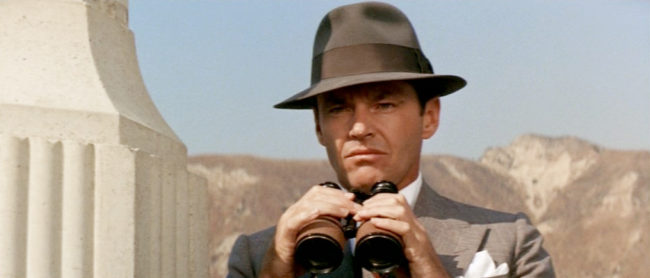
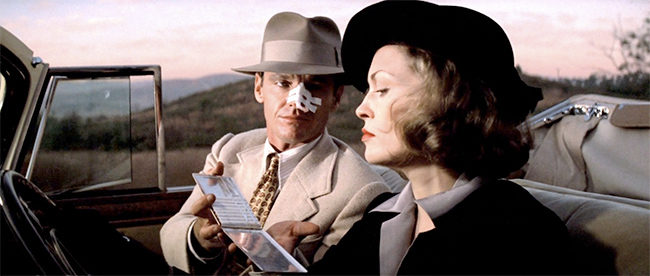
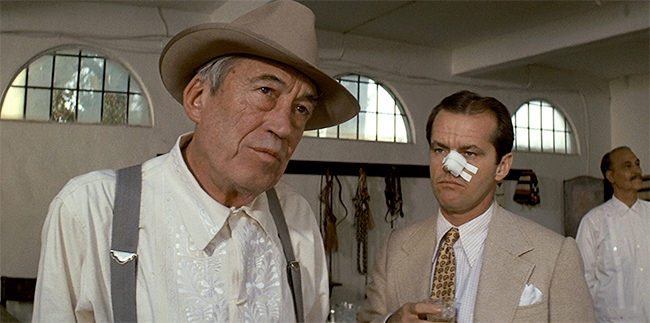
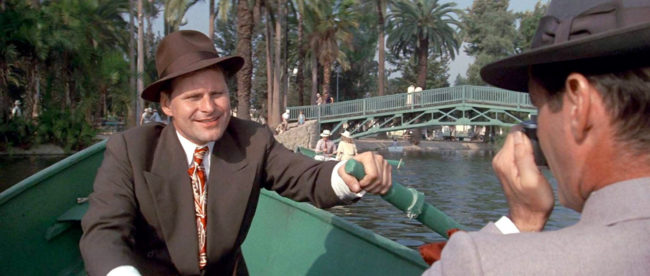
Laemmle Theatres and the Anniversary Classics Series present a screening of one of the most memorable films of the 70s, the neo-noir mystery thriller, CHINATOWN. Nominated for 11 Academy Awards in 1974 (including Best Picture, Best Director, Best Actor Jack Nicholson and Best Actress Faye Dunaway), the film won the Oscar for the original screenplay by Robert Towne. Although it was set in a beautifully recreated 1930s universe, the film reflected the bitter cynicism and disillusionment of the Vietnam and Watergate era.

CHINATOWN 45th Anniversary Screening and Q&A on Thursday, June 27th in West LA.

Towne was a Los Angeles native, and he had long been fascinated by the history of the city, where the sun-dappled settings hid tales of greed and corruption. The inspiration for the story was the water wars that had helped to shape the modern life of the city. These struggles over the city’s natural resources had taken place in the first decade of the 20th century; Towne moved the setting up to the 1930s, partly in order to combine this scorching social commentary with the spirit of classic detective novels penned by authors like Dashiell Hammett and Raymond Chandler.

CHINATOWN 45th Anniversary Screening and Q&A on Thursday, June 27th in West LA.

Nicholson plays J.J. Gittes, a private eye who specializes in sordid cases of marital infidelity. But he gets himself into deeper territory when an investigation into a civic leader’s extramarital affair leads to a discovery of a massive conspiracy by big business interests to seize control of the city’s desperately needed water supply. Gittes’s sleuthing also leads him to uncover shocking cases of sexual abuse among the city’s upper crust. Dunaway plays a variation on the classic femme fatale of noir cinema, a beautiful heiress who is commanding on the surface but is secretly and tragically damaged by events in her past. John Huston plays her corrupt father, and the supporting cast includes John Hillerman, Perry Lopez, Diane Ladd, Burt Young, Bruce Glover, and James Hong.

Robert Evans, the successful head of Paramount Studios at the time, backed Towne’s screenplay and decided to make the film his first venture as a producer. When Evans took over as head of the studio in the 60s, one of his early successes was an adaptation of Ira Levin’s best-selling novel, Rosemary’s Baby, which became the first American movie of European director Roman Polanski. That film was a smash hit, and Evans hired Polanski again to direct Chinatown. Polanski had been reluctant to work in Hollywood since the murder of his pregnant wife, Sharon Tate, by the notorious Manson family in 1969. But Evans persisted, and Polanski brought his knowledge of the underside of Hollywood to his depiction of the city’s past, even changing the ending of Towne’s screenplay to reflect his own deep pessimism.

CHINATOWN 45th Anniversary Screening and Q&A on Thursday, June 27th in West LA.

The film’s technical team—including cinematographer John Alonzo, production designer Richard Sylbert, and costume designer Anthea Sylbert—helped to realize the writer and director’s vision of decay beneath the elegant surfaces of Southern California. Jerry Goldsmith’s sultry score, highlighted by a melancholy trumpet solo, clinched the mournful mood.

Variety praised the achievement: “Roman Polanski’s American made film, his first since Rosemary’s Baby, shows him again in total command of talent and physical filmmaking elements.” Derek Malcom of the London Evening Standard wrote, “Polanski’s telling of his tale of corruption in LA is masterly—thrilling, humorous and disturbing at the same time—and brilliantly played by John Huston and Faye Dunaway as well as Nicholson.” The film was added to the National Film Registry of the Library of Congress in 1991.

CHINATOWN 45th Anniversary Screening and Q&A on Thursday, June 27th in West LA.
Bruce Glover and Jack Nicholson.

Our panel to discuss the film will include actor Bruce Glover (Hard Times, Walking Tall, Diamonds Are Forever); assistant director Hawk Koch (who went on to produce such films as Heaven Can Wait, The Idolmaker, The Pope of Greenwich Village, Wayne’s World, and Primal Fear and later served as president of the Motion Picture Academy); and author Sam Wasson (who wrote the biography of Bob Fosse that served as the basis of the highly acclaimed miniseries, Fosse/Verdon, and is writing a new book on the seminal films of the 70s).

CHINATOWN screens Thursday, June 27 at 7PM at the Royal Theatre in West LA. Click here for tickets.

Format: DCP.

Leave a Comment Filed Under: Actor in Person, Anniversary Classics, Featured Post, Q&A's, Repertory Cinema, Royal

ROOM AT THE TOP 60th Anniversary Screening and Q&A with KCRW Art Critic Edward Goldman

May 30, 2019 by Lamb Laemmle Leave a Comment

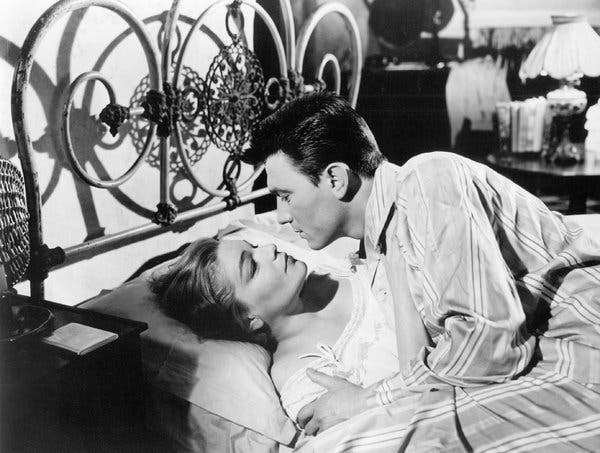
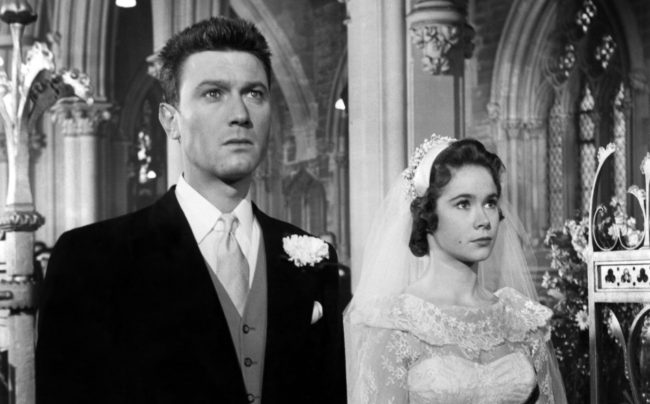
Laemmle Theatres and the Anniversary Classics Series present a 60th anniversary screening of one of the most influential of all British films, the Oscar-winning ROOM AT THE TOP. The film was one of the five nominees for Best Picture of 1959, and also earned nominations for director Jack Clayton, actor Laurence Harvey, and supporting actress Hermione Baddeley. Surprising some of the pundits, Simone Signoret was named Best Actress of the Year, besting Hollywood favorites Audrey Hepburn, Elizabeth Taylor, and Katharine Hepburn. The film also won the Oscar for best adapted screenplay.

ROOM AT THE TOP 60th Anniversary Screening and Q&A with KCRW Art Critic Edward Goldman

Neil Paterson adapted the acclaimed novel by John Braine that told the story of a young working-class upstart who aims to defy the British class system and rise to the top ranks of society. The novel had evoked comparisons to Theodore Dreiser’s classic novel of ambition and murder An American Tragedy, which was turned into George Stevens’ award-winning 1951 film ‘A Place in the Sun.’ In the story that Braine and Paterson told, Harvey plays Joe Lampton, who decides that the best way to the executive suite is to seduce the boss’s daughter, played by Heather Sears. Complications arise when he meets an unhappily married older woman, played by Signoret, and falls in love with her. But he is reluctant to allow romance to jeopardize his larger game plan. The cast also includes Donald Wolfit as the tycoon and Donald Houston as Joe’s friend and roommate. Esteemed cinematographer Freddie Francis (‘Sons and Lovers,’ ‘The Elephant Man,’ ‘Glory’) contributed vivid black-and-white photography.

At the time, the film was considered groundbreaking in part because of its adult language and themes. As the Los Angeles Times noted, the film was “laced with earthy dialogue and a very frank approach to sex.” It received an X rating on its initial release in England. Outstanding reviews complemented the sexual explicitness to make the movie one of the first major arthouse hits in America. As Pauline Kael wrote, “The movie helped bring American adults back into the theatres… mostly because of the superb love scenes between Harvey and Simone Signoret. She’s magnificent.” The New Republic’s Stanley Kauffmann concurred:“Miss Signoret is so heartbreakingly effective in the role that it is now inconceivable without her,” and he concluded his review by writing, “as a drama of human drives and torments told with maturity and penetration, it is a rare event among English-language films.”

ROOM AT THE TOP 60th Anniversary Screening and Q&A with KCRW Art Critic Edward Goldman

Joining film critic Stephen Farber for a discussion after the screening will be renowned cultural critic Edward Goldman, who has been the host of KCRW’s popular Art Talk program for more than 30 years. Goldman also contributes weekly art reports to the Huffington Post, and he has written for many other publications. He first discovered foreign films (including several starring Simone Signoret) while he was growing up in Russia; one of his early jobs was at the Hermitage Museum in St. Petersburg.

Our 60th anniversary screening of ROOM AT THE TOP (1959) featuring a Q&A with KCRW art critic Edward Goldman and film critic Stephen Farber screens Thursday, June 13, at 7pm at the Laemmle Royal in West LA. Click here for tickets.

Format: DCP.

Leave a Comment Filed Under: Actor in Person, Anniversary Classics, Featured Post, News, Q&A's, Repertory Cinema, Royal

Jarmusch in June Every Throwback Thursday Next Month at the NoHo 7!

May 9, 2019 by Lamb Laemmle Leave a Comment

Excited about Jim Jarmusch’s new zombie-comedy THE DEAD DON’T DIE opening June 14th in Pasadena, NoHo, and Claremont? We are, too! So much so that we’re diving into the iconic filmmaker’s back catalog for June’s Throwback Thursday series!

Our Jarmusch in June Throwback Thursday series screens every Thursday evening at our NoHo 7 theater. Doors open at 7pm, trivia starts at 7:30, and movies begin at 7:40pm. More details at www.laemmle.com/tbt!

You can save $3 with our EARLY BIRD SPECIAL! Tickets are only $9 (or $6 for Laemmle Premiere Card holders) if you buy them at least one week before the date of the screening!

Jarmusch in June Schedule:

Jarmusch in June Every Throwback Thursday Next Month at the NoHo 7!Stranger Than Paradise, June 6: A low-key avante-garde comedy about a trio of misfits — an everyday guy, his Hungarian cousin, and his geeky best friend — and their misadventures in New York, Cleveland, and Florida. John Lurie, Eszter Balint, Richard Edson, and Cecillia Stark star. The National Society of Film Critics voted Stranger Than Paradise Best Picture of 1984. Format: DCP.

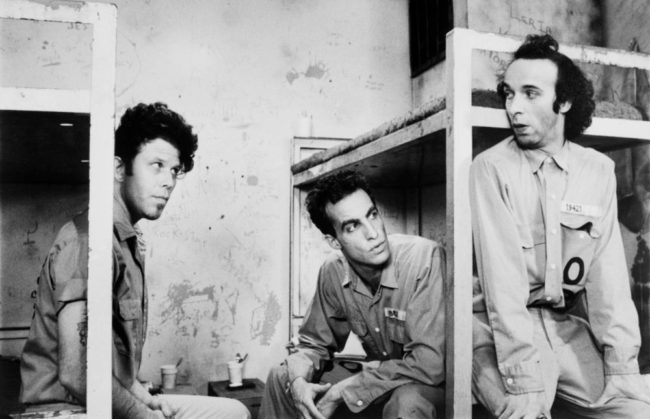
Jarmusch in June Every Throwback Thursday Next Month at the NoHo 7!Down by Law, June 13: Jarmusch followed up Stranger Than Paradise with another rambling, character-driven film with a twisted sense of humor. Set in a seedy New Orleans summer, Down By Law details the meeting of three unlikely convicts and their just-as-unlikely escape. Starring Tom Waits, John Lurie, Roberto Benigni, Nicoletta Braschi, and Ellen Barkin. Format: DCP.

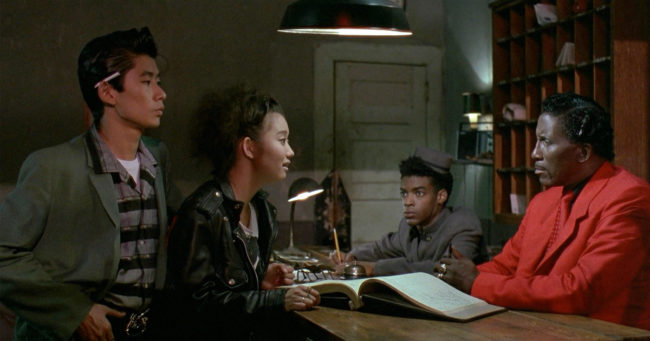
Jarmusch in June Every Throwback Thursday Next Month at the NoHo 7!Mystery Train, June 20: This deadpan triptych takes place over the course of an evening in a tacky, low-rent Memphis motel dedicated to Elvis Presley visited by Japanese tourists, criminals on the run, and the spirit of the King himself. Youki Kudoh, Masatoshi Nagase, Screamin’ Jay Hawkins, Cinqué Lee, Nicoletta Braschi, Elizabeth Bracco, Rick Aviles, Joe Strummer, and Steve Buscemi star. Format: DCP.

Jarmusch in June Every Throwback Thursday Next Month at the NoHo 7!
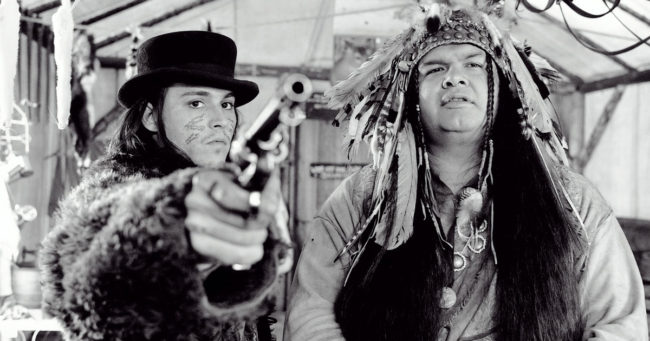
Dead Man, June 27: In Jarmusch’s psychedelic western, an accountant on the run for murdering a man encounters a strange North American man named Nobody who prepares him for his journey into the spiritual world. The cast includes Johnny Depp, Gary Farmer, Crispin Glover, Iggy Pop, Billy Bob Thornton, Gabriel Byrne, John Hurt, Alfred Molina, and Robert Mitchum. Neil Young improvised the soundtrack while watching the freshly edited film. Format: DCP.

Leave a Comment Filed Under: Featured Post, Films, NoHo 7, Repertory Cinema, Throwback Thursdays

Sixtieth Anniversary Screenings of Ingmar Bergman’s WILD STRAWBERRIES on May 15 in Glendale, Pasadena, and West LA.

May 2, 2019 by Lamb Laemmle Leave a Comment

Laemmle Theatres and the Anniversary Classics Series present this month’s installment in our Anniversary Classics Abroad program: one of the most revered of all foreign films, Ingmar Bergman’s WILD STRAWBERRIES. Indeed, Leonard Maltin hailed the film as “Still a staple of any serious filmgoer’s education,” and he added, “Superb use of flashbacks and brilliant performance by (Victor) Sjostrom make this Bergman classic an emotional powerhouse.” It was nominated for the Oscar for Best Original Screenplay of 1959 and also earned the top prize, the Golden Bear, at the Berlin Film Festival.

Sixtieth Anniversary Screenings of Ingmar Bergman’s WILD STRAWBERRIES on May 15 in Glendale, Pasadena, and West LA.

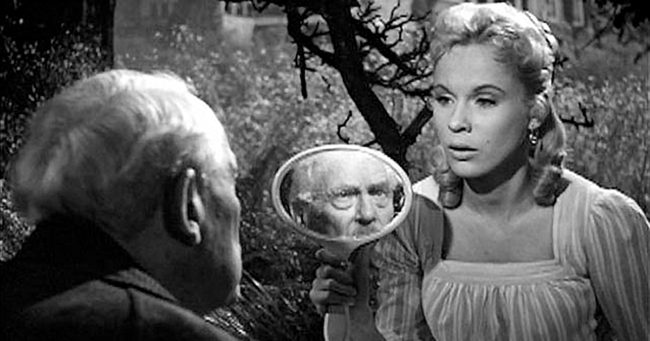
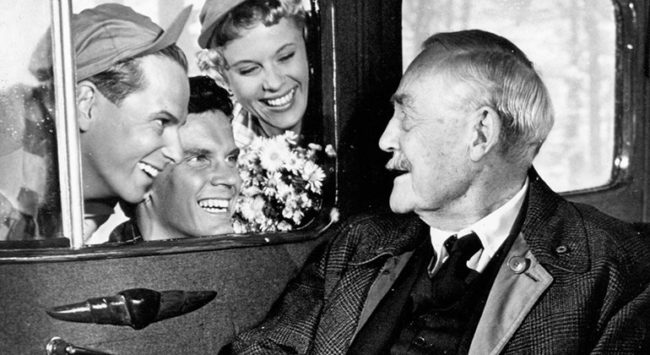
Sjostrom, a revered Swedish actor and also an acclaimed director who helmed memorable silent films with American stars Lon Chaney and Lillian Gish during the 1920s, capped his career with his moving performance as Professor Isak Borg, a distinguished physician who re-evaluates his life while driving from Stockholm to Lund to receive an honorary degree. On his journey he is haunted by memories and dreams that illuminate his inner life with trenchant insight. Indeed Wild Strawberries was one of the seminal films that changed cinematic grammar by introducing non-linear storytelling to discriminating audiences during the late 1950s.

Sixtieth Anniversary Screenings of Ingmar Bergman’s WILD STRAWBERRIES on May 15 in Glendale, Pasadena, and West LA.

The supporting cast includes many of Bergman’s favorite actors, including Bibi Andersson (in a dual role as a hitchhiker and as Isak’s first love), Gunnel Lindblom, Gunnar Bjornstrand, and Max von Sydow in a cameo role. Reviews of the film were enthusiastic at the time, and critics continued to exalt Bergman’s achievement in later years. Variety raved, “It’s a personal and profound work.” Tom Dawson of the BBC said, “This is one of the truly outstanding works of post-war European cinema.” And Pauline Kael commented, “Few movies give us such memorable, emotion-charged images.”

This film also had a strong influence on other directors. In a 1963 interview with Cinema magazine, Stanley Kubrick listed Wild Strawberries as his second favorite film of all time. Woody Allen paid homage in several of his movies, including Stardust Memories and Crimes and Misdemeanors.

WILD STRAWBERRIES screens at 7 PM on Wednesday, May 15 at Laemmle theaters in Glendale, Pasadena, and West LA. Click here for tickets.

Format: DCP

Leave a Comment Filed Under: Abroad, Anniversary Classics, Featured Post, Glendale, Playhouse 7, Repertory Cinema, Royal

THE TERMINATOR 35th Anniversary Screening with Co-star Michael Biehn In Person.

April 25, 2019 by Lamb Laemmle Leave a Comment

Laemmle Theatres and the Anniversary Classics Series present a 35th anniversary screening of one of the most popular sci-fi films of all-time, THE TERMINATOR, the movie that spawned one of the screen’s most profitable film franchises.

THE TERMINATOR 35th Anniversary Screening with Co-star Michael Biehn In Person.

Starring Arnold Schwarzenegger in his most iconic role, Linda Hamilton, and our special guest, Michael Biehn, THE TERMINATOR screens on Saturday, May 11th at 7:30pm at the Ahrya Fine Arts in Beverly Hills. Click here for tickets.

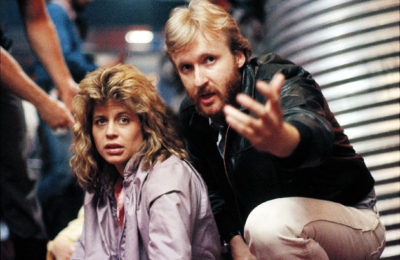
Writer-director James Cameron and Producer Gale Ann Hurd had both apprenticed at Roger Corman’s low-budget factory, New World Pictures, in the late 1970s and early 1980s when they joined forces to create THE TERMINATOR.

THE TERMINATOR 35th Anniversary Screening with Co-star Michael Biehn In Person.

Their original screenplay (with co-writer William Wisher, inspired by works of Harlan Ellison) chronicles the battle for the survival of the human race against Skynet, a synthetic intelligent machine network of the future. In 2029, an automaton killer (Schwarzenegger) is dispatched through time to assassinate an unsuspecting waitress (Linda Hamilton) in 1984, who turns out to be the future mother of the 21st–century human Resistance leader, John Connor. To protect her, Connor sends guerrilla fighter Kyle Reese (Michael Biehn). The ensuing chase through the streets of Los Angeles, with the seemingly unstoppable and leather-clad Schwarzenegger, is a model of low-budget efficiency and resourcefulness.

Contemporary critics embraced the sci-fi suspense thriller, with Kirk Ellis of The Hollywood Reporter calling it “a genuine steel metal trap of a movie.” Dave Kerr of Chicago Reader characterized its “almost graceful violence…(has) the air of a demented ballet,” and Janet Maslin in The New York Times cited it as a “B-movie with flair.”

The film was a genuine sleeper hit, and its success led to several sequels, a television series and video games. The latest incarnation of the series, TERMINATOR: DARK FATE, with Cameron returning to a creative role, is set to open theatrically later this year. The film that started it all, THE TERMINATOR, was added to the Library of Congress’ National Film Registry in 2008.

THE TERMINATOR 35th Anniversary Screening with Co-star Michael Biehn In Person.

Cameron, of course, became one of the most sought-after filmmakers in Hollywood, staying in the sci-fi world for several landmark films (Aliens, The Abyss, Avatar) and winning Oscars for a venture into the past, Titanic, the biggest box-office hit of the twentieth century.

Schwarzenegger went on to movie superstardom and political success. His terse line reading in the film, “I’ll be back,” is ranked 37th of AFI’S all-time movie quotes, and his character Terminator is ranked as the 22nd greatest movie villain.

Gale Ann Hurd emerged as one of the most successful female producers of the era, with Aliens, Alien Nation, and Armageddon among her hits.

Our special guest, Michael Biehn, has enjoyed a long career, primarily in action roles (Aliens, The Abyss, Tombstone, The Rock, The Art of War) into the 21st century.

Saturday, May 11th at 7:30pm at the Ahrya Fine Arts in Beverly Hills. Click here for tickets.

Format: DCP

Leave a Comment Filed Under: Actor in Person, Ahrya Fine Arts, Anniversary Classics, Featured Post, News, Q&A's, Repertory Cinema

Marcel Pagnol’s Classic French Comedy THE BAKER’S WIFE, Restored and Back in Theaters April 26-May 2.

April 17, 2019 by Lamb Laemmle 9 Comments

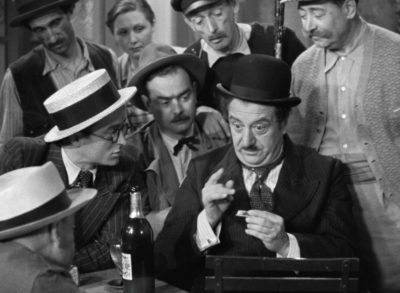
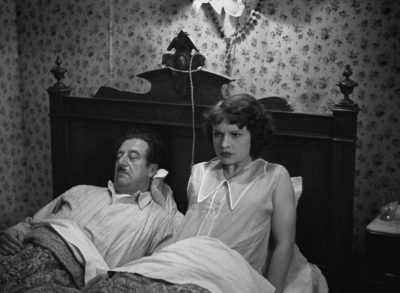
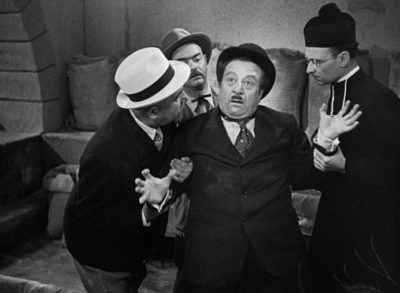
The warmth and wit of celebrated playwright turned auteur Marcel Pagnol (The Marseille Trilogy) shines through in the enchanting slice-of-life comedy The Baker’s Wife (1938). Returning once again to the Provençal countryside he knew intimately, Pagnol draws a vivid portrait of a close-knit village where the marital woes of a sweetly deluded baker (the inimitable Raimu, heralded by no less than Orson Welles as “the greatest actor who ever lived”) snowball into a scandal that engulfs the entire town. Marrying the director’s abiding concern for the experiences of ordinary people with an understated but superbly judged visual style, The Baker’s Wife is at once wonderfully droll and piercingly perceptive in its nuanced treatment of the complexities of human relationships.

https://vimeo.com/303765477

Here’s are some fun facts about the movie:

—The story is taken from the novel Blue Boy (Jean le bleu) by Jean Giono. It was Marcel Pagnol’s fourth and final Giono adaptation, after Jofroi (1934), Angèle (1934), and Harvest (1937).
—Pagnol’s initial choice for the role of the baker was Marcel Maupi, whose frail constitution was more in keeping with Giono’s physical description of the character in Blue Boy. But the part eventually went to the burly Raimu. (Maupi plays Barnabé in the film.)
Marcel Pagnol's Classic French Comedy THE BAKER'S WIFE, Restored and Back in Theaters April 26-May 2.
Criterion art catalog
—Pagnol wrote the part of Aurélie for Joan Crawford, using minimal dialogue since she didn’t speak French. After she declined, Raimu convinced Pagnol to cast Ginette Leclerc, who would go on to star in such films as Le Corbeau (1943) and Tropic of Cancer (1970).
—Raimu refused to play his dialogue scenes outdoors. Therefore, much of the film was shot in a studio, giving many scenes a look that’s a combination of location and studio photography.
Marcel Pagnol's Classic French Comedy THE BAKER'S WIFE, Restored and Back in Theaters April 26-May 2.
Criterion art catalog
—The film’s exteriors were shot in the medieval village of Le Castellet, roughly thirty miles southeast of Marseille. Today, the area is famous for its wine production and Formula 1 racetrack.
—The film was a major critical and box office hit in France when it was released in 1938. In 1940, the film also had a successful run in the U.S., where it won best foreign film honors from both the National Board of Review and the New York Film Critics Circle.
Marcel Pagnol's Classic French Comedy THE BAKER'S WIFE, Restored and Back in Theaters April 26-May 2.
Criterion art catalog
—In the mid-forties, after the war, Orson Welles visited Pagnol and told him that he had seen The Baker’s Wife and would like to meet its star, Raimu, whose acting Welles revered. Pagnol informed Welles that Raimu had recently passed away, and Welles burst into tears.
—Pagnol adapted his script for The Baker’s Wife into a theatrical production but only staged one performance. In 1976, a musical adaptation of the same name, with music and lyrics by Stephen Schwartz and a book by Joseph Stein, embarked on a six-month tour of small venues in the U.S., undergoing major retooling along the way. The musical finally premiered in the West End in 1989. Although the reviews and audience reaction were positive, the show lasted here for only fifty-six performances. It has not been produced on Broadway.


—In The Catcher in the Rye, Holden Caulfield, despite his own distaste for movies, mentions that his younger sister, Phoebe, likes them and knows the difference between good and bad films. He says that he took her to see The Baker’s Wife and she found it hysterical.


We will screen The Baker’s Wife daily at the Ahrya Fine Arts April 26-28 and April 29 at the Laemmle Glendale, April 30 at the Playhouse 7, May 1 at the Town Center and Claremont, and May 2 at the Royal.

9 Comments Filed Under: Ahrya Fine Arts, Claremont 5, Featured Films, Featured Post, Films, Glendale, Playhouse 7, Royal, Town Center 5

THE LAST Filmmaker Jeff Lipsky on His Provocative New Movie.

April 17, 2019 by Lamb Laemmle 1 Comment

On April 26 we’ll open Jeff Lipsky’s new film The Last, a powerful drama about the survivors of four generations of a Jewish family who are shaken to the core when the family’s beloved 92-year-old matriarch makes a stunning confession. Mr. Lipsky recently sat for an interview about the movie. (Warning, it contains spoilers below the first photo.)

Q. Describe the origin of this particular story. What was the inspiration, what was the catalyst, and what point did you decide that this was the next film you were going to write, and where did the idea come from?

A. Initially I’d written a movie called Abigail’s Surrender that I thought was going to be my next feature. It was a period piece, not too long ago, in the early to mid 70s, and it was set in a small town in Texas with stop-offs in Pennsylvania, Tennessee and New York. I fell in love with the script, I fell in love with the actress I had written it in mind for, she adored the script. Then I realized I can’t shoot this on a micro-budget, what was I thinking?! I had to come up with something way more affordable, something I was even more enraptured by, that was distinctive and yet fit into my overall oeuvre. My most successful film to date had been my most autobiographical film, which was Flannel Pajamas. I said let me dig a little deeper, maybe not autobiographically, but maybe biographically, and that’s when I hit upon the idea of my nephew, who was in his late 20s at the time. I have a niece and a nephew, my niece came first so my nephew always got sloppy seconds. I loved him but, in a way, he was a cypher to me; in writing this script I finally got to know him. He’s a terrific young man. He excelled in school, he graduated from college, he went and got his Masters and his teaching degree, and he became a teacher of special needs kids in Connecticut. I am immensely proud of him. What was interesting was…he grew up in a conservative Jewish household, as did I, but he tended to take religious studies and traditions a little more to heart, a little more seriously, a little more piously than any of us, and yet in a revolutionary fashion. He somewhat surprised the family – at least me – when seven years or so ago he merged or morphed, he shifted, from conservative Judaism to Modern Orthodox Judaism. He found it much more relevant than conservative Judaism in general, much more essential for Jewish connectivity, much more inclusive. Around that same time, he was fixed up with a young woman by his best friend and she’s terrific. She was Catholic yet, even as a young girl, expressed an avowed interest in Judaism. My nephew and she seemed to click as a couple. She expanded her knowledge of Judaism, immersed herself in study about Modern Judaism. They began living together. She decided to convert, a plunge she had always been considering making anyway. My nephew was the final catalyst. Then they decided to marry. For me the single most compelling facet, and most fascinating contradiction in their partnership was that my nephew, this Modern Orthodox Jew, who grew up in a centuries-old Jewish family, did not believe in a deity. He didn’t believe in God. She believed in God. A perfect couple! I thought they are the basis for two wonderful characters in a movie. A movie that could be shot in New York, set in New York, not Texas.

THE LAST Filmmaker Jeff Lipsky on His Provocative New Movie.

But I needed a story. I needed drama, I needed tension, I needed a through line, I needed a fiction to complement their fact. How could I incorporate something that happened eighty years ago into this contemporary story about two very contemporary Modern Orthodox Jews? My previous films had always been about family. They’d always been about multiple generations of family. So this time I thought that if I add one more generation, I’ve arrived at the Holocaust. But I wanted to do something interesting and provocative, with a twist yet utterly believable. That’s when I hit upon the character of Claire – a Holocaust survivor, somebody that everybody in this extended family knows as an escapee from Germany during World War II, who makes a life in New York as a Jewish woman, marries a Jewish man (we think!), and three more generations of her Jewish family ensue. Then I hit on the twist that would make this provocative, relevant, shockingly plausible. A story about a Holocaust survivor who has, in fact, been prevaricating, in a most shocking manner, about her entire life, and was, in fact, a member of the Nazi party. Someone who had the audacity to believe that any Jew, any person, should understand that if you put yourself in her position…wouldn’t you have also followed your literal savior to work at Auschwitz? The rest of it came very easily to me which is how were the surviving members of this extended Jewish family going to react to this information, this shattering and devastating confession delivered by a 92-year-old woman they’ve only ever known as the matriarch of the family, someone who represented Israel to them.

THE LAST Filmmaker Jeff Lipsky on His Provocative New Movie.

Best of all, in the process of writing the script, I discovered how singularly generous, selfless, giving, and scholarly my nephew and his wife were. She offered up her actual wedding gown to us for use by our co-star for prop photos! In fact, they permitted us to shoot at their apartment for two days…while she was eight and a half months pregnant. She delivered her daughter five days after we wrapped at the apartment. The film is dedicated to that child.

https://www.youtube.com/watch?v=97MQVBte3ms&feature=youtu.be

Q. What’s striking to me about the film and Claire’s character specifically is not that she’s a Nazi but that she’s unrepentant. I mean, she’s not quite marching in Skokie or Charlottesville or anything, but her position is “I did what I had to do to survive and you would’ve done it too.” When Olivia asks about her reaction to the footage of the camps being liberated, she says that it made her wish they, Germany, had won the war. She goes on to speak, not entirely without impact, about the plight of the German people in the aftermath of World War II. How do you create empathy for an unrepentant Nazi?

A. Once I hit on the bare outlines of the story, and conjured up the various characters who had to be included, painstakingly following a precise timeline, the ultimate insult and/or challenge to the youngest generation of Jews in the story (and perhaps to those watching the movie) would be a woman who begs them, who implores them to identify with her unique circumstances, trials and tribulations. But not with her circumstances during the Holocaust, not even during the Nazis’ rise to power in 1928 (before they became the official government of Germany in 1933), but before that. For that to happen, I had to create an unseen character and give her more biographical detail than perhaps any unseen character that’s ever been invented from whole cloth for a film. Her mother, Marta. A woman who was born in 1898, who loved Germany, who grew up an orphan, whose life was informed by music, who had to suffer all the degradations of World War I, lost the hearing in one ear as a consequence of the war, whose first pregnancy would result in a miscarriage, and who turns to prostitution when she finds herself destitute. During her second pregnancy when she discovers that her unborn child is in severe distress she learns of a young gynecology student, a star on the rise, near Hamburg, and she seeks his help. This man, this doctor, turns out to seemingly have a heart of gold and tries his damnedest to save Claire’s mother’s life, does in fact save the child’s life. Marta dies two weeks later, but before the mother dies, he makes her a deathbed promise. An irrational promise to make sure her baby doesn’t wind up a feral street urchin. Miraculously, he makes good on his word, he puts her in a quality foundling home. He makes sure she’s not abused there, makes sure she’s educated there. He makes sure she learns about the arts there and then, because she expresses a desire to be a nurse, gets her into nursing school at the age of fourteen. Two years later, at the height of the war, he asks her to come with him as his nurse to his newest assignment: Auschwitz. Given those circumstances, who in their right mind who would say no? As Claire unironically says, “It was the safest place I could be!”

Q. It’s certainly provocative to posit the idea that a particular Nazi’s crimes or misdeeds might be a form of self-preservation or altruism. As a Jew yourself, are you expecting a certain reaction from Jewish audiences that will see the film?

A. Absolutely. Not too long ago I distributed two Palestinian films directed by an Academy Award-nominated filmmaker, Hany Abu-Assad, born in Palestine, schooled in Israel. It wasn’t so much that there was backlash, there was an absolute, steadfast “I will not see this film because it was made by a Palestinian filmmaker” mindset on the part of many Jewish moviegoers. Jewish audiences, except when it comes to comic book type movies and tentpole blockbusters, are probably the most reliable, frequent movie theater-going audience in America. So when they take a stance like that, it’s a little scary. That said, at our rough cut screenings of The Last, we found that although there was a small percentage of conservative Jews clearly outraged by the film and this particular character, the Modern Orthodox Jews who came to see it, they got it. They understood it, they understood everything about it. Their astute editing room suggestions made it a better film. The more studious, the more historically-minded Jews who saw it, they got it. The ones who are caught up in the very aspects of conservative Judaism that the character of Josh disdains were the ones who occasionally had blinders on. I hope that no one sees Claire as a heroine or as someone you should lay down on the tracks for or express untampered empathy towards — as her own granddaughter in the movie says, to her dead mother when she visits her at the cemetery, “she [Claire] doesn’t even want to be forgiven.” And she doesn’t.

Q. Dr. Carl Clauberg was a real person, as was Horst Schumann, who’s mentioned as part of Claire’s history as well. Can you talk about the decision to insert real people into this otherwise fictional universe?

A. I thought some people would look at the fiction of our story and say “Well, that’s incredulous.” So I felt it was incumbent upon me to incorporate as many actual characters or actual events into Claire’s history, her mother’s history, to be able to say that enough of this really happened to make it an all-too-horrifying and plausible happenstance. I raced over to Barnes & Noble and started rifling through the books on the Holocaust and the concentration camps and very quickly – look, I knew I could use well known monsters. Everybody knows Josef Mengele, he is the quintessential Dr. Frankenstein of the Holocaust, the most monstrous medical figure of the Holocaust, but it would be a cliché to “import” him, I didn’t want to use him because then it becomes a melodrama. But there were others, more unknown but just as dementedly lethal, there were so many concentration camps, so many Josef Mengeles. I wasn’t looking for someone who toiled at Auschwitz necessarily, but the first one I found – whose actual fields of study were sterilization and progesterone studies and artificial insemination – happened to be this guy Carl Clauberg. And he happened to be a doctor who was assigned to Auschwitz. And he happened to be a gynecology student in a college outside Hamburg at a time when a desperate Marta might seek him out.

Q. Was there a lot of material about him – the real Carl – that you found?

A. There was enough. I wouldn’t call it a lot. I think it probably helped that I didn’t delve too much into his personal life or his life before the war, and his life after the war. But there was enough of a biographical sketch before the war to be able to, I think, imbue him with the proper dimensions to make him palpable for audiences.

Q. There’s this astonishing 45 minute sequence in the film that, contained within, features this monologue by Rebecca Schull where she reveals this history. Can you talk about the process of directing actors in a scene such as this?

A. Most of my direction for that scene, most of my work with Rebecca, took place weeks before the camera rolled. I spent hours with her in her apartment making certain she felt comfortable with every phrase I’d written, so on set the words were coming from Claire’s mouth, not Rebecca’s. Sometimes I would alter a word or clarify a phrase; her instincts when she made such a request were fairly spot-on. But once we began filming not a word in the script changed. Rebecca and I experimented with different accents for Claire until we came up with one that was faintly European but not quite readily identifiable. After all, Claire’s been living in New York for almost three quarters of a century. What Rebecca and I finally decided on was a variant of Lili Palmer, the Austrian Jewish actress who was born in 1914. It was Rebecca who found a perfect interview with Palmer on You Tube to use as a baseline. We had a dialect coach meet us for a few hours to make sure the German words and location Claire cites during her monologue, and prior to her monologue, flowed effortlessly. On set, we broke the monologue into eight parts, not so much to give this extraordinary thespian a break but to give my DP a chance to move the camera in, ever so slightly closer to Claire, so that what begins as a medium shot winds up being a tight close-up without the audience even catching on to what we’ve been doing. I’m sure Claire rehearsed the scene beforehand, many times, over many months. She thought, ‘how do I get these people whom I love and cherish, on my side, at least make them understand the circumstances.’ To do so she had to describe her own mother’s life, to give an oral recitation of her mother’s diaries. Once I realized that the monologue had to begin with Marta’s history – and given the research I’d done about World War II, about the rise of the Nazi party, about Germany between World War I and World War II, before World War I – since her mother had to have been born in 1898 – once I had the bare facts in my head, writing this monologue, the words just spilled out of me. I didn’t outline it or sketch it out, it was the easiest section of the movie to write and I can’t explain why or how. Perhaps it was because, by then, the one aspect of the film that I did know well was the character of Claire. I intuitively understood every fiber of her being at that point. Before I knew it, I’d written an eight page monologue. It wasn’t something I set out to do, to write to any particular length, I didn’t know how long it would last on-screen, I didn’t know how long it would take to film. Here I was, writing a monologue for a character who’s 92 years old.

Q. How long did the sequence take to shoot?

A. Three days. I should say it took three days minus three hours because on the first day, we arrived at the beach, in late summer, and encountered torrential rainstorms. We had intended to shoot the sequence chronologically but as a consequence of the weather we made a spur-of-the-moment decision to shoot the scenes in reverse. Yet all three performers still knocked it out of the park. How long would I have liked to have had to shoot it? Probably six days. How long would a Hollywood film have taken to shoot the same sequence? At least two weeks. At least. And that might be a conservative guesstimate. And they would have cast someone who was seventy and slathered a lot of makeup on her!

Q. Melody delivers the other notable monologue in the film.

A. She does. She addresses, head-on, the “missing generation” in the film. I wrote it, I loved it, but it’s so different than Claire’s monologue. At the beach, Claire would be speaking to two flesh and blood human beings. She was going to be able to look at these people, her great grandchildren, and be able to play off their ongoing, changing, and evolving reactions. Melody’s monologue is at her parents’ gravesite. She’s addressing a headstone. It was only after I cast Julie…I mean I didn’t know how I was going to film it, let alone how she was going to act it to a rock. When Julie first auditioned she was talking to “us.” And that’s when I came up with the idea that she visits the cemetery regularly, and talks to her dead parents often, and she herself is probably put off by the fact that she’s talking… these are not the people she remembers. She lives in a world where we have photographs of our parents and videos of our parents and iPhone selfies of our parents. So when she comes here, she arrives with a tape gun and two 8×10 color photographs of her parents, taken in the early 50s, and slaps them onto the headstone so at least she’s talking to the people she remembers. I thought that’s great, now I have reaction shots to cut to.

Q. This is your seventh feature?

A. Seventh, yes. Sixth as a writer, seventh as a director.

Q. When you make a new film, do you go in with a specific reaction that you’re hoping for? Something you’re looking to elicit?

A. I don’t go in looking for a particular reaction. No matter what the story is, I always try to write characters who are honest. Some of my characters may be shocking, they may do shocking things, but as long as I feel I’ve imbued the characters with honesty and naturalism, then some aspect of that person, and some element of the story is going to be universal, identifiable to people anywhere. That’s what I’m always shooting for. Do I think The Last might provoke? Yes. Do I think it might provoke copious questions from audiences? Probably more than any of my other movies. But it wasn’t a specific reaction I was looking for. Our copy line is “What would you do?” I suppose the copy line could’ve been “What would you have done?” That’s what Claire is asking. What would you have done in my position? That’s the question I would like all audiences to ask themselves, and I don’t think it’s answerable. In a perfect world, those lingering questions, will make them want to see it again. I love the characters in this movie, and, yes, I even love the character of Claire. Because she’s so singular. And in Olivia, Josh, Harry and Melody, I want people to see my characters as people they recognize from their own lives, from their friends’ lives. Is it possible to turn almost a century of abject love into rejection and hate virtually overnight? That’s the kind of response I want to elicit…from any of my films.

The Last filmmaker Jeffrey Lipsky and star Rebecca Schull will participate in Q&A’s following the 4 pm and 7:10 pm shows on Friday, 4/26 at the Royal and after the 4 pm and 7 pm shows on Saturday, 4/27 at the Town Center.


1 Comment Filed Under: Featured Films, Featured Post, Filmmaker in Person, Q&A's, Royal, Town Center 5

  • « Previous Page
  • 1
  • …
  • 40
  • 41
  • 42
  • 43
  • 44
  • …
  • 66
  • Next Page »

Search

Instagram

☘️ WEAR GREEN ☘️ $AVE GREEN ☘️ $2 OFF your concess ☘️ WEAR GREEN ☘️ $AVE GREEN ☘️ $2 OFF your concessions order!

⭐ St. Patrick's Day! Tuesday March 17th Only!

-Movie ticket purchase not required
-Like and show this post!
🎟️ laemmle.com/discounts
🚀 PROJECT HAIL MARY, AN EPIC PRIZE PACK GIVEAWAY! 🚀 PROJECT HAIL MARY, AN EPIC PRIZE PACK GIVEAWAY!
👉 ENTER in BIO!

#ProjectHailMary — starring Academy Award® nominee Ryan Gosling and directed by Academy Award®-winning filmmakers Phil Lord & Christopher Miller. Based on Andy Weir's New York Times best-selling novel.

🎟️ GET TICKETS in BIO!
For the 21st consecutive year, Laemmle will be scr For the 21st consecutive year, Laemmle will be screening the Oscar-Nominated Short Films, opening on Feb. 20th. Showcasing the best short films from around the world, the 2026 Oscar®-Nominated Shorts includes three feature-length programs, one for each Academy Award® Short Film category: Animated, Documentary and Live Action.

ANIMATED SHORTS: (Estimated Running Time: 83 mins)
The Three Sisters
Forevergreen
The Girl Who Cried Pearls
Butterfly
Retirement Plan
 
LIVE ACTION SHORTS (Estimated Running Time: 119 minutes)
The Singers
A Friend Of Dorothy
Butcher’s Stain
Two People Exchanging Saliva
Jane Austin’s Period Drama

DOCUMENTARY SHORTS (Estimated Running Time: 158 minutes)
Perfectly A Strangeness
The Devil Is Busy
Armed Only With A Camera: The Life And Death Of Brent Renaud
All The  Empty Rooms
Children No More: “Were And Are Gone”

Please note that some films may not be appropriate for audiences under the age of 14 due to gun violence, shootings, language and animated nudity.
❤️ Laemmle be your Valentine ❤️ and enjoy a FREE S ❤️ Laemmle be your Valentine ❤️ and enjoy a FREE Sweet Treat 🍭 on Valentine's Day! Like this post and show at the concessions stand for One Free Candy w/purchase of any combo! (2/14 only)
For Tickets and Locations 🎟️ laemmle.com
Follow on Instagram


Laemmle Theatres

Laemmle Theatres
Tickets: http://laemmle.com/film/artfully-united | Subscribe: http://bit.ly/3b8JTym | ARTFULLY UNITED is a celebration of the power of positivity and a reminder that hope can sometimes grow in the most unlikely of places. As artist Mike Norice creates a series of inspirational murals in under-served neighborhoods in and around Los Angeles, the Artfully United Tour transforms from a simple idea on a wall to a community of artists and activists coming together to heal and uplift a city.

Tickets: http://laemmle.com/film/artfully-united

RELEASE DATE: 10/17/2025
Director: Dave Benner
Cast: Mike Norice

-----
ABOUT LAEMMLE: Since 1938, Laemmle [Theatres] has been showing the finest independent, arthouse, and international films.

Subscribe to Laemmle's E-NEWSLETTER: http://bit.ly/3y1YSTM
Visit Laemmle.com: http://laemmle.com
Like LAEMMLE on FACEBOOK: http://bit.ly/3Qspq7Z
Follow LAEMMLE on TWITTER: http://bit.ly/3O6adYv
Follow LAEMMLE on INSTAGRAM: http://bit.ly/3y2j1cp
Tickets: http://laemmle.com/film/brides | Subscribe: http://bit.ly/3b8JTym | Nadia Fall's compelling debut feature offers a powerful and empathetic look into the lives of two alienated teenage girls, Doe and Muna, who leave the U.K. for Syria in search of purpose and belonging. By humanizing its protagonists and exploring the complex interplay of vulnerability, societal pressures, and digital manipulation, BRIDES challenges simplistic explanations of radicalization.

Tickets: http://laemmle.com/film/brides

RELEASE DATE: 9/24/2025
Director: Nadia Fall

-----
ABOUT LAEMMLE: Since 1938, Laemmle [Theatres] has been showing the finest independent, arthouse, and international films.

Subscribe to Laemmle's E-NEWSLETTER: http://bit.ly/3y1YSTM
Visit Laemmle.com: http://laemmle.com
Like LAEMMLE on FACEBOOK: http://bit.ly/3Qspq7Z
Follow LAEMMLE on TWITTER: http://bit.ly/3O6adYv
Follow LAEMMLE on INSTAGRAM: http://bit.ly/3y2j1cp
Tickets: http://laemmle.com/film/writing-hawa | Subscribe: http://bit.ly/3b8JTym | Afghan documentary maker Najiba Noori offers not only a loving and intimate portrait of her mother Hawa, but also shows in detail how the arduous improvement of the position of women is undone by geopolitical violence. The film follows the fortunes of Noori’s family, who belong to the Hazaras, an ethnic group that has suffered greatly from discrimination and persecution.

Tickets: http://laemmle.com/film/writing-hawa

RELEASE DATE: 10/8/2025

-----
ABOUT LAEMMLE: Since 1938, Laemmle [Theatres] has been showing the finest independent, arthouse, and international films.

Subscribe to Laemmle's E-NEWSLETTER: http://bit.ly/3y1YSTM
Visit Laemmle.com: http://laemmle.com
Like LAEMMLE on FACEBOOK: http://bit.ly/3Qspq7Z
Follow LAEMMLE on TWITTER: http://bit.ly/3O6adYv
Follow LAEMMLE on INSTAGRAM: http://bit.ly/3y2j1cp
Subscribe

Recent Posts

  • Modern Love, Unfiltered: The Bold Charm of ‘Two Women’
  • ‘Our Land’ and the Weight of History
  • All the Right Notes: ‘Two Pianos’ and the Music of Complicated Love

Archive

Featured Posts

An “embrace of what makes us unknowable yet worthy of forgiveness,” A LITTLE PRAYER opens Friday at the Claremont, Newhall, Royal and Town Center.

Leaving Laemmle: A Goodbye from Jordan