The Official Blog of Laemmle Theatres.

Laemmle Theatres

Film Reviews & Previews

  • All
  • Theater Buzz
    • Claremont 5
    • Glendale
    • Newhall
    • NoHo 7
    • Royal
    • Santa Monica
    • Town Center 5
  • Q&A’s
  • Locations & Showtimes
    • Claremont
    • Glendale
    • NewHall
    • North Hollywood
    • Royal (West LA)
    • Santa Monica
    • Town Center (Encino)
  • Film Series
    • Anniversary Classics
    • Culture Vulture
    • Worldwide Wednesdays
  • Facebook
  • Instagram
  • TikTok
  • YouTube

You are here: Home / Theater Buzz

Law as Labyrinth: Loznitsa’s ‘Two Prosecutors’

March 25, 2026 by Lamb Laemmle Leave a Comment

Sergei Loznitsa’s Two Prosecutors is less a historical drama than a slow descent into a meticulously ordered nightmare. Set in 1937 at the height of Stalin’s Great Purge, the film follows a young, newly promoted prosecutor, Kornyev (Aleksandr Kuznetsov), whose belief in the integrity of the Soviet legal system has not yet been eroded by experience. So when a blood-written letter alleging systemic torture and fabricated charges from a political prisoner crosses his desk, Kornyev does something both admirable and, in this world, dangerously naïve: he takes it seriously.

two prosecutors

Catch filmmaker Sergei Loznitsa for a series of live Q&As regarding his latest work following the 7 p.m. showing at the Laemmle Glendale on March 24th or the Laemmle Royal on March 26-27th.

Kornyev’s journey begins in Bryansk, where Loznitsa immediately establishes the film’s governing logic: obstruction not through force, but through delay. Doors remain closed, officials are perpetually “unavailable,” and requests are met with polite deflection. Kornyev merely waits, wielding his patience as a bureaucratic weapon. When he finally gains access to the prisoner, Stepnyak (Aleksandr Filippenko), the encounter is shocking not only for the man’s physical deterioration but for the clarity of his accusations. A former legal mind himself, Stepnyak describes a system that has turned inward, devouring its own architects in order to sustain the illusion of order. Convinced this must be an isolated case of local corruption rather than a structural reality, Kornyev travels to Moscow to bring the case to higher authorities, placing his faith in the idea that somewhere, at the top, justice still exists.

Law as Labyrinth: Loznitsa’s 'Two Prosecutors'

Loznitsa, whose background in documentary filmmaking informs his rigorously controlled style, stages much of Two Prosecutors in long, static takes that deny the audience conventional emotional cues. The camera rarely moves; instead, dread accumulates within the frame. Offices, corridors, and waiting rooms become indistinguishable from prison cells, suggesting that confinement is not a matter of walls but of systems. Even moments of apparent absurdity—a talkative stranger on a train, an encounter with a man too frightened to move—carry a disquieting sense of design, as though every interaction is part of an invisible web closing around Kornyev.

Though rooted in Stalinist history and adapted from a suppressed work by dissident writer and gulag survivor Georgy Demidov, Two Prosecutors resonates far beyond its period setting. Loznitsa is not simply reconstructing the past, but mapping the anatomy of authoritarian logic, where procedure replaces morality and complicity is cultivated through cynicism and inertia.

By the time Kornyev begins to understand the true nature of the system he has appealed to, the film has already made its devastating point. This is not a story about whether justice will prevail, but about how long one can believe in it once the evidence proves otherwise.

“A very disturbing parable of the insidious micro-processes of tyranny.” – Peter Bradshaw, The Guardian

“[A] compelling, meticulous, mordantly relevant historical drama.” – Jessica Kiang, Variety

Leave a Comment Filed Under: Filmmaker in Person, Glendale, Q&A's, Royal Tagged With: Aleksandr Kuznetsov, drama, historical, International Cinema, Russian, Sergei Loznitsa, Two Prosecutors

The Future Is Thinking: ‘The AI Doc’ and the Anxiety of Our Moment

March 25, 2026 by Lamb Laemmle Leave a Comment

If there’s a defining anxiety of the present moment, it may be this: We are building something we do not fully understand. The AI Doc: Or How I Became an Apocaloptimist, directed by Daniel Roher and Charlie Tyrell, begins from that uneasy premise and refuses to resolve it into something comforting. Instead, it becomes a wide-ranging, often disorienting attempt to map the emotional and intellectual terrain of artificial intelligence at a moment when even the experts can’t agree on where we’re headed.

The Future Is Thinking: 'The AI Doc' and the Anxiety of Our Moment

Catch The AI Doc: Or How I Became an Apocaloptimist in theaters beginning March 27th at the Laemmle Noho 7 and Monica Film Center.

Roher, coming off his Oscar-winning Navalny, positions himself not as an authority but as a stand-in for the audience—curious, overwhelmed, and increasingly uneasy. As he and his wife prepare to welcome their first child, a looming question takes hold: What kind of world is he bringing this child into? AI, once an abstract concept, suddenly feels immediate and consequential. The film uses that tension as its narrative spine, turning a global technological shift into an intimate, almost existential dilemma.

From there, The AI Doc expands outward, assembling a striking range of voices across the AI spectrum. On one end are the so-called “doomers,” who warn that the development of artificial general intelligence (AGI) could lead to catastrophic outcomes, including the possibility—however speculative—of human extinction. Their arguments are not framed as fringe paranoia but as serious, technically grounded concerns: systems growing beyond human comprehension, incentives misaligned with human survival, and a pace of development that far outstrips our ability to comprehend (much less regulate) it.

On the other side are the optimists, those who see AI not as a threat but as a once-in-history opportunity. In their view, the same technology that inspires fear could unlock solutions to some of humanity’s most intractable problems: curing disease, transforming education, addressing climate challenges, and reducing global inequality.

The Future Is Thinking: 'The AI Doc' and the Anxiety of Our Moment

What makes the film compelling is not that it chooses between these camps, but that it refuses to. Roher oscillates between perspectives, absorbing each argument only to have it unsettled by the next. The result is a kind of intellectual whiplash that mirrors the broader cultural conversation around AI: every confident claim met with an equally persuasive counterpoint. Even basic questions—what AI actually is, how it works, where it’s going, etc.—prove surprisingly difficult to answer in any definitive way.

By the closing act, the term “apocaloptimist” emerges as a kind of uneasy compromise, a recognition that AI holds both extraordinary promise and profound danger. The film doesn’t argue for a single path forward so much as it insists on the urgency of pondering the question: How do we navigate between those extremes? It’s a question that extends beyond engineers and executives to anyone living through what may one day be called the “Age of AI.”

“Director Daniel Roher makes a good-faith effort to engage with a topic whose potential impact only gets bigger the closer you look at it.” – Christian Zilko, IndieWire

“The type of documentary vital for someone who needs a streamlined explainer of the concerns and hopes around artificial intelligence.” – John Dotson, InSession Film

Leave a Comment Filed Under: Featured Films, Films, NoHo 7, Santa Monica Tagged With: Charlie Tyrell, Daniel Rober, documentary, Navalny, The AI Doc

Anniversary Classics Presents: Revisiting the Cult Classic ‘Harold and Maude’

March 18, 2026 by Lamb Laemmle Leave a Comment

Laemmle Theatres and the Anniversary Classics Series are proud to present a tribute to the late Bud Cort with a screening of his most famous movie, the offbeat romantic comedy Harold and Maude, on Wednesday, March 25th at 7:30 p.m. at the Laemmle NoHo.

Anniversary Classics Presents: Revisiting the Cult Classic 'Harold and Maude'

Cort first attracted attention in two films directed by Robert Altman, the Oscar-winning black comic hit M*A*S*H and the eccentric comedy Brewster McCloud. He also played one of the student protestors in The Strawberry Statement, one of a handful of movies about student rebellion produced in the early 1970s. Yet it wasn’t until he joined forces with Ruth Gordon, Oscar-winning co-star of Rosemary’s Baby, to play one of the oddest couples in movie history, that the talented young actor was launched into what would ultimately develop into a decades-long career.

Cort plays Harold, a death-obsessed young man determined to commit suicide, at least until he meets the vibrant 79-year-old Maude and gradually falls in love with her. Before their chance encounter, Harold spends his days staging elaborate fake suicides to shock his wealthy, emotionally distant mother and attending strangers’ funerals for entertainment, drifting through life with a morbid detachment that borders on performance art. Maude, by contrast, lives with mischievous spontaneity: stealing cars she fancies, rescuing trees slated for demolition, and approaching each moment with irreverent wonder. Their unlikely friendship grows (while sneakily developing into the most improbable of romances) through a series of adventures that gently dismantle Harold’s fascination with death, as Maude introduces him to the pleasures, absurdities, and quiet rebellions that make life worth living. Set against a rich backdrop of early-1970s countercultural whimsy, their relationship challenges social expectations and invites Harold (and, ultimately, the audience) to reconsider what it means to truly embrace being alive.

Written by Colin Higgins as the basis for his Master’s thesis at UCLA and directed by Hal Ashby, Harold and Maude was a critical and financial flop when it first opened in December of 1971. Major critics like Roger Ebert, and Vincent Canby of The New York Times, panned the film, and it struggled to find an audience. Pauline Kael gave it a mixed review, noting that it flaunted a bizarre concept, but granted that it had “been made with considerable wit and skill,” also noting the considerable impact it had on young viewers: “Many young moviegoers have returned to this eccentric film repeatedly (in 1974, one 22-year-old claimed to have seen it 138 times).” The venerable New York Review of Books called it “a philosophical black comedy for grandparents and grandchildren.”

Anniversary Classics Presents: Revisiting the Cult Classic 'Harold and Maude'

It wasn’t until 1983, twelve years after its initial release, that the film finally turned a profit, and that Cort, Gordon, and the filmmakers received their long-overdue royalty checks. In the years that followed, the critics, too, gradually gave the film a second look, and in 1997 it was tagged for preservation by the National Film Registry of the Library of Congress. By 2004, Entertainment Weekly ranked it #4 on its list of the top 50 cult films of all time. Rarely has the phrase “aged like fine wine” been a more apt descriptor for a work of art.

Ashby and Higgins, for their part, also went on to much bigger successes, the former directing a number of acclaimed, Oscar-nominated films such as The Last Detail, Shampoo, Bound for Glory, Coming Home, and Being There, while the latter penned the smash-hit comedy Silver Streak, starring Gene Wilder and Richard Pryor, followed by a successful directorial run with Foul Play and 9 to 5.

With a deep and memorable cast including Vivian Pickles and the prolific Cyril Cusack, as well as an iconic soundtrack by Cat Stevens—filling in admirably for Elton John, who recommended him for the project after dropping out—Harold and Maude has plenty to offer its viewers, whether seeing it for the first… or 139th time.

Join us in remembering Bud Cort, in his most iconic role, at Harold and Maude‘s one-night-only screening at the Laemmle Noho.

Leave a Comment Filed Under: Anniversary Classics, Cinematic Classics, Films, Repertory Cinema, Royal, Special Events Tagged With: Anniversary Classics, black comedy, Bud Cort, Colin Higgins, cult movies, Hal Ashby, Harold and Maude, romantic comedy, Ruth Gordon

Running on Empty: Compassion and Crisis in ‘Late Shift’

March 10, 2026 by Lamb Laemmle Leave a Comment

When Late Shift premiered in 2025, it quickly established itself as a gripping portrait of life inside an overburdened healthcare system. Now returning to theaters for an expanded run, Petra Volpe’s propulsive hospital drama offers audiences another chance to experience one of the year’s most quietly intense character studies.

Running on Empty: Compassion and Crisis in 'Late Shift'

Catch Late Shift beginning March 20th at the Laemmle Royal, Glendale, and Town Center theaters.

At the center of the film is Leonie Benesch, an actor who has developed a reputation for portraying capable professionals under extreme duress. After her acclaimed performance in The Teachers’ Lounge—which earned an Oscar nomination for Best International Feature—and memorable roles in September 5 and The Crown, Benesch once again plays a woman trying to maintain her composure in an environment that threatens to overwhelm her.

In Late Shift, she is Floria, a single mother and dedicated nurse beginning a long night in the surgical ward of a Zurich hospital. The film unfolds almost entirely over the course of one exhausting shift. From the moment Floria pulls on her blue scrubs and steps onto the floor, the pace is relentless. The ward is understaffed, one colleague has called in sick, and the list of patients requiring attention seems endless.

Volpe structures the film as a breathless procession of urgent tasks and interruptions. Floria rushes through corridors, checks charts, administers medication, and tries to keep dozens of patients calm while juggling the demands of doctors, relatives, and a nervous trainee nurse.

  1. Running on Empty: Compassion and Crisis in 'Late Shift'

The film’s tension comes not from a single dramatic crisis but from the constant accumulation of small ones: An elderly man awaits test results from an overbooked doctor; a patient’s medication allergy threatens to slip through the cracks in the rush of rounds; a terminally ill woman’s worried sons demand updates that Floria scarcely has time to give. Every encounter matters, and every minute lost with one patient means someone else must wait.

Volpe captures this controlled chaos with brisk, fluid filmmaking that keeps the camera close to Floria as she moves through the hospital’s sterile corridors. The effect is immersive: viewers experience the shift as she does, racing from one urgent call to the next with barely a moment to breathe, faithfully mirroring the rhythms of hospital life, where emotional highs and lows arrive in rapid succession.

Amid this constant motion, Benesch gives a performance of remarkable control. Floria is compassionate and efficient, but the strain is always visible just beneath the surface. In small gestures—a weary pause in the hallway, a flicker of frustration when another demand arrives—Benesch reveals the human cost of a job that requires endless patience and emotional endurance.

Returning to theaters for a second go, Late Shift remains a tense, empathetic reminder of the unseen labor that keeps hospitals running, and of the quiet heroism that’s required to endure it.

“Benesch could be cornering the market in tough, competent, hardworking young women doing their best in a stressful situation.” – Peter Bradshaw, The Guardian

“Perhaps the slickest example yet of [Volpe’s] mainstream but character-oriented storytelling sensibility.” – Guy Lodge, Variety

Leave a Comment Filed Under: Featured Films, Films, Glendale, Royal, Town Center 5 Tagged With: International Cinema, Late Shift, Leonie Benesch, Petra Volpe

A Summer of Echoes: ‘Miroirs No. 3’ and the Art of Starting Over

March 10, 2026 by Lamb Laemmle Leave a Comment

Christian Petzold has long been one of Europe’s most distinctive filmmakers, crafting coolly precise dramas wherein ordinary settings conceal deep emotional fault lines. In his latest film, Miroirs No. 3, a chance encounter on a quiet country road sets off a moving tale about grief, identity, and the strange ways people try to begin again.

A Summer of Echoes: 'Miroirs No. 3' and the Art of Starting Over

Catch Miroirs No. 3 in theaters beginning March 20th at the Laemmle Royal, or from March 27th at the Glendale or Town Center 5.

The film opens with Laura (Paula Beer), a piano student in Berlin who seems adrift even before tragedy strikes. After reluctantly accompanying her boyfriend Jakob on a weekend trip out of the city, she asks to turn back almost as soon as they set out. What follows is sudden and violent: a car crash that leaves Jakob dead and Laura, miraculously, alive. Shaken and disoriented, she is taken in by Betty (Barbara Auer), a middle-aged woman who witnessed the accident and lives nearby in a modest rural home.

Rather than heading to a hospital, however, Laura asks if she can stay with Betty while she convalesces. The arrangement is unexpected but quietly welcomed. In the days that follow, Laura drifts into Betty’s daily routines: helping paint a fence, working in the garden, preparing meals in the kitchen. Freed from the pressures of her former life, she appears almost relieved to inhabit this temporary refuge.

Yet Petzold’s films rarely settle for simple emotional recovery, as subtle signs suggest that Betty’s generosity is tied to deeper wounds of her own. Her husband Richard (Matthias Brandt) and their son Max (Enno Trebs), who run a nearby auto repair shop, seem wary of Laura’s presence. Their unease hints at unresolved family tensions and a past loss that still reverberates through the household.

A Summer of Echoes: 'Miroirs No. 3' and the Art of Starting Over

Visually, Miroirs No. 3 carries the director’s familiar elegance. Shot in natural light by Petzold’s longtime cinematographer Hans Fromm, the Brandenburg countryside becomes a place both serene and uneasy, where summer warmth never quite dispels the lingering chill of grief.

At the center of it all is Paula Beer, continuing her remarkable collaboration with Petzold. Her performance balances opacity with vulnerability, making Laura both enigmatic and deeply human. As the story unfolds, it becomes clear that Miroirs No. 3 is less about solving a mystery than about watching people tentatively reshape themselves after suffering a loss.

Quiet, thoughtful, and emotionally resonant, the film offers another example of Petzold’s penchant for uncovering profundity within the smallest moments of everyday life.

“A compact, masterful film, with affecting performances.” – Dustin Chang, Screen Anarchy

“A quietly haunting domestic drama that remains cloistered in its pastoral setting.” – Brad Hanford, Slant Magazine

Leave a Comment Filed Under: Featured Films, Glendale, Royal, Town Center 5 Tagged With: Christian Petzold, International Cinema, Miroirs No. 3, Paula Beer

Living With the Volcano: Rosi’s Mesmerizing ‘Pompei: Below the Clouds’

March 4, 2026 by Lamb Laemmle Leave a Comment

Nearly two thousand years after Mount Vesuvius buried Pompeii in ash, the volcano remains, less a relic than a constant, ambient presence. In Pompei: Below the Clouds, director Gianfranco Rosi turns his gaze toward the modern communities that live in Vesuvius’ shadow, culminating in a study of daily life shaped by history, haunted by catastrophe, and suspended between past and present.

Pompei: Below the Clouds

Catch Pompei: Below the Clouds in theaters beginning March 13th at the Laemmle Royal.

Rosi is no stranger to immersive, place-based filmmaking. The Golden Lion-winning Sacro GRA and the Golden Bear recipient’s Fire at Sea established him as one of contemporary cinema’s greatest observers, an artist whose documentaries feel at once intimate and planetary. Shot over three years in and around Naples, Pompei: Below the Clouds may be among his most humane works, yet it hums with unease. Vesuvius does not dominate the frame; instead, it lingers in the background, a calm but potentially devastating fact of life.

Working in luminous black-and-white cinematography, Rosi captures a Naples veiled in silvery cloud and sea mist. Fumaroles exhale pale steam near the volcano’s summit while, down below, the city exhales its own brands of smoke: industrial plumes, street fires, and the everyday combustion of urban existence. The threat of disaster, natural or human-made, never quite recedes.

Pompei: Below the Clouds

Elsewhere, archaeologists carefully brush dirt from newly unearthed bones in Pompeii’s ruins, while police pursue tomb robbers tunneling through the storied soil. In a museum basement, a curator tends to long-buried statues and fragments as if they were old friends. “Time destroys everything, but it also preserves everything,” one historian reflects, a sentiment that becomes the film’s quiet thesis.

With its spare, tactile soundscape—blending music with the subterranean murmurs of earth and water—Pompei: Below the Clouds listens as much as it observes. Rosi isn’t interested in spectacle; he’s attentive to rhythms, textures, and the fragile balance between endurance and collapse. The film ultimately suggests that living beneath Vesuvius is less about fearing apocalypse than about negotiating coexistence with it. Past and present aren’t opposites here but layers, compacted together like geological strata. In patiently recording how people work, worry, study, remember, and simply pass the time, Rosi masterfully paints a portrait of a community suspended between memory and possibility, where history is not a distant chapter but a daily companion.

“An intensely disquieting, utterly distinctive film and a superb final panel to his [Italy-focused] triptych.” – Peter Bradshaw, The Guardian

“As a filmmaker, Rosi acts as both guide and preservationist, making movies that may one day be uncovered like statues below ground, dug up by future archeologists trying to grasp how we lived.” – Jordan Mintzer, The Hollywood Reporter

“There are many ways to live around an active volcano, and this humming, keen-eyed film is interested in all of them.” – Guy Lodge, Variety

Leave a Comment Filed Under: Featured Films, Royal Tagged With: documentary, Gianfranco Rosi, Italian, Pompei: Below the Clouds

‘Charliebird’: When the Music Doesn’t Fix Everything

March 4, 2026 by Lamb Laemmle Leave a Comment

How do you make space for joy inside a children’s hospital? In Charliebird, winner of the 2025 Tribeca Film Festival’s US Narrative Feature Prize, the answer is neither grand nor sentimental. It’s a ukulele carried from room to room, a pop song request taken seriously, or a willingness to sit beside someone who doesn’t feel like singing.

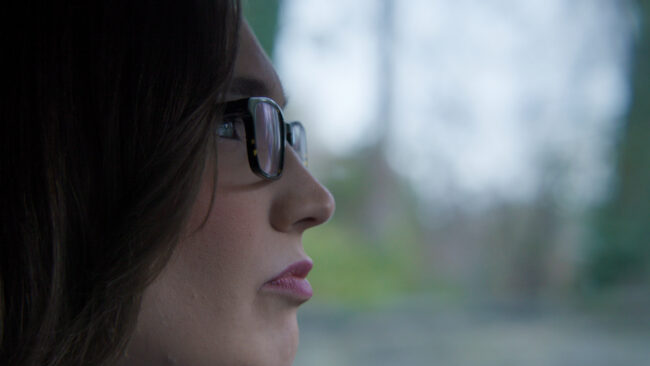
Samantha Smart in Charliebird

Tune into Inside the Arthouse to hear director Libby Ewing discuss her new hit film with co-hosts Greg Laemmle and Raphael Sbarge, or come see Ewing, lead actors Samantha Smart and Gabrielle Ochoa Perez, and production designer Emily Li participate in live Q&As following the film’s one-night stay at the Laemmle Royal on March 5th, or to kick off its theatrical run at Glendale beginning March 6-8th.

Charliebird centers on Al (Smart), a music therapist working with seriously ill young patients. Her job description ranges from lullabies for restless five-year-olds to tracking down the right track to coax a guarded teenager into cracking a smile. It’s delicate work—sometimes playful, sometimes devastating—yet the film resists any temptation to frame it as miraculous. Music here doesn’t cure; it connects.

That connection proves hardest to forge with Charlie (Perez), a sharp, funny seventeen-year-old who has spent years in and out of hospitals. Convinced that adults are shielding her from the truth about her condition, Charlie has little patience for forced cheer. What unfolds between her and Al is not a tidy inspirational arc but a gradual, hard-earned friendship. They talk about sex and regret, about fear and boredom, about the awkwardness of being young in a body that won’t cooperate. Their conversations are by turns irreverent and raw, sidestepping clichés about generational divides or saintly caregivers.

Samantha Smart in Charliebird

The film’s power lies in that restraint. Rather than building toward sweeping melodrama, Charliebird offers glimpses: a Snow White costume that doesn’t quite land, a hospital corridor that feels too narrow, a moment of laughter that catches both women off guard. Cinematographer Luca Del Puppo shoots in an unusual, vertically compressed frame that at first feels constricted, then intimate, as though we’re being invited into a private space. This visual approach mirrors the story itself: focused, uncluttered, attentive to faces.

Smart’s performance as Al reveals a woman whose devotion to her patients coexists with her own unresolved struggles. Perez, meanwhile, delivers a breakout turn, allowing Charlie’s sarcasm to soften into vulnerability without losing her edge.

Ewing makes bold choices in the film’s second half, embracing ambiguity instead of easy answers. Not every question is resolved. Not every outcome is spelled out. The film trusts its audience to sit with uncertainty—much as its characters must.

Ultimately, Charliebird argues for the value of presence over perfection. It suggests that even when one’s circumstances can’t be changed, a shared joke, an honest confession, or a song played slightly off-key can resonate the longest.

“An emotional roller coaster that will inspire viewers to cherish every day.” – Thomas Duffy, Film Book

“A simple, elegant look at friendship and finality.” – Christian Zilko, IndieWire

Leave a Comment Filed Under: Actors in Person, Featured Films, Filmmaker in Person, Glendale, Royal Tagged With: Charliebird, Gabrielle Ochoa Perez, Greg Laemmle, Inside the Arthouse, Libby Ewing, Raphael Sbarge, Samantha Smart

From ‘Cutting Through Rocks’ to ‘Come See Me in the Good Light’: Two Oscar-Nominated Portraits of Courage and Willpower

February 24, 2026 by Lamb Laemmle Leave a Comment

Two of this year’s Oscar nominees for Best Documentary Feature could hardly be more different in setting or scale—one unfolding in a remote Iranian village, the other in the intimate spaces of a Colorado home—yet both pulse with urgency, personality, and the stubborn insistence on living fully.

From 'Cutting Through Rocks' to 'Come See Me in the Good Light': Two Oscar-Nominated Portraits of Courage and Willpower

Tune into Inside the Arthouse to hear directors Mohammadreza Eyni, Sara Khaki, and Ryan White discuss their latest films with co-hosts Greg Laemmle and Raphael Sbarge, or catch them in person when Cutting Through Rocks returns to the Laemmle Royal on February 26th, kicked off by a live Q&A with Eyni after the 7 p.m. showing, followed by Come See Me in the Good Light on February 28th, beginning with a pair of Q&As featuring Ryan White following the Saturday night and Sunday matinee showings at the Laemmle Noho.

Sara Khaki and Mohammadreza Eyni’s Cutting Through Rocks introduces us to Sara Shahverdi, a headscarf-clad former midwife in northwest Iran who opens the film wrestling a metal door back into place with a buzzsaw. It’s an image that doubles as a thesis, as Shahverdi has spent her life defying expectations: riding motorcycles, working construction, advocating for girls’ education, and pushing back against child marriage in a deeply conservative region. When she runs for village council, hoping to become its first elected councilwoman, the film embeds with her over several years, capturing both the grassroots thrill of her campaign and the backlash that follows.

Shahverdi is no abstract symbol; she’s charismatic, funny, impatient, and strategic. She rallies women in living rooms, challenges men in council chambers, and leverages her past as a midwife into political capital. The result is a rousing, clear-eyed portrait of incremental revolution, proving Shahverdi’s own personal mantra that, sometimes, one small step can make all the difference in the world.

From 'Cutting Through Rocks' to 'Come See Me in the Good Light': Two Oscar-Nominated Portraits of Courage and Willpower

If Cutting Through Rocks is about carving space within rigid systems, Come See Me in the Good Light turns inward, illuminating the interior landscape of love and mortality. Directed by Ryan White, the film follows celebrated spoken word poet Andrea Gibson and their longtime partner writer Megan Falley after Gibson is diagnosed with incurable ovarian cancer. Yet what might sound like familiar “cancer documentary” terrain quickly becomes something far more singular: funny, profane, luminous, and fiercely alive.

Gibson, once a touring poet who commanded stages like a rock star, meets their illness not with platitudes but with radical candor. The film moves between chemotherapy appointments and kitchen-table laughter, between whispered fears and bawdy jokes. The lovers measure life in three-week increments between blood tests, yet refuse to surrender their intrinsic biases toward joy. White interweaves archival performance footage with scenes of present-day intimacy, building toward a final public reading that lands with the emotional force of a championship game.

Taken together, these two nominees remind us not only of the documentary genre’s extraordinary range, but of the commonalities that unite us from across the world. Catch these Oscar-nominated documentaries back on the big screen at Laemmle Theatres and see for yourself why they’re among the year’s most celebrated nonfiction films.

Leave a Comment Filed Under: Awards, Filmmaker in Person, Filmmaker Interviews, Greg Laemmle, Inside the Arthouse, NoHo 7, Royal Tagged With: Come See Me in the Good Light, Cutting Through Rocks, documentary, Greg Laemmle, Inside the Arthouse, Oscar nominees, Raphael Sbarge

  • « Previous Page
  • 1
  • 2
  • 3
  • 4
  • 5
  • …
  • 259
  • Next Page »

Search

Instagram

This is the way. 🍿 Exclusive Mandalorian & Grogu p This is the way. 🍿 Exclusive Mandalorian & Grogu popcorn tins and collectible figurines. Yours with a Mando Combo purchase! Very limited supply. 

@LaemmleNewhall & @LaemmleNoHo

🎟️Tickets: laem.ly/4aoKwRb
🖌️Sandwich board art by @mikaelparis_

#StarWars #TheMandalorian #Grogu
☘️ WEAR GREEN ☘️ $AVE GREEN ☘️ $2 OFF your concess ☘️ WEAR GREEN ☘️ $AVE GREEN ☘️ $2 OFF your concessions order!

⭐ St. Patrick's Day! Tuesday March 17th Only!

-Movie ticket purchase not required
-Like and show this post!
🎟️ laemmle.com/discounts
🚀 PROJECT HAIL MARY, AN EPIC PRIZE PACK GIVEAWAY! 🚀 PROJECT HAIL MARY, AN EPIC PRIZE PACK GIVEAWAY!
👉 ENTER in BIO!

#ProjectHailMary — starring Academy Award® nominee Ryan Gosling and directed by Academy Award®-winning filmmakers Phil Lord & Christopher Miller. Based on Andy Weir's New York Times best-selling novel.

🎟️ GET TICKETS in BIO!
For the 21st consecutive year, Laemmle will be scr For the 21st consecutive year, Laemmle will be screening the Oscar-Nominated Short Films, opening on Feb. 20th. Showcasing the best short films from around the world, the 2026 Oscar®-Nominated Shorts includes three feature-length programs, one for each Academy Award® Short Film category: Animated, Documentary and Live Action.

ANIMATED SHORTS: (Estimated Running Time: 83 mins)
The Three Sisters
Forevergreen
The Girl Who Cried Pearls
Butterfly
Retirement Plan
 
LIVE ACTION SHORTS (Estimated Running Time: 119 minutes)
The Singers
A Friend Of Dorothy
Butcher’s Stain
Two People Exchanging Saliva
Jane Austin’s Period Drama

DOCUMENTARY SHORTS (Estimated Running Time: 158 minutes)
Perfectly A Strangeness
The Devil Is Busy
Armed Only With A Camera: The Life And Death Of Brent Renaud
All The  Empty Rooms
Children No More: “Were And Are Gone”

Please note that some films may not be appropriate for audiences under the age of 14 due to gun violence, shootings, language and animated nudity.
Follow on Instagram


Laemmle Theatres

Laemmle Theatres
Tickets: http://laemmle.com/film/artfully-united | Subscribe: http://bit.ly/3b8JTym | ARTFULLY UNITED is a celebration of the power of positivity and a reminder that hope can sometimes grow in the most unlikely of places. As artist Mike Norice creates a series of inspirational murals in under-served neighborhoods in and around Los Angeles, the Artfully United Tour transforms from a simple idea on a wall to a community of artists and activists coming together to heal and uplift a city.

Tickets: http://laemmle.com/film/artfully-united

RELEASE DATE: 10/17/2025
Director: Dave Benner
Cast: Mike Norice

-----
ABOUT LAEMMLE: Since 1938, Laemmle [Theatres] has been showing the finest independent, arthouse, and international films.

Subscribe to Laemmle's E-NEWSLETTER: http://bit.ly/3y1YSTM
Visit Laemmle.com: http://laemmle.com
Like LAEMMLE on FACEBOOK: http://bit.ly/3Qspq7Z
Follow LAEMMLE on TWITTER: http://bit.ly/3O6adYv
Follow LAEMMLE on INSTAGRAM: http://bit.ly/3y2j1cp
Tickets: http://laemmle.com/film/brides | Subscribe: http://bit.ly/3b8JTym | Nadia Fall's compelling debut feature offers a powerful and empathetic look into the lives of two alienated teenage girls, Doe and Muna, who leave the U.K. for Syria in search of purpose and belonging. By humanizing its protagonists and exploring the complex interplay of vulnerability, societal pressures, and digital manipulation, BRIDES challenges simplistic explanations of radicalization.

Tickets: http://laemmle.com/film/brides

RELEASE DATE: 9/24/2025
Director: Nadia Fall

-----
ABOUT LAEMMLE: Since 1938, Laemmle [Theatres] has been showing the finest independent, arthouse, and international films.

Subscribe to Laemmle's E-NEWSLETTER: http://bit.ly/3y1YSTM
Visit Laemmle.com: http://laemmle.com
Like LAEMMLE on FACEBOOK: http://bit.ly/3Qspq7Z
Follow LAEMMLE on TWITTER: http://bit.ly/3O6adYv
Follow LAEMMLE on INSTAGRAM: http://bit.ly/3y2j1cp
Tickets: http://laemmle.com/film/writing-hawa | Subscribe: http://bit.ly/3b8JTym | Afghan documentary maker Najiba Noori offers not only a loving and intimate portrait of her mother Hawa, but also shows in detail how the arduous improvement of the position of women is undone by geopolitical violence. The film follows the fortunes of Noori’s family, who belong to the Hazaras, an ethnic group that has suffered greatly from discrimination and persecution.

Tickets: http://laemmle.com/film/writing-hawa

RELEASE DATE: 10/8/2025

-----
ABOUT LAEMMLE: Since 1938, Laemmle [Theatres] has been showing the finest independent, arthouse, and international films.

Subscribe to Laemmle's E-NEWSLETTER: http://bit.ly/3y1YSTM
Visit Laemmle.com: http://laemmle.com
Like LAEMMLE on FACEBOOK: http://bit.ly/3Qspq7Z
Follow LAEMMLE on TWITTER: http://bit.ly/3O6adYv
Follow LAEMMLE on INSTAGRAM: http://bit.ly/3y2j1cp
Subscribe

Recent Posts

  • The Needle, the Noise, the Nineties: ‘Trainspotting’ Turns 30
  • The Last Great Maestro: Inside ‘Bernstein’s Wall’
  • Culture Vulture: All the World’s a Stage, and These Are Its Players

Archive

Featured Posts

An “embrace of what makes us unknowable yet worthy of forgiveness,” A LITTLE PRAYER opens Friday at the Claremont, Newhall, Royal and Town Center.

Leaving Laemmle: A Goodbye from Jordan