
Three decades after its original release, Danny Boyle’s Trainspotting remains one of the most electrifying cinematic gut-punches of the 1990s, a film that somehow manages to be hilarious, horrifying, exhilarating, and deeply sad often within the same scene. Returning to theaters for its 30th anniversary fresh off a new 4k restoration, Boyle’s adaptation of Irvine Welsh’s cult novel still feels startlingly alive, retaining the same manic energy and confrontational honesty that made it an instant cultural landmark upon its release in 1996.
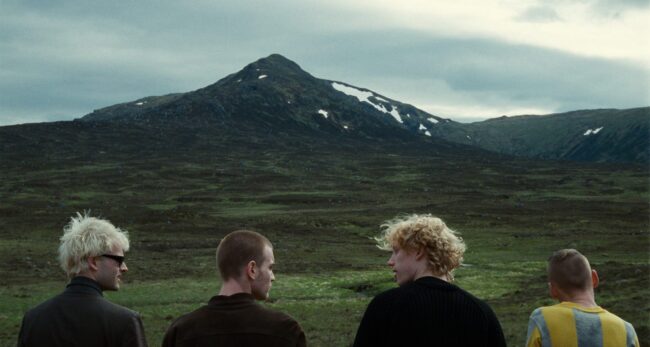
Catch Trainspotting on its 30th anniversary tour beginning June 4th at the Laemmle Glendale, Newhall, and NoHo 7.
Set amid the economic stagnation and restless youth culture of Edinburgh, Trainspotting follows Mark Renton (Ewan McGregor) and his circle of friends as they drift through heroin addiction, petty crime, self-destruction, and fleeting attempts at escape. Yet what distinguished the film then, and what continues to distinguish it now, is its refusal to settle into easy moralism. Boyle never romanticizes addiction, but neither does he flatten it into a simple cautionary tale. The film understands the seductive pull of oblivion just as clearly as it does the devastation left in its wake.
Much of that awareness comes from Boyle’s direction, which exploded onto screens with a style that felt entirely novel for its time. Hyperactive editing, surreal visual detours, needle-drop music cues, and fourth-wall-breaking narration combine to plunge viewers directly into Renton’s fractured state of mind. The now-iconic soundtrack, ranging from Iggy Pop to Underworld, became inseparable from the film’s identity, helping transform Trainspotting into not merely a movie but a full-fledged cultural phenomenon.
Watching it today, it is striking how much of Boyle’s later career already seems present here in embryonic form: the propulsive momentum of Slumdog Millionaire, the visceral intensity of 127 Hours, and the restless experimentation that would come to define one of the most eclectic directing careers of the last thirty years. Since Trainspotting, Boyle has gone on to win the Academy Award for Best Director, helm the opening ceremony of the 2012 London Olympics, and cement himself as one of contemporary cinema’s most energetic and unpredictable filmmakers. But Trainspotting remains, for many, the film most inseparable from his singular artistic identity.
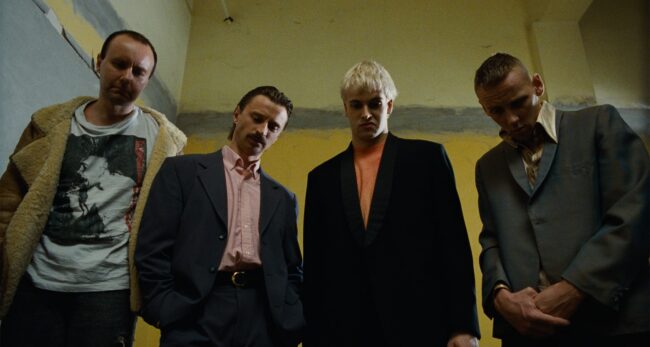
The anniversary arrives at a moment when the story itself is once again evolving, with a stage musical adaptation of Trainspotting set to launch this July in London’s West End, bringing Renton and company back to the city where their story began. That continued reinvention speaks to the film’s enduring resonance across generations. What once felt shocking and immediate has now also become historical: a snapshot of 1990s disaffection that somehow never lost its pulse.
For all its stylization and dark humor, Trainspotting endures because beneath the bravado lies something painfully human. Renton’s famous “Choose Life” monologue lands differently at 30 than it did at 20—not merely as satire, but as the exhausted cry of someone trying, however imperfectly, to imagine the possibility of another kind of existence. So whether it’s your first-ever viewing or a stroll down memory lane, get your tickets now and prepare to be entertained.