Never entirely serious nor quite an all-out comedy, Cédric Klapisch’s Colors of Time might best be described as “cheeky” in its comparison of our current media moment to that of early 20th-century Paris. Through parallel narratives that play fast and loose with history, it’s all about how art may change, but reactions to it remain universal.
Colors of Time opens Aug. 27th at Laemmle’s Royal, Glendale, and Town Center 5.
As the film opens, a punk-styled girl with dyed red hair and intricate body art takes selfies in front of large, impressionist paintings in a gallery. Across the room, a film crew is creating “content” by having an influencer strike dance poses in front of another artwork. Alas, the color of her dress doesn’t match the painting, but since the clothes are sponsor-provided, they’ll just have to tweak the color of the masterpiece behind her in post-production. Throughout the gallery, there’s nary a spectator who isn’t utilizing some sort of mobile device in some way. This is how we consume and process art now.
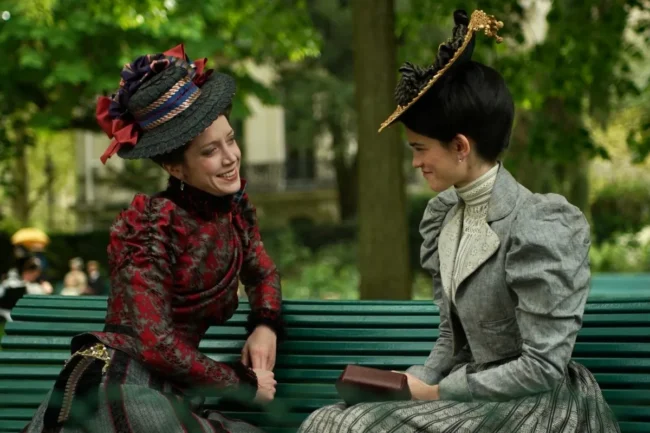
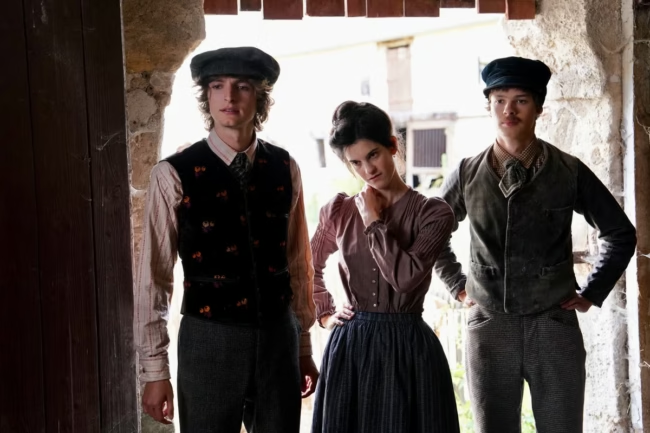
In another time period, a century or so earlier, Adele (Spring Blossom writer-director-star Suzanne Lindon) journeys from the country to Paris, first by horse-drawn cart and then by riverboat, in search of the mother who funds her life but has never shown up in person. Along the way, she’ll find herself amidst a burgeoning art movement, at the birth of impressionism, photography, and even a rumored new invention called the cinematograph.
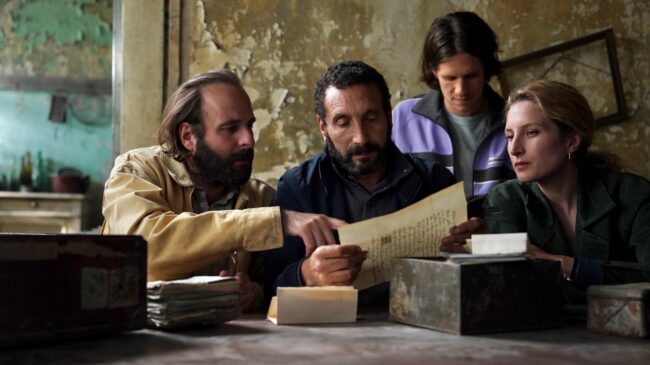
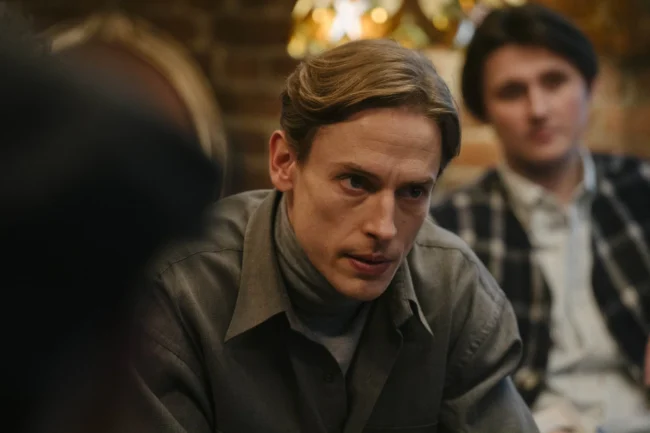
Connecting the two time periods is Adele’s country house, unopened since 1945 or thereabouts. Today, she has approximately 30 descendants, who must decide whether or not to sell the property to a shopping mall. Four are chosen to be representative of the group; each clad in different primary colors, they seem to have each inherited different aspects of the young Adele’s personality. Content-creator Seb (Abraham Wapler) is her youth, anti-capitalist beekeper Guy (playwright and actor Vincent Macaigne) her idealism, future planner and iconoclast Celine (Julia Piaton) her ambition, and schoolteacher Abdel (Klapisch regular Zinadine Soualem) her grounded self.
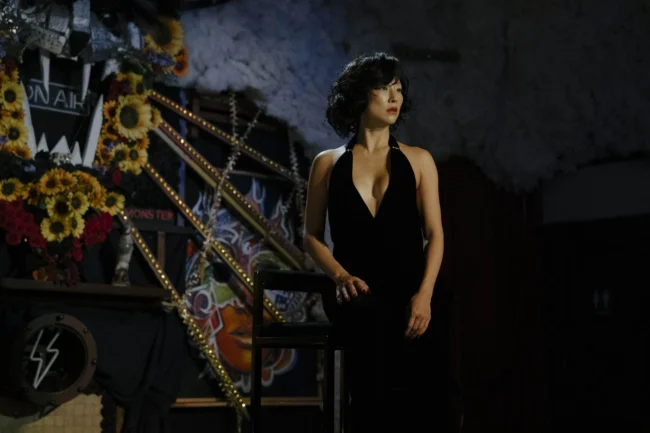
As the four distant cousins journey by train back and forth from the plant-covered house, they find letters, photos, and even two mysterious paintings that offer clues to their shared past. Meanwhile, with clever cuts and dissolves, the past comes alive, with Adele standing out in a bright red blouse amid the more muted gentlemen of Paris. Only when she finds her mother, now a high-end prostitute, in an equally red room, does she blend into the background, much as Adele might like to shrink away in embarrassment herself.
In both time periods, attitudes towards art are changing, with young people embracing the new, be it photography or digital editing, as the older generation of critics scoffs. While the past illuminates the future and present, Klapisch suggests that it personal stakes will always motivate the best art in any era. When the timelines briefly merge, in one of cinema’s unlikeliest drug trips, things get really interesting!
Klapisch’s 2002 hit L’Auberge Espagnole brought together a group of international grad students, and in the subsequent two sequels, followed them over the course of ten years. A gulf of much more than a decade separates the two generations in Colors of Time, but their needs and desires are universal, as are their naysayers, who wish those darn kids in their respective generations would take the time to slow down and enjoy real conversation and connection. This is a movie which suggests that art should facilitate that dialogue rather than separate spectators from it, no matter the tech involved. That most of the primary actors are also creators feels like a pointed, relevant choice in that regard.
“Klapisch is brilliant at directing an ensemble piece, in which the relationships between the characters weave the story, but he also takes the opportunity to pay homage to those who lived…before us.” – Roger Salvans, Fotogramas.
“Klapisch demonstrates, in the most aesthetic and sensory way, the necessity of engaging with the past to move forward in the present.” – Paula Hernandez Platero, Cinemania.