The Official Blog of Laemmle Theatres.

Laemmle Theatres

Film Reviews & Previews

  • All
  • Theater Buzz
    • Claremont 5
    • Glendale
    • Newhall
    • NoHo 7
    • Royal
    • Santa Monica
    • Town Center 5
  • Q&A’s
  • Locations & Showtimes
    • Claremont
    • Glendale
    • NewHall
    • North Hollywood
    • Royal (West LA)
    • Santa Monica
    • Town Center (Encino)
  • Film Series
    • Anniversary Classics
    • Culture Vulture
    • Worldwide Wednesdays
  • Facebook
  • Instagram
  • TikTok
  • YouTube

You are here: Home / Director's Statement

Filmmaker Xavier Giannoli on seven-time César Award winner LOST ILLUSIONS’ “theme of lost innocence, of the ‘waste of self,’ of what was beautiful and precious in oneself.”

June 1, 2022 by Jordan Deglise Moore Leave a Comment

Winner of seven César Awards — Best Film, Adapted Screenplay, Supporting Actor, Male Newcomer, Cinematography, Costume and Set Design — the sumptuous adaptation of Balzac’s LOST ILLUSIONS follows aspiring poet Lucien de Rubempré as he joins a cynical team of journalists in 19th century Paris and discovers that the written word can be an instrument of both beauty and deceit. Director/co-screenwriter Xavier Giannoli sat for an interview to discuss the movie we’ll open June 10 at the Claremont, Royal, Playhouse and Town Center.

Q: How did you decide to adapt LOST ILLUSIONS for the cinema? 

A: I discovered the novel when I was in my twenties, about the same age as Rubempré. I was studying literature and I was fortunate to have a professor named Philippe Berthier, who has since become a great specialist in The Human Comedy [the multi-volume novel of which Lost Illusions is one part]. I had gone to the Sorbonne to be in  the neighborhood with its many movie theaters. I didn’t yet know how, but I wanted to devote my life to cinema. Everything led back to it, in one way or another… 
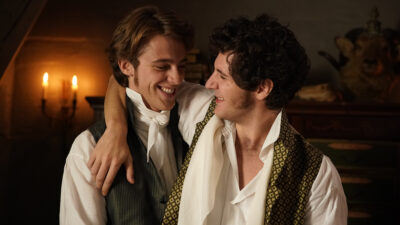
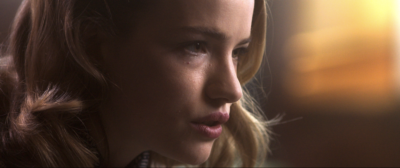
Filmmaker Xavier Giannoli on seven-time César Award winner LOST ILLUSIONS' "theme of lost innocence, of the 'waste of self,' of what was beautiful and precious in oneself."

I then began to accumulate notes, visual references, studies by Marxist critics or their opposites, the reactionary aesthetes, because critics of all varieties wanted to reclaim Balzac. And as far back as I can remember, I have always lived with the idea of one day making a film adaptation of Illusions. But it was out of the question for me to color the novel’s images, to clumsily plagiarize the story in an academic adaptation. Art feeds on what it burns. Cinema is by nature the transfiguration of a reality or of a book – otherwise what is the point?

Q: What were your choices for this adaptation? 

A: After years of exploring the book and its history, I needed to free myself from it, to concentrate on the sensations and feelings the text inspired  in me, similar, in a way, to what music can inspire. In fact, it was by listening to a lot of music that I felt the novel become cinema. It was music that brought me back to what we look for beyond words in the work of cinema, especially when it is a literary adaptation. 
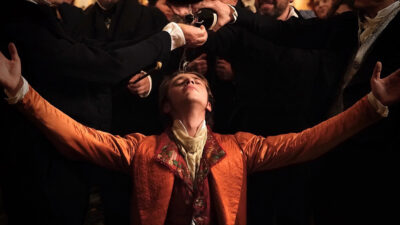
Filmmaker Xavier Giannoli on seven-time César Award winner LOST ILLUSIONS' "theme of lost innocence, of the 'waste of self,' of what was beautiful and precious in oneself."

Some pieces of music were randomly chosen according to my tastes. I found this an original  way to approach the work of adaptation. For example, there is the piece by Vivaldi,  L’inquiétudine, that opens the film. It is 18th century baroque music re-orchestrated in a  “romantic” style by Karajan. Different eras thus discover a secret harmony, like ours with that of  Balzac. Max Richter went even further by freely “rewriting” Vivaldi’s Four Seasons, as if to  express its spirit and modernity without betraying the work… I was also listening to Bach’s concerto for four pianos and orchestra, its incredible “choral” architecture where the themes seem to dialogue from one piano to another. I was thinking of all the characters, of the harmony that had to be found in the adaptation to tie together all these life lines, all these voices, all these tones, the tragic and the comic. 

That is how the “movement” was established, the very physical sensation of movement,  whether musical or simply that of bodies in the salons, throughout Paris, but also the great  movement of a civilization in full mutation. This speed and movement had to be expressed, to  be made a part of the setting. 

Finally, in a more concrete way, I chose to concentrate on the second part of the novel: Un Grand homme de Province à Paris, the Odyssey of the young provincial who is going to discover “the back side of the scenery” and of consciences in the monstrous city. 

Jacques Fieschi’s contribution to the script was very important in helping me to capture the film. He brought a sensitive approach to the characters, helped me to humanize their relationships when Balzac seemed too mocking and punitive. 
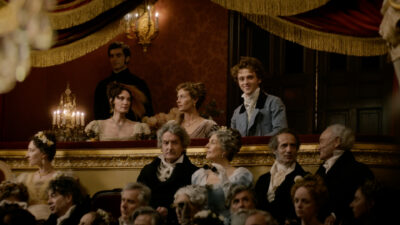
Filmmaker Xavier Giannoli on seven-time César Award winner LOST ILLUSIONS' "theme of lost innocence, of the 'waste of self,' of what was beautiful and precious in oneself."

Q: The character of d’Arthez does not appear in the film… 

A: In the novel, d’Arthez is in some way the  moral counterpoint of Lousteau. He is a moody, pure young writer who embodies virtue, hard work, patience, and high moral standards. A kind of secular saint who belongs to the Cenacle group, an association of young men who, to put it simply, refuse to  compromise themselves by making a pact with the world as it moves towards the race for profit and impatient recognition. 

In the novel, Rubempré is torn between Lousteau and d’Arthez, between vice and virtue, but I found this dramatic casting too easy in a film, too didactic. Also, filming simple virtue bored me… While d’Arthez is, in a certain way, Rubempré’s bad conscience when he allows himself to be corrupted, I preferred that this rupture be an internal one, so that Rubempré can have an awareness, even if shrouded in illusions, of what he has renounced. 
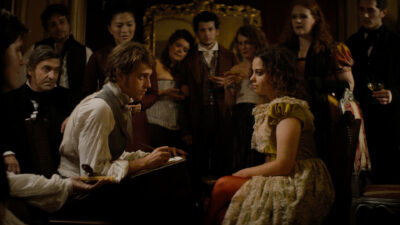
Filmmaker Xavier Giannoli on seven-time César Award winner LOST ILLUSIONS' "theme of lost innocence, of the 'waste of self,' of what was beautiful and precious in oneself."

The spirit of d’Arthez thus flows differently in the film. Several characters see Lucien falling apart and tell him so, warn him… but he ruins himself in spite of everything… Out of revenge, greed,  convenience, unawareness, innocence, survival instinct, pleasure… All these “notes” are present in his score and form the theme: the young man caught up in this movement of the world where all the values that structured society until then are shuffled like playing cards, laid out on a table where everyone cheats. 

But the important thing for me was not to adopt a moralizing or punitive view of this story. Balzac is both fascinated and frightened by this new society that is paving the way for economic liberalism. He presents himself as a worried humanist rather than a moralizer. 
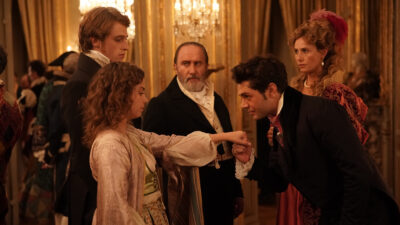
Filmmaker Xavier Giannoli on seven-time César Award winner LOST ILLUSIONS' "theme of lost innocence, of the 'waste of self,' of what was beautiful and precious in oneself."

Q: What is this moment in history in which the novel takes place, in the first half of the 19th century? 

A: There is a book by Philippe Muray which has a title I like very much: The 19th Century through the Ages. He often evokes Balzac and compares this moment of our history with “our time.” Some similarities are indeed disturbing…

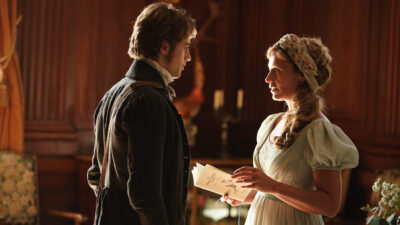
After the blood of the Revolution and the wars of the Empire, French society is longing for a kind of peace, to enjoy it, to have fun… Louis XVIII is in power and he is looking for compromises. The aristocracy has restored the values of the monarchy but the new bourgeois society aspires to social, political and, especially, economic conquests. Louis XVIII is thus a King who is resolutely conservative but, at the same time, is unable to ignore the progress underway. 
Filmmaker Xavier Giannoli on seven-time César Award winner LOST ILLUSIONS' "theme of lost innocence, of the 'waste of self,' of what was beautiful and precious in oneself."

There was the France “underneath”, the one below the ramparts of Angoulême, and the nobles “above,” up on the hill. It is no accident that Rastignac (in Le père Goriot) and Rubempré both come from this provincial town, whose topography expresses this social divide that both these ambitious young men will want to cross, each in his own way. 

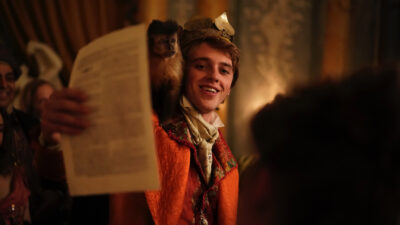
But Paris is not about being there but being part of it. The Parisian aristocracy of money was also self-absorbed, jealous of its privileges. To find one’s place, it is necessary to accept the new “rules” imposed by the obsession with profit, even if it means giving up one’s values. “What have they done with us?” Louise will ask Lucien at the end of the film. I am fascinated by the title of a little-known novel by Balzac: Les comédiens sans le savoir [The Unwitting Comedians]. As if, in this society of performance, we have no other choice than to play this comedy, even in spite of ourselves. 
Filmmaker Xavier Giannoli on seven-time César Award winner LOST ILLUSIONS' "theme of lost innocence, of the 'waste of self,' of what was beautiful and precious in oneself."

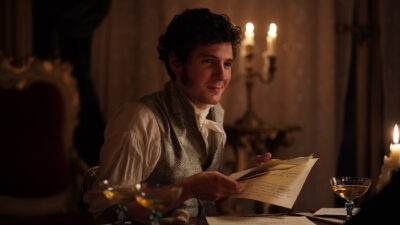
Coming from Angoulême full of illusions, Lucien will learn the hard way about these false pretenses and waste something of his beautiful aspirations. I am particularly touched by this theme of lost innocence, of the “waste of self,” of what was beautiful and precious in oneself. The insidious way that an era or an environment has of leading you to deny your ideals, your most beautiful “values.” Thus, the young idealistic poet of Angoulême will end up in Paris writing advertisements whereas he wanted to create something. He has fallen into the trap of “everything, right away”… and Lousteau, too, will admit: “And yet, I was good… I too had a pure heart.” Balzac saw all these young talents wasting themselves, getting lost in the smoke and mirrors. 

Following the example of the little Corsican who became emperor of the world, these young people dreamed of conquests, of social revenge, but this time far from the battlefields. Heroism becomes careerist, monetizable. It is even at this time that the first business school was created! 

But be careful: Lucien is not a victim. That would be too easy. Balzac also sees the fascinating seduction of this “new world.” Cruelty and melancholy are two notes that I wanted to make resound in the din of the whirlwind. 
Filmmaker Xavier Giannoli on seven-time César Award winner LOST ILLUSIONS' "theme of lost innocence, of the 'waste of self,' of what was beautiful and precious in oneself."

Q: Exactly what is this world that Balzac sees being born before his eyes? 

A: During the period when Balzac was writing Illusions, Marx was in the streets of Paris and Thackeray was preparing Barry Lyndon, which would be published in serial form a little later. There are dozens of other examples of authors who understood that the world had entered “the icy waters of selfish calculation,” to use a phrase dear to Marxists. The critic Georg Lukacs has written magnificent pages on this great novel of the “capitalization of minds” and the “commodification of the world.” 

Balzac sees this moment when “being” degenerates into “possessing” and “possessing” degenerates into “appearing” because he is also writing about France’s conversion to capitalism, and the human, political, spiritual and artistic damage caused by this earthquake. 
Filmmaker Xavier Giannoli on seven-time César Award winner LOST ILLUSIONS' "theme of lost innocence, of the 'waste of self,' of what was beautiful and precious in oneself."

Q: So, with the fundamental value becoming that of profit, can we still know what really has “value” in this world of Illusions, what really has “meaning”? 

A: I’m thinking of those books that the publisher Dauriat will not even read. Or the novel by young Nathan, about which Rubempré admits, following his paid “lesson in criticism”, that he no longer knows if he finds it “good or bad”. Or those plays that are booed or applauded by hired claqueurs [a group of people employed to boo or applaud in French theatres]. 

A fundamental issue is raised here: that of the possibility of meaning in the modern world. What still has meaning in a world where everything is evaluated by a market  value? The young poet Rubempré will be hunted down and the young actress sacrificed by the hounds as though in a  pagan ritual. Does art still have a place in such a world? And I found it particularly interesting that these questions were captured in a movement of cinema, the machine of illusions par excellence, the spectacle of life… and of death. 
Filmmaker Xavier Giannoli on seven-time César Award winner LOST ILLUSIONS' "theme of lost innocence, of the 'waste of self,' of what was beautiful and precious in oneself."

Q: The novel is very severe with the journalism of the time. 

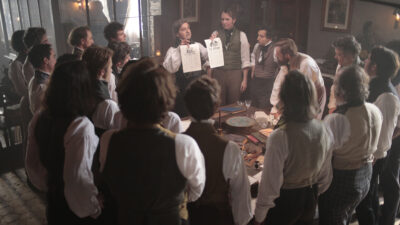
A: The commercial press is only a sign, in The Human Comedy, of society’s great movement towards the God of profit. An entire civilization is being swept away, not a simple corporation. Balzac is severe with these small newspapers that resembled  lawless “gangs,” ready to exchange their opinion for money. 

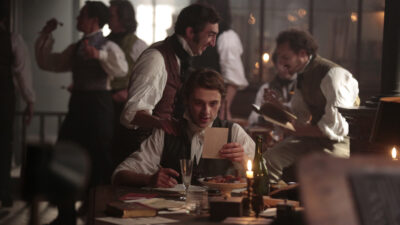
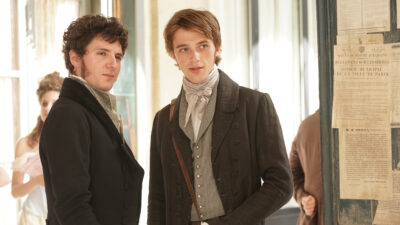
I wanted to film these so-called journalists as gangsters who shoot up careers, defend their territory in theaters and fight with inkwells. For me, wickedness, cruelty and bad faith are as much cinematic material as violence. 
Filmmaker Xavier Giannoli on seven-time César Award winner LOST ILLUSIONS' "theme of lost innocence, of the 'waste of self,' of what was beautiful and precious in oneself."

But from the moment the press became “commercial,” it was foreseeable that some would respond to imperatives other than the desire to enlighten the reader. A little later, Randolph Hearst will declare, “False information and a denial are already two events!” 

Besides, at a time when the print media is in the midst of a “crisis,” I liked filming inks, paper, lead typefaces, books, carved quills, newspaper sheets… all the “signs” of the civilization of the written word now threatened by “numbers,” calculation, and the digital. 

And it is indeed the cinema, this impure art so dependent on money, which now has to consider this tumult that Balzac saw come alive before his eyes.
Filmmaker Xavier Giannoli on seven-time César Award winner LOST ILLUSIONS' "theme of lost innocence, of the 'waste of self,' of what was beautiful and precious in oneself."

Q: How did you work on recreating Restoration Paris?

A: I fought to shoot in France, in Paris, and in  “real” settings, as much as possible. The  project was also a way to pay tribute to the splendor of France, its spirit, its language, as well as its fabrics and its spaces. All of that is the same expression of a magnificent  civilization, need I remind you? 

My set designer Riton Dupire-Clément, my costume designer Pierre-Jean Laroque, my director of photography, the brilliant Christophe Beaucarne, or my sound engineer François Musy, all were concentrated on restoring a feeling of the period as precise and as sensual  as possible. I enjoyed immersing myself in the  world of 19th century Paris, discovering the fantastic forgotten theater of the Château de Compiègne where Coralie is stoned at the end of the film. With its perspectives, you would think it was designed by Kubrick… 

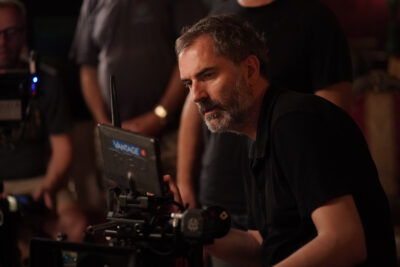
I shot with very special lenses that subtly  distort the perspectives, sometimes darkening the edges of the screen. I was looking for both  a feeling of “realism” through the precision of the reconstruction but also a shift, a poetic and sometimes “fantastic” vision, as in the backstage of theaters, the vision of Lucien’s staring eye discovering the back of the set. 

I was especially looking for sensuality, an organic relationship with the places and the materials, with the colors, for all that to be  embodied, to become cinema, life, sound, movement… A cinematic spectacle in a world where a whole society becomes a spectacle, a game of shadows and illusions, but where the  body, physical love and violence remain “real”. 

Balzac is both sensualist and philosopher, psychologist and anthropologist, painter and director. For example, when reading the description of the Boulevard du Crime, you get the feeling that he had the intuition of cinematic language, it is clear. It is a literature of the gaze. Cinema is organically  linked to Balzac’s vision of the world. Eisenstein spoke about it in his lessons on directing based on “Le Père Goriot.”

Q: Tell us about the casting, Lucien and the others… 

A: Benjamin emerged as a natural, physical choice. It is the injustice of the “gift,” of the  cinematic body, of the look that the camera likes. I did long screen tests in costume where he recited poems, laughed, cried. He had an innocence without mawkishness, a sensuality without vulgarity, a period diction without effort. An element of cinema in which the smallest gesture has a grace without calculation. He was Rubempré, a modern Rubempré. Everything was  personified… Just look at his assurance in front of Depardieu. It’s the same thing. It’s animal. 

Cécile came to the fore when I decided to humanize the character of Louise, who in the novel has the same first name as Darrieux in Madame De… by Max Ophuls, about whom I often thought. In Balzac’s work, there is something miserable and pathetic about her, ready to do anything to  be accepted by high society. I wanted her renunciation of Lucien to have a more  sensitive and “tragic” quality, so that the social aspect did not totally destroy the  feelings. I wanted to nuance, to make their relationship and their age difference more complex and moving. The cruelty of their relationship seemed more devastating to me if their relationship remained secretly loving.

I invented the scene where the young Coralie visits Louise to ask her for help… and not to “take” Lucien from her. Salomé Dewaels is for me a great discovery, even though we had already seen her in small roles. She has this full body, with a roundness that looks “period”, and at the same time the innocence and the craftiness of a girl from the street. She herself was a night bartender and she amazed me when she recited verses from Berenice in the screen tests with perfect diction. She “speaks” dialogues that are sometimes taken from the book, although written in the language of the 19th century. I found the discussion scenes with Lucien when they are in bed, after making love, particularly moving, for their youth, their spontaneity, their sensual innocence. I thought about the cruelty of their fate, the unjust sacrifice of a young woman by a cynical society. 

If he had been more clever, more Rastignac, Lucien would have seduced the terrible Madame d’Espard, played by the dazzling Jeanne Balibar, whose every sibilant line in the dialogue, every look, becomes a danger both voluptuous and threatening. Perhaps she is also taking revenge for the fact that Lucien does nothing to seduce her and that it is even more unbearable for her than seeing a young commoner trying to penetrate the aristocracy. Again, the cruelty of the situations, of the social struggle, seemed to me even more bloody and physical when mixed with wounds of love. 

“And yet I was good…” This sentence had caught me while reading the novel. It haunted me… and Vincent Lacoste gives it a glow that is both painful and laughing, a derision that masks a failure, a renounced vocation, a lost illusion. Lacoste gives a human truth to each look and his incredible laughter resounds at the bottom of an abyss, of a life perhaps already ruined… He is funny and tragic in the same movement, that of jealousy and friendly betrayal. Once again, I wanted to give the character a chance because his humanity rips away a little more of his flesh. 

Friendship as a value torn to shreds by “the hounds” is an essential theme of the film, one of those higher feelings put to the test by the obsession with success and profit. And while Lousteau sells out, Nathan resists and “plays with it all,” as he wants to push Lucien to learn to do in order to protect his talent. 

For this character, I wanted an artist, an icon. A musician, a writer… or why not a filmmaker. I quickly thought of Xavier Dolan whom I admire as a filmmaker and as an actor. He has a very pure energy and an uncommon intelligence. He was enthusiastic when he read the script and immediately understood the issues at stake, starting with the place of the artist in this world, the vanity and the taste for beauty, against all odds… Our relationship was close and concentrated, right up to the enormous voice work of the narrator, who enlightens the film with his irony and his humanity. 

He is an accomplished actor, subtle and unpredictable, extraordinarily involved. In the film, he is an icon of his time who, unlike Lucien or Lousteau, knows how to protect his inspiration from the social and “media” comedy. Crossing paths with him on this gigantic shoot was very stimulating for me, like a visceral reminder of the need for a personal vision, for a singular proposal. 

On the set, I had real joy in seeing him working so closely with Depardieu. Something of the poetic history of cinema was there, between the actor of Loulou and the author of Mommy. Depardieu was jubilant in playing this fruit and vegetable vendor who cannot read but has become the sultan of publishers, through pure commercialism. He is an actor of pure genius – you could see it in the looks that all these young actors were giving him. Seeing him so happy to act, to invent, gave us incredible energy. 

Finally, I would like to say a word about the great Jean-François Stévenin, my claqueur, whose presence on the set was essential to remind me that a film must remain an adventure, that one must not let oneself be fooled by the system, to risk everything and expect nothing, and to protect one’s flame, however modest it may be. His death overwhelms me. 

He would have been the first to pay tribute to André Marcon and Louis-Do de Lencquesaing and to all those who embody this bundle of destinies, this “Human Comedy.”
Leave a Comment Filed Under: Director's Statement, Claremont 5, Featured Films, Featured Post, Films, Playhouse 7, Royal, Theater Buzz, Town Center 5

“Mind-bending, hammed-up, highly paced, farcical, funny, and suspenseful dark fairy tale” ’18 1/2′ coming soon.

May 18, 2022 by Jordan Deglise Moore Leave a Comment

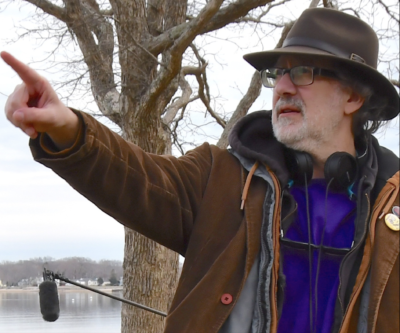
Dan Mirvish Guest Blog for Laemmle Theaters:

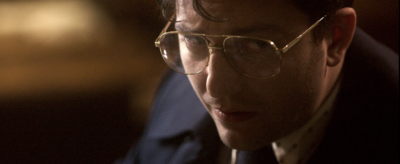
I’m thrilled and honored to be bringing my newest film, 18½ back to my filmmaking home in LA, Laemmle Theaters! 18½ is about a White House transcriber who tries to leak Nixon’s 18½-minute gap to the press, but runs afoul of hippies, swingers and nefarious forces. It stars Willa Fitzgerald (Reacher), John Magaro (Kelly Reichardt’s First Cow and Cannes competition Showing Up), Vondie Curtis Hall (Harriet), Richard Kind, Catherine Curtin and the voices of Ted Raimi as Gen. Al Haig, Jon Cryer as HR Haldeman and Bruce Campbell as Richard Nixon.

"Mind-bending, hammed-up, highly paced, farcical, funny, and suspenseful dark fairy tale" '18 1/2' coming soon.

The film is having its L.A. Premiere at the Laemmle Monica, on May 27th and screening for a week there, with bonus screenings at the Glendale on May 31 and NoHo7 on June 1, with guest Q&As for most of the screenings.  After winning audience and jury awards and screening at some 21 film festivals on four continents over the last few months, it’s very exciting to finally bring the film to the greater Los Angeles community.

"Mind-bending, hammed-up, highly paced, farcical, funny, and suspenseful dark fairy tale" '18 1/2' coming soon.

My history with Laemmle theaters goes back to 1995 when my first film, Omaha (the movie) screened for 11 straight weeks. Whether I was showing up at the old Sunset 5 wearing a sandwich board, or throwing raw steaks at the audience, I was buoyed in my efforts by Bob and Greg Laemmle, who not only tolerated but encouraged my indie film shenanigans. The Laemmle family support of independent film in the heart of Los Angeles has proved time and time again that Hollywood is more than just big budget studio superhero films and streaming “content.” Laemmle Theaters are truly one of the last bastions of support for independent filmmaking in the belly of the beast. We are all indebted to their decades-long support of all our films, and our ability to share them with audiences and engage in a uniquely live cinematic conversation.

"Mind-bending, hammed-up, highly paced, farcical, funny, and suspenseful dark fairy tale" '18 1/2' coming soon.

As a filmmaker who lives a block south of the biggest studios in the world (so, technically they’re in my shadow), 18½ was largely produced during the pandemic with the incredible support and help of my Culver City neighbors, family and friends – for whom I baked sourdough bread as barter for music cues, VFX shots, cameras, posters and sound mixing. I’m looking forward to seeing many of them at our screenings, and I know you’ll love meeting such amazing collaborators as composer Luis Guerra, featured vocalist Caro Pierotto, and so many other talented artists who will be joining me for our Q&As.  If it takes a village to make a film, it takes a village idiot like me to make one in the middle of a pandemic!

"Mind-bending, hammed-up, highly paced, farcical, funny, and suspenseful dark fairy tale" '18 1/2' coming soon.

But don’t take my word on why you should see the film. I’m thrilled and humbled by all the fantastic reviews we’ve been getting…

“18½ is a rare find in the current landscape of filmmaking, an original story that draws you in from the opening frame…18½ is weird, engrossing, and thoroughly enjoyable.” – Susan Leighton, ScreenAnarchy

“18½ is a mind-bending, hammed-up, highly paced, farcical, funny, and suspenseful dark fairy tale. This makes it a timeless curveball aimed to hit the strike zone of our minds.” – Lloyd Sederer, M.D., Psychology Today 

“Mirvish’s film is a fun and eccentric outing, relishing in the “what ifs” of alternate political history; a much-needed breath of fresh air when taking on politics in today’s charged climate.” – Sammy Levine, Hammer to Nail

“18½ is so riveting and immersive that I forgot I was making a cup of tea and found a cup of cold, over-steeped leaf water after the final credits rolled.” – Jamie Toth, The Somewhat Cyclops

Looking forward to seeing you at Laemmles and talking about 18½!

Leave a Comment Filed Under: Director's Statement, Filmmaker in Person, Films, Glendale, NoHo 7, Q&A's, Santa Monica, Theater Buzz

Searing, prescient French abortion drama ‘Happening’ arrives just in time.

May 11, 2022 by Jordan Deglise Moore Leave a Comment

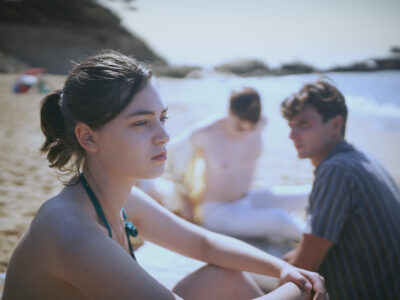
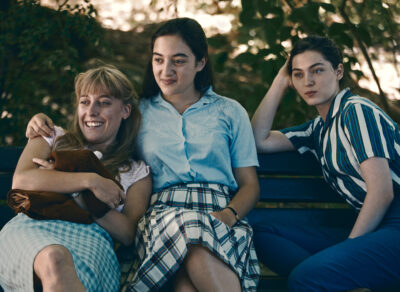
Opening just as the expected but still shocking news broke that the Republican appointees to the Supreme Court are ready to begin clawing back women’s rights within a few weeks, Happening could not be more timely or galvanizing. As Mark Olsen wrote recently in the L.A. Times, “Happening is set in 1963 and yet it suddenly feels like a possible window into the future. Directed by Audrey Diwan, who co-wrote the adaptation of Annie Ernaux’s autobiographical novel of the same name, the film follows a young French college student Anne (Anamaria Vartolomei) as she attempts to get an abortion after discovering she is pregnant. Though abortion became legal in France in 1975, in 1963 it very much was not, with potential prison time for the woman, whoever performed the procedure and anyone who helped. Isolated from her friends and family, Anne becomes increasingly driven as the weeks pass by to find a solution to her problem — anything that will allow her to continue on with her life as she planned and fulfill her goal to become a writer…In an emailed statement, Diwan responded to the recent news [from SCOTUS], writing, “The purpose of art is also to bring to light some hidden truths. We all know, time has proven it, that when abortion becomes illegal, women who feel the need for it find other solutions. And not safe ones. I think that those who want to intervene in the abortion debate, whether for or against, should at least know clearly what a clandestine abortion is. We cannot talk about what we don’t know. And I include myself here: before reading Happening, I participated in this conversation for a long time without knowing … I was wrong. We should all know, this must not stay silent.'”

 Searing, prescient French abortion drama 'Happening' arrives just in time.

Happening was a critical, commercial and cultural phenomenon in its native France, where it opened in the autumn. The New York Times recently published a piece headlined “In France, a Film Has Women Sharing Their Stories of Abortion: Following the release of Happening, about an illegal abortion in 1963, the country’s contemporary stigma around the procedure is facing scrutiny.” The lede: “Happening, Audrey Diwan’s film about a 1960s back-street abortion in France, isn’t for the fainthearted. In fact, audience members have fainted at several screenings, including at the Venice Film Festival last September, where it won the Golden Lion. ‘It’s often men who say the experience took them to the limit of what they could bear,” Diwan said in a recent interview, “because they had never imagined what it might be like.’…Happening, which aims for a sense of immediacy onscreen, has led artists and activists to speak up about the taboo they feel still surrounds the procedure. ‘There is this constructed social shame that women are meant to feel, Diwan said, ‘and the sense that if we talk about it, we take the risk of calling into question this right, which in the end is never assured.’ In response to Happening, last December, the French feminist magazine Causette devoted a cover story to testimonies from 13 celebrities, under the title: “Yes, I Had An Abortion.” The author Pauline Harmange, who rose to international prominence last year with her debut book “I Hate Men,” also published an essay in March about her own experience, “Avortée” (“Aborted”).”

Searing, prescient French abortion drama 'Happening' arrives just in time.

Some of the abundant praise for Happening:

“Magnificently written, directed, shot and performed, it reminds you that cinema can be such a powerful medium of empathy.” – Zhuo-Ning Su, Awards Daily

Searing, prescient French abortion drama 'Happening' arrives just in time.

“It’s hard to think of a film more necessary in the current moment.” – David Jenkins, Little White Lies

“Deftly adapted by director Audrey Diwan from a novella, Happening is a period piece, but it’s acted and shot with a shivery immediacy.” – Robbie Collin, Daily Telegraph UK

Searing, prescient French abortion drama 'Happening' arrives just in time.
Audrey Diwan

We open Happening at the Claremont, Newhall, Playhouse and Town Center this Friday, May 13 and at the Monica Film Center, Glendale and NoHo on May 20.

Leave a Comment Filed Under: Featured Films, Claremont 5, Director's Statement, Featured Post, Films, Glendale, Newhall, NoHo 7, Playhouse 7, Press, Santa Monica, Theater Buzz, Town Center 5

Stand with Ukraine through Film: THE GUIDE and Ukraine War relief.

March 16, 2022 by Jordan Deglise Moore 1 Comment

We all know of the tragedy that is happening in Ukraine because of the Russian invasion.  Thousands of civilians are dying in the streets while as of today 3,000,000 people are fleeing the country.

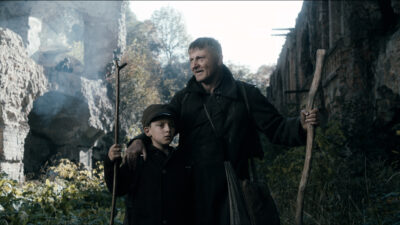
Film exhibitors around the country want to do their small part. Working with filmmaker Oles Sanin, who is currently in Ukraine, we have banded together to screen his 2014 Ukrainian film The Guide and will donate 100% of the proceeds to help his fellow Ukrainians. We’ll begin screening the film this Friday at the Monica Film Center. The Guide follows an American boy named Peter and and a blind minstrel, Ivan, who are thrown together by fate during the Stalin-perpetrated genocide in 1930s Ukraine.

Stand with Ukraine through Film: THE GUIDE and Ukraine War relief.

Here’s the official website: STAND WITH UKRAINE THROUGH FILM

Here is a message from the director that will precede the screenings:

https://www.youtube.com/watch?v=7ea5wsqA6xI

Here is the film’s trailer:

https://www.youtube.com/watch?v=CxoWXxdKSZA

1 Comment Filed Under: Charity Opportunity, Claremont 5, Director's Statement, Featured Post, Films, Glendale, Newhall, News, NoHo 7, Playhouse 7, Royal, Santa Monica, Special Events, Theater Buzz, Town Center 5

“Solidarity is a magnificent way to reinvent oneself.” Catherine Frot on her role in THE ROSE MAKER, opening April 1 at the Playhouse and Royal.

March 16, 2022 by Jordan Deglise Moore Leave a Comment

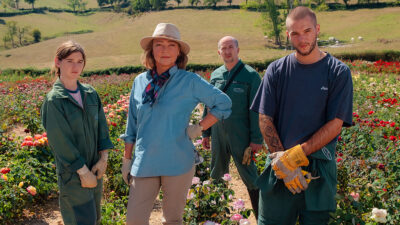
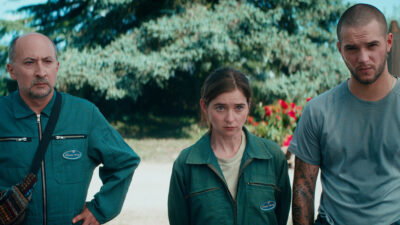
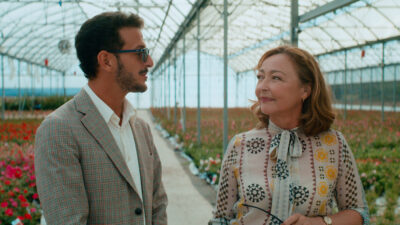
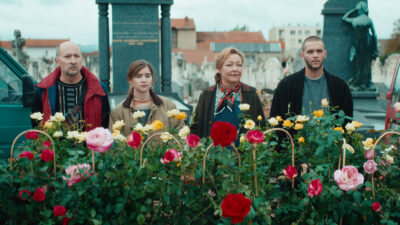
The French rightly pride themselves on their artisanal traditions, from fine wines to bread, cheeses and more. That storied culture is increasingly at odds with modern, massive corporations trying to maximize profits, which can radically reduce quality. (This recent Guardian story about baguettes is a case in point.) The “lovingly made light drama” The Rose Maker dramatizes this dynamic. The film follows Eve, one of France’s greatest artisanal horticulturalists, whose rose business is on the brink of bankruptcy. When her secretary hires three inexperienced ex-convicts, they must team up to rescue the business in this verdant comedy. The movie is “a tender dramedy about apprenticeship, striving for excellence, and the passing down of savoir-faire.” (City of Lights, City of Angeles Film Festival)

Lead actress Catherine Frot was recently interviewed about her work on the film:

Q: What attracted you to The Rose Maker?

A: I was initially drawn to the character’s personality and also her arc: that of a woman who was a glory in her profession, who is no longer a glory but who will nevertheless experience a rebirth by accepting the help of people who have also hit rock bottom. People who are in trouble, locked in their solitude but who, despite their differences, end up finding their salvation in solidarity. I was first touched by the social dimension and the humanity of The Rose Maker. And then I realized that the roses were very important in the charm of this tale of helping hands, that they were even essential, that they gave it an indescribable poetry and a heady perfume. I must admit that I didn’t pay much attention to these flowers before. The film introduced me to them. I feel like I’ve made an extraordinary journey into an unknown land. I no longer look at roses in the same way. I know what their beauty requires in terms of care and know-how and today they touch me and make me dream.

"Solidarity is a magnificent way to reinvent oneself." Catherine Frot on her role in THE ROSE MAKER, opening April 1 at the Playhouse and Royal.

Q: Let’s get back to Eve.

A: For an actress, Eve is an irresistible character, because she is so complex and will evolve so much. At the start of the film, she is proud, upstanding, courageous, closed in on herself; a sort of uptight but bruised boss lady who only keeps going thanks to her “monomaniacal” passion for roses. She was a queen in her field, stronger competitors have taken her crown, and yet she continues to fight for the survival of her business with quite incredible panache. Eve is a bit like an oak. On the surface, she is as solid as a rock, and yet she is weakened by wounds she believes to be invisible: the death of her father, the decline of her business and… the anonymity into which she has fallen. The unexpected arrival of three people in search of identity and social integration is enough to make this stubborn woman give up, question herself, and let a feeling develop in her that, as a childless woman, she thought she would never be able to experience: that of passing something on. Playing someone who comes out of her shell and transforms herself is always exciting, all the more so if, as is the case here, she is driven by an exclusive and totally disinterested passion. In a certain way, Eve “takes after” roses. She lives only for the perpetuation of beauty, something completely useless, fleeting, obsolete and yet fundamental and primordial. Eve undergoes a sort of spiritual quest which borders on poetry and which also gives rise, at times, to a certain humor.

"Solidarity is a magnificent way to reinvent oneself." Catherine Frot on her role in THE ROSE MAKER, opening April 1 at the Playhouse and Royal.

Q: Eve is an artisan. While her work is based on taste and intuition, it also requires skill, meticulousness and precision. Playing her required learning quite a few things. Did this add to your desire to take the part?
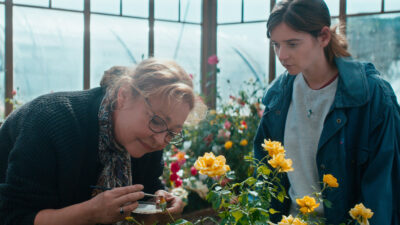
A: Oh yes! I love to give the illusion on screen that I have mastered skills that I don’t have in everyday life. In fact, that is one of my great joys as an actress. For example, I still have wonderful memories of the cooking lessons I was given for Haute Cuisine or the piano virtuosity lessons I took for The Page Turner. For The Rose Maker, I had to learn about hybridization. It is a skill that requires a lot of precision and I loved it. My teacher was Madame Dorieux, the owner of the rose garden in which we shot the film. I really like these periods of learning the trade that my characters practice. For me, they are like schools of life. Even if I forget them quickly afterwards, I retain the pleasure I had in learning the gestures of professions that would have remained completely foreign to me otherwise.
"Solidarity is a magnificent way to reinvent oneself." Catherine Frot on her role in THE ROSE MAKER, opening April 1 at the Playhouse and Royal.
Q: Are costumes important for you?
A: They are essential. They allow me to fully “inhabit” my character. With Pierre Pinaud and the costume designer, I spent a lot of time thinking about Eve’s clothes. She is a modern company manager with a manual job but, at the same time, she cherishes the memory and the working methods of her father. We imagined her a little masculine, in clothes that are both modern and old-fashioned, practical but with an outdated elegance. I immediately thought of the floppy necktie, the hat and the pipe. The pipe, which she seems to smoke on the sly, out of nostalgia for her father, is also a tangible expression of her contradictions, since at one point she, whose job is to appreciate the fragrance of roses, asks her young employee to stop smoking so as “not to spoil his sense of smell”. I love it when someone’s contradictions are also revealed in the accessories of their daily life.
"Solidarity is a magnificent way to reinvent oneself." Catherine Frot on her role in THE ROSE MAKER, opening April 1 at the Playhouse and Royal.
Q: You didn’t know Pierre Pinaud. What kind of director is he?
A: He is charming, really, touching, elegant, poetic and tactful at the same time. He is a man who lives in and for beauty. He is a garden of flowers all by himself. His film is called The Rose Maker, because for him, undeniably, the rose is at the center of his film, the rose, its history and its perpetuation which is symbolized here by the fight of a woman. It is also thanks to this approach that, beyond its social dimension, his film exudes such poetry, sensuality and emotion.
"Solidarity is a magnificent way to reinvent oneself." Catherine Frot on her role in THE ROSE MAKER, opening April 1 at the Playhouse and Royal.
Q: A word about your partner, Melan Omerta, who plays Fred, and who was making his feature debut here.
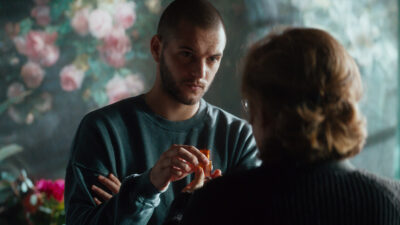
A: Melan was the best in the screen tests… and he has an incredible presence. It’s pretty crazy, he comes from a rap background, knew little or nothing about film, yet he immediately had a feel for the camera. Performing with him was both intense and simple. He gives off an incredible amount of emotion. He is a great discovery.
"Solidarity is a magnificent way to reinvent oneself." Catherine Frot on her role in THE ROSE MAKER, opening April 1 at the Playhouse and Royal.
Q: We get the impression that The Rose Maker is a film that has particularly touched you.
A: That’s true. It’s a very beautiful, refined, very well written and constructed film. At the same time, it is very rich. It exposes the difficulties of a small family business in the face of large corporations, it takes stock of a profession facing great difficulties, it portrays an endearing woman in her struggle to survive without renouncing her moral values, and in her stubbornness to maintain a floral tradition, and it shows that solidarity is a magnificent way to reinvent oneself. The fact that the link between all these facets is the passion for a flower that is the image of eternal beauty merely adds to its singularity!

Leave a Comment Filed Under: Director's Statement, Featured Films, Films, Playhouse 7, Royal, Theater Buzz

Radu Jude on BAD LUCK BANGING OR LOONY PORN: “This was my idea — to clash these two types of obscenity, and to see that the one so-called obscenity in the porn video is nothing compared with what is around us, but that we don’t pay attention to.”

January 26, 2022 by Jordan Deglise Moore Leave a Comment

Internationally acclaimed Romanian writer-director Radu Jude’s daring new film BAD LUCK BANGING OR LOONY PORN, which we’ll screen February 1 at our Glendale, NoHo, Playhouse and Royal theaters followed by a streaming engagement beginning February 4 on Laemmle Virtual Cinema, follows Emi (Katia Pascariu), a schoolteacher who finds her reputation under attack after her personal sex tape is uploaded to the internet. Forced to meet the angry parents demanding her dismissal, Emi refuses to surrender. Jude begins the film with an excerpt of the tape and then proceeds with three loosely connected parts: Emi’s confrontational walk through Bucharest between COVID surges; then a playful essay on obscenities; all culminating, in the third part, in an incendiary comic confrontation between Emi and her students’ aggrieved parents. The final part is quite reminiscent of recent U.S. school board meetings but with sex substituting for arguments about COVID restrictions and the teaching of America’s racist history.
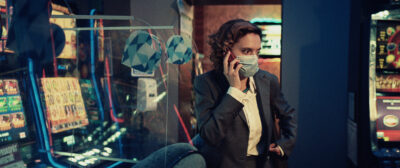
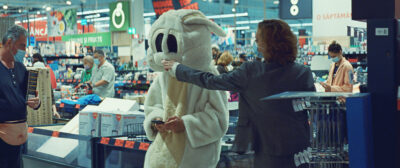
   Radu Jude on BAD LUCK BANGING OR LOONY PORN: "This was my idea — to clash these two types of obscenity, and to see that the one so-called obscenity in the porn video is nothing compared with what is around us, but that we don’t pay attention to."
BAD LUCK BANGING is Romania’s submission to the Oscars for the Best International Feature prize and has enjoyed excellent critical response, as have earlier highlights from his oeuvre on our Laemmle Virtual Cinema platform (now playing but ending soon): AFERIM!, UPPERCASE PRINT and “I DO NOT CARE IF WE GO DOWN IN HISTORY AS BARBARIANS.”
Radu Jude on BAD LUCK BANGING OR LOONY PORN: "This was my idea — to clash these two types of obscenity, and to see that the one so-called obscenity in the porn video is nothing compared with what is around us, but that we don’t pay attention to."
Some praise for BAD LUCK BANGING:
“A fascinating snapshot of the here and now, an unusually direct example of a nimble, adventurous filmmaker embracing the difficulties of the moment. But it is also something more.” ~ Justin Chang, Los Angeles Times
“Wild. Audacious. An angry, funny film.” ~ Edgar Wright (director, Shaun of the Dead, One Night in Soho)

“A batshit farce. See is on a big screen with an audience to bask in their outrage.” ~ Alex Winter, actor-director, Zappa, Bill & Ted Face the Music

“An eyeball-slicing polemic by a bomb-throwing provocateur.” ~ Josh Kupecki, Austin Chronicle

“Amid so many earnest, forgettable COVID-era and COVID-acknowledging movies around the world, here’s one that truly goes for it.” ~ Michael Phillips, Chicago Tribune

Radu Jude on BAD LUCK BANGING OR LOONY PORN: "This was my idea — to clash these two types of obscenity, and to see that the one so-called obscenity in the porn video is nothing compared with what is around us, but that we don’t pay attention to."

Jude wrote about the origins of the film and its themes:

“The film first appeared out of long discussions with friends. On a few occasions we discussed real-life stories from Romania and other countries, of teachers being expelled from schools where they were teaching because of what they were doing in their private lives: live-cam sex chat or posting amateur porn recordings on the internet. The discussions were so heated, it made me think that although the topic seems trivial and shallow, there must be a lot more behind it if reactions to it are so powerful. Then I decided to make a film – so now I have the last word in front of my friends, they cannot come up with something like that.

Radu Jude on BAD LUCK BANGING OR LOONY PORN: "This was my idea — to clash these two types of obscenity, and to see that the one so-called obscenity in the porn video is nothing compared with what is around us, but that we don’t pay attention to."
Radu Jude

“The film has three parts which engage each other in poetic ways – understanding “poetic” according to Malraux’s definition: “Without doubt all true poetry is irrational in that it substitutes, for the ‘established’ relation of things, a new system of relations.”

“While the film title is mostly self-explanatory, its subtitle, ‘a sketch for a popular film’, could benefit from an explanation. Malraux once noted that “Delacroix, though affirming the superiority of the finished painting over the sketch, kept many of his sketches, whose quality as works of art he considered equal to that of his best paintings.” The idea struck me as relevant and I decided to apply it in filmmaking and try to see what a film would look like if its form was left open, unfinished, like a sketch. And yes, “popular”, since I believe the film could be easy like a summer breeze and because of its tabloid-like topic. But it is not a real popular film. Only a sketch of a possible one.”

Radu Jude on BAD LUCK BANGING OR LOONY PORN: "This was my idea — to clash these two types of obscenity, and to see that the one so-called obscenity in the porn video is nothing compared with what is around us, but that we don’t pay attention to."

On shooting in COVID times:

“The first lockdown ended in Romania at the end of May and we were supposed to film in October and November. When we saw that the second wave of Covid-19 was coming (at the beginning of July), me and the producer Ada Solomon had to decide: either we stick to the plan (which meant also applying for extra funding), with the risk of postponing the shooting in case the crisis worsens, or we film sooner with the money we have. We opted for the latter and started to prepare the film. The number of cases was rising, so I had also to decide how to interact with people. I strongly believe that, as a director, you have a certain responsibility towards the cast and crew.

Radu Jude on BAD LUCK BANGING OR LOONY PORN: "This was my idea — to clash these two types of obscenity, and to see that the one so-called obscenity in the porn video is nothing compared with what is around us, but that we don’t pay attention to."

“When I was young, I really admired all the crazy shoots I read about: Way Down East, Aguirre, Apocalypse Now etc. I still admire them, but I am too weak: I try not to risk the life or health of anybody when it comes to shooting. I don’t think any film in the world is worth someone contracting even a common cold, and my bad films – even less. With these in mind, I did all the casting, and all the rehearsals on Zoom and decided to have the crew wearing masks. And also, even the cast. Firstly, because the film was supposed to be contemporary and the masks were part of our daily life and I wanted to capture this moment, to find the anthropological aspect of the mask-wearing. Secondly, because I cared about the health of the people involved. You know, many of them are in the film at my invitation. I was the host and I felt responsible. Most of the people agreed with these safety regulations. Some of them, more vulnerable, agreed to do the film only because I promised them that the rules of social distancing and protection will be severely respected. We all tested for Covid-19 before shooting and two times more.

“If you went down on the street during this time, the signs that remained — posters for concerts, empty restaurants, and so on and so forth — were already signs of a non-existent reality. Cinema has this possibility to capture things, to capture the signs of the time passing, to make a capsule of the moment in many ways.

“In the first shooting day, Ada Solomon, our producer, explained to everyone that wearing the mask is mandatory on set for the whole film, that we must change it every 4 hours (they were provided free by the production), that we have only sandwiches as catering (for obvious reasons). Everybody (literally: everybody) agreed. And most of us respected the rules, although it was exhausting, and wearing a mask in severe heat for 12 hours a day can be horrible. Then, there were some crew or cast members sometimes not respecting the rules, which made our shoot more challenging than it could have been. I am not against people who break the rules, on the contrary, if it involves only their bodies. I am against breaking the rules when you endanger or harm others. The great thing on a film set (or on my sets, anyway) is that everyone has the same rights as everyone else: the same working hours (apart from special situations, like a more time-consuming make-up etc.), the same food, the same accommodation or transport. So, it was quite disappointing to have a few people every day taking off the mask whenever they could. I see it as a lack of respect for their colleagues, a kind of “Fuck you, I don’t care about anyone else, I want to feel good even if I can infect you.” This sometimes made the atmosphere on the set tense, but that’s it. I felt relieved when the shooting ended, and we were all healthy.”

Themes

“What is obscene and how do we define it? We are used to acts which are much more obscene, in a way, than small acts like the one that set off the uproar we see in the film.

“This was my idea — to clash these two types of obscenity, and to see that the one so-called obscenity in the porn video is nothing compared with what is around us, but that we don’t pay attention to.

“The film tells a contemporary story, a small one, a little story. If history and politics are part of the film, that is because the story itself has a deeper meaning if we see it in a historical, societal and political context.

“Obscenity is the theme of this film and the viewers are constantly invited to compare the so- called obscenity of a banal amateur porn video with the obscenity around us and the obscenity we can find in recent history, whose traces are all around. So, the viewers should make this montage operation. Georges Didi Huberman wrote something very important regarding montage and it could apply to our film as well:

“Le montage sera précisément l’une des réponses fondamentales à ce problème de construction de l’historicité. Parce qu’il n’est pas orienté simplement, le montage échappe aux théologies, rend visibles les survivances, les anachronismes, les rencontres de temporalités contradictoires qui affectent chaque objet, chaque événement, chaque personne, chaque geste. Alors, l’historien renonce à raconter ‘une histoire’ mais, ce faisant, il réussit à montrer que l’histoire ne va pas sans toutes les compléxités du temps, toutes les strates de l’archéologie, tous les pointillés du destin.” *

* “Montage will be precisely one of the fundamental responses to this problem of constructing historicity. Because it is not oriented towards simplicity, Montage escapes theologies, and has the power to make visible the legacies, anachronisms, contradictory intersections of temporalities that affect each object, each event, each person, each movement. Thus, the historian renounces telling ‘a story’, but in doing so, succeeds in showing that history cannot be, without all of the complexities of time, all the archaeological strata, all of the perforated fragments of destiny.”

Leave a Comment Filed Under: Director's Statement, Featured Films, Featured Post, Glendale, Laemmle Virtual Cinema, News, NoHo 7, Playhouse 7, Royal, Theater Buzz

“COMPARTMENT NO. 6 evokes a powerful nostalgia for a type of loneliness we don’t really have any more, and for the type of love that was its cure.” The Finnish Oscar contender opens next week.

January 19, 2022 by Jordan Deglise Moore Leave a Comment

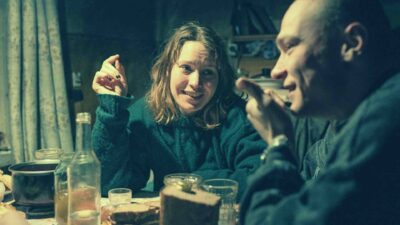
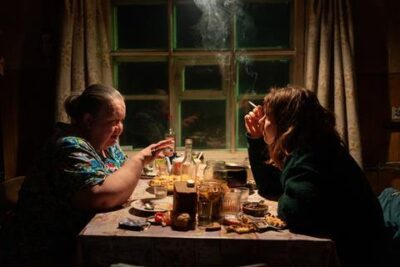
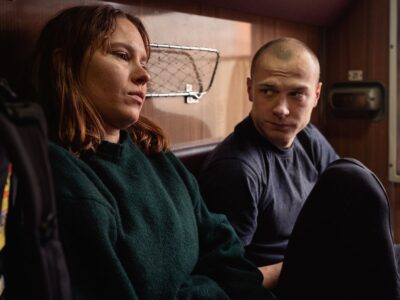
We love a movie set on a train and are excited to open an excellent new addition to the genre, the acclaimed new Finnish movie COMPARTMENT NO. 6. (We may be hosting the filmmaker for a Q&A; check our website for news.) The film follows a young woman who escapes an enigmatic love affair in Moscow by boarding a train to the Arctic port of Murmansk. Forced to share the long ride and a tiny sleeping car with a larger than life Russian miner, the unexpected encounter leads the occupants of compartment no. 6 to face major truths about human connection. In addition to the Royal engagement starting Wednesday, January 26, we’ll expand the film to Encino and Pasadena on February 4. The Academy has short-listed the film for its Best International Feature Oscar and prompted some glowing reviews:

“An engrossingly offbeat rail movie…the two leads…walk us through the human condition with the nuances of a big Russian novel.” ~ Deborah Young, The Film Verdict

"COMPARTMENT NO. 6 evokes a powerful nostalgia for a type of loneliness we don't really have any more, and for the type of love that was its cure." The Finnish Oscar contender opens next week.

“It makes for a take on the love story as fresh, resonant and honest… as you’ll find in a contemporary film.” ~ Robert Abele, L.A. Times

"COMPARTMENT NO. 6 evokes a powerful nostalgia for a type of loneliness we don't really have any more, and for the type of love that was its cure." The Finnish Oscar contender opens next week.

“As bleak as the settings may be, it has a delicious black comic streak and shares the buzz of personal re-awakening without ever feeling obvious or cheap. It turns out to be a beacon of warmth amid a frozen wasteland.” ~ Dave Calhoun, TimeOut

"COMPARTMENT NO. 6 evokes a powerful nostalgia for a type of loneliness we don't really have any more, and for the type of love that was its cure." The Finnish Oscar contender opens next week.

“COMPARTMENT NO. 6 evokes a powerful nostalgia for a type of loneliness we don’t really have any more, and for the type of love that was its cure.” ~ Jessica Kiang, Variety

"COMPARTMENT NO. 6 evokes a powerful nostalgia for a type of loneliness we don't really have any more, and for the type of love that was its cure." The Finnish Oscar contender opens next week.

“Seida Haarla gives a winning, intelligent performance as a naturally very clever person made to feel small and helpless in a strange land. But Yuriy Borisov pops from the first moments you see him.” ~ Mark Asch, Little White Lies

"COMPARTMENT NO. 6 evokes a powerful nostalgia for a type of loneliness we don't really have any more, and for the type of love that was its cure." The Finnish Oscar contender opens next week.
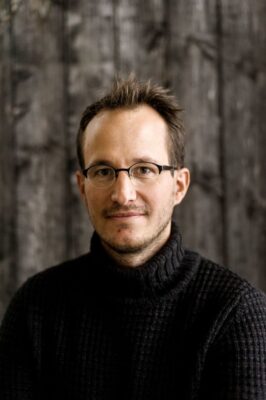
Juho Kuosmanen

Director/co-screenwriter Juho Kuosmanen penned the following about his film:

“COMPARTMENT NO. 6 is an Arctic road movie, perhaps it could be seen as a clumsy attempt to find harmony and peace of mind in a world of chaos and anxiety. The core of the story lies in the notion of acceptance. It’s a hard duty to accept that you are part of this chaotic world, and that you exist as you do. Our hero, Finnish student Laura, takes a long train ride to visit some ancient petroglyphs. She quotes a man she met: “To know yourself, you need to know your past.” She would like to be an archaeologist who gets fulfilment out of these kind of things, petroglyphs and such. But is she really that person? Or is this just a stolen dream from a person she would like to be?

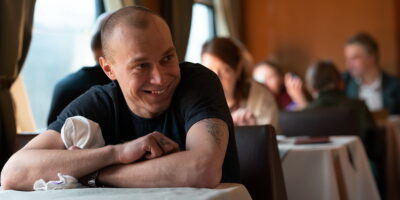
“On the train she meets Ljoha, an annoying Russian miner who follows her like a shadow. She wanted to know her past, and Ljoha is the embodiment of it. It’s unpleasant and banal, but it is what it is.

“Road movies are often about freedom. In a car you can go where you want, every crossroad is a possibility. But I tend to think that freedom isn’t an endless number of options but rather, the ability to accept your limitations. A train ride is more like destiny. You can’t decide where to go, you just have to take what it gives you.”

https://www.youtube.com/watch?v=itL_GpBalA4

Leave a Comment Filed Under: Director's Statement, Featured Films, Featured Post, Filmmaker in Person, Films, Playhouse 7, Q&A's, Royal, Theater Buzz, Town Center 5

LUNANA: A YAK IN THE CLASSROOM, the first film from the Kingdom of Bhutan to make the shortlist for the Best International Feature Oscar, opens January 21.

January 12, 2022 by Jordan Deglise Moore Leave a Comment

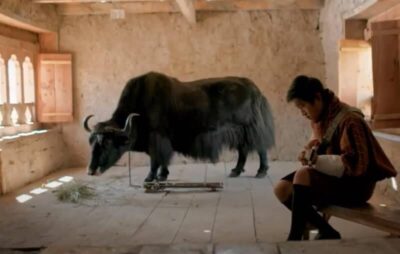
Ugyen, a young teacher in modern Bhutan, shirks his duties while planning to go to Australia to become a singer. As a reprimand, his superiors send him to the most remote school in the world, in a village called Lunana, to complete his service. He finds himself exiled from his Westernized comforts after an arduous eight-day trek just to get there, where he finds no electricity, no textbooks, not even a blackboard. Though poor, the villagers extend a warm welcome to their new teacher, but he faces the daunting task of teaching the village children without any supplies. He wants to quit and go home, but he learns of the hardship in the lives of the beautiful children he teaches, and begins to be transformed by the villagers’ amazing spiritual strength.

We open LUNANA: A YAK IN THE CLASSROOM Friday, January 21 at the Playhouse, Royal and Town Center.

LUNANA: A YAK IN THE CLASSROOM, the first film from the Kingdom of Bhutan to make the shortlist for the Best International Feature Oscar, opens January 21.

From the writer-director, Pawo Choyning Dorji:

“Pursuit of Happiness: Being the nation of ‘Gross National Happiness,’ Bhutan is supposedly the world’s happiest country. But what does it really entail to be happy? For that matter are the Bhutanese really that happy? Ironically many Bhutanese leave Bhutan, the land of happiness, to seek their own version of ‘happiness’ in the modern glittering cities of the west. With LUNANA: A YAK IN THE CLASSROOM I wanted to tell a story where Ugyen, the young protagonist of the story also wishes to go in search of his happiness. However, he is sent on another journey… he reluctantly goes into a world that is unlike the modern world in every aspect. Along this journey he realizes what we so desperately seek in the outer material world, actually always exists within us, and that happiness is not really a destination but the journey.

LUNANA: A YAK IN THE CLASSROOM, the first film from the Kingdom of Bhutan to make the shortlist for the Best International Feature Oscar, opens January 21.
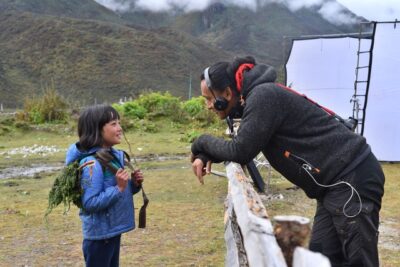
Filmmaker Pawo Choyning Dorji with an actor.

“The Dark valley: The film was shot on-location at the world’s most remote school, in the village of Lunana. The village is a settlement that’s sits along the glaciers of the Himalayas, only accessible through an eight-day trek over some of the highest mountains of the world. There are only 56 people in the village, most of whom had never seen the world outside their village. The word ‘Lunana’ literally means the dark valley; a valley so far and distant that the light doesn’t even reach it. So isolated is the village that even to this day, there are no electricity and cellular network connections. Due to the lack of facilities, the production of the film was totally dependent on solar-charged batteries.

LUNANA: A YAK IN THE CLASSROOM, the first film from the Kingdom of Bhutan to make the shortlist for the Best International Feature Oscar, opens January 21.

“Though extremely challenging, I specifically wanted to shoot the movie in Lunana, inspired by the purity of the lands and the people. I also wanted everyone involved in the production to experience this life changing journey, so that the authenticity of experience could translate on to the film.

LUNANA: A YAK IN THE CLASSROOM, the first film from the Kingdom of Bhutan to make the shortlist for the Best International Feature Oscar, opens January 21.

“The major themes of the story are ‘the search for happiness and a sense of belonging’, and these are universal themes that everyone can relate to irrespective of one’s culture and background. However I wanted to present those themes through a medium like Lunana, a world and a people that are so different from not only the rest of the world, but from also Bhutan itself. I wanted to show that even if in such a unique world, the hopes and dreams that connect humanity are the same.”

LUNANA: A YAK IN THE CLASSROOM, the first film from the Kingdom of Bhutan to make the shortlist for the Best International Feature Oscar, opens January 21.

Leave a Comment Filed Under: Director's Statement, Featured Films, Featured Post, Films, Playhouse 7, Royal, Theater Buzz, Town Center 5

  • « Previous Page
  • 1
  • …
  • 4
  • 5
  • 6
  • 7
  • 8
  • 9
  • Next Page »

Search

Instagram

You heard the man! bazluhrmann says "Go see a movi You heard the man! bazluhrmann says "Go see a movie with theatre owners that care! Go see it at a Laemmle!"

🎟️🎟️
@LaemmleMonicaFilmCenter (Santa Monica)
@Laemmle_Royal (West Los Angeles)
@LaemmleGlendale (Glendale)
@LaemmleNoHo (North Hollywood)
@LaemmleClaremont (Claremont)
@LaemmleNewhall (Newhall)
@LaemmleTownCenter (Encino)
🎟️🎟️

🎬 From the director of Moulin Rouge! and Elvis, Baz Luhrmann has a new documentary: "EPiC: Elvis Presley in Concert." Catch it at a Laemmle Theatre in February!

#laemmlelove #laemmle #arthouse #tishlaemmle @greglaemmle
OG video from TishLaemmle
Part of the #WorldwideWednesday Series! 🎟️ laem.ly Part of the #WorldwideWednesday Series! 🎟️ laem.ly/4lT0rcd
#TheDialoguePolice
In Sweden, people have a right to freedom of expression, and the dialogue police are there to protect that right. Created in the wake of 2001 anti-EU protests in Gothenburg, where police shot three protesters, the unit is tasked with managing relationships with demonstrators to prevent violence (rather than reacting to it) and to de-escalate effectively, when necessary.
Part of the #WorldwideWednesday Series! 🎟️ laem.ly Part of the #WorldwideWednesday Series! 🎟️ laem.ly/3JCaLYV
#UnderTheFlagsTheSun
Unearthed secrets of Stroessner's 35-year Paraguayan reign. Never-before-seen footage exposes a brutal dictatorship's lasting impact.  #documentary #history #Paraguay #dictatorship #Stroessner.
🍿 EXCLUSIVE POPCORN BUCKET GIVEAWAY! 👉 ENTER IN B 🍿 EXCLUSIVE POPCORN BUCKET GIVEAWAY! 
👉 ENTER IN BIO!

Two paths. One epic conclusion. Return to Oz!

🎟️ GET TICKETS:  IN BIO!
Follow on Instagram


Laemmle Theatres

Laemmle Theatres
Tickets: http://laemmle.com/film/artfully-united | Subscribe: http://bit.ly/3b8JTym | ARTFULLY UNITED is a celebration of the power of positivity and a reminder that hope can sometimes grow in the most unlikely of places. As artist Mike Norice creates a series of inspirational murals in under-served neighborhoods in and around Los Angeles, the Artfully United Tour transforms from a simple idea on a wall to a community of artists and activists coming together to heal and uplift a city.

Tickets: http://laemmle.com/film/artfully-united

RELEASE DATE: 10/17/2025
Director: Dave Benner
Cast: Mike Norice

-----
ABOUT LAEMMLE: Since 1938, Laemmle [Theatres] has been showing the finest independent, arthouse, and international films.

Subscribe to Laemmle's E-NEWSLETTER: http://bit.ly/3y1YSTM
Visit Laemmle.com: http://laemmle.com
Like LAEMMLE on FACEBOOK: http://bit.ly/3Qspq7Z
Follow LAEMMLE on TWITTER: http://bit.ly/3O6adYv
Follow LAEMMLE on INSTAGRAM: http://bit.ly/3y2j1cp
Tickets: http://laemmle.com/film/brides | Subscribe: http://bit.ly/3b8JTym | Nadia Fall's compelling debut feature offers a powerful and empathetic look into the lives of two alienated teenage girls, Doe and Muna, who leave the U.K. for Syria in search of purpose and belonging. By humanizing its protagonists and exploring the complex interplay of vulnerability, societal pressures, and digital manipulation, BRIDES challenges simplistic explanations of radicalization.

Tickets: http://laemmle.com/film/brides

RELEASE DATE: 9/24/2025
Director: Nadia Fall

-----
ABOUT LAEMMLE: Since 1938, Laemmle [Theatres] has been showing the finest independent, arthouse, and international films.

Subscribe to Laemmle's E-NEWSLETTER: http://bit.ly/3y1YSTM
Visit Laemmle.com: http://laemmle.com
Like LAEMMLE on FACEBOOK: http://bit.ly/3Qspq7Z
Follow LAEMMLE on TWITTER: http://bit.ly/3O6adYv
Follow LAEMMLE on INSTAGRAM: http://bit.ly/3y2j1cp
Tickets: http://laemmle.com/film/writing-hawa | Subscribe: http://bit.ly/3b8JTym | Afghan documentary maker Najiba Noori offers not only a loving and intimate portrait of her mother Hawa, but also shows in detail how the arduous improvement of the position of women is undone by geopolitical violence. The film follows the fortunes of Noori’s family, who belong to the Hazaras, an ethnic group that has suffered greatly from discrimination and persecution.

Tickets: http://laemmle.com/film/writing-hawa

RELEASE DATE: 10/8/2025

-----
ABOUT LAEMMLE: Since 1938, Laemmle [Theatres] has been showing the finest independent, arthouse, and international films.

Subscribe to Laemmle's E-NEWSLETTER: http://bit.ly/3y1YSTM
Visit Laemmle.com: http://laemmle.com
Like LAEMMLE on FACEBOOK: http://bit.ly/3Qspq7Z
Follow LAEMMLE on TWITTER: http://bit.ly/3O6adYv
Follow LAEMMLE on INSTAGRAM: http://bit.ly/3y2j1cp
Subscribe

Recent Posts

  • Laemmle Holiday Gifts: Wear Your Love of Cinema (Literally)
  • Resurrection: Inside Bi Gan’s Cinematic Dreamscape
  • Anniversary Classics Presents: Power, Politics, and Passion in Nixon and Doctor Zhivago

Archive

Featured Posts

An “embrace of what makes us unknowable yet worthy of forgiveness,” A LITTLE PRAYER opens Friday at the Claremont, Newhall, Royal and Town Center.

Leaving Laemmle: A Goodbye from Jordan