Ms. Cohen spoke with the Laemmle Theatres president on Monday about getting the company through 2020, the company’s history of meeting past challenges, safely re-opening theaters, and more.

Film Reviews & Previews
Ms. Cohen spoke with the Laemmle Theatres president on Monday about getting the company through 2020, the company’s history of meeting past challenges, safely re-opening theaters, and more.
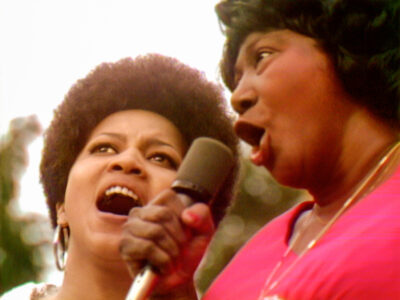
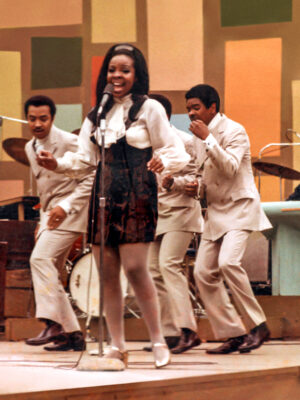
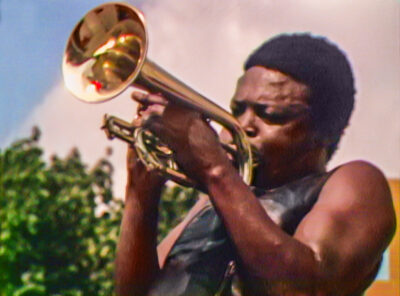
In his acclaimed debut as a filmmaker, Ahmir “Questlove” Thompson presents a powerful and transporting documentary: part music film, part historical record, created around an epic event that celebrated Black history, culture and fashion. Over the course of six weeks in the summer of 1969, just one hundred miles south of Woodstock, The Harlem Cultural Festival was filmed in Mount Morris Park (now Marcus Garvey Park). The footage was never seen and largely forgotten–until now. SUMMER OF SOUL shines a light on the importance of history to our spiritual well-being and stands as a testament to the healing power of music during times of unrest, both past and present. The feature includes never-before-seen concert performances by Stevie Wonder, Nina Simone, Sly & the Family Stone, Gladys Knight & the Pips, Ray Baretto, Abbey Lincoln & Max Roach and more. SUMMER OF SOUL won both the Grand Jury Prize and the Audience Award for Feature Documentary at this year’s Sundance Film Festival. Laemmle Theatres opens in July 2 at the Claremont, Glendale, Monica Film Center, Newhall, NoHo and Playhouse theaters.
Reviews have been rapturous:
“A joyous piece of filmmaking, something that I could have watched for literal hours, and contains quite simply some of the best concert footage ever put on film.” ~ Brian Tallerico, RogerEbert.com
“SUMMER OF SOUL is as thoughtful as it is rousing, a welcome shot of adrenaline to kick off not just a film festival but a new year.” ~ Sheri Linden, Hollywood Reporter

“You can come for the music and stay for the politics, or vice versa; either way, it’s a vibrant document of an inspiring event that never loses sight of what that event meant for a community, a city and a culture.” ~ Steve Pond, TheWrap

“SUMMER OF SOUL stirringly captures the moment when a sea of people in Harlem heard a grand series of voices and said, Yes.” ~ Owen Gleiberman, Variety)
“Seething through the entire documentary, against the backdrop of a racially turbulent 1960s, is an insistence on a new kind of racial pride and unity across the diaspora, which infuses “Summer” with an honesty and realism.” ~ Tambay Obenson, indieWire
“The lack of awareness of this event is another tragic example of black history being ignored. Only this time the record survived, and now we all get to share in it.” ~ Jordan Hoffman, Guardian)
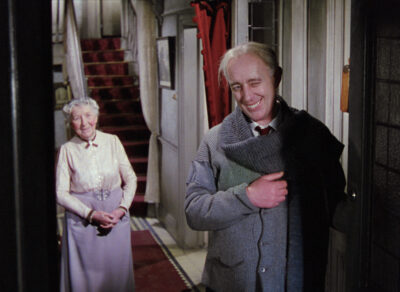
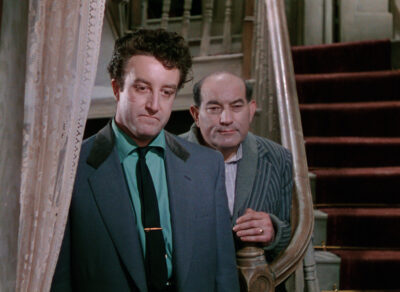
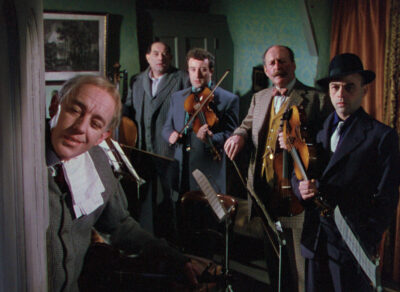
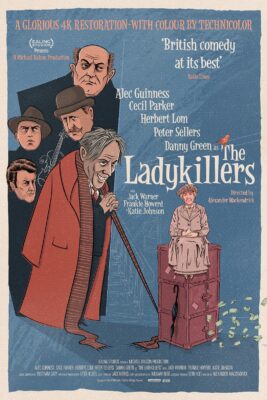
In the newly restored British comedy THE LADYKILLERS (1955), a crew of thieves led by Professor Marcus (Alec Guinness) pulls off a daring heist and tricks their elderly landlady, who believes them to be a string quintet, into sneaking the loot past the authorities. When things don’t go as planned, the crew must improvise to keep their treasure and to ensure the old woman’s silence. Widely considered one of the finest comedies ever filmed, we’re proud to screen it at the Royal, Playhouse and Town Center starting July 2.
“A superbly elegant comedy. Even after 65 years, it still kills… Subversive, hilarious and as English as Elgar… A mixture of cynicism with guileless innocence.” – Peter Bradshaw, The Guardian
“Extravagantly funny.” – Pauline Kael
“Near flawless.” — Philip French
“The last, most enduring and best known of all the studio’s comedies, in which the sheer blackness of the central concept is barely disguised by the accomplished farce which surrounds it.” – Time Out
Rialto Pictures on the 2021 restoration:
As the last British film shot in three-strip Technicolor, THE LADYKILLERS is fortunate to have all thirty-three reels of its original Technicolor camera negative. So it was crucial and important that these elements be used for StudioCanal’s restoration, the best version of the film since its original release.
The restoration began with the 4K pin-registered scanning of the original 1950s Technicolor three-strip camera negative. With three-strip Technicolor (a process that was last used by Hollywood in the early 1970s), three color separations (r yellow, cyan and magenta) are combined to create the full Technicolor palette. Therefore, though the release prints of THE LADYKILLERS are 11 reels total, there are 33 reels of camera negative.
One of the biggest issues to overcome was the proper alignment of the separations. This was automated to a certain extent, but a huge amount of manual tweaking was required, involving tracking each one of the perforations. This is performed to avoid “fringing,” which causes colored outlines on edges of objects, faces etc.
Manual and automated digital restoration was then carried out over the aligned images. This was to remove particles of dirt, debris, hair, sparkle and then moving onto bigger issues such as stains, marks and scratches. The film suffered from a few extreme issues such as blue marks in the middle to right hand side of frame throughout the film that had to be removed. There was significant flicker that has been corrected as best as possible on a shot-by-shot basis. Many shots suffered from instability and some sections also suffered from scratching, the worst being four minutes of scratched film throughout an entire sequence.
In total, the film benefitted from over 1000 hours’ worth of 4K digital restoration. A 35mm Technicolor print was used as a reference for the color grade to ensure the new HDR Dolby Vision master stayed true to the film’s original 1950s “color by Technicolor” look.
Laemmle Theatres is pleased to present Ruthy Pribar’s ASIA, beginning Friday, June 25 at the Playhouse, Royal, and Town Center. Shira Haas made an indelible impression (she was nominated for an Emmy and won an Independent Spirit Award) as the lead in the acclaimed recent TV series Shtisel and Unorthodox. Here she stars as a Russian émigré to Israel, navigating (with her single mother) her teenage years, burdened by a largely undefined illness that makes all of her decisions infinitely more poignant. First-time writer-director Ruthy Pribar does an exquisite job of defining the complexities of a mother-daughter relationship that eschews clichés and sentimentality. Instead both actresses (Alena Yiv plays the mother) give riveting, yet understated performances that explore the inevitable chasm that divides the generations and creates barriers between the healthy and the sick—while limning a universal and timeless story of maternal love and loss.
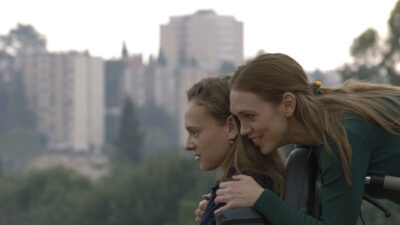
ASIA swept the 2020 Ophir Awards (Israeli Oscars) winning nine honors (eight going to women), including Best Picture, Actress, Supporting Actress, Cinematography, Editing, and Score. The film also won multiple awards at the 2020 Tribeca Film Festival: Best Actress for Shira Haas; Best Cinematography for Daniella Nowitz; and The Nora Ephron Award for Ruthy Pribar.

Film critics have started to weigh in with warm reviews:
“Rigorously unsentimental, this impressive Israeli feature debut from Ruthy Pribar stars a mesmerising Shira Haas (recently seen in Unorthodox) as Vika, the daughter struggling to resolve her frail, failing body with the urge to be a normal, rebellious teenager. As her mother, Asia, Alena Yiv is superb, creating a flawed, flesh-and-blood character who is smart enough to know that doing the right thing by her daughter might place her at odds with society and perhaps even the law.” (Wendy Ide, Guardian)
“Sparse and gorgeously acted.” (Linda Marric, Jewish Chronicle)
“Delivers an emotional wallop. Modest. Intimate. Subtle. Eschews sentimentalism for a patient inquisitive character study.” (Eric Kohn, Indiewire)
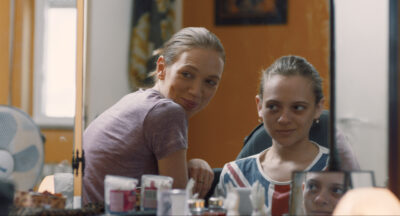
“The maturity of the directorial voice is evident in its clear-eyed, rigorously unsentimental assessment of a shattering situation.” (David Rooney, Hollywood Reporter)
“From Daniella Nowitz’s muted, intimately lit lensing to the plaintive, judiciously used piano strains of Karni Postel’s score, every formal element of ASIA serves to illustrate and enrich the tricky, evolving relationship at its center.” (Guy Lodge, Variety)

In Francois Ozon’s new film about first love and its consequences, SUMMER OF 85, a seaside summer fling between Alexis and David lasts just six weeks, but casts a shadow over a lifetime. We open it Friday, June 18 at the Royal, Playhouse, and Town Center. Here’s the filmmaker statement about the source material, English writer Aidan Chambers’ 1982 novel Dance on My Grave, and making the film, followed by a recent interview:
I read the novel in 1985, when I was seventeen years old, and I loved it. It spoke to me personally. The book is playful and inventive. It has drawings, press clippings, changing points of view … I so much enjoyed reading it that, when I started directing short films, I thought: “If one day I make a feature film, my first will be an adaptation of this novel” (…) Films are made when they’re supposed to be made.
This story needed time for me to mature so that I would know how to tell it. In the end, I remained faithful to the novel’s narrative structure. I adapted the story’s background to make it French and I transposed it to the time period when I first read the book. The movie encompasses both the book’s reality and my memories of what I felt when first reading it.
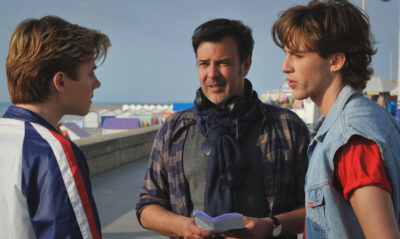
[Warning: there are spoilers in the following interview.]
Q: SUMMER OF 85 was originally a novel by Aidan Chambers: “Dance On My Grave.”
A: I read the novel in 1985, when I was seventeen years old, and I loved it. It spoke to me personally. The book is playful and inventive. It has drawings, press clippings, changing points of view… I so much enjoyed reading it that when I started to direct short films, I thought: “If one day I make a feature film, my first will be an adaptation of this novel.”
Q: And thirty-five years later…
A: It didn’t occur to me until now to make this film because the truth is, more than anything, I wanted to see it as a moviegoer! And I was convinced that someone else was going to make it – an American filmmaker. But to my surprise, it never happened. After wrapping up “By the Grace of God,” I reread the book out of curiosity and I was shocked, because I realized that I had already filmed many of the book’s themes: cross-dressing in “A Summer Dress” or “The New Girlfriend;” the scene at the morgue in “Under the Sand;” a relationship with a professor in “In the House;” the cemetery in “Frantz.”
This book had been fueling my imagination, yet I’d never made the connection. I had forgotten about the novel’s scrapbook-style, which also seemed very cinematographic to me. And I remembered that when at the age of eighteen I had written a first draft of the script with a friend, I had only focused on the love story and had removed everything that seemed secondary at the time, such as the social worker, the professor, the parents, Judaism, and the flashbacks.
Perhaps I couldn’t handle all the different elements back then. Films are made when they’re supposed to be made. This story needed time for me to mature so that I would know how to tell it. In the end, I remained faithful to the novel’s narrative structure. I adapted the story’s background to make it French and I transposed it to the time period when I first read the book. The movie encompasses both the book’s reality and my memories of what I felt when first reading it.
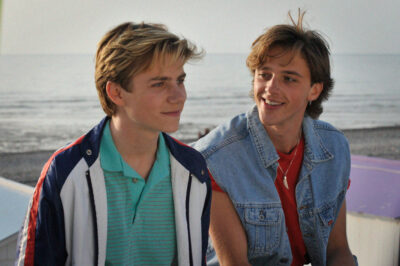
Q: The book’s tone is rather offhand. You approach it from a more dramatic and romantic register.
A: Some scenes were slightly more humorous when we were shooting, but during the editing stage I tended to tone down the comical side to be wholly with the boys, to experience their love story straightforwardly. And in the second half of the movie, with the mourning and what their pact entailed, there was even less room for comedy. It was important to establish a genuine rapport with the characters and to convey the emotion I had felt as a teenager. It sometimes seemed like I was remaking a first film, but with the maturity I had acquired from making all my other films. This lent clarity coupled with a tender nostalgia for the time period to the process. If I had been closer to my characters’ ages, my approach would undoubtedly have been more distant.
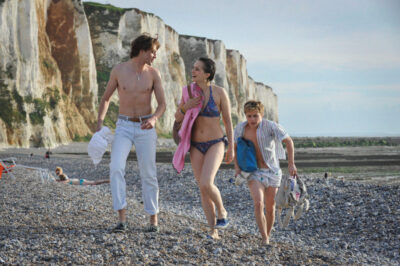
Q: SUMMER OF 85 is firstly a love story before being a story about gay love.
A: I was faithful to the book which never problematizes gayness, never makes it an issue, which is very beautiful and modern for the time period. Alex and David love one another and the fact that they are two boys is beside the point. That’s the reason why I dreamed of being able to go see this film when I was a teenager. Depictions of gay people in the movies in the 1980s were very dark and painful, even before AIDS.
Following the codes of the teen movie genre was important to me while making the film. I shot the romance between the boys in a very classic way, without irony, in order to make this a universal love story.
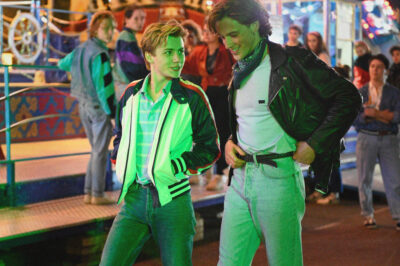
Q: SUMMER OF 85 could have become a teenage saga, but you have transformed the material, playing on the suspense of what really happened…
A: That’s the big difference the film has with the novel, in which we know from the onset what Alex did and why. The movie lets the mystery dwell and creates false leads, which allow the audience to imagine several different possibilities. I adopted the same approach when adapting Ernst Lubitsch’s Broken Lullaby for “Frantz.”
Q: The scene with the Walkman is an homage to “La Boum (The Party),” the 1980s French teen cult movie, but also foreshadows how David and Alex are out of synch with each other.
A: This dance scene is clearly the heart of the film: Alex and David aren’t dancing to the same music. One is fidgeting about and laughing while the other is daydreaming, staring at the ball hanging from the ceiling. At this point in the story, we experience this disconnect as if it were a game between them, not suffering. It’s only in retrospect that we can re- interpret the scene as the early warning signs of their separation. To be truthful, I wasn’t even conscious myself of this while shooting the scene, which was shot very quickly and improvised in order to integrate the Rod Stewart song.
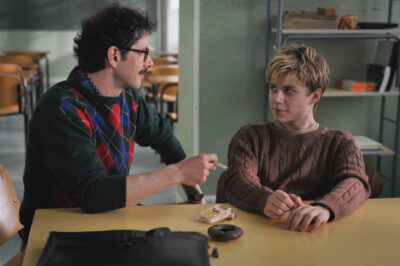
Q: The re-creation of the time period is very realistic, at times giving the impression that we are watching a film made in the 80s.
A: The scenery is realistic, but the 80s are a little idealized as far as the costumes are concerned. Pascaline Chavanne and I were very much inspired by American films of the time period whose eighties folklore I wanted to replicate. I made the film thinking about the moviegoer I was, and of the film I would have liked to see at the time.
Q: And the choice to shoot on film?
A: Today we’re used to digital cinematography, but when making a period movie, film is a must! I had already made this decision for “Frantz.” I was thrilled to return to Super 16, which was the format I used for my first short films. I like its grain which is so specific to this kind of film stock. The result is very beautiful and sensual on the skin in closeups. There is a subtlety in the color that can’t be achieved with digital, which tends to dull things down.
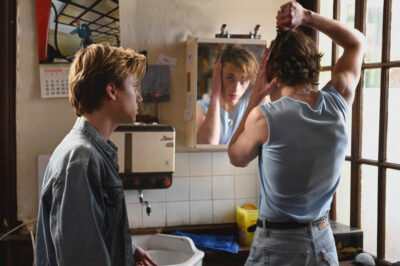
Q: The film takes place in Le Tréport…
A: Le Tréport would be the equivalent of the novel’s Southend-on-Sea in the south of England. It’s nothing like the French Riviera. I felt it was important to anchor the story in the social realities of this working-class seaside town in Upper Normandy. Le Tréport is a city that has largely retained its character – it hasn’t been overly renovated. It’s a very photogenic place with wide and long pebble beaches, cliffs, and 1960s low-income
housing complexes running alongside the jetty.
Q: Is young Kate’s English nationality an allusion to the book?
A: Kate’s character is Norwegian in the book. I made her English especially because my 1980s experience was heavily influenced by British pop culture, like most teenagers at the time. The soundtrack to our lives was all New Wave: The Smiths, Depeche Mode, The Cure, whose music opens the movie.
Q: Why did you decide to make David’s family Jewish?
A: The family in Aidan Chambers’ book is Jewish, and I kept it. When I asked him about it, he explained that the town of Southend-on-Sea (where the novel is set) has a large Jewish community. It therefore seemed natural for David to be Jewish, and at the same time set him apart from
Alex with respect to their social and cultural backgrounds. I like the fact that it is never an issue. Just like being gay, it belongs to the narrative just like its other parts. There is also a narrative reason, which has to do with Jewish post-mortem and funeral rituals. In Judaism, the body should be buried as soon as possible, the funeral usually taking place within one or two days after the death. Alex could not mourn with the body, nor could he be among the mourners. These restrictions increased his emotional trauma and fueled his psychological need to dance on David’s grave. It was the only way for Alex to express his profound sorrow and let everything out. If David had been Christian, Alex would not have had to endure the same torments following David’s death. Everything would have been simpler, more straightforward, and thus less interesting to me.
Q: How did you go about casting the couple of Alex and David, whose physiques are extremely different?
A: I started casting quite early on, before I’d even finished the script. I told myself that if I couldn’t find the actors, I wouldn’t make the film. I very quickly met Félix Lefebvre. I immediately knew he was Alex when he auditioned, with his roundish face, childish smile, and his liveliness. He has a melancholy look in his eyes which gives him an air of River Phoenix that corresponds perfectly to the era and the character. Félix is a quick, clever actor, which was vital for the role. We have to believe in Alex’s intelligence, and in his ability to become a writer.
Then I had to find David. The contrast between him and Alex was important. I wanted David to physically dominate Alex, to have an effortless poise and naturally be at ease with himself. David is a bit like a wild animal while Alex is a lamb whose demeanor is awkward, whether he’s walking or sailing a boat. Benjamin Voisin had auditioned for the role of Alex, but when I saw him act, I had a hunch that he could be David. Although I had been looking for someone who was more physically imposing and sturdily built, at the same time, when we see David from Alex’s point of view, he is indeed like that. There was true chemistry between Benjamin and Félix from the first screen tests, which was vital. They were on the same page – two kindred spirits. Then we did several readthroughs and rehearsed scenes together. And one month before the shoot, they left to spend a week sailing with each other in Le Tréport.
Q: What about choosing the other actors?
A: For Kate, I was at first looking for a girl who exuded more sexuality than Philippine Velge, but her tomboy, Jean Seberg side immediately appealed to me. Philippine is Belgian-English, and she has both the grace and maturity that I was looking for in this character, who helps Alex through the mourning process. Like most people, I discovered Isabelle Nanty in “Auntie Danielle” and I’m tremendously fond of her. She radiates a great sense of humanity. We’ve rarely seen her in a dramatic register, and I wanted to place her in a different context to show another facet of her personality and work.
As for Melvil Poupaud and Valeria Bruni Tedeschi, with whom I have already worked, they were the obvious choices for these roles. After “By the Grace of God,” it was fun to make Melvil a flirty professor – the professor all of us have had at one point or another in our lives – really nice but a little bit creepy. Valeria was the ideal person to bring some humor and a pinch of craziness to this extroverted mother; she’s able to make us accept her more dramatic transformation. For this character, I thought about the monstrous and conniving mother in Tennessee Williams’ “Suddenly Last Summer” played by Katharine Hepburn in Mankiewicz’ film – a mother who lures boys and reels them in for her son, and whose possessive, devouring, incestuous nature is later revealed.
Q: “Swimming Pool,” “Angel,” “In the House”… This isn’t the first time you’re tackling the figure of an author.
A: I’m interested in depicting the artistic vocation. How a character is driven to go through self-transcendence as part of the creative process, and what he draws upon for inner nourishment. What I find beautiful about Alex’s situation is that he discovers writing almost accidentally: he is incapable of talking about what happened and so is told to write it down in order for the judge to understand what he did and why.
“Sometimes, things we have a hard time voicing are easier to write down,” his professor tells him. Especially at that age. As he has a gift for writing, this works in his favor. By becoming a writer, Alex is doubly saved: before the judge and because he has found his vocation. Alex has a very resilient side thanks to his writing, which allows him to transform the ordeal he has gone through and move forward.
Q: How did you put together the dance on the grave?
A: First, we had to find the music. In the book, it’s the Laurel and Hardy theme song, music that evokes a cuckoo clock – hence the French title of the book “La Danse du Coucou [The Cuckoo Dance].” For the movie, it was Félix who suggested using the Rod Stewart song “Sailing,” which is in fact from 1975. As soon as I listened to it, I knew it was the right song, at once for its rhythm and lyrics. I immediately thought of Angelin Preljocaj for the choreography, but as he is in the south of France, logistics were a little complicated. He then referred me to a dancer with whom he works, Virginie Caussin.
I wanted the dance to feel genuine and be inspired by Félix’s own body language. At first, he gets on his knees and caresses himself as the rhythm gradually takes over his body. We asked Félix to dance naturally to the music in order to incorporate his own body movements, as well as gestures that are reminiscent of the way people danced in the 80s. This was coupled with other moments when he lets go completely, giving off pure energy, but channeled by a choreography that evokes a tribal, funerary dance.
Q: Why did you bring in Jean-Benoît Dunckel to compose the music?
A: I wanted music that was sexy, romantic and nostalgic; something that would remind us of the 1980s and the beginnings of electronic music. All these aspects can be found in Jean-Benoît’s music. I have always enjoyed the work he did when he was in the band Air. And it turns out that in an interview where he was asked to give the title of a song he liked when he was young, he’d answered: “Stars de la pub,” [an 80s hit pop song], saying that it was a really well produced song.
I took this coincidence as a sign because it was also one of my favorite songs when I was a teenager. So I contacted him, and I explained that I wanted to use the very song he’d mentioned in my film. I gave him the script, from which he composed themes without having seen
the images. It’s quite extraordinary because during the editing process we used the melodies exactly as they were written.
Q: And the film’s title?
A: The French title of the book, “La Danse du Coucou [The Cuckoo Dance],” didn’t work because we changed the music for the grave scene. The original title of the book is very beautiful: “Dance On My Grave,” but it revealed too much about the movie’s storyline, which is unlike the book, where you learn everything from the onset. So I simply connected it to the date when I read the book and when The Cure song, which opens the film, “In Between Days,” came out. This song really marks the heart of the 80s while also remaining timeless. It’s an extremely joyful song, but fundamentally melancholic. It corresponds to Alex, to his enthusiastic discovery of life, but to its dark side as well.
1985 is also the year Rock Hudson died, and AIDS suddenly appeared in everyone’s daily life. It’s the last year of carefreeness and innocence, when it was still possible not to be aware of the disease, and not to worry about it.
Q: “The only important thing is that somehow we all escape our history,” says Alex in voice over at the very end of the film.
A: It’s the last sentence in Aidan Chambers’ book; it’s beautiful and enigmatic. I identify with it completely.
Laemmle Theatres and the Anniversary Classics Series invite you to celebrate the publication of Stephen Farber and Michael McClellan’s new book, Cinema ’62: The Greatest Year at the Movies, with a return to the big screen of one of the cinematic crown jewels from 1962, To Kill a Mockingbird. The film will be shown as a series of one night-only screenings at 7 PM the week of June 7-10 at four Laemmle locations, the Royal, Playhouse, NoHo and Newhall. The authors will introduce all screenings and sign their book, which will be on sale at the events. Acclaimed filmmaker Cecilia Peck, daughter of Gregory Peck, will join the discussion at the Royal screening on June 7.
A box-office smash in its day, To Kill a Mockingbird remains one of the most memorable films in Hollywood history. In 1995 it was selected for the National Film Registry of the Library of Congress, reserved for films of “historical, cultural, or aesthetic significance.” The film was faithfully adapted by playwright Horton Foote from Harper Lee’s beloved, Pulitzer Prize-winning novel about childhood memories in the segregated South of the 1930s. The film version has become so intertwined with the book in the national consciousness that they have blended as “an inescapable part of our cultural DNA.”
Directed by Robert Mulligan and produced by Alan Pakula, the film gave Gregory Peck the iconic role of a lifetime, that of Atticus Finch, the small-town lawyer who heroically defends a black man (Brock Peters as Tom Robinson) accused of raping a white woman, invoking the ire of the bigoted white community. Peck’s performance resonated so strongly that when the American Film Institute conducted a poll of all-time screen heroes, his portrayal of Finch was voted number one, ahead of such screen favorites as Han Solo and James Bond. Peck closely identified with the themes of parenting two young children, and those of social and racial justice at the height of the Civil Rights era. He was awarded a very popular Best Actor Oscar in one of the most competitive Oscar races of the twentieth century.
Among the film’s eight total nominations (including Best Picture and Director) is one for Supporting Actress, which went to screen newcomer Mary Badham as Scout, the impressionable six-year-old daughter of Atticus, and it is through her eyes the story unfolds. Her remarkable performance conveys all the wonderment and innocence of childhood imagination, and she is ably joined by Philip Alford as her brother Jem and John Megna as Dill (a surrogate for Lee’s friend Truman Capote). The rest of the stellar cast includes Colin Wilcox, Frank Overton, Rosemary Harris, Estelle Evans, James Anderson, and in the pivotal role of the mentally damaged “Boo” Radley, Robert Duvall in his screen debut.
The transformation of childhood memory into black-and-white screen reality was achieved by the superb craftsmanship of cinematographer Russell Harlan and Oscar winning production design of Alexander Golitzen, Henry Bumstead, and set decoration by Oliver Emert. Elmer Bernstein’s exquisite score also enhances the film’s rich atmosphere and mood. Harper Lee was involved in the film’s preparation and was “very proud and very grateful” for the fidelity of the finished film.
The film received widespread praise, ranging from such varied sources as the mainstream press, presidential adviser and journalist Arthur Schlesinger Jr., Walt Disney, and numerous pop culture publications. Often considered a role model, Atticus Finch is understandably not always seen as an uncomplicated hero. But such reassessments have not diminished the popularity and appeal of To Kill a Mockingbird, which has been elevated to the level of American folklore. Witness the recent PBS poll of millions of viewers who voted it America’s most beloved novel, and Aaron Sorkin’s revisionist stage version that was sold out for the entirety of its two-year, pandemic-shortened Broadway run.
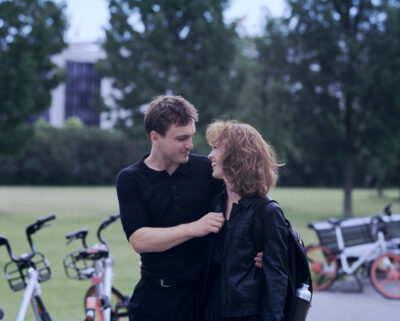
German filmmaker Christian Petzold is one of the most exciting — and perhaps underappreciated — auteurs in cinema today. Having completed his triumphant trilogy of Barbara (2012), Phoenix (2014) and Transit (2018) on the theme “Love in Times of Oppressive Systems,” his latest film Undine (pronounced oon-DEE-nuh) is a dark romance inspired by a fairy tale. Petzold boldly reimagines the ancient myth of Undine, the water nymph who becomes human when she falls in love with a man but is doomed if he is unfaithful to her. In Undine, the title character (Paula Beer, Frantz, Transit) works as a historian lecturing on Berlin’s urban development. When her lover leaves her, her namesake catches up with her. The mythical Undine has to kill the man who betrays her and return to the water. Will Undine defy fate when she meets a diver (Franz Rogowski, Transit) who offers her a chance at new love?
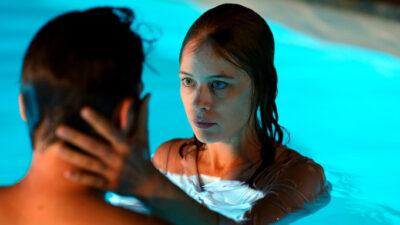
Undine was selected to compete for the Golden Bear in the competition section at the 70th Berlin International Film Festival, where Beer won the Silver Bear for Best Actress.

Film critics have been rapturous:
INDIEWIRE: “Petzold remains a master of capturing frantic characters doomed by dark obsessions… Undine shows evidence of a master’s hand.”
MIAMI NEW TIMES: “A tremendous romance from one of contemporary cinema’s greatest and most underrated filmmakers… Undine feels as fresh as it does familiar for the filmmaker.”
SLANT MAGAZINE: “Undine is a striking change of pace that sacrifices none of the director’s intellect or ambition.”
DEADLINE: “Paula Beers dominates… she’s one of those fortunate and skilled actors who compels attention even when quiet and doing and saying nothing.”
In a recent interview, Petzold conveyed how essential it is to experience movies in theaters rather than at home, something especially clear because of something particular about Undine: “Underwater sequences have to be in a cinema. A cinema is a tank for our bodies. We’re with our bodies physically, but our mind is not in the room. When I was 11 and saw 20,000 Leagues Under the Sea, it was as if the whole audience was underwater. But if you’re alone in front of a TV? I love underwater sequences because there’s no dialogue. The acoustics are based on gestures and sounds in your head. You hear things better in a cinema. It’s not good to see it on a TV with shit [speakers] from a supermarket.”
Now that Laemmle Theatres is fully reopened — all eight theaters at 50% capacity — now is a good time for a reminder that masks are still required in our lobbies and auditoriums by all managers, staff, and customers. The CDC issues recommendations but the state and county have jurisdiction and both the California and L.A. County health departments continue to require that masks be worn indoors regardless of vaccination status. The only exception for moviegoers: when seated in an auditorium while eating or drinking. We are doing our best to supervise with signage and polite verbal reminders when necessary, and fortunately most of our patrons are being very conscientious.
On an individual level, the vaccines are superbly effective and epidemiologists are saying that people who are fully vaccinated should feel really safe and confident being out in public.
On a community level, however, we still haven’t vaccinated a large enough percentage of the population. And that’s not just about the vaccine hesitant. There are also 12-16 year olds who only recently became eligible.
So for the sake of our community, and to really squelch the transmission of the virus, please stay masked up for the time being.
Hopefully, it will be just a few more weeks.