The Official Blog of Laemmle Theatres.

Laemmle Theatres

Film Reviews & Previews

  • All
  • Theater Buzz
    • Claremont 5
    • Glendale
    • Newhall
    • NoHo 7
    • Royal
    • Santa Monica
    • Town Center 5
  • Q&A’s
  • Locations & Showtimes
    • Claremont
    • Glendale
    • NewHall
    • North Hollywood
    • Royal (West LA)
    • Santa Monica
    • Town Center (Encino)
  • Film Series
    • Anniversary Classics
    • Culture Vulture
    • Worldwide Wednesdays
  • Facebook
  • Instagram
  • TikTok
  • YouTube

You are here: Home / Q&A's

The Last Great Maestro: Inside ‘Bernstein’s Wall’

May 19, 2026 by Lamb Laemmle Leave a Comment

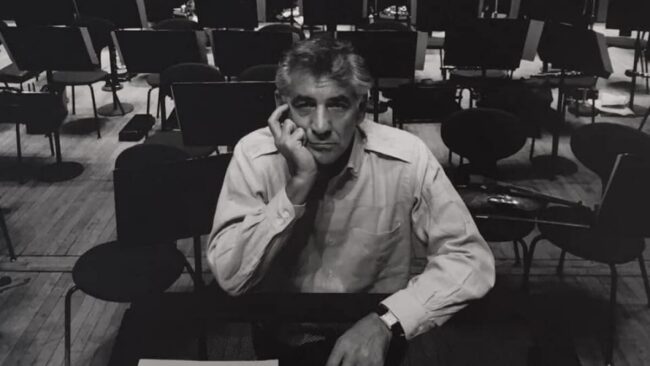
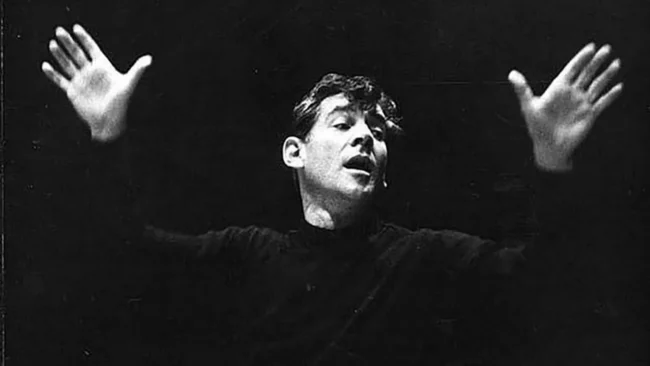
There was a time in American culture when a conductor could become something close to a national celebrity: part educator, part activist, part showman, and part mystic. Few embodied that role more completely than Leonard Bernstein, whose larger-than-life presence animated concert halls, television screens, political movements, and Broadway stages alike. Douglas Tirola’s Bernstein’s Wall revisits that extraordinary life not through conventional talking-head retrospection, but almost entirely through archival footage, home movies, and Bernstein’s own words, allowing the composer and conductor to narrate his story at his own impeccable tempo.

The Last Great Maestro: Inside 'Bernstein’s Wall'

Tune into Inside the Arthouse to hear director Douglas Tirola discuss his latest film with co-hosts Greg Laemmle and Raphael Sbarge, or catch one of his live post-screening Q&As running May 21-23rd at the Laemmle Glendale, Royal, and Town Center theaters.

Rather than unfolding as a straightforward cradle-to-grave biography, Bernstein’s Wall assembles an impressionistic portrait of a man whose myriad passions—for music, politics, teaching, sociology, and more—were inseparably intertwined. The result feels less like a summary than an attempt to capture the restless energy that made Bernstein such a singular public figure throughout the second half of the twentieth century.

For audiences primarily familiar with Bernstein as the composer of West Side Story, the film offers a broader look at the figure who became one of the defining cultural personalities of postwar America. Bernstein was not merely a conductor but a communicator, someone who approached classical music with evangelical enthusiasm and a rare ability to make it feel accessible without diminishing its complexity. The documentary’s many clips from his televised lectures and Young People’s Concerts reveal his innate talent for speaking about music with warmth, humor, and genuine conviction, treating audiences not as passive listeners but as treasured participants in something emotionally and spiritually vital.

The film also captures the sheer physical electricity of Bernstein as a performer. Watching him conduct, drenched in sweat and completely consumed by the music, one understands why he inspired such devotion. Tirola repeatedly emphasizes Bernstein’s ability to embody music rather than simply direct it, transforming orchestral performance into a kind of emotional theater all its own.

The Last Great Maestro: Inside 'Bernstein’s Wall'

Bernstein’s Wall also thoughtfully explores the tensions that shaped Bernstein’s personal life, addressing his sexuality with unusual candor while drawing from deeply personal letters that illuminate the emotional strain placed upon his marriage to actress Felicia Montealegre. Bernstein’s outspoken activism, too—from civil rights advocacy to antiwar protests—remains central to this portrait of artist-as-advocate, particularly in relation to his now-infamous 1970 fundraiser for the Black Panthers that inspired Tom Wolfe’s term “radical chic.”

Yet for all its historical scope, Bernstein’s Wall is ultimately less about legacy than vitality, as the film continually returns to Bernstein’s overwhelming appetite for life itself. The result is a moving reminder of a singular artist who believed deeply in the power of music not merely to entertain, but to awaken something larger within us.

“A lovely film that will appeal to Bernstein’s most ardent fans, while warmly inviting neophytes into his world.” – Ryan Lattanzio, IndieWire

“A thoughtfully constructed tribute that lacks neither cultural and political context nor intimate personal perspective.” – David Rooney, The Hollywood Reporter

Leave a Comment Filed Under: Featured Films, Filmmaker Interviews, Glendale, Inside the Arthouse, Q&A's, Royal, Town Center 5 Tagged With: Bernstein's Wall, Douglas Tirola, Greg Laemmle, Inside the Arthouse, Leonard Bernstein, Raphael Sbarge

Modern Love, Unfiltered: The Bold Charm of ‘Two Women’

April 28, 2026 by Lamb Laemmle Leave a Comment

There’s a mischievous spark at the heart of Two Women, a film that takes a familiar setup—restless relationships, suburban routines—and flips it into something unexpectedly playful, warm, and quietly subversive. Directed with a light but assured touch by Chloé Robichaud, this Montreal-set comedy finds humor and honesty in the messiness of modern love.

Modern Love, Unfiltered: The Bold Charm of 'Two Women'

Catch Two Women in theaters beginning May 1st at the Laemmle Monica and Town Center, followed by a special screening and Q&A hosted by Not Your Daddy’s Films following the 7:10 p.m. show on May 2nd at the Monica.

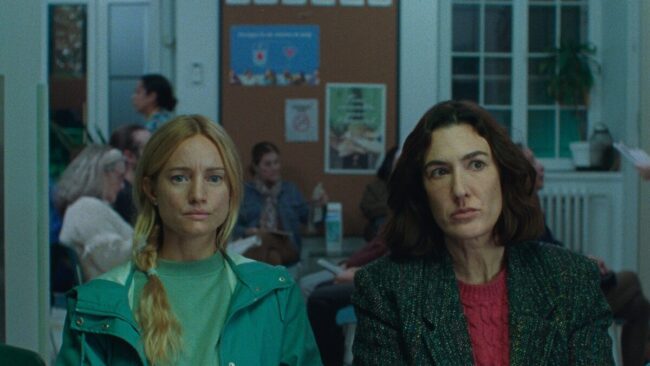
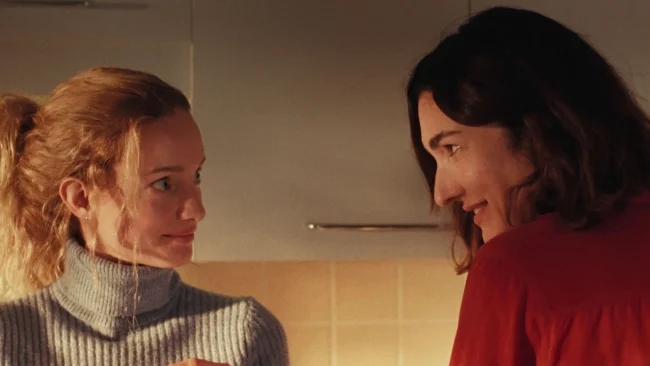
The story centers on two neighbors, Violette and Florence, who form an unspoken bond over their shared dissatisfaction at home. Violette, adjusting to new motherhood, finds herself adrift in a marriage that has lost all sense of intimacy, while Florence, navigating her own partner’s lack of libido, feels similarly disconnected. Their apartments may only be a balcony apart, but emotionally, they’ve both been stranded for some time.

What follows isn’t subtle: both women begin having affairs, embarking on a string of clandestine hookups that quickly spiral into something both comedic and unexpectedly revealing. Yet what might sound like a setup for moralizing instead plays out with a surprising lightness, for rather than framing this infidelity as purely destructive, Two Women treats it as a catalyst—messy, impulsive, and often funny—for the characters to confront what’s missing in their lives and to begin to discover what they actually want.

At the center of it all are two standout performances. Karine Gonthier-Hyndman brings a subtle emotional evolution to Florence, charting her journey from quiet detachment to a more awakened, self-assured presence. Opposite her, Laurence Leboeuf gives Violette a lively, layered warmth, balancing the character’s natural humor with an undercurrent of vulnerability. Together, they create a dynamic that feels genuinely lived-in, less like a traditional movie friendship and more like something instinctive and real.

Modern Love, Unfiltered: The Bold Charm of 'Two Women'

Robichaud’s direction keeps the tone buoyant even as the film brushes up against larger questions about relationships, expectations, and autonomy. There’s a sense that Two Women is less interested in offering definitive answers than in simply letting its characters explore the questions themselves. That openness extends to the film’s humor, which leans into awkwardness and absurdity without ever losing sight of its characters’ humanity.

Ultimately, Two Women is a film about connection: between friends, between partners, and (perhaps most importantly) with oneself. It’s playful without being trivial, thoughtful without being heavy, and anchored by performances that make every twist feel earned. In a landscape where stories about relationships often follow well-worn paths, this one finds its own rhythm—and invites audiences to enjoy the ride.

“[The film’s] reflections on modern relationships are engagingly comical, cynical and ultimately tender. ” – Allan Hunter, Screen Daily

“[Two Women is] unafraid of sex and female pleasure in a way that feels so rare in modern films.” – Jesse Saunders, Movie Jawn

Leave a Comment Filed Under: Featured Films, Monica Film Center, Q&A's, Santa Monica, Town Center 5 Tagged With: Canadian, Chloé Robichaud, comedy, French, Karine Gonthier-Hyndman, Laurence Leboeuf, romance, Two Women

Law as Labyrinth: Loznitsa’s ‘Two Prosecutors’

March 25, 2026 by Lamb Laemmle Leave a Comment

Sergei Loznitsa’s Two Prosecutors is less a historical drama than a slow descent into a meticulously ordered nightmare. Set in 1937 at the height of Stalin’s Great Purge, the film follows a young, newly promoted prosecutor, Kornyev (Aleksandr Kuznetsov), whose belief in the integrity of the Soviet legal system has not yet been eroded by experience. So when a blood-written letter alleging systemic torture and fabricated charges from a political prisoner crosses his desk, Kornyev does something both admirable and, in this world, dangerously naïve: he takes it seriously.

two prosecutors

Catch filmmaker Sergei Loznitsa for a series of live Q&As regarding his latest work following the 7 p.m. showing at the Laemmle Glendale on March 24th or the Laemmle Royal on March 26-27th.

Kornyev’s journey begins in Bryansk, where Loznitsa immediately establishes the film’s governing logic: obstruction not through force, but through delay. Doors remain closed, officials are perpetually “unavailable,” and requests are met with polite deflection. Kornyev merely waits, wielding his patience as a bureaucratic weapon. When he finally gains access to the prisoner, Stepnyak (Aleksandr Filippenko), the encounter is shocking not only for the man’s physical deterioration but for the clarity of his accusations. A former legal mind himself, Stepnyak describes a system that has turned inward, devouring its own architects in order to sustain the illusion of order. Convinced this must be an isolated case of local corruption rather than a structural reality, Kornyev travels to Moscow to bring the case to higher authorities, placing his faith in the idea that somewhere, at the top, justice still exists.

Law as Labyrinth: Loznitsa’s 'Two Prosecutors'

Loznitsa, whose background in documentary filmmaking informs his rigorously controlled style, stages much of Two Prosecutors in long, static takes that deny the audience conventional emotional cues. The camera rarely moves; instead, dread accumulates within the frame. Offices, corridors, and waiting rooms become indistinguishable from prison cells, suggesting that confinement is not a matter of walls but of systems. Even moments of apparent absurdity—a talkative stranger on a train, an encounter with a man too frightened to move—carry a disquieting sense of design, as though every interaction is part of an invisible web closing around Kornyev.

Though rooted in Stalinist history and adapted from a suppressed work by dissident writer and gulag survivor Georgy Demidov, Two Prosecutors resonates far beyond its period setting. Loznitsa is not simply reconstructing the past, but mapping the anatomy of authoritarian logic, where procedure replaces morality and complicity is cultivated through cynicism and inertia.

By the time Kornyev begins to understand the true nature of the system he has appealed to, the film has already made its devastating point. This is not a story about whether justice will prevail, but about how long one can believe in it once the evidence proves otherwise.

“A very disturbing parable of the insidious micro-processes of tyranny.” – Peter Bradshaw, The Guardian

“[A] compelling, meticulous, mordantly relevant historical drama.” – Jessica Kiang, Variety

Leave a Comment Filed Under: Filmmaker in Person, Glendale, Q&A's, Royal Tagged With: Aleksandr Kuznetsov, drama, historical, International Cinema, Russian, Sergei Loznitsa, Two Prosecutors

‘Starman’ and the Case for Cosmic Curiosity

February 10, 2026 by Lamb Laemmle Leave a Comment

Robert Stone’s documentary Starman is a reflective, wonder-driven journey through the history of space exploration, scientific imagination, and one of humanity’s most enduring questions: Are we alone? Rather than building a conspiracy or chasing sensational revelations, the film takes a more intimate and philosophical route, centering on one remarkable figure—NASA engineer, mission planner, and science-fiction collaborator Gentry Lee—and using his life and outlook as a guide through decades of cosmic discovery.

Gentry Lee in Starman

Tune into Inside the Arthouse on February 11th to hear Gentry Lee and Robert Stone discuss their mind-expanding documentary with co-hosts Greg Laemmle and Raphael Sbarge, or come to the Laemmle Glendale for a series of post-viewing Q&As running February 13-16th.

Now in his eighties, Lee proves an unexpectedly magnetic on-screen presence. Sharp, funny, and visibly thrilled by the prospect of the unknown, he serves as the film’s narrator and emotional anchor. His career connects him directly to many of NASA’s landmark achievements, including the Viking missions to Mars and the Galileo mission to Jupiter, as well as creative collaborations with Carl Sagan and Arthur C. Clarke. Through Lee, the film links the technical realities of planetary science with the imaginative power of science fiction, showing how each has fueled the other’s progress across the generations.

Starman unfolds largely through extended conversations with Lee, interwoven with rich archival footage and a wide-ranging visual collage: historic NASA imagery, cultural touchstones from classic science-fiction films, television broadcasts, and deep-space photography. The result is less a straight chronological history than a flowing meditation on curiosity, ambition, and perspective. The documentary repeatedly returns to the emotional impact of first contact with cosmic imagery: the transformative power of seeing Earth from afar, the shock of planetary landscapes, and the strange mix of triumph and anticlimax that followed the initial moon landing.

'Starman' and the Case for Cosmic Curiosity

At its most interesting, Starman wrestles with ambiguity. Lee openly embraces uncertainty about extraterrestrial life, arguing that the absence of proof is not a disappointment but rather a motivation to continue searching. One of his recurrent ideas—that advanced civilizations may be rare not because they never arise, but because they don’t last—gives the film a quiet philosophical edge. Space exploration, in this view, becomes a mirror held up to Earth: a reminder of our fragility, responsibility, and intrinsically shared fate.

Gentler and more personal than most modern space documentaries, Starman aims less to dazzle than to rekindle, inviting viewers not just to look outward, but to rediscover the nearly forgotten thrill of simply looking up.

“Full of extraordinary footage, Robert Stone’s blissed-out mind-bender of a movie meditates on the possibilities of life in the universe.” – Owen Gleiberman, Variety

“[Gentry Lee] commands the screen every time he is on it telling stories about his involvements with the space program as well as his associations with some of the greatest scientific and science fiction writers of all time.” – Dan Pal, PalCinema

Leave a Comment Filed Under: Filmmaker in Person, Glendale, Greg Laemmle, Inside the Arthouse, Q&A's Tagged With: documentary, Gentry Lee, Greg Laemmle, Inside the Arthouse, NASA, Raphael Sbarge, Robert Stone, Starman

The Weight of History: Cherien Dabis’ All That’s Left of You

January 6, 2026 by Lamb Laemmle Leave a Comment

In All That’s Left of You, writer-director Cherien Dabis crafts an expansive, emotionally grounded portrait of a Palestinian family shaped by decades of displacement, political upheaval, and inherited memory. Spanning more than seventy years, the film situates an intimate domestic story within the broader arc of Palestinian history, tracing how the consequences of one violent moment ripple backward and forward across generational lines.

All That's Left of You

Tune into Inside the Arthouse to hear director Cherien Dabis discuss her latest film with co-hosts Greg Laemmle and Raphael Sbarge ahead of its return to Laemmle Theatres beginning January 8th at the Royal, kicked off by a series of live Q&A sessions with Dabis moderated by actors Mark Ruffalo, Tatiana Maslany, and Diego Luna over its first three days, before expanding to the Town Center on January 16th.

The narrative begins with a Palestinian teenager living in the Occupied West Bank who is swept into a protest that turns suddenly and irrevocably violent. Yet rather than centering on the incident itself, the film unfolds through the voice of the boy’s mother, who recounts the personal and political forces that brought her family to this precise moment in time. From there, All That’s Left of You moves fluidly across the generations, returning to earlier chapters of family life—the loss of a home, the pressures of occupation, the persistence of love and routine—while showing how each generation carries both the scars and the hopes of those who came before.

Dabis approaches this sweeping material with a focus on the textures of daily life. Weddings, meals, schooldays, and quiet conversations are given as much weight as moments of historical rupture. The effect is cumulative and deeply affecting: history presented not as abstraction, but as something that fundamentally reshapes families from the inside out.

All That's Left of You

Visually, All That’s Left of You balances intimacy with scope, grounding its political context in faces, gestures, and lived-in spaces. The performances, including masterful contributions from members of the Bakri acting family, bring an intergenerational authenticity to the story, emphasizing continuity as much as loss.

At once a family chronicle and a political testimony, All That’s Left of You refuses simplification. It does not ask viewers to look away from pain, nor does it reduce its characters to symbols. Instead, it offers a sustained act of bearing witness: to a family, to a history, and to the enduring emotional cost of dispossession. By the time the film returns to its opening moment, that act of violence is no longer isolated, but has been integrated as part of a long, unfinished story whose consequences are still unfolding.

“A moving and intimate narrative about the toll displacement takes on generations of people.” – Lovia Gyarke, The Hollywood Reporter

“[A] considered, moving tale that effectively blends the personal and the political.” – Allan Hunter, Screen Daily


Leave a Comment Filed Under: Filmmaker Interviews, Films, Greg Laemmle, Inside the Arthouse, Q&A's, Royal, Special Events, Town Center 5 Tagged With: All That's Left of You, Cherien Dabis, Diego Luna, Greg Laemmle, Inside the Arthouse, Mark Ruffalo, Palestine, Raphael Sbarge, Tatiana Maslany

Painting Change: Inside the Uplifting World of Artfully United

October 14, 2025 by Lamb Laemmle Leave a Comment

More than a decade in the making, Artfully United traces the work of Mike Norice, a Los Angeles muralist whose expansive, colorful pieces are not just art, but acts of reclamation in neighborhoods too often shut out from visibility and voice.

Catch Artfully United in theaters beginning October 17th at the Laemmle Glendale, highlighted by an in-person Q&A with both Mike Norice and producer Christopher Walters following the 7:45pm showing, moderated by radio personality Tammi Mac.

Chris Walters first met Norice thirteen years ago in the latter’s boutique on Melrose Avenue, an encounter that ignited a collaboration and a creative mission that would persist across time, geography, and mutual adversity. Together with director Dave Benner, Walters follows Norice from his roots in Watts through dozens of cross-country trips and prolonged mural projects, capturing not only the final painted walls but the sweat, doubt, and resolve that underlies each stroke.

Painting Change: Inside the Uplifting World of Artfully United

Rooted as much in quiet reflection as in sweeping public murals, the film traces how Norice’s life shaped his art, from a childhood marked by a teacher mother and an incarcerated father to the spiritual and communal values that serve as guideposts in the creation of art that feels both profoundly personal and powerfully collective. Each mural becomes a gathering place, a message, and a mirror—echoes of hope, defiance, and renewal painted across the city’s worn walls.

Visually, Artfully United doesn’t shy away from spectacle. Murals tower and sprawl, color bursts through grime, and entire city blocks become open-air galleries. But the film also balances those sweeping images with moments of presence and proximity: Norice selecting his palette, a neighbor’s quiet response to a newly finished mural, hands smeared with paint beneath a muted dusk light. These smaller moments anchor the film emotionally, reminding us that transformation is not only seen, but felt.

Painting Change: Inside the Uplifting World of Artfully United

Walters has called the journey “the experience of a lifetime,” crediting Norice’s artwork, activism, and faith for inspiring communities in Los Angeles and beyond. When the credits roll, viewers will recognize that Norice’s murals are more than just decorations; they are living gestures of solidarity, symbols of what art can be when it reaches beyond aesthetics into the realm of belonging.

Ultimately, Artfully United is more than a portrait of its artist. It is a meditation on place, loss, renewal, and how visual creativity can become a force for collective healing, demonstrating how much stronger spirits can become when we prioritize beauty in the unlikeliest of places.

“A powerful documentary about art, transformation, and the enduring strength of community.” – Jon Stojan, LA Weekly

Leave a Comment Filed Under: Filmmaker in Person, Featured Films, Films, Glendale, Q&A's

With Predators, award-winning documentarian David Osit revisits this cultural phenomenon and its complicated legacy

September 25, 2025 by Lamb Laemmle Leave a Comment

True crime has rarely blurred the line between public service and spectacle so sharply as in NBC’s To Catch a Predator. Running from 2004 to 2007, the controversial series lured would-be sexual predators into sting operations before subjecting them to a primetime confrontation with journalist Chris Hansen. What followed provided justice and entertainment in equal measure: police officers waiting outside, television cameras rolling, and millions of viewers at home consuming humiliation as moral catharsis.

With Predators, award-winning documentarian David Osit (Mayor, The Gaza Fixer) revisits this cultural phenomenon and its complicated legacy. The film is less about rehashing the show’s format than about interrogating why it captured such an enduring grip on the American psyche—and what that says about us as viewers.

Tune into Inside the Arthouse to hear Osit discuss his latest project with co-hosts Greg Laemmle and Raphael Sbarge ahead of its release at the Laemmle Royal on September 26th.

Osit’s documentary unfolds across three carefully structured chapters. The first examines To Catch a Predator itself: the young actors cast as decoys, the police officers forced to wrestle with blurred responsibilities, and the legal experts made to reckon with whether law enforcement was working for the public good or for network ratings. The second chapter tracks the rise of copycat vigilantes who migrated the formula to YouTube, where humiliation was pursued less as deterrence than as content. Finally, Osit confronts Hansen himself, who continues his decades-long pursuit through his streaming show, Takedown, still unwavering in his belief that the ends justify the means.

Unlike ancient Greek tragedy, where audiences are steered to identify with the doomed hero and feel pity and fear as he meets his fate, To Catch a Predator encourages the exact opposite response: distancing, finger-pointing, and the smug satisfaction of seeing a wholly externalized evil be exposed.

What sets Predators apart from its source material is Osit’s refusal to sanitize the moral ambiguity inherent in his subject matter. Rather than casting the titular predators as irredeemable monsters or Hansen as an unassailable hero, the film probes the ethical gray areas: Can public shaming really lead to rehabilitation? Where does journalism end and law enforcement begin? And finally, what risks and/or culpability does the audience take on by repeatedly consuming real human disgrace as blasé entertainment?

Ultimately, Predators emerges as a gripping, unsettling study of modern media, ethics, and justice, challenging audiences to reflect on their own complicity in a culture that so often confuses accountability with spectacle.

“An absolutely fascinating watch. One of the most talked-about entries at this year’s Sundance Film Festival.” – David Fear, Rolling Stone

“A raw and riveting documentary that skeptically re-examines the program’s appeal, legacy, and ethicality.” – David Ehrlich, Indiewire

“Osit’s brilliant, subtly needling film leaves us unnerved and alert, but not certain of our convictions — an outcome, perhaps, that more true-crime programming should pursue.” – Guy Lodge, Variety

Leave a Comment Filed Under: Featured Films, Films, Q&A's

IT’S NEVER OVER, JEFF BUCKLEY opens Friday at the Laemmle Glendale and NoHo with in-person director Q&A’s and rare concert footage.

August 6, 2025 by Jordan Deglise Moore Leave a Comment

You may not be familiar with Jeff Buckley’s name. But you almost certainly have heard his haunting cover of Leonard Cohen’s “Hallelujah,” a song which was named to Rolling Stone Magazine’s list of the 500 Greatest Songs of All Time and has been inducted into the Library of Congress’s National Recording Registry.

In her latest documentary, It’s Never Over, Jeff Buckley, Oscar-nominated filmmaker Amy Berg explores the singer’s story and impact.

Tragically, Buckley drowned while swimming in the Wolf River in Memphis just as he was about to start work on his second album. But his stature as a singer and songwriter has only grown in the years since his early death at the age of 31. Acclaimed by musicians like Bob Dylan, David Bowie, and Jimmy Page, Buckley’s life and legacy is being given a thoughtful and thorough review in this new documentary — which includes a treasure trove of archival material, candid interviews with the man’s family, friends, lovers and collaborators. We emerge from the film with a greater understanding of the forces that shaped his artistic aspirations and an appreciation for all that he accomplished in his short life.

Ms. Berg will participate in Q&A’s after the 4:00 P.M. screening at the Glendale on August 10 and the 7:00 P.M. screening at the NoHo on August 11. You can also watch or listen to an interview with her on a recent episode of Inside the Arthouse. We will also open the film on August 15 at the Monica Film Center.

All of the screenings in Glendale and North Hollywood will feature special bonus footage. Very few people were fortunate enough to witness Buckley live, but those who did often described it as transcendent, jaw-dropping, and emotionally shattering. As part of the theatrical release of It’s Never Over, Jeff Buckley, Magnolia Pictures proudly presents 26 minutes of exclusive, remastered footage from a rare solo performance at The Middle East in Cambridge, MA, filmed on February 19, 1994. This previously unreleased set will screen immediately following the film, offering both longtime fans and newcomers a rare opportunity to experience Buckley’s raw, unfiltered brilliance.

“Pays tribute to one of the greatest singers ever…Buckley hasn’t had a million portraits sketched of him, much to this degree. The singularity of It’s Never Over, along with the access and the candor, makes up for a lot here.” ~ David Fear, Rolling Stone

“The film is a resonant depiction of the gaping holes left by Jeff Buckley’s untimely death.” ~ Chris Barsanti, Slant Magazine

“Offer[s] a unique perspective on the varying music of the 1990s, an experimental time where lonely artists like Buckley could buck the system and create a new brand of music.” ~ Matthew Creith, TheWrap

“As we drink in the majesty of his voice, the film lays bare a paradox about him that isn’t nearly as apparent if you just listen to Grace (1994), the only album he ever released.” ~ Owen Gleiberman, Variety

“A stirring tribute made with a lot of heart.” ~ David Rooney, Hollywood Reporter

Leave a Comment Filed Under: News, Featured Films, Filmmaker in Person, Filmmaker Interviews, Films, Glendale, Greg Laemmle, Inside the Arthouse, Monica Film Center, NoHo 7, Q&A's, Santa Monica, Theater Buzz

  • 1
  • 2
  • 3
  • …
  • 141
  • Next Page »

Search

Instagram

This is the way. 🍿 Exclusive Mandalorian & Grogu p This is the way. 🍿 Exclusive Mandalorian & Grogu popcorn tins and collectible figurines. Yours with a Mando Combo purchase! Very limited supply. 

@LaemmleNewhall & @LaemmleNoHo

🎟️Tickets: laem.ly/4aoKwRb
🖌️Sandwich board art by @mikaelparis_

#StarWars #TheMandalorian #Grogu
☘️ WEAR GREEN ☘️ $AVE GREEN ☘️ $2 OFF your concess ☘️ WEAR GREEN ☘️ $AVE GREEN ☘️ $2 OFF your concessions order!

⭐ St. Patrick's Day! Tuesday March 17th Only!

-Movie ticket purchase not required
-Like and show this post!
🎟️ laemmle.com/discounts
🚀 PROJECT HAIL MARY, AN EPIC PRIZE PACK GIVEAWAY! 🚀 PROJECT HAIL MARY, AN EPIC PRIZE PACK GIVEAWAY!
👉 ENTER in BIO!

#ProjectHailMary — starring Academy Award® nominee Ryan Gosling and directed by Academy Award®-winning filmmakers Phil Lord & Christopher Miller. Based on Andy Weir's New York Times best-selling novel.

🎟️ GET TICKETS in BIO!
For the 21st consecutive year, Laemmle will be scr For the 21st consecutive year, Laemmle will be screening the Oscar-Nominated Short Films, opening on Feb. 20th. Showcasing the best short films from around the world, the 2026 Oscar®-Nominated Shorts includes three feature-length programs, one for each Academy Award® Short Film category: Animated, Documentary and Live Action.

ANIMATED SHORTS: (Estimated Running Time: 83 mins)
The Three Sisters
Forevergreen
The Girl Who Cried Pearls
Butterfly
Retirement Plan
 
LIVE ACTION SHORTS (Estimated Running Time: 119 minutes)
The Singers
A Friend Of Dorothy
Butcher’s Stain
Two People Exchanging Saliva
Jane Austin’s Period Drama

DOCUMENTARY SHORTS (Estimated Running Time: 158 minutes)
Perfectly A Strangeness
The Devil Is Busy
Armed Only With A Camera: The Life And Death Of Brent Renaud
All The  Empty Rooms
Children No More: “Were And Are Gone”

Please note that some films may not be appropriate for audiences under the age of 14 due to gun violence, shootings, language and animated nudity.
Follow on Instagram


Laemmle Theatres

Laemmle Theatres
Tickets: http://laemmle.com/film/artfully-united | Subscribe: http://bit.ly/3b8JTym | ARTFULLY UNITED is a celebration of the power of positivity and a reminder that hope can sometimes grow in the most unlikely of places. As artist Mike Norice creates a series of inspirational murals in under-served neighborhoods in and around Los Angeles, the Artfully United Tour transforms from a simple idea on a wall to a community of artists and activists coming together to heal and uplift a city.

Tickets: http://laemmle.com/film/artfully-united

RELEASE DATE: 10/17/2025
Director: Dave Benner
Cast: Mike Norice

-----
ABOUT LAEMMLE: Since 1938, Laemmle [Theatres] has been showing the finest independent, arthouse, and international films.

Subscribe to Laemmle's E-NEWSLETTER: http://bit.ly/3y1YSTM
Visit Laemmle.com: http://laemmle.com
Like LAEMMLE on FACEBOOK: http://bit.ly/3Qspq7Z
Follow LAEMMLE on TWITTER: http://bit.ly/3O6adYv
Follow LAEMMLE on INSTAGRAM: http://bit.ly/3y2j1cp
Tickets: http://laemmle.com/film/brides | Subscribe: http://bit.ly/3b8JTym | Nadia Fall's compelling debut feature offers a powerful and empathetic look into the lives of two alienated teenage girls, Doe and Muna, who leave the U.K. for Syria in search of purpose and belonging. By humanizing its protagonists and exploring the complex interplay of vulnerability, societal pressures, and digital manipulation, BRIDES challenges simplistic explanations of radicalization.

Tickets: http://laemmle.com/film/brides

RELEASE DATE: 9/24/2025
Director: Nadia Fall

-----
ABOUT LAEMMLE: Since 1938, Laemmle [Theatres] has been showing the finest independent, arthouse, and international films.

Subscribe to Laemmle's E-NEWSLETTER: http://bit.ly/3y1YSTM
Visit Laemmle.com: http://laemmle.com
Like LAEMMLE on FACEBOOK: http://bit.ly/3Qspq7Z
Follow LAEMMLE on TWITTER: http://bit.ly/3O6adYv
Follow LAEMMLE on INSTAGRAM: http://bit.ly/3y2j1cp
Tickets: http://laemmle.com/film/writing-hawa | Subscribe: http://bit.ly/3b8JTym | Afghan documentary maker Najiba Noori offers not only a loving and intimate portrait of her mother Hawa, but also shows in detail how the arduous improvement of the position of women is undone by geopolitical violence. The film follows the fortunes of Noori’s family, who belong to the Hazaras, an ethnic group that has suffered greatly from discrimination and persecution.

Tickets: http://laemmle.com/film/writing-hawa

RELEASE DATE: 10/8/2025

-----
ABOUT LAEMMLE: Since 1938, Laemmle [Theatres] has been showing the finest independent, arthouse, and international films.

Subscribe to Laemmle's E-NEWSLETTER: http://bit.ly/3y1YSTM
Visit Laemmle.com: http://laemmle.com
Like LAEMMLE on FACEBOOK: http://bit.ly/3Qspq7Z
Follow LAEMMLE on TWITTER: http://bit.ly/3O6adYv
Follow LAEMMLE on INSTAGRAM: http://bit.ly/3y2j1cp
Subscribe

Recent Posts

  • The First Artists: Herzog’s ‘Cave of Forgotten Dreams’
  • ‘Honeyjoon’ and the Distance Between Grief and Connection
  • The Living Archive: ‘Time and Water’ and the Disappearing Glaciers of Iceland

Archive

Featured Posts

An “embrace of what makes us unknowable yet worthy of forgiveness,” A LITTLE PRAYER opens Friday at the Claremont, Newhall, Royal and Town Center.

Leaving Laemmle: A Goodbye from Jordan