
We’ll open MIFUNE this December 2 at the Fine Arts. Check it out!
Anna Muylaert on Her New Film DON’T CALL ME SON, Opening November 11th at the Royal.
In the new Brazilian movie Don’t Call Me Son, tall, dark, androgynously handsome Pierre (Naomi Nero) wears eyeliner and a black lace G-string and enjoys sex with both boys and girls. The confusion only goes deeper when the teenager’s single, working-class mom is arrested for having stolen him (and his “sister”) at birth. Thanks to the wonders of DNA, he’s returned to his biological parents: bourgeois, straight-laced and thrilled to have him back — at least until he joins them at a bowling alley in a zebra-print mini dress.
We played filmmaker Anna Muylaert’s previous film, The Second Mother, last fall and are thrilled to open her latest beginning Friday, November 11th at the Royal. What follows is a short interview with her.
You are the screenwriter of your films and co-writer of several works for cinema and TV. How was it to start from a real life situation to create the story for Don’t Call Me Son?
The basis of the plot of Don’t Call Me Son is a very famous case in Brazil. The character of the first mother has even been used in soap operas, but no one really talked about the situation of the son. I wanted to develop this situation because I thought that in a symbolic way, every child has to change its mother and family when they become teenagers and start to show new sides of their personality that the family won’t love as much as they used to when this child was a toddler.
Is that why you chose the same actress, Dani Nefussi, to play both mothers?
Exactly. I wanted the character to live a continuum: Although Pierre leaves his first mother he will soon meet her again in the face of the second mother. I chose that because I believe that our mothers shape the way we look at things in the very beginning and unless we make a lot of effort to change this, they will always be there in our subconscious, intermediating our relationship with life. But Dani Nefussi is such a great actress – and the makeup/ wardrobe characterization is so well done – that very few people notice that both moms are played by the same person.
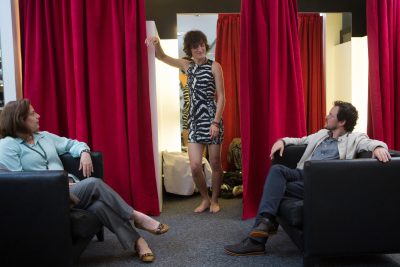
With your previous film, The Second Mother, you achieved great success from both critics and audiences, and the film won awards at several festivals around the world, causing a major debate about social classes. How do you think Don’t Call Me Son will be received? What do you expect from the film?
I see The Second Mother as the film of my maturity, a crowd-pleasing film that took me 20 years of work as a person, as a mother and as a filmmaker. It’s the blossom of many characteristics that I have been working already in my previous films. Don’t Call Me Son represents a break. In terms of style it’s totally different of all my other films. I normally work with steady shooting and this one is filmed all with hand-held camera. And also in terms of storytelling, this is a younger film, full of locations and different situations, gaps and mystery. So, I don’t know how it’s going to be received, but it’s certainly a break. Later I will probably come back to my old classic way, but at this moment I am very excited about doing a more provocative film.
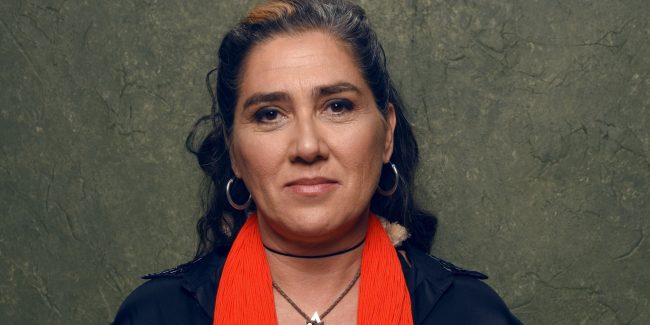
How do you chose your crew?
Cinema is an art of the crew. Finding the right crew is maybe the most important action a director takes. After many years I have recently found the director of photography who really collaborates best with my storytelling: Barbara Alvarez from Uruguay (Whisky, The Headless Woman). She and Thales Junqueira (my art director) both understand deeply that in my directing I am never looking for beauty but I am looking for life, for authenticity.
You once again have a very eclectic but relevant cast, famous Brazilian actors as well as new faces. How do you choose the actors you’re working with?
I look for actors/authors – I like actors that can contribute to their characters, who can improvise, who can create more something beyond the material I give to them, I like to be surprised by their performances. So, this is basically what I look for. Sometimes, I think of a famous actor for the leading role, but in Don’t Call Me Son, I looked for the most authentic teenagers. And I called Matheus Nachtergaele because I really like his strength on the screen and I really felt like working with him.
With Don’t Call Me Son you’re experiencing sensuality in filmmaking. Is it something you usually like to express through cinema or is it a new direction you’re exploring?
WILLY WONKA Q&A this Thursday at the NoHo 7.
Wolfgang Glattes, Assistant Director of ‘Willy Wonka & the Chocolate Factory,’ will be doing a Q&A after the 7:30pm screening at the NoHo 7 on Thursday, November 3rd. Along with fun memories, he will bring his original script and golden ticket to show everyone.
BEAUTY BITES BEAST Q&A’s at the Playhouse.
BEAUTY BITES BEAST filmmaker Ellen Snortland will participate in Q&A’s at the Playhouse Friday-Sunday, November 11, 12 and 13, along with associate producer Lisa Gaeta and co-producer, Ken Gruberman, after the 7:15 shows.
WE ARE X Q&A’s with the Filmmaker this Weekend.
WE ARE X director Stephen Kijak will participate in Q&A’s after the 7:30 PM screening, Friday, October 28 at the Monica Film Center and after the 5:20 PM screening at the Playhouse 7 on Saturday, October 29.
https://www.youtube.com/watch?v=yX6Ord06p-k
Q&A with Michael Moore after MICHAEL MOORE IN TRUMPLAND at the NoHo Friday Night.
MICHAEL MOORE IN TRUMPLAND director Michael Moore will participate in a Q&A after the 9:50 PM screening at the NoHo 7 on Friday, October 28.
THE UNCONDEMNED Q&A’s at the Royal.
The Q&A schedule for THE UNCONDEMNED:
Friday, October 28
7:10 Pierre Prosper, Michele Mitchell
Saturday, October 28
4:30 pm Naama Haviv, executive director of Panzi USA, & Michele Mitchell, co-director/producer
7:10 pm Mike Brand, atrocities prevention expert and advocacy director, Jewish World Watch; Naama Haviv, executive director, Panzi USA; Michele Mitchell, co-director/producer
Tuesday, Nov 1
7:10 pm Dr. Caroline Heldman, associate professor of politics at Occidental College, principal researcher at Geena Davis Institute for Gender in Media; Chelsea Byers, creative action coordinator at Beautiful Trouble and campaign activist with CODEPINK: Women for Peace; Schatzi Throckmorton, associate producer, THE UNCONDEMNED
Wednesday, Nov 2
7:10 pm Mike Brand, atrocities prevention expert and advocacy director, Jewish World Watch; Schatzi Throckmorton, associate producer, THE UNCONDEMNED
Thursday, Nov 3rd
7:10 pm Junemarie Justus, Human Rights Watch; Schatzi Throckmorton, associate producer, THE UNCONDEMNED
THE DAVID DANCE Q&A’s Opening Weekend at the Music Hall.
THE DAVID DANCE writer-star-producer Don Scime and director Aprill Winney will participate in Q&A’s after all screenings opening weekend at the Music Hall, November 4th-6th.
- « Previous Page
- 1
- …
- 190
- 191
- 192
- 193
- 194
- …
- 287
- Next Page »