Aviva Kempner’s Rosenwald, which we open at the Royal, Playhouse and Town Center on August 28th and the Claremont on September 5th, is the incredible story of Julius Rosenwald, who never finished high school but rose to become the president of Sears. Influenced by the writings of the educator Booker T. Washington, this Jewish philanthropist joined forces with African American communities during the Jim Crow South to build over 5,300 schools during the early part of the 20th century. The film sheds light on this silent partner of the pre-Civil Rights Movement. Rosenwald awarded fellowship grants to a who’s who of African American intellectuals and artists including: Marian Anderson, James Baldwin, the father and uncle of civil rights leader Julian Bond, Ralph Bunche, W. E. B. DuBois, Katherine Dunham, Ralph Ellison, Langston Hughes, Zora Neale Hurston, Gordon Parks, Jacob Lawrence and Augusta Savage along with Woody Guthrie. Inspired by the Jewish ideals of tzedakah (charity) and tikkunolam (repairing the world) and a deep concern over racial inequality in America, Julius Rosenwald used his wealth to become one of America’s most effective philanthropists. Because of his modesty, Rosenwald’s philanthropy and social activism are not well known today. He gave away $62 million in his lifetime.
In a Forward article titled “Is Julius Rosenwald Our Greatest Philanthropist,?” Ms. Kempner (The Life and Times of Hank Greenberg, Yoo-Hoo, Mrs. Goldberg) recently spoke about his latest film, saying “to me, Julius Rosenwald is the best antidote to Donald Trump. You see how pompous rich people can be, but Rosenwald is quite the contrary; he is one of the greatest examples for American Jews of tzedakah, tikkun olam , and repairing the world without fanfare — doing it just because he wants to make a difference.”
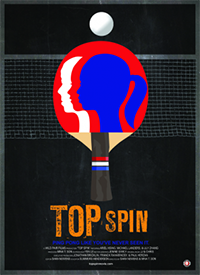 An inside look at the offbeat sport of ping pong, the new documentary


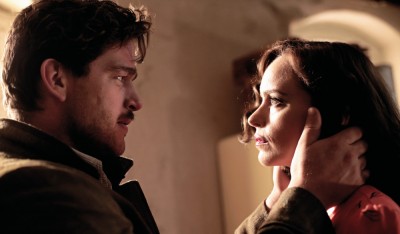
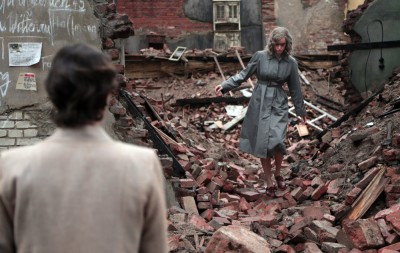
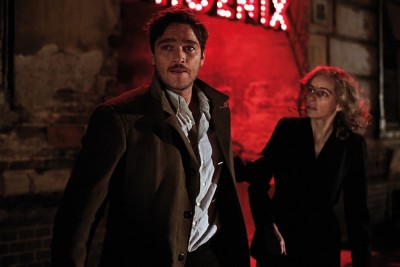 “One text had a major influence on our preparations: Ein Liebesversuch (‘An Experiment in Love’) by Alexander Kluge. The story is set in Auschwitz. The Nazis are looking through peepholes into a sealed room. They’re observing a couple who, according to their records, used to be passionately in love. The Nazi doctors are trying to revive this love: They want the couple to sleep with each other. The goal is to establish whether the woman has been successfully sterilized. They try everything: champagne, red light, spraying them with ice-cold water – thinking that the need for warmth might drive them together again. But nothing happens – the two of them don’t look at each other. In a strange way, the Nazi doctors’ failure is a victory for love: a love lost that can’t be re-kindled by these criminals. I think that was the most significant text for us. Is it possible to leap back over the deep, nihilistic chasm torn by the National Socialists and the Germans, and to reconstruct things: emotions, love, compassion, empathy – life?
 The engaging, richly textured drama