
In the newly restored British comedy THE LADYKILLERS (1955), a crew of thieves led by Professor Marcus (Alec Guinness) pulls off a daring heist and tricks their elderly landlady, who believes them to be a string quintet, into sneaking the loot past the authorities. When things don’t go as planned, the crew must improvise to keep their treasure and to ensure the old woman’s silence. Widely considered one of the finest comedies ever filmed, we’re proud to screen it at the Royal, Playhouse and Town Center starting July 2.
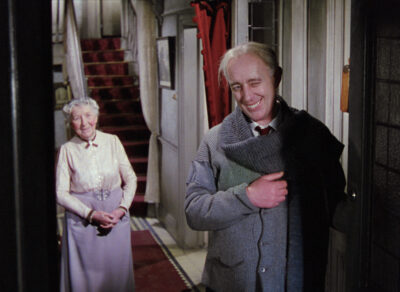
“A superbly elegant comedy. Even after 65 years, it still kills… Subversive, hilarious and as English as Elgar… A mixture of cynicism with guileless innocence.” – Peter Bradshaw, The Guardian
“Extravagantly funny.” – Pauline Kael
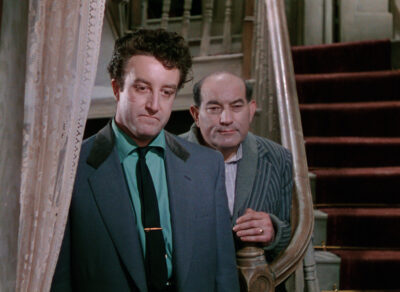
“Near flawless.” — Philip French
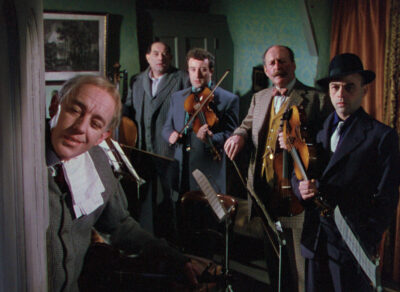
“The last, most enduring and best known of all the studio’s comedies, in which the sheer blackness of the central concept is barely disguised by the accomplished farce which surrounds it.” – Time Out
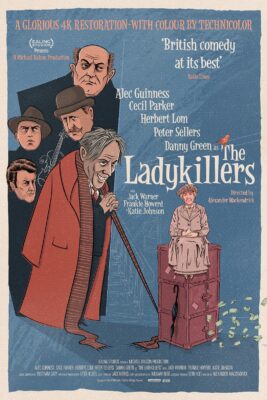
Rialto Pictures on the 2021 restoration:
As the last British film shot in three-strip Technicolor, THE LADYKILLERS is fortunate to have all thirty-three reels of its original Technicolor camera negative. So it was crucial and important that these elements be used for StudioCanal’s restoration, the best version of the film since its original release.
The restoration began with the 4K pin-registered scanning of the original 1950s Technicolor three-strip camera negative. With three-strip Technicolor (a process that was last used by Hollywood in the early 1970s), three color separations (r yellow, cyan and magenta) are combined to create the full Technicolor palette. Therefore, though the release prints of THE LADYKILLERS are 11 reels total, there are 33 reels of camera negative.
One of the biggest issues to overcome was the proper alignment of the separations. This was automated to a certain extent, but a huge amount of manual tweaking was required, involving tracking each one of the perforations. This is performed to avoid “fringing,” which causes colored outlines on edges of objects, faces etc.
Manual and automated digital restoration was then carried out over the aligned images. This was to remove particles of dirt, debris, hair, sparkle and then moving onto bigger issues such as stains, marks and scratches. The film suffered from a few extreme issues such as blue marks in the middle to right hand side of frame throughout the film that had to be removed. There was significant flicker that has been corrected as best as possible on a shot-by-shot basis. Many shots suffered from instability and some sections also suffered from scratching, the worst being four minutes of scratched film throughout an entire sequence.
In total, the film benefitted from over 1000 hours’ worth of 4K digital restoration. A 35mm Technicolor print was used as a reference for the color grade to ensure the new HDR Dolby Vision master stayed true to the film’s original 1950s “color by Technicolor” look.
 Laemmle Theatres and the Anniversary Classics Series present this month’s film in our popular Anniversary Classics Abroad program: Regis Wargnier’s compelling and increasingly timely thriller,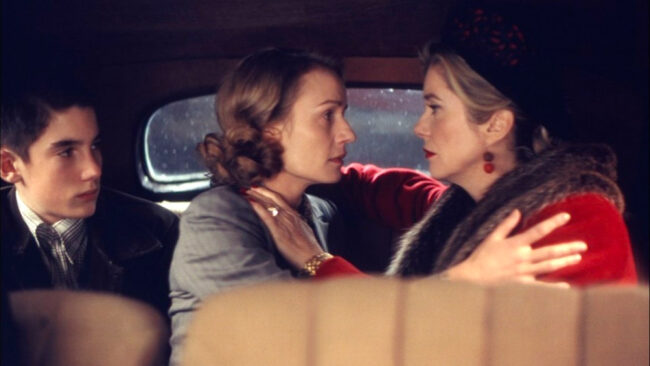
 Laemmle Theatres and the Anniversary Classics Series invite you to celebrate the publication of Stephen Farber and Michael McClellan’s new book, Cinema ’62: The Greatest Year at the Movies, with screenings of one of the most memorable movies from 1962, John Frankenheimer’s The Manchurian Candidate.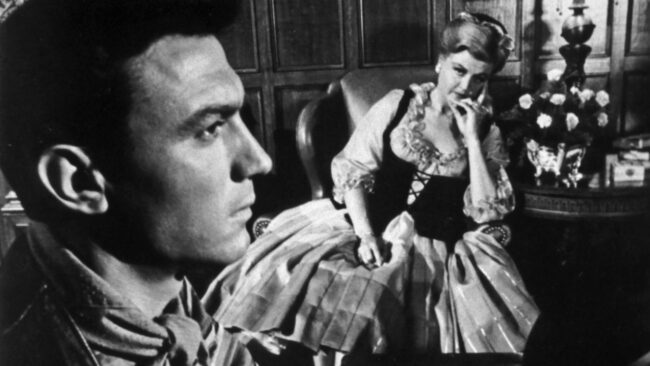
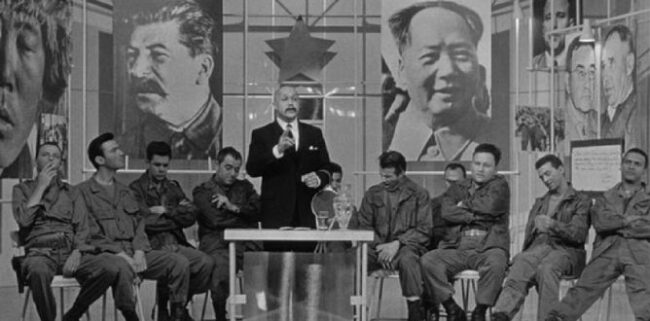
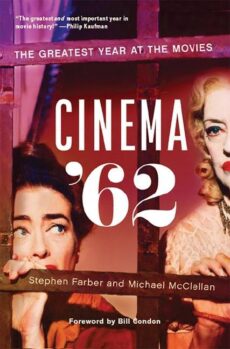 Cinema ’62 provides fascinating anecdotes about this classic thriller and about many of the other masterpieces of this landmark year. Read all about them after you enjoy this innovative, frightening, wickedly funny, and ever-timely highlight from a year full of cinematic wonders.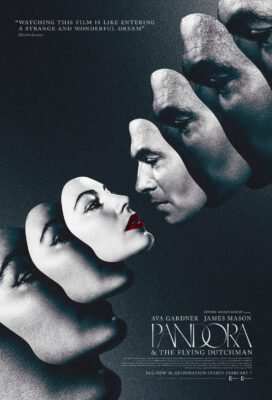
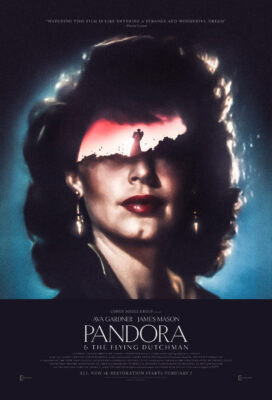

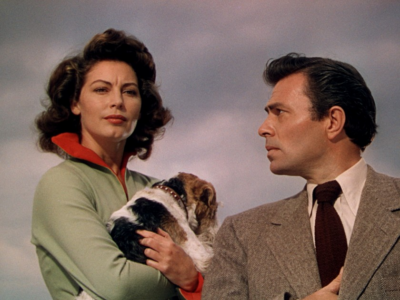
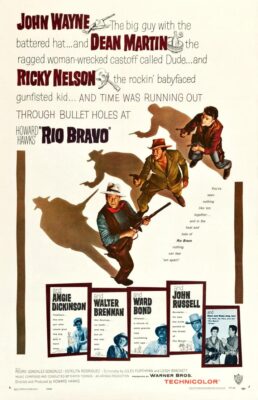
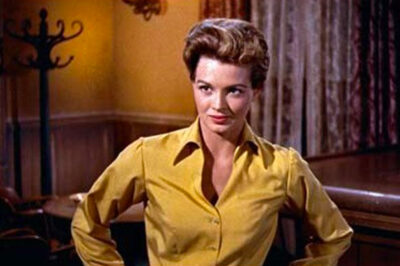 Laemmle Theatres and the Anniversary Classics Series present one of the best-loved westerns of all time, Howard Hawks’ 1959 action romp,
 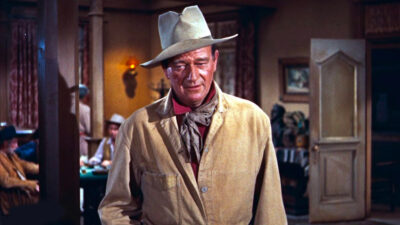 The story by B.H. McCampbell (Hawks’s eldest daughter Barbara) presents a fairly simple tale. Wayne plays a sheriff in a small Texas town who is holding a murderer (Claude Akins) in the town jail until the marshal can move him to a nearby penitentiary. But the killer’s brother, a wealthy rancher with a large gang of confederates, intends to break the prisoner out of jail. Wayne’s character is vastly outnumbered, but he turns to an unlikely posse—a drunken deputy (Martin), a helpless cripple (Brennan), and a young greenhorn (Nelson), along with a visiting lady gambler (Dickinson).
 Brackett surely contributed to the vitality of Angie Dickinson’s character, Feathers, a tough, sassy woman who more than holds her own in confrontations with Wayne. The Los Angeles Times took special note of Dickinson, saying, “starmaker Howard Hawks has worked some of the same kind of magic as he did with Lauren Bacall in To Have and Have Not.” Indeed, some of the memorable repartee between Bogart and Bacall in that film was recycled effectively in Rio Bravo.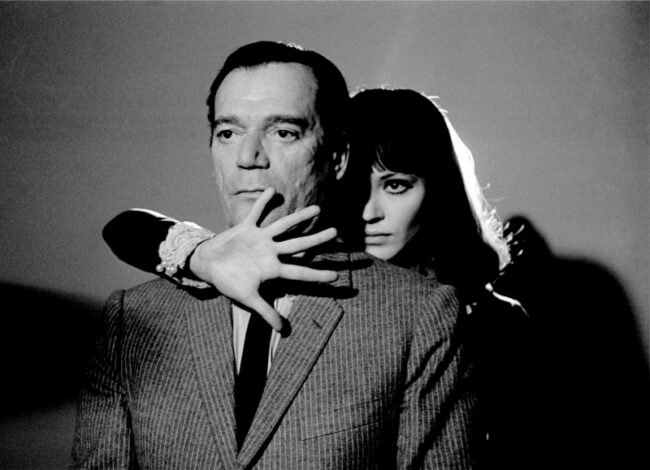
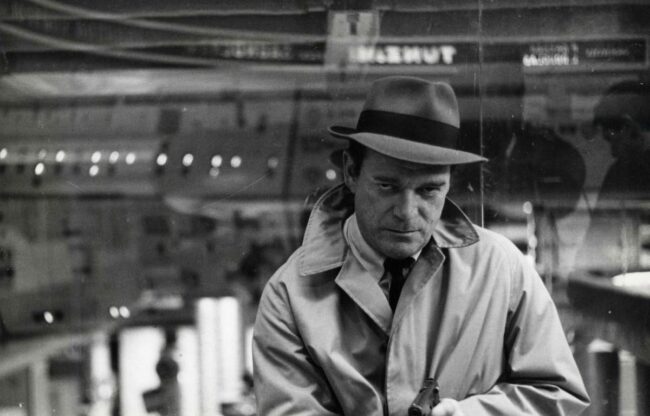
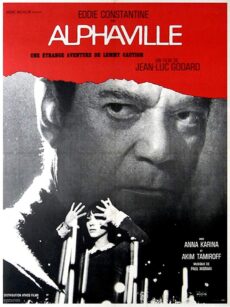 The film won the top prize, the Golden Bear, at the Berlin Film Festival. Reviews were mixed at the time, with some critics bewildered and others praising the film’s style and originality. Over the years it has been recognized as a prophetic work in its protest of the growing dehumanization of modern life. As the Boston Globe’s Ty Burr wrote, “Alphaville moves closer to relevance with every passing year.” The New Yorker’s Richard Brody called it “one of the great cinematic works of romanticism.” Time Out’s Keith Uhlich added, “Karina proves to be the beating heart of the movie.”