The Official Blog of Laemmle Theatres.

Laemmle Theatres

Film Reviews & Previews

  • All
  • Theater Buzz
    • Claremont 5
    • Glendale
    • Newhall
    • NoHo 7
    • Royal
    • Santa Monica
    • Town Center 5
  • Q&A’s
  • Locations & Showtimes
    • Claremont
    • Glendale
    • NewHall
    • North Hollywood
    • Royal (West LA)
    • Santa Monica
    • Town Center (Encino)
  • Film Series
    • Anniversary Classics
    • Culture Vulture
    • Worldwide Wednesdays
  • Facebook
  • Instagram
  • TikTok
  • YouTube

You are here: Home / Featured Films

Brevity is the soul of wit: The 2022 Oscar-nominated short films are now playing everywhere.

March 9, 2022 by Jordan Deglise Moore Leave a Comment

This Friday we’ll expand our screenings of the 2022 Oscar-nominated short films — live action, animated and documentary — to almost all our venues so cinephiles from throughout L.A. County and beyond can enjoy them theatrically. Robert Abele of the L.A. Times weighed in on his favorites:

Documentaries: “The Queen of Basketball is a joyous portrait of college legend, breakthrough Olympian, and only ever female NBA draftee Lusia “Lucy” Harris, a gifted athlete without a professional league of her own. Harris died in January, but here she’s a wry chronicler of her underappreciated majesty, making Queen a fitting film obituary. Matt Ogens’ percussively energized, heartfelt Audible takes us into the tightknit huddle of high schoolers in the successful football program at the Maryland School for the Deaf, their Big Game preparation a poignant metaphor for the feelings of pride, loss and community that make them different from, but also no different than, any teenager facing an uncertain world…Looking back on a childhood choice (and seizing on a wild coincidence) is the province of veteran experimental filmmaker Jay Rosenblatt’s When We Were Bullies, a wonderfully intimate, collage-styled reckoning with memory, hurt and the ethics of storytelling.”

Brevity is the soul of wit: The 2022 Oscar-nominated short films are now playing everywhere.
From WHEN WE WERE BULLIES. Courtesy of ShortsTV.

Live action: “The nerviest conscience buster is Aneil Karia’s The Long Goodbye, a companion film to actor/rapper Riz Ahmed’s same-named album. He plays one of many members of a large British-South Asian family in a bustling house preparing for a wedding until a violent reality intrudes, leading to a wall-breaking rap about race, history and nationalism that Ahmed delivers like a frontline soliloquy. On the more Black Mirror end of things is KD Davila’s Kafkaesque satire Please Hold, which fuses our blind fascination with all things contactless, online and privatized with our inability to reform a byzantine justice system, following it to a not-too-far-off conclusion for someone like innocent Latino 20-something Mateo (Erick Lopez).”

Brevity is the soul of wit: The 2022 Oscar-nominated short films are now playing everywhere.
From PLEASE HOLD. Courtesy of ShortsTV.

Animation: “Lives marred by cruelty factor into the hand-drawn Boxballet and stop-motion Bestia. The former, from Anton Dyakov, brings together a hulking, banged-up pugilist and an up-and-coming ballerina for a wordless-but-not-soundless meeting of sensitive souls. The latter is Chilean animator Hugo Covarrubias’ slow-burning, textural glimpse — set during the country’s military dictatorship — of the corrosive duality in a policewoman’s daily life with her dog, her body and her demons. The eerie airlessness of the dollhouse-like settings and the porcelain shine on the puppets are memorably unsettling.’

Brevity is the soul of wit: The 2022 Oscar-nominated short films are now playing everywhere.
From BESTIA.

“Influential designer/animator Alberto Mielgo, who sparked the aesthetic of Into the Spider-Verse, is another wizard with texture and visual depth. His meditative The Windshield Wiper poses the question “What is love?” to a man in a café, then seeks clues in a series of vignettes with couples around the world. Mielgo’s urbanized hybrid of the painterly and the digitized is hypnotic and its own example of an artist’s love.’

Brevity is the soul of wit: The 2022 Oscar-nominated short films are now playing everywhere.
From THE WINDSHIELD WIPER.

“British animator Joanna Quinn’s enthusiasm for the wiggly expressiveness of traditional animation, meanwhile, makes her latest romp starring middle-aged feminist factory worker Beryl, Affairs of the Art, a raucous delight. (The last Beryl short was in 2006.) Now hellbent on becoming a “hyperfuturist artiste,” drawing-obsessed Beryl (voiced as ever by Menna Trussler) relays a family history of sibling rivalry, imperiled pets, morbid curiosities and eccentric tastes, while Quinn’s masterful caricatures and love of bulbous bodies in motion would make Da Vinci blush, laugh and be jealous simultaneously. Drawing becomes riotously, beautifully alive in Quinn’s vaudeville of aging and anatomy, but so does the wonderfully personal message delivered through her never-too-late-to-try heroine: There’s power in passion, whenever it strikes you in life.”

Brevity is the soul of wit: The 2022 Oscar-nominated short films are now playing everywhere.
From AFFAIRS OF THE ART.

Please note that the animated shorts are not MPAA rated but if they were they’d likely receive an R or NC-17 rating. Only adults will be admitted.

https://vimeo.com/678295462/7a10ce4892

Leave a Comment Filed Under: Claremont 5, Featured Films, Films, Glendale, Newhall, News, NoHo 7, Playhouse 7, Santa Monica, Theater Buzz, Town Center 5

“Haroun shows how the strength of sisterhood extends beyond family to unite women in resistance.” LINGUI, THE SACRED BONDS opens this Friday at the Royal.

February 16, 2022 by Jordan Deglise Moore Leave a Comment

Celebrated Chadian director Mahamat-Saleh Haroun (A Screaming Man) makes a remarkable return to his home country with Lingui, The Sacred Bonds, in which a mother struggles to secure an abortion for her pregnant teen daughter. Honest and poignant, gorgeously shot and superbly acted, this official submission to the 2022 Academy Awards is a stunning vision of female solidarity. Film critics have noticed:

“Haroun has a gift for distilling volumes of meaning in his direct, lucid, balanced visuals, which he uses to complement and illuminate the minimalist, naturalistic dialogue.” ~ Manohla Dargis, New York Times

"Haroun shows how the strength of sisterhood extends beyond family to unite women in resistance." LINGUI, THE SACRED BONDS opens this Friday at the Royal.
Achouackh Abakar Souleyman and Rihane Khalil Alio. All photos courtesy of MUBI.

“It’s a bracing work that passes quickly in 87 minutes. But the world it shows us, etched in fully felt performances and beautifully hued compositions, feels vividly, sometimes overwhelmingly present.” ~ Justin Chang, Los Angeles Times
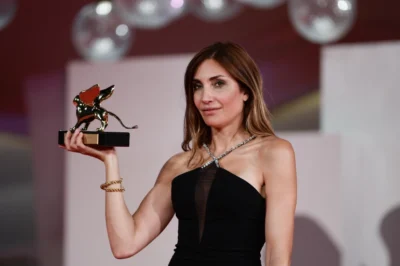
"Haroun shows how the strength of sisterhood extends beyond family to unite women in resistance." LINGUI, THE SACRED BONDS opens this Friday at the Royal.
Rihane Khalil Alio.

“Beautiful to look at, impeccably shot and boasts a righteous, perfectly judged, weapon-wielding climax.” ~ Kevin Maher, Times [UK]

"Haroun shows how the strength of sisterhood extends beyond family to unite women in resistance." LINGUI, THE SACRED BONDS opens this Friday at the Royal.
Achouackh Abakar Souleyman and Rihane Khalil Alio.

“Haroun shows how the strength of sisterhood extends beyond family to unite women in resistance, and the movie’s powerful vision of their furtive heroism reflects the overwhelming forces that they confront.” ~ Richard Brody, New Yorker

"Haroun shows how the strength of sisterhood extends beyond family to unite women in resistance." LINGUI, THE SACRED BONDS opens this Friday at the Royal.
Rihane Khalil Alio.

“As we tag along with Harouns characters, we learn to appreciate their story as a small, but vivid study of lives that are so much more than their progressive developments.” ~ Simon Abrams, RogerEbert.com

"Haroun shows how the strength of sisterhood extends beyond family to unite women in resistance." LINGUI, THE SACRED BONDS opens this Friday at the Royal.
Rihane Khalil Alio.

“But it’s the silent allegiances of sisterhood, a near-underground network operating to safeguard women’s rights, which exercise Haroun’s imagination throughout this excellent piece.” ~ Tim Robey, Daily Telegraph [UK]

"Haroun shows how the strength of sisterhood extends beyond family to unite women in resistance." LINGUI, THE SACRED BONDS opens this Friday at the Royal.
Rihane Khalil Alio and Achouackh Abakar Souleyman.

“The intense, focused performances from the two central women keep this drama in a hyper-alert state.” ~ Peter Bradshaw, Guardian

"Haroun shows how the strength of sisterhood extends beyond family to unite women in resistance." LINGUI, THE SACRED BONDS opens this Friday at the Royal.
Writer-director Mahamat-Saleh Haroun.

“A beautiful portrait of community.” ~ Lovia Gyarkye, Hollywood Reporter

https://www.youtube.com/watch?v=2DFew16WifY

Leave a Comment Filed Under: Featured Films, Featured Post, Films, News, Press, Royal, Theater Buzz

“Touchingly absurd and absurdly touching,” BRIGHTON 4TH comes to L.A. February 11 via Tbilisi, Georgia and Brighton Beach, Brooklyn.

February 2, 2022 by Jordan Deglise Moore Leave a Comment

In this portrait of parental sacrifice and the love of a father for his son, former wrestler Kakhi (played by real-life Olympic champion Levan Tediashvili) embarks on a journey from his home in the Republic of Georgia to visit his son Soso (Giorgi Tabidze) in the Russian-speaking neighborhood of Brighton Beach, Brooklyn. There he finds him living in a shabby boarding house populated by a colorful group of fellow Georgian immigrants. Soso is not studying medicine, as Kakhi believed, but is working for a moving company and has accrued a $14,000 gambling debt to a local Russian mob boss. Kakhi sets his mind to helping his hapless son out of his debt, leading to situations as often comic as they are dire. Lensed by Oscar®-nominated cinematographer Phedon Papamichael (The Trial of the Chicago 7, Nebraska), Levan Koguashvili Brighton 4th won three major awards at the Tribeca Film Festival – Best International Film, Best Actor, and Best Screenplay – and is Georgia’s official submission to the 94th Academy Awards®.

Laemmle Theatres is proud to open Brighton 4th on February 11 at our Encino, Pasadena and West L.A. theaters.

“Touchingly absurd and absurdly touching… A slow-burn family drama infused with welcome doses of deadpan dark humor.” ~ Frank Scheck, The Hollywood Reporter

"Touchingly absurd and absurdly touching," BRIGHTON 4TH comes to L.A. February 11 via Tbilisi, Georgia and Brighton Beach, Brooklyn.
(l. to r.) Levan Tediashvili (Kakhi) and Giorgi Tabidze (Soso) shopping on the boardwalk of Brighton Beach, Brooklyn, in Brighton 4th, directed by Levan Koguashvili. Image courtesy of Kino Lorber.

“A tragicomedy that sneaks up on you stealthily before flooring you with an emotional sucker punch in the final reel.” ~ Matt Fagerholm, RogerEbert.com

"Touchingly absurd and absurdly touching," BRIGHTON 4TH comes to L.A. February 11 via Tbilisi, Georgia and Brighton Beach, Brooklyn.
(l. to r.) Nadezhda Mikhalkova (Lena) and Giorgi Tabidze (Soso) on the beach in Brighton Beach, Brooklyn, in Brighton 4th, directed by Levan Koguashvili. Image courtesy of Lorber.

“The melancholy-infused narrative neatly balances rueful humor with genuine sweetness.” ~ Alissa Simon, Variety

"Touchingly absurd and absurdly touching," BRIGHTON 4TH comes to L.A. February 11 via Tbilisi, Georgia and Brighton Beach, Brooklyn.
Levan Tediashvili (Kakhi) in Brighton 4th, directed by Levan Koguashvili. Image courtesy of Kino Lorber.

“A near-perfect, semi-comic portrait of the low-rent Georgian enclave in Brighton Beach.” ~ Michael Atkinson, The Village Voice

"Touchingly absurd and absurdly touching," BRIGHTON 4TH comes to L.A. February 11 via Tbilisi, Georgia and Brighton Beach, Brooklyn.
Levan Tediashvili (Kakhi) in Brighton 4th, directed by Levan Koguashvili. Image courtesy of Kino Lorber.

“A touching and surprising exploration of masculinity that features a stunning central performance from former Olympic wrestling champion Levan Tediashvili.” ~ Kaleem Aftab, Cineuropa

"Touchingly absurd and absurdly touching," BRIGHTON 4TH comes to L.A. February 11 via Tbilisi, Georgia and Brighton Beach, Brooklyn.
Levan Koguashvili, director of Brighton 4th. Photo credit: Eliso Sulakauri

“Koguashvili deftly blends tones in his vividly realised snapshots of Georgian manhood.” ~ Wendy Ide, Screen Daily

“A compelling portrait of the Eastern European community that exists in Brighton, [featuring] a great performance by Tediashvili, in his first film role.” ~ Christian Gallichio, The Playlist

https://www.youtube.com/watch?v=f6R0js4LoqI

Leave a Comment Filed Under: Featured Films, Films, News, Playhouse 7, Press, Royal, Theater Buzz, Town Center 5

Radu Jude on BAD LUCK BANGING OR LOONY PORN: “This was my idea — to clash these two types of obscenity, and to see that the one so-called obscenity in the porn video is nothing compared with what is around us, but that we don’t pay attention to.”

January 26, 2022 by Jordan Deglise Moore Leave a Comment

Internationally acclaimed Romanian writer-director Radu Jude’s daring new film BAD LUCK BANGING OR LOONY PORN, which we’ll screen February 1 at our Glendale, NoHo, Playhouse and Royal theaters followed by a streaming engagement beginning February 4 on Laemmle Virtual Cinema, follows Emi (Katia Pascariu), a schoolteacher who finds her reputation under attack after her personal sex tape is uploaded to the internet. Forced to meet the angry parents demanding her dismissal, Emi refuses to surrender. Jude begins the film with an excerpt of the tape and then proceeds with three loosely connected parts: Emi’s confrontational walk through Bucharest between COVID surges; then a playful essay on obscenities; all culminating, in the third part, in an incendiary comic confrontation between Emi and her students’ aggrieved parents. The final part is quite reminiscent of recent U.S. school board meetings but with sex substituting for arguments about COVID restrictions and the teaching of America’s racist history.
   Radu Jude on BAD LUCK BANGING OR LOONY PORN: "This was my idea — to clash these two types of obscenity, and to see that the one so-called obscenity in the porn video is nothing compared with what is around us, but that we don’t pay attention to."
BAD LUCK BANGING is Romania’s submission to the Oscars for the Best International Feature prize and has enjoyed excellent critical response, as have earlier highlights from his oeuvre on our Laemmle Virtual Cinema platform (now playing but ending soon): AFERIM!, UPPERCASE PRINT and “I DO NOT CARE IF WE GO DOWN IN HISTORY AS BARBARIANS.”
Radu Jude on BAD LUCK BANGING OR LOONY PORN: "This was my idea — to clash these two types of obscenity, and to see that the one so-called obscenity in the porn video is nothing compared with what is around us, but that we don’t pay attention to."
Some praise for BAD LUCK BANGING:
“A fascinating snapshot of the here and now, an unusually direct example of a nimble, adventurous filmmaker embracing the difficulties of the moment. But it is also something more.” ~ Justin Chang, Los Angeles Times
“Wild. Audacious. An angry, funny film.” ~ Edgar Wright (director, Shaun of the Dead, One Night in Soho)

“A batshit farce. See is on a big screen with an audience to bask in their outrage.” ~ Alex Winter, actor-director, Zappa, Bill & Ted Face the Music

“An eyeball-slicing polemic by a bomb-throwing provocateur.” ~ Josh Kupecki, Austin Chronicle

“Amid so many earnest, forgettable COVID-era and COVID-acknowledging movies around the world, here’s one that truly goes for it.” ~ Michael Phillips, Chicago Tribune

Radu Jude on BAD LUCK BANGING OR LOONY PORN: "This was my idea — to clash these two types of obscenity, and to see that the one so-called obscenity in the porn video is nothing compared with what is around us, but that we don’t pay attention to."

Jude wrote about the origins of the film and its themes:

“The film first appeared out of long discussions with friends. On a few occasions we discussed real-life stories from Romania and other countries, of teachers being expelled from schools where they were teaching because of what they were doing in their private lives: live-cam sex chat or posting amateur porn recordings on the internet. The discussions were so heated, it made me think that although the topic seems trivial and shallow, there must be a lot more behind it if reactions to it are so powerful. Then I decided to make a film – so now I have the last word in front of my friends, they cannot come up with something like that.

Radu Jude on BAD LUCK BANGING OR LOONY PORN: "This was my idea — to clash these two types of obscenity, and to see that the one so-called obscenity in the porn video is nothing compared with what is around us, but that we don’t pay attention to."
Radu Jude

“The film has three parts which engage each other in poetic ways – understanding “poetic” according to Malraux’s definition: “Without doubt all true poetry is irrational in that it substitutes, for the ‘established’ relation of things, a new system of relations.”

“While the film title is mostly self-explanatory, its subtitle, ‘a sketch for a popular film’, could benefit from an explanation. Malraux once noted that “Delacroix, though affirming the superiority of the finished painting over the sketch, kept many of his sketches, whose quality as works of art he considered equal to that of his best paintings.” The idea struck me as relevant and I decided to apply it in filmmaking and try to see what a film would look like if its form was left open, unfinished, like a sketch. And yes, “popular”, since I believe the film could be easy like a summer breeze and because of its tabloid-like topic. But it is not a real popular film. Only a sketch of a possible one.”

Radu Jude on BAD LUCK BANGING OR LOONY PORN: "This was my idea — to clash these two types of obscenity, and to see that the one so-called obscenity in the porn video is nothing compared with what is around us, but that we don’t pay attention to."

On shooting in COVID times:

“The first lockdown ended in Romania at the end of May and we were supposed to film in October and November. When we saw that the second wave of Covid-19 was coming (at the beginning of July), me and the producer Ada Solomon had to decide: either we stick to the plan (which meant also applying for extra funding), with the risk of postponing the shooting in case the crisis worsens, or we film sooner with the money we have. We opted for the latter and started to prepare the film. The number of cases was rising, so I had also to decide how to interact with people. I strongly believe that, as a director, you have a certain responsibility towards the cast and crew.

Radu Jude on BAD LUCK BANGING OR LOONY PORN: "This was my idea — to clash these two types of obscenity, and to see that the one so-called obscenity in the porn video is nothing compared with what is around us, but that we don’t pay attention to."

“When I was young, I really admired all the crazy shoots I read about: Way Down East, Aguirre, Apocalypse Now etc. I still admire them, but I am too weak: I try not to risk the life or health of anybody when it comes to shooting. I don’t think any film in the world is worth someone contracting even a common cold, and my bad films – even less. With these in mind, I did all the casting, and all the rehearsals on Zoom and decided to have the crew wearing masks. And also, even the cast. Firstly, because the film was supposed to be contemporary and the masks were part of our daily life and I wanted to capture this moment, to find the anthropological aspect of the mask-wearing. Secondly, because I cared about the health of the people involved. You know, many of them are in the film at my invitation. I was the host and I felt responsible. Most of the people agreed with these safety regulations. Some of them, more vulnerable, agreed to do the film only because I promised them that the rules of social distancing and protection will be severely respected. We all tested for Covid-19 before shooting and two times more.

“If you went down on the street during this time, the signs that remained — posters for concerts, empty restaurants, and so on and so forth — were already signs of a non-existent reality. Cinema has this possibility to capture things, to capture the signs of the time passing, to make a capsule of the moment in many ways.

“In the first shooting day, Ada Solomon, our producer, explained to everyone that wearing the mask is mandatory on set for the whole film, that we must change it every 4 hours (they were provided free by the production), that we have only sandwiches as catering (for obvious reasons). Everybody (literally: everybody) agreed. And most of us respected the rules, although it was exhausting, and wearing a mask in severe heat for 12 hours a day can be horrible. Then, there were some crew or cast members sometimes not respecting the rules, which made our shoot more challenging than it could have been. I am not against people who break the rules, on the contrary, if it involves only their bodies. I am against breaking the rules when you endanger or harm others. The great thing on a film set (or on my sets, anyway) is that everyone has the same rights as everyone else: the same working hours (apart from special situations, like a more time-consuming make-up etc.), the same food, the same accommodation or transport. So, it was quite disappointing to have a few people every day taking off the mask whenever they could. I see it as a lack of respect for their colleagues, a kind of “Fuck you, I don’t care about anyone else, I want to feel good even if I can infect you.” This sometimes made the atmosphere on the set tense, but that’s it. I felt relieved when the shooting ended, and we were all healthy.”

Themes

“What is obscene and how do we define it? We are used to acts which are much more obscene, in a way, than small acts like the one that set off the uproar we see in the film.

“This was my idea — to clash these two types of obscenity, and to see that the one so-called obscenity in the porn video is nothing compared with what is around us, but that we don’t pay attention to.

“The film tells a contemporary story, a small one, a little story. If history and politics are part of the film, that is because the story itself has a deeper meaning if we see it in a historical, societal and political context.

“Obscenity is the theme of this film and the viewers are constantly invited to compare the so- called obscenity of a banal amateur porn video with the obscenity around us and the obscenity we can find in recent history, whose traces are all around. So, the viewers should make this montage operation. Georges Didi Huberman wrote something very important regarding montage and it could apply to our film as well:

“Le montage sera précisément l’une des réponses fondamentales à ce problème de construction de l’historicité. Parce qu’il n’est pas orienté simplement, le montage échappe aux théologies, rend visibles les survivances, les anachronismes, les rencontres de temporalités contradictoires qui affectent chaque objet, chaque événement, chaque personne, chaque geste. Alors, l’historien renonce à raconter ‘une histoire’ mais, ce faisant, il réussit à montrer que l’histoire ne va pas sans toutes les compléxités du temps, toutes les strates de l’archéologie, tous les pointillés du destin.” *

* “Montage will be precisely one of the fundamental responses to this problem of constructing historicity. Because it is not oriented towards simplicity, Montage escapes theologies, and has the power to make visible the legacies, anachronisms, contradictory intersections of temporalities that affect each object, each event, each person, each movement. Thus, the historian renounces telling ‘a story’, but in doing so, succeeds in showing that history cannot be, without all of the complexities of time, all the archaeological strata, all of the perforated fragments of destiny.”

Leave a Comment Filed Under: Director's Statement, Featured Films, Featured Post, Glendale, Laemmle Virtual Cinema, News, NoHo 7, Playhouse 7, Royal, Theater Buzz

“COMPARTMENT NO. 6 evokes a powerful nostalgia for a type of loneliness we don’t really have any more, and for the type of love that was its cure.” The Finnish Oscar contender opens next week.

January 19, 2022 by Jordan Deglise Moore Leave a Comment

We love a movie set on a train and are excited to open an excellent new addition to the genre, the acclaimed new Finnish movie COMPARTMENT NO. 6. (We may be hosting the filmmaker for a Q&A; check our website for news.) The film follows a young woman who escapes an enigmatic love affair in Moscow by boarding a train to the Arctic port of Murmansk. Forced to share the long ride and a tiny sleeping car with a larger than life Russian miner, the unexpected encounter leads the occupants of compartment no. 6 to face major truths about human connection. In addition to the Royal engagement starting Wednesday, January 26, we’ll expand the film to Encino and Pasadena on February 4. The Academy has short-listed the film for its Best International Feature Oscar and prompted some glowing reviews:

“An engrossingly offbeat rail movie…the two leads…walk us through the human condition with the nuances of a big Russian novel.” ~ Deborah Young, The Film Verdict

"COMPARTMENT NO. 6 evokes a powerful nostalgia for a type of loneliness we don't really have any more, and for the type of love that was its cure." The Finnish Oscar contender opens next week.

“It makes for a take on the love story as fresh, resonant and honest… as you’ll find in a contemporary film.” ~ Robert Abele, L.A. Times

"COMPARTMENT NO. 6 evokes a powerful nostalgia for a type of loneliness we don't really have any more, and for the type of love that was its cure." The Finnish Oscar contender opens next week.

“As bleak as the settings may be, it has a delicious black comic streak and shares the buzz of personal re-awakening without ever feeling obvious or cheap. It turns out to be a beacon of warmth amid a frozen wasteland.” ~ Dave Calhoun, TimeOut

"COMPARTMENT NO. 6 evokes a powerful nostalgia for a type of loneliness we don't really have any more, and for the type of love that was its cure." The Finnish Oscar contender opens next week.

“COMPARTMENT NO. 6 evokes a powerful nostalgia for a type of loneliness we don’t really have any more, and for the type of love that was its cure.” ~ Jessica Kiang, Variety

"COMPARTMENT NO. 6 evokes a powerful nostalgia for a type of loneliness we don't really have any more, and for the type of love that was its cure." The Finnish Oscar contender opens next week.

“Seida Haarla gives a winning, intelligent performance as a naturally very clever person made to feel small and helpless in a strange land. But Yuriy Borisov pops from the first moments you see him.” ~ Mark Asch, Little White Lies

"COMPARTMENT NO. 6 evokes a powerful nostalgia for a type of loneliness we don't really have any more, and for the type of love that was its cure." The Finnish Oscar contender opens next week.
Juho Kuosmanen

Director/co-screenwriter Juho Kuosmanen penned the following about his film:

“COMPARTMENT NO. 6 is an Arctic road movie, perhaps it could be seen as a clumsy attempt to find harmony and peace of mind in a world of chaos and anxiety. The core of the story lies in the notion of acceptance. It’s a hard duty to accept that you are part of this chaotic world, and that you exist as you do. Our hero, Finnish student Laura, takes a long train ride to visit some ancient petroglyphs. She quotes a man she met: “To know yourself, you need to know your past.” She would like to be an archaeologist who gets fulfilment out of these kind of things, petroglyphs and such. But is she really that person? Or is this just a stolen dream from a person she would like to be?

“On the train she meets Ljoha, an annoying Russian miner who follows her like a shadow. She wanted to know her past, and Ljoha is the embodiment of it. It’s unpleasant and banal, but it is what it is.

“Road movies are often about freedom. In a car you can go where you want, every crossroad is a possibility. But I tend to think that freedom isn’t an endless number of options but rather, the ability to accept your limitations. A train ride is more like destiny. You can’t decide where to go, you just have to take what it gives you.”

https://www.youtube.com/watch?v=itL_GpBalA4

Leave a Comment Filed Under: Director's Statement, Featured Films, Featured Post, Filmmaker in Person, Films, Playhouse 7, Q&A's, Royal, Theater Buzz, Town Center 5

LUNANA: A YAK IN THE CLASSROOM, the first film from the Kingdom of Bhutan to make the shortlist for the Best International Feature Oscar, opens January 21.

January 12, 2022 by Jordan Deglise Moore Leave a Comment

Ugyen, a young teacher in modern Bhutan, shirks his duties while planning to go to Australia to become a singer. As a reprimand, his superiors send him to the most remote school in the world, in a village called Lunana, to complete his service. He finds himself exiled from his Westernized comforts after an arduous eight-day trek just to get there, where he finds no electricity, no textbooks, not even a blackboard. Though poor, the villagers extend a warm welcome to their new teacher, but he faces the daunting task of teaching the village children without any supplies. He wants to quit and go home, but he learns of the hardship in the lives of the beautiful children he teaches, and begins to be transformed by the villagers’ amazing spiritual strength.

We open LUNANA: A YAK IN THE CLASSROOM Friday, January 21 at the Playhouse, Royal and Town Center.

LUNANA: A YAK IN THE CLASSROOM, the first film from the Kingdom of Bhutan to make the shortlist for the Best International Feature Oscar, opens January 21.

From the writer-director, Pawo Choyning Dorji:

“Pursuit of Happiness: Being the nation of ‘Gross National Happiness,’ Bhutan is supposedly the world’s happiest country. But what does it really entail to be happy? For that matter are the Bhutanese really that happy? Ironically many Bhutanese leave Bhutan, the land of happiness, to seek their own version of ‘happiness’ in the modern glittering cities of the west. With LUNANA: A YAK IN THE CLASSROOM I wanted to tell a story where Ugyen, the young protagonist of the story also wishes to go in search of his happiness. However, he is sent on another journey… he reluctantly goes into a world that is unlike the modern world in every aspect. Along this journey he realizes what we so desperately seek in the outer material world, actually always exists within us, and that happiness is not really a destination but the journey.

LUNANA: A YAK IN THE CLASSROOM, the first film from the Kingdom of Bhutan to make the shortlist for the Best International Feature Oscar, opens January 21.
Filmmaker Pawo Choyning Dorji with an actor.

“The Dark valley: The film was shot on-location at the world’s most remote school, in the village of Lunana. The village is a settlement that’s sits along the glaciers of the Himalayas, only accessible through an eight-day trek over some of the highest mountains of the world. There are only 56 people in the village, most of whom had never seen the world outside their village. The word ‘Lunana’ literally means the dark valley; a valley so far and distant that the light doesn’t even reach it. So isolated is the village that even to this day, there are no electricity and cellular network connections. Due to the lack of facilities, the production of the film was totally dependent on solar-charged batteries.

LUNANA: A YAK IN THE CLASSROOM, the first film from the Kingdom of Bhutan to make the shortlist for the Best International Feature Oscar, opens January 21.

“Though extremely challenging, I specifically wanted to shoot the movie in Lunana, inspired by the purity of the lands and the people. I also wanted everyone involved in the production to experience this life changing journey, so that the authenticity of experience could translate on to the film.

LUNANA: A YAK IN THE CLASSROOM, the first film from the Kingdom of Bhutan to make the shortlist for the Best International Feature Oscar, opens January 21.

“The major themes of the story are ‘the search for happiness and a sense of belonging’, and these are universal themes that everyone can relate to irrespective of one’s culture and background. However I wanted to present those themes through a medium like Lunana, a world and a people that are so different from not only the rest of the world, but from also Bhutan itself. I wanted to show that even if in such a unique world, the hopes and dreams that connect humanity are the same.”

LUNANA: A YAK IN THE CLASSROOM, the first film from the Kingdom of Bhutan to make the shortlist for the Best International Feature Oscar, opens January 21.

Leave a Comment Filed Under: Director's Statement, Featured Films, Featured Post, Films, Playhouse 7, Royal, Theater Buzz, Town Center 5

Asghar Farhadi on his award-winning film A HERO: “People can take years to find within themselves the reasons for their actions, deeply buried within their past.”

January 5, 2022 by Jordan Deglise Moore 1 Comment

Winner of the Grand Prix and François Chalais Award and a nominee for the Palme d’Or at the last Cannes Film Festival, Iranian filmmaker Asghar Farhadi’s new film A Hero follows Rahim, on a two-day leave from debtor’s prison. While out, he tries to convince his creditor to withdraw his complaint. But things don’t go as planned. We open the film Friday at the Royal, Playhouse and Town Center and at our Claremont, Glendale and Newhall theaters on January 21.

“In Mr. Farhadi’s hands it’s a deliciously ironic, exquisitely complex and mysteriously stirring tale of a man, his son and family, and the staining of multiple reputations by what seems, at the outset, to be a fairly minor lie.” ~ Joe Morgenstern Wall St. Journal

“A superb morality play that immerses us deeply in a society’s values and rituals and keeps us guessing right to its powerful final shot.” ~ Dave Calhoun, Time Out

“As it takes more and more twists, the story veers on the edge of Shakespearean tragicomedy, with darkly funny results. But the dominant tone is dramatic, and occasionally tense and painful, as we watch our hero make dubious choices.” ~ Anna Smith, Deadline Hollywood Daily

Interview with Asghar Farhadi:

Q: How did the idea for A Hero come about?

A: I had been reading stories like this in the press for some time. Those of ordinary individuals, who briefly made newspaper headlines because of an altruistic act. These stories often had common peculiarities. A Hero was not inspired by a specific news item, but while writing it, I had these stories in mind that I read in the press.

Asghar Farhadi on his award-winning film A HERO: "People can take years to find within themselves the reasons for their actions, deeply buried within their past."
Asghar Farhadi

Q: Why locate this story in Shiraz?

A: The answer to this question is given by the film’s theme. There are many historical remains in Shiraz, important and glorious traces of the Iranian identity. The main reason for choosing this city is the specificity of the plot and the characters. But the secondary reason was my wish to distance myself from the tumult of Tehran.

Asghar Farhadi on his award-winning film A HERO: "People can take years to find within themselves the reasons for their actions, deeply buried within their past."
Amir Jadidi

Q: How did the writing process go?

A: At the beginning, I had a vague idea from these true stories. Over the years, the idea grew. I always work the same way. The spark can come from an image, a feeling, a succinct plot which will develop thereafter. Sometimes all of this can stay in a corner of my mind, without my suspecting that it will one day lead to a screenplay. Time is an important ally. Some of these seeds disappear on their own, others persist, grow and stay in you in a state of unfinished process, waiting for you to dedicate yourself to them. It is at this stage, through scattered notes, that an idea begins to emerge. Then comes the research and the first sketches which themselves dictate the path to take. Almost all of my stories have developed in my mind in this progressive way. I do not remember ever having been able to conceive of a complete story with a beginning, a middle and an end from the outset.

Asghar Farhadi on his award-winning film A HERO: "People can take years to find within themselves the reasons for their actions, deeply buried within their past."
Sahar Goldust.

Q: Do you know the full biography of your characters?

A: The scattered notes I mentioned are largely part of the exploration of the characters’ past. This step, which always takes a long time, mostly concerns the main characters. For months, I note all the ideas related to the story I am developing on colored notecards. I choose one color for the ideas I am sure I will somehow incorporate into the script, another for those of which I am less sure. Many of these cards will not be used directly in the writing phase. They do not provide clear information for the script, however they help me to better understand my characters. During this preparatory phase, many aspects of the characters’ backgrounds are developed and leave more or less visible traces in the film.

Asghar Farhadi on his award-winning film A HERO: "People can take years to find within themselves the reasons for their actions, deeply buried within their past."
Asghar Farhadi

Q: There is a great ambiguity in the character of Rahim. For example, the smile that hardly ever leaves him.

A: It seems to me that the realistic approach of the film required this complexity in the characters. As in real life, people are made of multiple dimensions, and in each situation, one dimension takes over and becomes more visible. One could say that these characters are “gray” – they are not stereotypical or one-dimensional. Like any real person in everyday life, they are made of contrasts, antagonistic tendencies or conflict at the time of their decision-making. Rahim’s smile is part of a set of traits that appeared gradually over months of rehearsals; while seeking to define the nature of the actor who embodied it, the role was inscribed in everyday life so as to give Rahim this quality of a “gray” character.

Asghar Farhadi on his award-winning film A HERO: "People can take years to find within themselves the reasons for their actions, deeply buried within their past."
Amir Jadidi

Q: What is your method for your group scenes to be so natural, especially the family scenes?

A: This results mainly from the writing. It is an unconscious process. When one takes special care to make every detail of the scene plausible and authentic, the whole team, especially the actors, want to bring the script to life. With the characters’ behaviors and their dialogues being realistic and not built on clichés, the actors in their interpretation strive not to fall into the trap of artifice. There is certainly a risk that the search for naturalness itself constitutes an artifice. The line is fine and subtle and you have to be very vigilant not to cross it. Daily life can be repetitive and boring. As a director, one has to take care that the search for a realistic impression of the scene, almost like a documentary, does not induce the slow and uneventful pace of real life.

Q: Siavash lives with his uncle and aunt, and Farkhondeh stays with her brother. There is real solidarity in these extended families, which sometimes becomes a burden. Is this something very common in Iran?

A: Like in many other countries, I guess this is less observed in the capital or in large cities. But elsewhere, the pace of life is less hectic, families have lost less of their identity, their traditional ways of life and therefore these extended families are more frequent. Affective and family relationships are more developed, so if a family member is in trouble, everyone feels concerned. I grew up in this type of socio-cultural environment. Twenty years ago, the sentence “This is not my problem” did not exist in the Iranian language. However, this sentence has now been imported and characterizes a new relational mode in our society.

Q: Bahram’s character, the man to whom Rahim owes money, is also very ambiguous…

A: Classically, because of the obstacles he creates for the main character, he should have been unsympathetic and the villain in the movie. But as I mentioned before, due to the treatment of the characters, he has also his own reasons for acting the way he does. When he finally expresses them, they seem to us quite justified and his behavior understandable. It is perhaps this aspect, which goes against the stereotypical figure of the villain that allows us to feel closer to him.

Q: As in A Separation, the eyes of the children are important.

A: Once more, in this movie too, the children are the witnesses. They observe adults’ difficulties and their conflicts. They are unable to grasp the complexity of these difficulties. This is why, as in the previous movies, the children are dazed witnesses of the events. Their perception of the crisis experienced by the adults is purely emotional. Yet in this movie Nazanin, Bahram’s daughter, who is older than the other children, commits an act that creates an even more complex situation.

Q: Most of the characters communicate through social media. Is this a new and powerful phenomenon in Iran?

A: Like everywhere in the world, social networks in Iran occupy an important place in the lives of individuals. This phenomenon is quite recent, but its impact is such that it has become difficult to remember what life was like before its appearance. My personal experience makes me think that the omnipresence of social networks in everyday life is even more obvious in Iranian society than elsewhere. This can be explained by the country’s current socio-political situation.

Q: At the end of each of your films, the viewer does not have all the answers to the questions raised by the plot. Are you a filmmaker of the undecidable?

A: As I already said, this specific characteristic common to the films I have made is not intentional. This ambiguity, even this part of mystery, sometimes sets in during the writing and I have to say that I like it. This aspect makes the relationship between the film and the viewer more lasting beyond the screening. It gives the viewer the opportunity to think more about the film and to dig further into what you call the undecidable. I always take great pleasure in seeing Rashōmon again, precisely because of this mysterious dimension. To combine this ambiguity with an everyday story was an interesting challenge.

Q: Do you know this famous quote from Jean Renoir: “In this world, the truly terrible thing is that everybody has their reasons.” It seems to fit most of the characters of A Hero…

A: I totally agree. Everyone has their reasons for acting the way they do, even if they are not necessarily aware of these reasons. If asked to list them, they would be unable to do so. Sometimes they are not clear or easy to summarize. They are a mass of contradictions. In reality people can take years to find within themselves the reasons for their actions, deeply buried within their past. Furthermore, I must specify that for me, this sentence does not mean that all actions are justified. It is not a question of legitimacy, but understanding. Understanding does not mean to legitimize. By taking note of the reasons that prompted an individual to act, we can understand it, without necessarily agreeing with it.

1 Comment Filed Under: Claremont 5, Director's Statement, Featured Films, Featured Post, Films, Glendale, Newhall, Playhouse 7, Royal, Theater Buzz, Town Center 5

The 2022 Q1 Culture Vulture schedule is here.

December 27, 2021 by Jordan Deglise Moore Leave a Comment

Fine art is healing and considering the pain of the past two years, some palliative movies are in order. We have finalized the January-March schedule for our Culture Vulture series — featuring films about art and artists, opera, dance, stage, classical music and more . See them on the big screen every Monday at 7:30 PM and Tuesday at 1 PM at our Claremont, Glendale, Newhall, Playhouse and Royal theaters. Without further ado:

January 24-25 SO LATE SO SOON
January 31-February 1 SECRET IMPRESSIONISTS
February 7-8 THE NINTH SYMPHONY BY MAURICE BEJART
February 14-15 MAVERICK MODIGLIANI
February 21-22 no Culture Vulture screenings (Presidents’ Day)
February 28-3/1 ROMEO AND JULIET
March 7-8 NAPOLEON: IN THE NAME OF ART
March 14-15 CONCERTO: A BEETHOVEN JOURNEY
March 21-22 FRIDA KAHLO
March 28-29 IN SEARCH OF HAYDN
April 4-5 TBA
April 11-12 EASTER IN ART

Leave a Comment Filed Under: Claremont 5, Culture Vulture, Featured Films, Featured Post, Films, Glendale, Newhall, News, Opera, Playhouse 7, Royal, Theater Buzz

  • « Previous Page
  • 1
  • …
  • 29
  • 30
  • 31
  • 32
  • 33
  • …
  • 64
  • Next Page »

Search

Instagram

☘️ WEAR GREEN ☘️ $AVE GREEN ☘️ $2 OFF your concess ☘️ WEAR GREEN ☘️ $AVE GREEN ☘️ $2 OFF your concessions order!

⭐ St. Patrick's Day! Tuesday March 17th Only!

-Movie ticket purchase not required
-Like and show this post!
🎟️ laemmle.com/discounts
🚀 PROJECT HAIL MARY, AN EPIC PRIZE PACK GIVEAWAY! 🚀 PROJECT HAIL MARY, AN EPIC PRIZE PACK GIVEAWAY!
👉 ENTER in BIO!

#ProjectHailMary — starring Academy Award® nominee Ryan Gosling and directed by Academy Award®-winning filmmakers Phil Lord & Christopher Miller. Based on Andy Weir's New York Times best-selling novel.

🎟️ GET TICKETS in BIO!
For the 21st consecutive year, Laemmle will be scr For the 21st consecutive year, Laemmle will be screening the Oscar-Nominated Short Films, opening on Feb. 20th. Showcasing the best short films from around the world, the 2026 Oscar®-Nominated Shorts includes three feature-length programs, one for each Academy Award® Short Film category: Animated, Documentary and Live Action.

ANIMATED SHORTS: (Estimated Running Time: 83 mins)
The Three Sisters
Forevergreen
The Girl Who Cried Pearls
Butterfly
Retirement Plan
 
LIVE ACTION SHORTS (Estimated Running Time: 119 minutes)
The Singers
A Friend Of Dorothy
Butcher’s Stain
Two People Exchanging Saliva
Jane Austin’s Period Drama

DOCUMENTARY SHORTS (Estimated Running Time: 158 minutes)
Perfectly A Strangeness
The Devil Is Busy
Armed Only With A Camera: The Life And Death Of Brent Renaud
All The  Empty Rooms
Children No More: “Were And Are Gone”

Please note that some films may not be appropriate for audiences under the age of 14 due to gun violence, shootings, language and animated nudity.
❤️ Laemmle be your Valentine ❤️ and enjoy a FREE S ❤️ Laemmle be your Valentine ❤️ and enjoy a FREE Sweet Treat 🍭 on Valentine's Day! Like this post and show at the concessions stand for One Free Candy w/purchase of any combo! (2/14 only)
For Tickets and Locations 🎟️ laemmle.com
Follow on Instagram


Laemmle Theatres

Laemmle Theatres
Tickets: http://laemmle.com/film/artfully-united | Subscribe: http://bit.ly/3b8JTym | ARTFULLY UNITED is a celebration of the power of positivity and a reminder that hope can sometimes grow in the most unlikely of places. As artist Mike Norice creates a series of inspirational murals in under-served neighborhoods in and around Los Angeles, the Artfully United Tour transforms from a simple idea on a wall to a community of artists and activists coming together to heal and uplift a city.

Tickets: http://laemmle.com/film/artfully-united

RELEASE DATE: 10/17/2025
Director: Dave Benner
Cast: Mike Norice

-----
ABOUT LAEMMLE: Since 1938, Laemmle [Theatres] has been showing the finest independent, arthouse, and international films.

Subscribe to Laemmle's E-NEWSLETTER: http://bit.ly/3y1YSTM
Visit Laemmle.com: http://laemmle.com
Like LAEMMLE on FACEBOOK: http://bit.ly/3Qspq7Z
Follow LAEMMLE on TWITTER: http://bit.ly/3O6adYv
Follow LAEMMLE on INSTAGRAM: http://bit.ly/3y2j1cp
Tickets: http://laemmle.com/film/brides | Subscribe: http://bit.ly/3b8JTym | Nadia Fall's compelling debut feature offers a powerful and empathetic look into the lives of two alienated teenage girls, Doe and Muna, who leave the U.K. for Syria in search of purpose and belonging. By humanizing its protagonists and exploring the complex interplay of vulnerability, societal pressures, and digital manipulation, BRIDES challenges simplistic explanations of radicalization.

Tickets: http://laemmle.com/film/brides

RELEASE DATE: 9/24/2025
Director: Nadia Fall

-----
ABOUT LAEMMLE: Since 1938, Laemmle [Theatres] has been showing the finest independent, arthouse, and international films.

Subscribe to Laemmle's E-NEWSLETTER: http://bit.ly/3y1YSTM
Visit Laemmle.com: http://laemmle.com
Like LAEMMLE on FACEBOOK: http://bit.ly/3Qspq7Z
Follow LAEMMLE on TWITTER: http://bit.ly/3O6adYv
Follow LAEMMLE on INSTAGRAM: http://bit.ly/3y2j1cp
Tickets: http://laemmle.com/film/writing-hawa | Subscribe: http://bit.ly/3b8JTym | Afghan documentary maker Najiba Noori offers not only a loving and intimate portrait of her mother Hawa, but also shows in detail how the arduous improvement of the position of women is undone by geopolitical violence. The film follows the fortunes of Noori’s family, who belong to the Hazaras, an ethnic group that has suffered greatly from discrimination and persecution.

Tickets: http://laemmle.com/film/writing-hawa

RELEASE DATE: 10/8/2025

-----
ABOUT LAEMMLE: Since 1938, Laemmle [Theatres] has been showing the finest independent, arthouse, and international films.

Subscribe to Laemmle's E-NEWSLETTER: http://bit.ly/3y1YSTM
Visit Laemmle.com: http://laemmle.com
Like LAEMMLE on FACEBOOK: http://bit.ly/3Qspq7Z
Follow LAEMMLE on TWITTER: http://bit.ly/3O6adYv
Follow LAEMMLE on INSTAGRAM: http://bit.ly/3y2j1cp
Subscribe

Recent Posts

  • Modern Love, Unfiltered: The Bold Charm of ‘Two Women’
  • ‘Our Land’ and the Weight of History
  • All the Right Notes: ‘Two Pianos’ and the Music of Complicated Love

Archive

Featured Posts

An “embrace of what makes us unknowable yet worthy of forgiveness,” A LITTLE PRAYER opens Friday at the Claremont, Newhall, Royal and Town Center.

Leaving Laemmle: A Goodbye from Jordan