
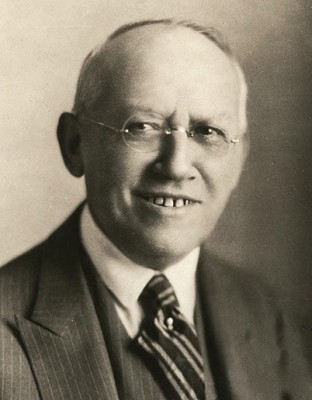
Laemmle Theatres was founded in 1938 by Max and Karl Laemmle, first cousins of iconic Universal Studios founder Carl Laemmle. Like everyone else, however, they called and considered him “Uncle Carl.” We were reminded of our origins this week after receiving an obituary in the mail. Written by Roland Ray and published in the German newspaper Süddeutsche Zeitung it was written upon the passing of UDO BAYER, the former deputy head of the Carl-Laemmle-Gymnasium, a high school in Laupheim, Germany. Having been moved by Bayer’s story, we thought we’d share it with you. Reprinted below.
9/28/15
Obituary: The CLG owes its name to Udo Bayer
Mourning Udo Bayer: The former deputy head of the Carl-Laemmle High School, an internationally recognized Laemmle specialist, died last Friday after a long illness. He was 71 years old.
In Hollywood a legend, a household name to film fans worldwide, but largely forgotten and misunderstood at home: after 1945, this was the fate of Laupheim-born cinema pioneer Carl Laemmle. In his native city, many covered up much that had to do with the Jewish community, which had been forcibly extinguished during the “Third Reich,” with the veil of silence. It wasn’t the only such case.
Udo Bayer’s endeavor was to keep the memory alive and to uphold Laupheim’s Jewish heritage. When the teacher’s son from Hechingen came to Laupheim in 1969, the young high school graduated its first class. A name wasn’t given to the school until 1994. The fact that the name Carl Laemmle was chosen is to be attributed to Udo Bayer. The friendship with Laemmle’s grandniece Ruth Regis, who visited Laupheim in 1988, had given him access to the life and work of the Universal founder. “I pushed his name through,” he later said. His ultimately successful recommendation to the city council was founded on three pillars: that Laemmle attended the local grammar school; that he generously supported Laupheim after the First World War; and that, after Hitler came to power, through Laemmle’s guarantees more than 300 German Jews were allowed to enter the United States, and he thus saved them from the deadly grip of the Nazis.
Bayer, who held a doctorate in semiotics (a specialty area of linguistics) and who was the deputy headmaster at CLG from 1989 until his retirement in 2008, where he taught history, social studies, German, philosophy, ethics and literature, published his research on several Jewish citizens of Laupheim. The focus of his research, however, was Carl Laemmle. For decades he meticulously put mosaic pieces together, combed archives, interviewed eyewitnesses, sparing no travel. He established ties of friendship to members of the Laemmle family. They, and especially Laemmle’s niece Carla, opened to him their private coffers and many doors. He also found information in the archives of Universal Studios, to which certainly not everyone is allowed admission, and on the Internet.
Bayer published the sum of his findings in the biography Carl Laemmle and Universal: A Transatlantic Biography in 2013, which he had assembled with scientific thoroughness from the sources — a standard work that embedded Laemmle’s life in the political and economic events of the time on both sides of the Atlantic. In an SZ interview the author, who also had a profound knowledge of film history, confessed: “This biography is the result of affection.” He had a high opinion of Laemmle’s human qualities.
A few months ago, as an addition to the Laemmle biography, Bayer published a wonderful coffee table book which tells Laemmle’s life in 160 annotated photos and documents. He could still complete a manuscript with short portraits of Jewish Laupheimers, and the Society for History and Remembrance, whose founding member he was, will probably take care of its publication.
Udo Bayer played a major role in establishing a Museum of the History of Christians and Jews. He contributed a wealth of documents, objects and photos — without him the Laemmle tract in its present form wouldn’t exist. He aso served as an adviser to the Museum and as an expert guide through the exhibition. Instead of vainly guarding his knowledge, as others do, he — all educator — had others participate willingly. Whoever visited the man with the dry, sometimes black humor at home in Baustetten, made acquaintance with his passion for painting and his hand-reared parrots.
With Udo Bayer, a part of Laupheim’s culture of remembrance is gone. His example remains.
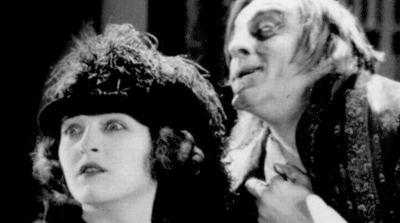 Paramount’s Dr. Jekyll and Mr. Hyde, directed by John S. Robertson and produced by Famous Players-Lasky, was the first of three film treatments of Robert Louis Stevenson’s famous novella produced in 1920. It starred John Barrymore as the fatally split personalities, and featured Martha Mansfield and Nita Naldi as their love interests, roles based on a stage treatment, not the original story.