The Official Blog of Laemmle Theatres.

Laemmle Theatres

Film Reviews & Previews

  • All
  • Theater Buzz
    • Claremont 5
    • Glendale
    • Newhall
    • NoHo 7
    • Royal
    • Santa Monica
    • Town Center 5
  • Q&A’s
  • Locations & Showtimes
    • Claremont
    • Glendale
    • NewHall
    • North Hollywood
    • Royal (West LA)
    • Santa Monica
    • Town Center (Encino)
  • Film Series
    • Anniversary Classics
    • Culture Vulture
    • Worldwide Wednesdays
  • Facebook
  • Instagram
  • TikTok
  • YouTube

You are here: Home / Theater Buzz / Town Center 5

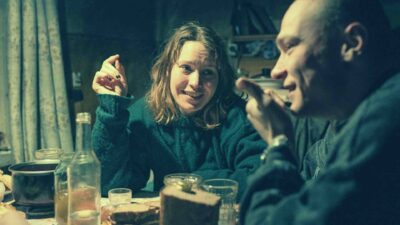
Oscar shortlists for International and Documentary Feature Films, including “Flee,” “Compartment No. 6,” “A Hero,” “Ascension” and “Faya Dayi.”

December 22, 2021 by Jordan Deglise Moore Leave a Comment

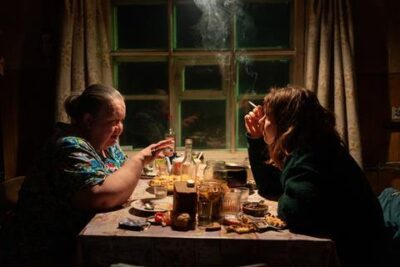
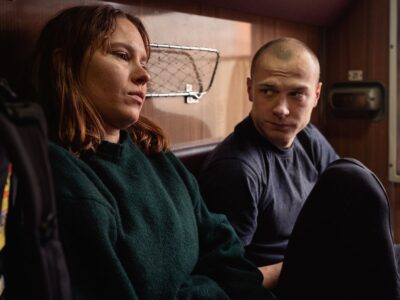
This week the Academy of Motion Picture Arts and Sciences announced shortlists in 10 categories for next year’s Oscars (the ceremony is March 27), including Documentary Feature and International Feature Film. We have a number of these films in or soon to be in theaters, including the double nominee, animated documentary/drama “Flee;” “Compartment No. 6,” the Finnish romantic drama set on a train travelling above the Arctic Circle; Asghar Farhadi’s latest, “A Hero;” the melancholy Japanese masterpiece “Drive My Car;” and the Norwegian romantic comedy “The Worst Person in the World.” We also have a couple of the shortlisted films available on Laemmle Virtual Cinema, the stunning portrait of Chinese society “Ascension” and Ethiopian-Mexican filmmaker Jessica Beshir’s mesmerising “Faya Dayi.” From the Academy:

INTERNATIONAL FEATURE FILM
Fifteen films will advance to the next round of voting in the International Feature Film category for the 94th Academy Awards.  Films from 92 countries were eligible in the category.Academy members from all branches were invited to participate in the preliminary round of voting and must have met a minimum viewing requirement to be eligible to vote in the category.In the nominations round, Academy members from all branches are invited to opt in to participate and must view all 15 shortlisted films to vote.The films, listed in alphabetical order by country, are:Austria, “Great Freedom”
Belgium, “Playground”
Bhutan, “Lunana: A Yak in the Classroom”
Denmark, “Flee”
Finland, “Compartment No. 6”
Germany, “I’m Your Man”
Iceland, “Lamb”
Iran, “A Hero”
Italy, “The Hand of God”
Japan, “Drive My Car”
Kosovo, “Hive”
Mexico, “Prayers for the Stolen”
Norway, “The Worst Person in the World”
Panama, “Plaza Catedral”
Spain, “The Good Boss”

DOCUMENTARY FEATURE
Fifteen films will advance in the Documentary Feature category for the 94th Academy Awards.  One hundred thirty-eight films were eligible in the category.  Members of the Documentary Branch vote to determine the shortlist and the nominees.

The films, listed in alphabetical order by title, are:

“Ascension”
“Attica”
“Billie Eilish: The World’s a Little Blurry”
“Faya Dayi”
“The First Wave”
“Flee”
“In the Same Breath”
“Julia”
“President”
“Procession”
“The Rescue”
“Simple as Water”
“Summer of Soul (…Or, When the Revolution Could Not Be Televised)”
“The Velvet Underground”
“Writing with Fire”

Leave a Comment Filed Under: Awards, Claremont 5, Featured Films, Featured Post, Films, Glendale, Laemmle Virtual Cinema, Newhall, News, NoHo 7, Playhouse 7, Royal, Santa Monica, Theater Buzz, Town Center 5

THE VELVET QUEEN co-director on filming in the Tibetan highlands: “Your whole being soaks everything up. All of your senses are brought into play. It’s as if you resonate with the space around you and the living elements in it. Your emotions are literally heightened, and your animal element can finally express itself.”

December 14, 2021 by Jordan Deglise Moore Leave a Comment

On December 22 we’ll open the acclaimed French wildlife documentary The Velvet Queen at the Royal in West L.A., with possible expansions to our Pasadena, Encino, Claremont, Newhall and Glendale theaters on January 7. In Variety, film critic Guy Lodge wrote “Two French adventurers travel the Tibetan Highlands in search of the elusive snow leopard, but Marie Amiguet’s quietly spellbinding doc is more about the chase than the quarry.” In Moveable Fest, Steven Saito wrote that co-director Marie “Amiguet get[s] at something even scarcer and more exquisite than what the two men are chasing.”

The Velvet Queen co-director and photographer Vincent Munier was interviewed about his experience:

Q: Why has the snow leopard been the main focus of your thoughts and your journeys over the past few years?

A: I’m still a big kid who lives off his dreams and images of mythical animals. I discovered this leopard in the adventure stories of American biologist George B. Schaller. He had filmed it in Chitral, in Pakistan, in the 1970s. But when I went to Tibet for the first time, in 2011, I wasn’t very convinced I would have a chance of seeing it. On the other hand, I knew I would see other species that were equally enigmatic. And to start with, I spent a month without seeing it — just some tracks — but it was fascinating to know that it was there. I was first attracted to these high plateaus by the wild yack, a totem animal from another era, which was probably around at the same time as woolly rhinos or mammoths. Like the musk ox in the Arctic. Deep down, the leopard was a pretext. An extravagant pretext, but a pretext all the same.

THE VELVET QUEEN co-director on filming in the Tibetan highlands: "Your whole being soaks everything up. All of your senses are brought into play. It’s as if you resonate with the space around you and the living elements in it. Your emotions are literally heightened, and your animal element can finally express itself."

Q: What made you come back on its tracks so often?

A: As with the Arctic, I like to return to the same places… I like to discover them at my own pace, over time, and often alone. It’s a great satisfaction to slowly learn to uncover the secrets that surround wild animals, by imagining them, tracking them, and observing them! I’ve effectively always preferred to spend several years focussing on one subject, rather than flitting from one to another: fleeing orders and following my instinct. With regards to Tibet, I must have been there eight times, at first to shoot photos and then for a book. Then, I got this desire to film, with a small team of two to three people at most, to avoid disturbing the wildlife and to be able to remain adaptable and flexible in this complex high-altitude environment. Léo-Pol Jacquot has been working with me for eight years, mainly in the office. I was delighted to get him away from his screens a bit and take him up there! He has practically no on-terrain experience and I was astonished by his ability to adapt. Marie Amiguet brought a fresh look at the place, a particular sensitivity… and I appreciated her leopard-like discretion. Her mission was to follow us whilst remaining invisible, to film us without anything being staged, so that we could be as close to reality as possible. That method brings its share of awkwardness and technical shortcomings, but also a certain amount of sincerity in the moments captured. The aim was to precisely capture the emotions we were feeling.

THE VELVET QUEEN co-director on filming in the Tibetan highlands: "Your whole being soaks everything up. All of your senses are brought into play. It’s as if you resonate with the space around you and the living elements in it. Your emotions are literally heightened, and your animal element can finally express itself."

Q: Why is it that the last two times you decided to travel with a writer?

A: To get a broader vision. It’s no longer sufficient for me to take my fill of the beauty I encounter and these living dreams. I want to share these experiences, to draw attention to the urgency of putting aside our intense anthropocentrism, to end the devastating hegemony of the human species over all others. I am deeply scarred by the destiny that awaits all these animals that are pushed into ever-decreasing areas because of us! And it’s difficult to portray that dimension using only images, particularly when you’ve chosen to show beauty rather than devastation. To emphasize the wonder that I want to portray with my photographs, I felt that a well-composed, engaged written presentation was necessary.

THE VELVET QUEEN co-director on filming in the Tibetan highlands: "Your whole being soaks everything up. All of your senses are brought into play. It’s as if you resonate with the space around you and the living elements in it. Your emotions are literally heightened, and your animal element can finally express itself."

Q: What made you choose Sylvain Tesson?

A: Sylvain and I had already bumped into each other several times and he’d mentioned he’d like to accompany me on my observations. I knew his adventure tales but I was particularly taken with his book Sur les Chemins Noirs. You could feel an ecological thread running through it. So, I naturally invited him to bring my adventures to a close with a book using his texts and this film. As is often the case, I strive to build bridges: to convey wonder, follow nature’s slow pace that you become completely steeped in as the hours and observations pass. So the aim was to film our exchanges around a common dream by using the wildlife images brought together during my preceding adventures up there. At the same time, came the idea of proposing a beautiful object related to that, an album whose photos would have captions composed by the writer. That’s my artistic side. I like to follow every stage at my own pace, so I can be as close as possible to what I really want to share, with no constraints and no pressure.

THE VELVET QUEEN co-director on filming in the Tibetan highlands: "Your whole being soaks everything up. All of your senses are brought into play. It’s as if you resonate with the space around you and the living elements in it. Your emotions are literally heightened, and your animal element can finally express itself."

Q: Vincent, you who are often used to doing your wildlife-watching alone, this time you had more people than ever before with you: guides, a writer, a director, and an assistant director following in your steps. How did that change the way you work?

A: I got myself into a different mindset. And we were rarely all together at the same time. One or two Tibetan friends stayed on the base camp (in the bottom of a valley, by a river), that we travelled out from for several days, into a landscape that I already knew a little thanks to the time I’d spent there previously. After that, we’d split up to work in more discreet pairs.

Q: Was your encounter with this beauty guaranteed?

A: The highpoint of this project was that it was like a planetary alignment, everything just fell into place. To begin with, there was no foregone conclusion that this combination would work out. And there was absolutely no guarantee that Sylvain would effectively end up seeing this leopard. And then, during the very last days, she was there! When I got out from beneath my duvet in the cave, and I saw her eating her prey that she’d killed the day before, it was just an incredible moment! That’s something you can’t stage in advance, of course.

Q: Talking of lucky planetary alignments, it would seem that also brought you a great surprise for the film’s music.

A: It was stunning! We were incredibly lucky to work with Warren Ellis, an extraordinary artist, whose minimalist and enchanting music I adore. It really echoed the vast wild landscapes and magical apparitions of the animals I encountered in Tibet. I had dreamed of being able to work with him one day on one of my films. I thought he was totally inaccessible, but, in spite of his massively busy schedule, he accepted to compose an original score for our leopard! And our exchanges during that work were extremely interesting and meaningful. I discovered him to be a sensitive and kind man. In spite of the fact that we work in very different environments, we found that we shared a lot of our influences. Even though he was supposed to go to Brighton to record his poetry album with Marianne Faithfull, he managed to make time to compose this score. And he brought in his former partner Nick Cave. Nick sings Sylvain’s words! Finishing the film on their voice and music was something I’d never dared hope for!

Q: On a more down to earth matter: You’ve already tested the comforts of Chinese jails in the past when you were out looking for leopards. Did you travel less hazardous administrative routes this time?

A: Astonishingly, yes. Yet, in these regions, the police are on the lookout. They are all over the place and carry out constant checks. You’re not allowed to photograph the poverty of the nomads, Chinese installations, and so on. The police force is probably the Chinese State’s largest employer in Tibet. And effectively, during one of my previous trips, when I had discovered the perfect place to watch out for the leopard, I was arrested by the police who accused me of poaching. It was totally absurd and very violent. In fact, I thought I’d been blacklisted and wouldn’t be allowed back. The exceptional presence of Europeans can create a veritable climate of paranoia in certain sectors. Luckily, we didn’t have any problems the last two times.

As a side story, the pictures of the leopard during the film’s closing credits, when we hear Nick Cave’s moving voice, were taken thanks to an automatically triggered camera. I’d placed it on the prey it had recently killed and, in between times, I’d been taken in by the police who kept me several days for a brutal interrogation. I got my first pictures of the animal without seeing it!

Q: Tell us about your first encounter with the snow leopard.

A: What a moment that was! But first and foremost, it was tracking it that was fascinating. Looking for its tracks, reading the clues, spending whole days with my binoculars glued to my eyes. Tracking it down is so exciting! Deep down, it has this slightly devilish side to it, constantly watching us without us being able to see it. It obliges us to behave a little like it does. We have to hide, camouflage, and above all, not be intrusive… that’s what it brings to us. The first time, there was this slow crescendo. First, there were old tracks, then fresh tracks, a crow calling out (which meant there may be a predator around), a change in weather (which often leads animals to change location)… and as I was spending hours and hours looking through the binoculars, it suddenly appeared in my field of vision. It went past without seeing me! It was like a perfect appearance on screen in a wildlife film. I was even more satisfied as I hadn’t disturbed its movements.

Q: The last trip you made also provided you with a new encounter: the Tibetan bear. Yet you didn’t seem to believe it would happen.

A: Effectively, that was another crazy story. The Tibetans are a little scared of this bear. I’d heard about quite a few fights up there between nomads and bears. But it seemed very improbable that I’d get a chance to observe it. It’s so cold up there. What could they possibly find to eat? They are mainly herbivores, after all! That’s what’s so wonderful about this passion. Nothing is planned, you go from surprise to surprise.

Q: Over the years, with your work, you’ve accumulated a wealth of in-depth knowledge about nature and its inhabitants. But does your instinct also play a role in your decisions with regards to where to go, where to lie in wait, or whether to press on?

A Yes. A huge role. I really believe in the notion of instinct. It’s difficult to describe the role your body plays at those moments in the way you react and the choices you make. Your whole being soaks everything up. All of your senses are brought into play. It’s as if you resonate with the space around you and the living elements in it. Your emotions are literally heightened, and your animal element can finally express itself. Yet, there are regular failures — and that’s a good thing! Failure allows us to understand how vulnerable we are out there.

Q: You say yourself in the film: “I don’t work like a photojournalist, showing what’s wrong with nature.” But isn’t showing only its beauty tantamount to drawing up an inventory of what will soon disappear?

A: That’s sadly true! And I’m not equipped to place my cameras where things are harsh or dark, or where horror has prevailed. In fact, I take my hat off to those who are capable of dealing with that. Naturally, I tend to live off poetry and beauty, even when it’s extremely vulnerable, and it would be really hard for me to only be the witness of ecological catastrophes.

Q: You have often had to deal with very harsh weather conditions. That’s probably not by pure chance.

A: The Arctic, the Antarctic, and Tibet are the three zones that attract me for a number of reasons. I have always liked cold lighting and the animals that live in these hostile conditions. On top of that, because of that extreme harshness, man is less present and the link to wildlife is much clearer. In Tibet, there’s also a very tense geopolitical dimension. There are very few visitors to the sites and its wildlife such as the Tibetan fox, the Tibetan antelope, and the manul remain largely unknown.

Q: For a few years, you’ve been making more films than you have taken photographs. Why is that?

A: When the filming option was put on our cameras about ten years ago, I simply started to use it more and more often. It got to the point where, in Asturias, where I recently made a film on bears, I hadn’t taken any photos at all. I feel that moving images are a better way to portray emotions. It’s exciting being able to integrate sound, too, which echoes the landscape, its ambiences, and its resonances. But a film is also much longer and much harder to make.

Q: After having crossed the leopard’s path several times, do you still dream of it, today? What does it represent for you?

A: The first encounter is inevitably unforgettable. Like all the major first times: with the Eurasian lynx at home in France, that I waited for, for fifteen years, after setting up camp a number of times… I would hear it yowling, but never see it! And finally, the day it appears, you’re finally within reach of something supreme, that’s haunted you for a long time. In the same way, I feel haunted by the memory of the ghostly presence of the first pack of white wolves I observed in the Canadian High Arctic. You’re so obsessed with these visions that you end up wondering if they are fantasies or reality. And there’s not just the image! There are the smells, the noises. All of that permeates you, permanently. Something outside us lodges inside of us, setting us in motion. Like the very first roe deer that I photographed when I was twelve years old, and that changed my life, dramatically. That’s the effect that the snow leopard still has on me, today.

About Vincent Munier: Since 2011, Munier has spent several months in Tibet to bring back precious images of this world that is poised between land and sky. A lover of wild open spaces and of extreme travel, he chose photography as a tool to convey his dreams, his emotions, and his encounters. Today, his pictures are exhibited in galleries in France and abroad. Vincent Munier founded the Kobalann publishing company and today, he is the author of a dozen books, including Arctique (2015) and Tibet, Minéral Animal (2018). In 2019, with Laurent Joffrion, he co-directed the film Ours, Simplement Sauvage (Kobalann Productions / France TV Studio).

Leave a Comment Filed Under: Claremont 5, Director's Statement, Featured Films, Featured Post, Films, Glendale, Newhall, News, Playhouse 7, Royal, Theater Buzz, Town Center 5

The power of the film: Jane Campion’s ‘The Power of the Dog’ is one of the year’s best movies.

November 23, 2021 by Jordan Deglise Moore 2 Comments

Jane Campion’s The Power of the Dog, her eighth feature and first since 2009’s Bright Star, is “a complex and probing adaptation of the late Thomas Savage’s superb 1967 novel about two very different Montana rancher brothers caught in a twisted emotional bind.” (Todd McCarthy, Deadline Hollywood Daily) “It pains me to say it,” Greg Laemmle said this week, “but Netflix may have produced the best film of the year. Certainly one of the best I’ve seen so far. It is a film that needs to be seen on the big screen.” Critics agree.
“Jane Campion makes a thrilling return with The Power of the Dog, a work as boldly idiosyncratic, unpredictable and alive with psychological complexity as anything in the revered director’s output.” ~ David Rooney, Hollywood Reporter
“It’s an epic about the way the male id can crush everyone it touches, anchored by a brilliant masquerade of a performance by Cumberbatch, his best yet.” ~ Esther Zuckerman, Thrillist
The power of the film: Jane Campion's 'The Power of the Dog' is one of the year's best movies.
“The Power of the Dog sticks its teeth into you so fast and furtively that you may not feel the sting on your skin until after the credits roll, but the delayed bite of the film’s ending doesn’t stop it from leaving behind a well-earned scar.” ~ David Ehrlich, Indiewire
“The film’s secrets are revealed while new ones bloom into being.” ~ Richard Lawson, Vanity Fair
The power of the film: Jane Campion's 'The Power of the Dog' is one of the year's best movies.
“Campion understands the genre she’s working in, setting the roiling emotions of her characters against the striking landscapes; Cumberbatch’s performance is as immense as the peaks and valleys around him.” ~ David Sims, The Atlantic
“The Power of the Dog divulges its secrets in deliberate, measured fashion, growing richer with each new reveal.” ~ Katie Rife, AV Club

The power of the film: Jane Campion's 'The Power of the Dog' is one of the year's best movies.

“A beautifully crafted movie with some individual scenes that are some of the tensest I’ve experienced in some time.” ~ Glenn Kenny, RogerEbert.com
“Through it all, Campion remains in masterful control of the film’s obscurely menacing mood, and of every aspect of its craft.” ~ Dana Stevens, Slate
“A film that initially seems too schematic gains in complexity as the characters add dimension and Campion uncorks one gripping set piece after another.” ~ Scott Tobias, The Reveal
Now playing at the Playhouse and Newhall; opening Friday at the Monica Film Center and Town Center and December 3 at the Glendale and Claremont.

2 Comments Filed Under: Claremont 5, Featured Films, Featured Post, Films, Glendale, Newhall, News, Playhouse 7, Santa Monica, Theater Buzz, Town Center 5

See IDA Documentary Awards Nominees at Laemmle: ‘Faya Dayi,’ ‘Writing with Fire,’ ‘Not Going Quietly,’ and more.

November 17, 2021 by Jordan Deglise Moore Leave a Comment

The International Documentary Association just announced the nominees for its 37th annual awards, and we’re screening or soon to screen almost a dozen from this cinematic treasure trove:

FAYA DAYI is a triple nominee for Best Feature, Director and Cinematography and is available on Laemmle Virtual Cinema.

NOT GOING QUIETLY also garnered three nominations: Best Feature, Director and Writing. It, too, is on LVC.

We open the animated FLEE (Best Feature and Director) in January.

We have Best Feature nominee WOJNAROWICZ: F**K YOU F*GGOT F**KER  now on Laemmle Virtual Cinema.

We open Best Feature nominee WRITING WITH FIRE on November 26 at the Royal.

Pare Lorentz Award Winner and Best Cinematography nominee THE FIRST WAVE opens this Friday at the Monica Film Center. The filmmaker will attend for Q&A’s after the 7:30 PM screening on Saturday, November 20 and after the 4:40 screening on Sunday, November 21.

Best Cinematography nominee ASCENSION is available now on LVC.

Best Music Documentary Nominee LYDIA LUNCH is now on LVC.

We open Best Editing Nominee PROCESSION this Friday at our Glendale theater.

Finally, we open ABC News VideoSource Award Nominee LIKE A ROLLING STONE: THE LIFE AND TIMES OF BEN FONG-TORRES November 26 at the Monica Film Center.

See IDA Documentary Awards Nominees at Laemmle: 'Faya Dayi,' 'Writing with Fire,' 'Not Going Quietly,' and more.

Leave a Comment Filed Under: Awards, Claremont 5, Featured Post, Films, Glendale, Laemmle Virtual Cinema, Newhall, News, NoHo 7, Playhouse 7, Press, Royal, Santa Monica, Theater Buzz, Town Center 5

“In ‘Speer Goes to Hollywood,’ Vanessa Lapa uses uncovered audio and never-before-seen archival images to show how Hitler’s confidant tried to make a movie to whitewash his past.”

November 3, 2021 by Jordan Deglise Moore Leave a Comment

Check out this excellent piece by Renee Ghert-Zand in The Times of Israel:

Award-winning Israeli doc on camera-hungry Nazi Albert Speer opens in NYC and L.A.: In ‘SPEER GOES TO HOLLYWOOD,’ Vanessa Lapa uses uncovered audio and never-before-seen archival images to show how Hitler’s confidant tried to make a movie to whitewash his past.

[SPEER GOES TO HOLLYWOOD director Vanessa Lapa and producer Tomer Eliav will participate in Q&As on Friday and Saturday, November 5 and 6 after the 7:20 pm shows at the Royal and Saturday and Sunday, November 6 and 7 after the 1:40pm shows at the Town Center.]

In her lauded 2014 documentary film, “The Decent One,” filmmaker Vanessa Lapa used SS leader and Final Solution architect Heinrich Himmler’s private family letters to expose just how deep his evil ran.

"In ‘Speer Goes to Hollywood,’ Vanessa Lapa uses uncovered audio and never-before-seen archival images to show how Hitler’s confidant tried to make a movie to whitewash his past."
Vanessa Lapa. (Aline Frisch)

Now she is again using a top Nazi’s words against him — this time with audio recordings made by Hitler’s chief architect and minister of armaments, Albert Speer, as he worked on a script for a feature film based on his blockbuster 1970 memoir, “Inside the Third Reich.”

In her new film, SPEER GOES TO HOLLYWOOD, Lapa shows just how cunning the manipulative Speer was in whitewashing his crimes, which included enslaving 12 million Jewish, Polish and Soviet prisoners and forced laborers — at least a third of whom died of starvation, injury, or exhaustion — to produce German armaments during World War II. Creating a reputation for himself as “the good Nazi,” he was sentenced to only 20 years in prison at the Nuremberg Trials, while his co-conspirators and subordinates went to the gallows.

"In ‘Speer Goes to Hollywood,’ Vanessa Lapa uses uncovered audio and never-before-seen archival images to show how Hitler’s confidant tried to make a movie to whitewash his past."
Albert Speer testifying at the Nuremberg Trials, 1945-1946. (Realworks LTD)

Speer spent his time in prison writing extensive notes for his memoir on paper napkins, and charmed sympathetic guards who illegally smuggled them out of prison for him.

Still buzzing with excitement from the film’s having won the 2021 Ophir Award for best Israeli documentary film earlier this month, Lapa recently spoke to The Times of Israel from her Tel Aviv studio, as she geared up for the United States theatrical release of SPEER GOES TO HOLLYWOOD. The film opens in New York on October 29 and in Los Angeles on November 5 [at Laemmle’s Royal and Town Center theaters].

"In ‘Speer Goes to Hollywood,’ Vanessa Lapa uses uncovered audio and never-before-seen archival images to show how Hitler’s confidant tried to make a movie to whitewash his past."
Vanessa Lapa (second from right) being awarded the award for best documentary film for ‘Speer Goes to Hollywood’ at the Ophir Awards, Israel’s version of the Academy Awards, October 5, 2021. (Biran and Eliran Avital)

As with Himmler’s letters, the 46-year-old, Belgian-born Lapa stumbled upon Speer’s recordings serendipitously. At a 2014 screening for “The Decent One” at New York’s Film Forum, a lawyer named Stanley Cohen approached her and told her that he had bought the film rights to the English edition of Speer’s “Inside the Third Reich,” and had approached Paramount Pictures in 1971 about making a movie based on it.

Paramount commissioned the British writer Andrew Birkin, a protégé of the director Stanley Kubrick, to develop a script. To do so, Birkin, then only 26 years old, traveled to Heidelberg to interview Speer. (By that time, after being released from prison in 1966, Speer was living comfortably in the German countryside and making frequent media appearances.)

Cohen did not know that Birkin had recorded his conversations with Speer, but Lapa discovered that there were 40 hours of tapes recorded in 1971-1972, when she went to visit Birkin in Wales in February 2015.

“After Andrew played me five minutes of the tapes, it was clear to me I wanted to hear all of them and make a film with them,” Lapa said.

According to the filmmaker, Birkin wanted the recordings to be used, and was happy to hand them over to her.

“He had never listened to them again in the last half-century, but he did digitize them at some point in an effort to preserve them,” Lapa said.

On the tapes, Speer and Birkin are heard discussing various scenes from a draft script for the possible Paramount project. It is clear that this was to be a scripted drama, and not a documentary.

“It must be very far away from a documentary. The farther away, the better it is,” listeners hear Speer saying.

Birkin speaks about the need to have the audience identify with Speer, the “hero,” in the first five minutes of the film. The notion of an audience identifying with a person responsible for the enslavement and murder of millions of people may be shocking today, but in the early 1970s people were enthralled with Speer’s book, in which he positioned himself as an impressionable young Nazi leader who really cared about the German people.

In a 2017 New Yorker piece, Nigerian writer Chimamanda Ngozi Adichie, reflected on why she was so taken with “Inside the Third Reich” as a child, but so disgusted by it 30 years later.

“Speer demonstrates a slick honesty whose goal is to disarm. If it disarmed me as a child, it repels me as an adult. His rueful acknowledgment of his dedication to Hitler, and his philosophical puzzlement at his own complicity, seeks to cast a glaze of innocence over him,” Adichie wrote.

“…[Speer] with calm canniness, assembles his follies in flattering light. His self-criticism has a too-smooth edge; it is as though he has considered all possible criticisms he might face and taken them on himself, and there is an egotistical undertone to this that is perverse,” she continued.

According to Lapa, “Inside the Third Reich” still sells 2,000 copies a year.

“It is mind blowing that there is still no preface in the book that puts it in context for today’s readers,” she said.

In Lapa’s film, we hear Birkin checking in with a mentor, who warns him that the script he is working on with Speer is a whitewash, especially with regard to Speer’s denial of knowing about Auschwitz and the Final Solution. But Birkin seems unconcerned.

“I think Birkin did his best. Was he gullible? He was young and it was a time when people knew less about the war and the Holocaust than we do now,” Lapa said.

“Speer managed to charm and manipulate Birkin, just like he charmed and manipulated everyone, including the judges at Nuremberg. Even Speer’s biographer Gitta Sereny believed his regret,” she said.

By contrast, Lapa, who was initially also under Speer’s sway, found extensive archival documentation to contradict Speer’s claims. It led her to see his regret as completely disingenuous and to call him out on his historical lies.

“What I found was a man for whom human life had no intrinsic value…We also see this from the fact that he convinced Hitler to prolong the war by two-and-a-half years, when he knew that Germany was losing.” Lapa said.

Lapa and Joëlle Alexis wrote the script for SPEER GOES TO HOLLYWOOD, based on the 40 hours of the uncovered audio, and then Lapa and her team spent several years doing extensive archival research to find still and moving images to match and juxtapose with the audio.

The dissonance between the lies of the audio and the truths of the images is powerfully effective. Although actors lend their voices to Speer and Birkin because the quality of the original recordings were not good enough to use, Lapa assured The Times of Israel that every word is uttered verbatim from the tape’s exact transcripts.

Lapa is passionate about using only preexisting material, which she lets tell the story. Her films have no narrators, talking heads, or newly shot footage.

“When you have such an amount of archival material to show to the world, it is a waste not to do so,” the filmmaker said.

Realizing that Speer was trying to play fast and loose with the facts and truth, Paramount ultimately decided not to greenlight the film based on the Nazi’s memoir.

“Had this film been made, it would have rewritten the history of a historical injustice and transformed its villain into its unchallenged hero,” Lapa said.

Speer maneuvered to avoid the death sentence at Nuremberg and passed away a free man in 1981 at age 76. Forty years later, Lapa, with her incisive film, has let him hang by his own rope.

https://www.youtube.com/watch?v=F7XMi5Xqqv0

Leave a Comment Filed Under: Featured Films, Featured Post, Filmmaker in Person, Films, Press, Q&A's, Royal, Theater Buzz, Town Center 5

Free Red BECOMING COUSTEAU Beanies Friday, October 29.

October 28, 2021 by Jordan Deglise Moore 1 Comment

Stay warm and emulate Frère Jacques: All BECOMING COUSTEAU ticket buyers for the Friday, October 29 screenings at the Claremont, Monica Film Center, Newhall, Town Center, and Playhouse* get a free beanie while supplies last!

*at the Playhouse, starting with the 7:30 PM show.

Free Red BECOMING COUSTEAU Beanies Friday, October 29.

1 Comment Filed Under: Claremont 5, Newhall, Playhouse 7, Santa Monica, Theater Buzz, Town Center 5

“I saw my job as getting people to know and love the sea…because you only protect what you love.” Jacque-Yves Cousteau in BECOMING COUSTEAU.

October 13, 2021 by Jordan Deglise Moore Leave a Comment

Captain Jacques-Yves Cousteau was one of the 20th century’s great explorers, a filmmaker and beloved adventurer who documented the exotic wonders below the ocean with pioneering equipment that yielded a Cannes Film Festival-winning film, two Academy Awards®, and a pair of iconic and long-running television shows, “The Undersea World of Jacques Cousteau” and “The Cousteau Odyssey.” His work became synonymous with life on the sea and on his famous boat, the Calypso. He authored over 50 books on his aquatic life and invented the Aqua-Lung, advancing the boundaries of scuba diving. Yet, it was as an environmentalist that Cousteau would have his most lasting impacts, alerting the world about the warming oceans decades before the climate crisis made headlines. Instrumental in protecting Antarctica and taking part in the first Earth Summit, Cousteau’s insight into what needs to be done for the planet continues to inspire generations.

In BECOMING COUSTEAU, from National Geographic Documentary Films and opening October 22 at the Laemmle Claremont, Monica Film Center, Newhall, Playhouse and Town Center, two-time Academy Award-nominated filmmaker Liz Garbus (All In: The Fight for Democracy, What Happened, Miss Simone?) poured through 550 hours of archival material and rarely-seen footage to let Cousteau’s films, words and recollections tell his own story. BECOMING COUSTEAU shines a spotlight on the man many of us grew up worshipping yet knew very little about while introducing him to a new generation. After prospecting for oil companies to support his globe-trotting adventuring, he had a late-in-life awakening and became the first great advocate for ocean preservation. Cousteau led a somewhat fractured family life, checkered with great loss, but he remained true to his one great love — the sea. Over 100 hours of audio journal entries, interviews and observations from collaborators and crew members add to this inside look at Cousteau. The documentary also chronicles his first wife and collaborator Simone Melchior (known aboard the Calypso as “The Shepherdess”), his family experiences, his second wife Francine Triplet, the creation of The Cousteau Society and the crucial work they do, and his evolution into one of the most important environmental voices of the 20th century, whose words and images are more vital today than ever.

“I saw my job as getting people to know and love the sea...because you only protect what you love.” Jacque-Yves Cousteau in BECOMING COUSTEAU.
Jacques Cousteau wears his iconic red diving cap aboard his ship Calypso, circa 1970s. (Credit: The Cousteau Society)

“Succeeds beautifully in its goal of reminding viewers of Jacques Cousteau’s important legacy of underwater exploration and environmental activism.” ~ Frank Scheck, Hollywood Reporter

“I saw my job as getting people to know and love the sea...because you only protect what you love.” Jacque-Yves Cousteau in BECOMING COUSTEAU.
Calypso crew members dive in dark waters while filming a scene for The Silent World. (Credit: National Geographic/Luis Marden)

“BECOMING COUSTEAU will well serve as a reminder and clarifier for those who remember him from their youth, and an invigorating introduction for those meeting him for the first time.” ~ Todd McCarthy, Deadline Hollywood Daily

“I saw my job as getting people to know and love the sea...because you only protect what you love.” Jacque-Yves Cousteau in BECOMING COUSTEAU.
Jacques Cousteau in a diving suit, 1972. (Credit: Yousuf Karsh)

“Compelling throughout, BECOMING COUSTEAU will make you want to strap on some flippers, grab a mask and plunge into an ocean near you.” ~ Christopher Llewellyn Reed, Hammer to Nail

“I saw my job as getting people to know and love the sea...because you only protect what you love.” Jacque-Yves Cousteau in BECOMING COUSTEAU.
Jacques Cousteau aboard Calypso on a 1963 expedition in the Red Sea. (Credit: National Geographic)
https://www.youtube.com/watch?v=jCjOjaE09gc

Leave a Comment Filed Under: Claremont 5, Featured Films, Featured Post, Films, Newhall, News, Playhouse 7, Santa Monica, Theater Buzz, Town Center 5

“I hope people are moved by seeing what great moral courage looks like.” The filmmakers on THE RESCUE, opening October 15 at the Monica Film Center, Newhall, Playhouse, and Town Center.

October 6, 2021 by Jordan Deglise Moore Leave a Comment

In the summer of 2018, a short outing after soccer practice became a two-week saga of survival and a story that soon captured the world’s attention. Monsoon rains had trapped twelve boys and their coach in a labyrinthian cave in Northern Thailand, and within days thousands of people had descended on the area to try to help. But were the boys even still alive? Anticipation and anguish hung in the air until they were found, trapped in a pitch-black chamber two kilometers deep into the cave. The next question—immediate, obvious, and confounding—was how to get them out.

THE RESCUE, the latest feature documentary from Academy Award-winning directors and producers E. Chai Vasarhelyi and Jimmy Chin, brings alive one of the most perilous and extraordinary rescues in modern times. With exclusive interviews and a wealth of never-before-seen material, the film takes us into the infamous cave, highlights the efforts of the Royal Thai Navy SEALs and US Special Forces, and details the expert cave divers’ audacious venture to dive the boys to safety.

"I hope people are moved by seeing what great moral courage looks like." The filmmakers on THE RESCUE, opening October 15 at the Monica Film Center, Newhall, Playhouse, and Town Center.
Credit: National Geographic

THE RESCUE keeps viewers on the edge of their seats as it shines a light on the high-risk world of cave diving, the astounding courage and compassion of the rescuers, and the shared humanity of the international community that united to save the boys. In the tradition of their earlier films FREE SOLO and MERU, Vasarhelyi and Chin document a profoundly daring physical feat, laying bare the details of the seemingly impossible rescue.

Reviews have been rapturous:

“THE RESCUE keeps you on the edge of your seat for every minute, even if you already know the outcome.” ~ Frank Scheck, Hollywood Reporter

“A stunning documentary of bone-deep moral resonance and cinematic mastery that deserves to be experienced on the big screen.” ~ Tomris Laffly, Variety

THE RESCUE “unfolds with stunning precision, letting the people who were there tell the story, and never softening their unique personalities.” ~ Brian Tallerico, RogerEbert.com

DIRECTORS’ STATEMENT

“Our films attempt to examine questions that transcend their subject matter. Our film MERU is about climbing, but really, it’s about friendship and mentorship. Our film FREE SOLO is about free soloing a mountain, but really, it’s about making intentional decisions about what we want to achieve in life and the sacrifices we make. THE RESCUE is about an impossible rescue, but really, it’s about moral responsibility. When we have the skill set to rescue someone, do we bear the burden to do so even if we put ourselves at risk? It’s also a story about the common humanity that brings us together rather than what divides us.

"I hope people are moved by seeing what great moral courage looks like." The filmmakers on THE RESCUE, opening October 15 at the Monica Film Center, Newhall, Playhouse, and Town Center.
Credit: National Geographic

“All these stories are about overcoming insurmountable odds. They feature unexpected heroes. And they invite the audience into specific worlds in a deep and authentic way. In THE RESCUE, that’s the world of cave diving. Cave diving is very dangerous and very difficult. So why do the cave divers do it? What’s their motivation, experience, inspiration? As a climber, Jimmy knows how vital it is that every last detail be right. Our films are defined by that level of exactitude.

"I hope people are moved by seeing what great moral courage looks like." The filmmakers on THE RESCUE, opening October 15 at the Monica Film Center, Newhall, Playhouse, and Town Center.
Credit: National Geographic

“We wanted to make this movie for many of the same reasons that the story of the Thai children trapped in the cave captivated the hearts and minds of the world in 2018. It was an against-all-odds story that gave you hope. It brought out the best in people who united from many different nations to help these kids. There’s a line in the film that says, “Generosity is the beginning of everything,” and that’s ultimately what the film is about.

"I hope people are moved by seeing what great moral courage looks like." The filmmakers on THE RESCUE, opening October 15 at the Monica Film Center, Newhall, Playhouse, and Town Center.
Credit: National Geographic

“But creating THE RESCUE was very challenging. It has all the ingredients of a film you shouldn’t or can’t make: Everything’s pitch black in the cave. It’s underwater and muddy. The main event is over; you can’t shoot footage of it, and the archival sources are scattered all over the world. And, of course, the pandemic hit. We were scheduled to go to Thailand in spring 2020, but as the shoot neared, it became clear that it was too risky to travel internationally. We did interviews by Zoom and focused on building trust and rapport remotely. We were dealing with different cultures, different languages, different time zones; and there were numerous constraints, but ultimately the story is still moving. The children, the cave divers, the Thai Navy SEALs, the US Special Forces and an entire community all showed us what great courage looks like.

"I hope people are moved by seeing what great moral courage looks like." The filmmakers on THE RESCUE, opening October 15 at the Monica Film Center, Newhall, Playhouse, and Town Center.
Credit: National Geographic

“The story of the rescue is filled with numerous coincidences that could be seen as more than coincidence. There’s a fairy-tale quality to the story. We couldn’t help but be struck by the fact that just as the boys were trapped in place in 2018, the whole world was trapped in place while we were making this movie. And yet, in 2018 the world came together to help the boys. THE RESCUE reminds us that amazing things are possible when people have integrity and a sense of responsibility for each other.”

"I hope people are moved by seeing what great moral courage looks like." The filmmakers on THE RESCUE, opening October 15 at the Monica Film Center, Newhall, Playhouse, and Town Center.
Credit: National Geographic

Asked in an interview, “What would you like the audience to take from the film?” they replied:

Jimmy Chin: I hope people are inspired by the humanity of the global community of rescuers, the courage of the divers and Thai Navy Seals and the bravery of the kids. I want people to come out of the theater asking themselves “Could I ever do that? Would I have made the same choices?” I think the divers really exemplified great moral courage. They didn’t have to go back in. I hope people are moved by seeing what great moral courage looks like and how people are able to achieve great things and overcome seemingly insurmountable odds through perseverance and determination.

"I hope people are moved by seeing what great moral courage looks like." The filmmakers on THE RESCUE, opening October 15 at the Monica Film Center, Newhall, Playhouse, and Town Center.
Credit: National Geographic

Elizabeth Chai Vasarhelyi: I think it’s the absolute morality of Rick. He felt an absolute obligation to figure out how to save the kids. If only we all did what’s fundamentally decent and responsible… that’s interesting. It’s about the common thread we all share — about finding your place in the world. We see the divers evolve emotionally. We see their attention to detail and methodology. We cherish that, love it, want to honor and respect it. Truth is so much stronger than fiction.

https://www.youtube.com/watch?v=_-Kw5kAPSbk

Leave a Comment Filed Under: Director's Statement, Featured Films, Featured Post, Films, Newhall, News, Playhouse 7, Santa Monica, Theater Buzz, Town Center 5

  • « Previous Page
  • 1
  • …
  • 27
  • 28
  • 29
  • 30
  • 31
  • …
  • 74
  • Next Page »

Search

Instagram

This is the way. 🍿 Exclusive Mandalorian & Grogu p This is the way. 🍿 Exclusive Mandalorian & Grogu popcorn tins and collectible figurines. Yours with a Mando Combo purchase! Very limited supply. 

@LaemmleNewhall & @LaemmleNoHo

🎟️Tickets: laem.ly/4aoKwRb
🖌️Sandwich board art by @mikaelparis_

#StarWars #TheMandalorian #Grogu
☘️ WEAR GREEN ☘️ $AVE GREEN ☘️ $2 OFF your concess ☘️ WEAR GREEN ☘️ $AVE GREEN ☘️ $2 OFF your concessions order!

⭐ St. Patrick's Day! Tuesday March 17th Only!

-Movie ticket purchase not required
-Like and show this post!
🎟️ laemmle.com/discounts
🚀 PROJECT HAIL MARY, AN EPIC PRIZE PACK GIVEAWAY! 🚀 PROJECT HAIL MARY, AN EPIC PRIZE PACK GIVEAWAY!
👉 ENTER in BIO!

#ProjectHailMary — starring Academy Award® nominee Ryan Gosling and directed by Academy Award®-winning filmmakers Phil Lord & Christopher Miller. Based on Andy Weir's New York Times best-selling novel.

🎟️ GET TICKETS in BIO!
For the 21st consecutive year, Laemmle will be scr For the 21st consecutive year, Laemmle will be screening the Oscar-Nominated Short Films, opening on Feb. 20th. Showcasing the best short films from around the world, the 2026 Oscar®-Nominated Shorts includes three feature-length programs, one for each Academy Award® Short Film category: Animated, Documentary and Live Action.

ANIMATED SHORTS: (Estimated Running Time: 83 mins)
The Three Sisters
Forevergreen
The Girl Who Cried Pearls
Butterfly
Retirement Plan
 
LIVE ACTION SHORTS (Estimated Running Time: 119 minutes)
The Singers
A Friend Of Dorothy
Butcher’s Stain
Two People Exchanging Saliva
Jane Austin’s Period Drama

DOCUMENTARY SHORTS (Estimated Running Time: 158 minutes)
Perfectly A Strangeness
The Devil Is Busy
Armed Only With A Camera: The Life And Death Of Brent Renaud
All The  Empty Rooms
Children No More: “Were And Are Gone”

Please note that some films may not be appropriate for audiences under the age of 14 due to gun violence, shootings, language and animated nudity.
Follow on Instagram


Laemmle Theatres

Laemmle Theatres
Tickets: http://laemmle.com/film/artfully-united | Subscribe: http://bit.ly/3b8JTym | ARTFULLY UNITED is a celebration of the power of positivity and a reminder that hope can sometimes grow in the most unlikely of places. As artist Mike Norice creates a series of inspirational murals in under-served neighborhoods in and around Los Angeles, the Artfully United Tour transforms from a simple idea on a wall to a community of artists and activists coming together to heal and uplift a city.

Tickets: http://laemmle.com/film/artfully-united

RELEASE DATE: 10/17/2025
Director: Dave Benner
Cast: Mike Norice

-----
ABOUT LAEMMLE: Since 1938, Laemmle [Theatres] has been showing the finest independent, arthouse, and international films.

Subscribe to Laemmle's E-NEWSLETTER: http://bit.ly/3y1YSTM
Visit Laemmle.com: http://laemmle.com
Like LAEMMLE on FACEBOOK: http://bit.ly/3Qspq7Z
Follow LAEMMLE on TWITTER: http://bit.ly/3O6adYv
Follow LAEMMLE on INSTAGRAM: http://bit.ly/3y2j1cp
Tickets: http://laemmle.com/film/brides | Subscribe: http://bit.ly/3b8JTym | Nadia Fall's compelling debut feature offers a powerful and empathetic look into the lives of two alienated teenage girls, Doe and Muna, who leave the U.K. for Syria in search of purpose and belonging. By humanizing its protagonists and exploring the complex interplay of vulnerability, societal pressures, and digital manipulation, BRIDES challenges simplistic explanations of radicalization.

Tickets: http://laemmle.com/film/brides

RELEASE DATE: 9/24/2025
Director: Nadia Fall

-----
ABOUT LAEMMLE: Since 1938, Laemmle [Theatres] has been showing the finest independent, arthouse, and international films.

Subscribe to Laemmle's E-NEWSLETTER: http://bit.ly/3y1YSTM
Visit Laemmle.com: http://laemmle.com
Like LAEMMLE on FACEBOOK: http://bit.ly/3Qspq7Z
Follow LAEMMLE on TWITTER: http://bit.ly/3O6adYv
Follow LAEMMLE on INSTAGRAM: http://bit.ly/3y2j1cp
Tickets: http://laemmle.com/film/writing-hawa | Subscribe: http://bit.ly/3b8JTym | Afghan documentary maker Najiba Noori offers not only a loving and intimate portrait of her mother Hawa, but also shows in detail how the arduous improvement of the position of women is undone by geopolitical violence. The film follows the fortunes of Noori’s family, who belong to the Hazaras, an ethnic group that has suffered greatly from discrimination and persecution.

Tickets: http://laemmle.com/film/writing-hawa

RELEASE DATE: 10/8/2025

-----
ABOUT LAEMMLE: Since 1938, Laemmle [Theatres] has been showing the finest independent, arthouse, and international films.

Subscribe to Laemmle's E-NEWSLETTER: http://bit.ly/3y1YSTM
Visit Laemmle.com: http://laemmle.com
Like LAEMMLE on FACEBOOK: http://bit.ly/3Qspq7Z
Follow LAEMMLE on TWITTER: http://bit.ly/3O6adYv
Follow LAEMMLE on INSTAGRAM: http://bit.ly/3y2j1cp
Subscribe

Recent Posts

  • The Needle, the Noise, the Nineties: ‘Trainspotting’ Turns 30
  • The Last Great Maestro: Inside ‘Bernstein’s Wall’
  • Culture Vulture: All the World’s a Stage, and These Are Its Players

Archive

Featured Posts

An “embrace of what makes us unknowable yet worthy of forgiveness,” A LITTLE PRAYER opens Friday at the Claremont, Newhall, Royal and Town Center.

Leaving Laemmle: A Goodbye from Jordan