As a tribute to the late Angela Lansbury, we present a 60th anniversary screening of the movie that she considered her greatest achievement, The Manchurian Candidate. When Lansbury joined us in person for a sold-out anniversary screening of Death on the Nile in 2018, she told the audience that The Manchurian Candidate was her favorite of all her film roles. She received her third and final Oscar nomination for her performance in this 1962 movie. The screening is Wednesday, November 16, 7 PM at the Royal Theater.

John Frankenheimer’s film was a hit in 1962 and remains one of the most highly acclaimed of all political thrillers. In 1994 it was selected for the National Film Registry of the Library of Congress, an honor reserved for films of “historical, cultural, or aesthetic significance.” This story of a diabolical plot to engineer a Russian takeover of the White House was provocative in 1962 and seems frighteningly prescient today. As Frankenheimer said in remarkably prophetic comments a few years before his death, “I think our society is brainwashed by television commercials, by advertising, by politicians, by a censored press… More and more I think that our society is becoming manipulated and controlled.”

The Manchurian Candidate was adapted from Richard Condon’s novel by screenwriter George Axelrod, who also wrote such films as The Seven-Year Itch and Breakfast at Tiffany’s. It tells the chilling story of a soldier in the Korean War, played by Laurence Harvey, who is captured and brainwashed by Russian and Chinese Communists into becoming an assassin in the employ of the Soviet regime. Frank Sinatra plays a fellow soldier trying to halt the assassination plot. Lansbury won awards from the Hollywood Foreign Press and the National Board of Review for her portrayal of Harvey’s manipulative mother, who plays a crucial role in the conspiracy.

In addition to its achievements as a political thriller, the film was one of the first to satirize the anti-Communist hysteria that had gripped the country and divided the Hollywood community during the 1950s. James Gregory plays Lansbury’s husband, a dimwitted U.S. Senator modeled on Joseph McCarthy. This mockery of fanatical politicians enraged right wing pundits at the time of the film’s release, but it received the best reviews of any movie released in 1962. Variety wrote, “Every once in a rare while a film comes along that works in all departments… Such is The Manchurian Candidate.”
Over the years, rave reviews continued to pour in. Roger Ebert called it “a work as alive and smart as when it was first released.” Pauline Kael said, “The picture plays some wonderful, crazy games about the Right and the Left; although it’s a thriller, it may be the most sophisticated political satire ever made in Hollywood.” Writing in Time magazine in 2007, Richard Corliss said, “Lansbury and Harvey are both sensational in a movie that remains pointed and current. It still touches you like a clammy hand in the dark.”
Lansbury’s portrayal of the malevolent Mrs. Iselin was ranked as one of the 25 greatest villains in film history by the American Film Institute. Unlike other female villains in film noir, who were motivated by sex or money, Lansbury’s character had much more grandiose ambitions; her aim was to become the most powerful person in the entire country, a concept that was way ahead of its time in 1962.
After the screening, Stephen Farber and Michael McClellan, co-authors of Cinema ’62: The Greatest Year at the Movies (which includes a lengthy section on The Manchurian Candidate) will discuss the film with the audience. Other surprise guests may join the conversation.
Laemmle Theatres and the Anniversary Classics Abroad Series present the 55th anniversary of Ingmar Bergman’s Persona (1967) on December 13 at three Laemmle locations. The intense, provocative psychological drama was one of the keystone films of the late-period golden age of the art-house in the 1960s and energized the “Film Generation” that came of age in that seminal decade.
The story concerns an actress (Bergman newcomer Liv Ullmann) who stops speaking in the middle of a performance and refuses to communicate. She is placed in the care of a nurse (Bergman regular Bibi Andersson) and they retreat to the isolation of a beach house for her recovery. As their relationship progresses, it takes fascinating twists and turns. Some have compared their relationship to that of a psychiatrist and patient, with Ullmann paradoxically playing the role of the psychoanalyst whose silence prods the nurse into revealing some of her innermost secrets and deep-seated anxieties. Andersson’s confessions include one vivid memory of an uninhibited sexual encounter that critic Pauline Kael described as “one of the rare truly erotic sequences in movie history.”

Swedish auteur and all-time film titan Bergman was one of the directors at the center of the international film explosion that captivated moviegoers during that era. College students and engaged moviegoers debated long into the night, trying to decipher all the mysteries of this utterly compelling but sometimes puzzling film, not unlike the reaction to Alain Resnais’ enigmatic Last Year at Marienbad earlier in the decade. Andrew Sarris, the influential film critic of The Village Voice, noted that the film “seems to bewitch audiences even when it bewilders them.” Michael Wilmington in the Chicago Tribune cited it as “one of the screen’s supreme works and perhaps Ingmar Bergman’s finest film.” Peter Bradshaw of the Guardian called it “sensually brilliant, an endlessly questioning and mysterious disquisition on identity. Persona is a film to make you shiver with fascination, or incomprehension, or desire.”

Persona plays one night only, Tuesday, December 13 at 7:00 PM at three Laemmle locations: the Royal (West Los Angeles), Glendale, and Newhall (Santa Clarita).

Only in Theaters filmmaker Raphael Sbarge kindly penned a director’s statement to share with you:
“I grew up in New York City, which at the time felt like a city filled with artists and colorful, intellectual, people. My father was an artist and a filmmaker, my mother, a Broadway costume designer. When I met the Laemmle family, they felt very familiar to me—their caring for one another, their openness and curiosity, their shared passion for art, music and culture, and their recognition that those things make life richer.
“It was always the Laemmle family that drew me to this story.

“Our plan was to highlight the Laemmle family’s unbelievable legacy and impact on the motion picture industry and set it against the slowly changing landscape. What we didn’t realize was the extent to which we were poised to witness history unfold. Not long after we started, we realized the story was much bigger than we had imagined.
“We ended up following the family for over two-and-a-half years, during which the Laemmle story became a microcosm of the macrocosm. The question was, where was it all headed?

“Multiple generations of a family had built a business on the core principle of celebrating artists. There was something so innate, so essential about the Laemmle family mission, which was ever more remarkable in a world that often undervalues artists, even though artists help us see the world, interpret it, and give it meaning.
“In a world fraught with corporate values and shareholders, this was a family business that wasn’t driven only by money, but by people who understood the importance of planting a tree for the next generation.

“We feel quite privileged to have been there, during what was the most tumultuous 24-month period in the theater’s history. We found ourselves quite suddenly in the “hot part of the flame,” witnessing the Laemmle’s’ challenges, which were echoed over and over by theaters around the country and around the world.” ~ Raphael Sbarge
Mr. Sbarge and cast member Greg Laemmle will participate in a Q&A following the 7 o’clock screening of Only in Theaters at the Monica Film Center on November 14 as part of the Reel Talk with Stephen Farber series. The regular engagements begin November 18 at the Royal and other Laemmle venues.
Torn from their families by the ravages of Hitler’s armies, men and women, many barely in their teens, escaped into the forests, banding together in partisan brigades; engaging in treacherous acts of sabotage, blowing up trains, burning electric stations, and attacking armed enemy headquarters. Against extraordinary odds, over 25,000 Jewish partisans courageously fought back against the Nazis and their collaborators from deep within the forests of WWII’s Belarus, Ukraine and Eastern Europe.

The last surviving partisans relive their journey in Four Winters, sharing their stories of resistance. Director Julia Mintz shines a spotlight on their transformation from young innocents raised in closely knit Jewish communities and families, to becoming fierce partisan soldiers with enduring hope, grit, magnificent courage and deep humanity.
Featuring the photography of Faye Schulman, partisan photographer clad in her signature leopard coat, and through a fusion of inspiring and powerful first-person interviews with stunning archival footage, Four Winters uncovers secrets held for lifetimes, revealing a heartfelt narrative of heroism, determination and resilience.

“Four Winters offers an enduring warning amid today’s global struggle with authoritarian forces: As one speaker explains, her neighbors were already anti-Semitic before the war, but with power, they became vicious.” ~ Nicolas Rapold, New York Times

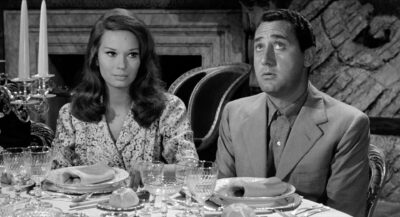
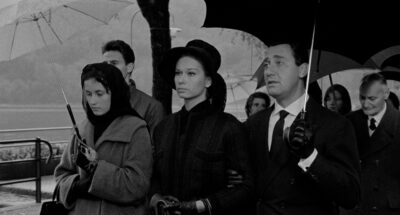
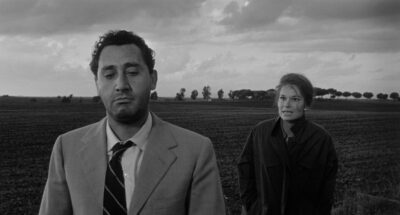
Buñuel, a Spanish-born iconoclast and provocateur, spent most of his career working outside his native country. In 1962, at the age of 62, Bunuel was enjoying international acclaim after being coaxed out of Mexican exile the year before to make ‘Viridiana,’ which was suffused with his characteristic caustic wit and anti-religious sentiment. The film’s notoriety revived his career and placed him at the center of international film culture for the remainder of his career. THE EXTERMINATING ANGEL, made in Mexico, further cemented his credentials as a mordant satirist. The story, written by Buñuel and Luis Alcoriza, deals with a lavish dinner party at the home of wealthy opera patrons in which the upper-class guests find themselves unable to leave after the meal. After a few days a rescue party is organized but the would-be rescuers cannot enter the house, and chaos ensues. During the ordeal the guests find their veneer of civilization slowly stripped away.


THE EXTERMINATING ANGEL premiered at the 1962 Cannes Film Festival and was selected as the opening night entry of the first New York Film Festival the following year. Buñuel was propelled into the most successful phase of his long career, and he followed it with a number of memorable films, ‘Belle de Jour’ (1967), ‘The Discreet Charm of the Bourgeoisie’ (1972), and his final film, ‘That Obscure Object of Desire’ (1977) among them. Later, THE EXTERMINATING ANGEL’s influence extended beyond the screen—in 2016 it was adapted as an opera of the same name by composer Thomas Ades.
Laemmle Theatres is pleased to present Mathieu Amalric’s deeply emotional drama Hold Me Tight, a selection of the Cannes International Film Festival, nominated for Best Actress and Best Adapted Screenplay César Awards. We open Hold Me Tight opens Friday, September 23 at the Laemmle Royal. With 1.05 million Americans dead from COVID in the past two-and-a-half years, art about grief is crucial right now, and this film explores the subject brilliantly.

Adapted from a stage play by Claudine Galéa, Hold Me Tight stars Vicky Krieps as Clarisse, a mother coping with great emotional upheaval, and Arieh Worthalter (Girl) as Marc, the husband she leaves behind. Krieps gives a riveting performance as a woman on the run from her family for reasons that aren’t immediately clear. Amalric’s sophisticated narrative alternates between scenes of Clarisse’s road trip and of Marc as he cares for their two children, Paul and Lucie, a pianist prodigy. While giving clues along the way, Amalric keeps viewers uncertain as to the reality of what they’re seeing until the film’s final moments.

With a dual career as an acclaimed actor (The Diving Bell and the Butterfly, My Sex Life…or How I Got into an Argument, The Grand Budapest Hotel) and a writer-director (Barbara, The Blue Room, On Tour), Amalric’s sixth directorial outing is a daring, poignant and unpredictable story about love, absence, grief, and memory. Luxembourg-born actress Vicky Krieps came to international attention with her performance opposite Daniel Day-Lewis in Paul Thomas Anderson’s Phantom Thread and has since starred in Bergman Island by Mia Hansen-Love and Old by M. Night Shyamalan.

Hold Me Tight’s soundtrack includes piano pieces by Ravel, Debussy, Messiaen, Beethoven, Rameau, Schönberg and Rachmaninov; the film features clips of legendary pianist Martha Argerich performing Ravel, Mozart and Chopin.
“One of the best films of the year…a powerful piece of work with poetic direction and incredible work from Krieps, an actress who increasingly feels like she’s never going to miss.” ~ Brian Tallerico, RogerEbert.com

“Hold Me Tight deftly unsettles what it means to “leave”—emotionally, physically, and spiritually—when staying put may prove impossible to bear.” ~ Eileen G’Sell, Reverse Shot
“A touching, sensory-driven new chapter to the cinema of escape and loss…with Amalric’s alert, empathetic stewardship and Krieps’ gripping portrayal, [Hold Me Tight] sets aside the banality of grief’s burden for something more alive and elusive, but no less affecting.” ~ Robert Abele, The Wrap