The Official Blog of Laemmle Theatres.

Laemmle Theatres

Film Reviews & Previews

  • All
  • Theater Buzz
    • Claremont 5
    • Glendale
    • Newhall
    • NoHo 7
    • Royal
    • Santa Monica
    • Town Center 5
  • Q&A’s
  • Locations & Showtimes
    • Claremont
    • Glendale
    • NewHall
    • North Hollywood
    • Royal (West LA)
    • Santa Monica
    • Town Center (Encino)
  • Film Series
    • Anniversary Classics
    • Culture Vulture
    • Worldwide Wednesdays
  • Facebook
  • Instagram
  • TikTok
  • YouTube

You are here: Home / Repertory Cinema

40th Anniversary Screening of SUBURBIA with Writer-Director Penelope Spheeris in Person Celebrating Art House Theater Day.

July 8, 2024 by Jordan Deglise Moore 2 Comments

Laemmle Theatres and the Anniversary Classics Series present the 40th anniversary of SUBURBIA (1984), the first narrative feature film of acclaimed writer-director Penelope Spheeris. Co-produced by Roger Corman, with Flea of the Red Hot Chili Peppers in an ensemble cast of mostly non-actors, the film plays one night only: Wednesday, July 24 at 7:30 pm at the Laemmle NoHo as a preview of Art House Theater Day (AHTD, officially July 25). AHTD is a celebration of the contributions that art house theaters and independent films make to the cultural landscape.

SUBURBIA was a follow up to Spheeris’ debut film, the landmark documentary ‘The Decline of Western Civilization’ (1981), which focused on the emerging punk rock/hardcore scene in Southern California in the early 1980’s. While the documentary (and its two sequels) dealt with the bands, SUBURBIA looks at their audiences, displaced and disaffected children of the Baby Boomer generation who rejected the consumerism and conservatism of their parents. The movie follows a group of kids (ranging from ages 6 to 18) who squat in a condemned tract-housing development, forming a family unit of punks who call themselves The TRs (the rejected). Although the TRs commit petty crimes to survive, the ostensible villains of the movie are a pair of gun-toting working men who view them as responsible for every crime imaginable and eventually hunt them down.

40th Anniversary Screening of SUBURBIA with Writer-Director Penelope Spheeris in Person Celebrating Art House Theater Day.

Spheeris approached Roger Corman to complete financing for the film. He viewed it as a teen exploitation movie that fit into his wheelhouse of low-budget genre pictures, a formula that worked very well for him for decades. Spheeris, however, saw it as a social statement, and chose to use mostly non-actors along with a few musicians (e.g., Flea) for authenticity, pointing out, “It’s easier to teach punks to be actors than actors to be punks.” Flea now cites the film as “the punk rock bible.”

Perceptive critics of the day supported Spheeris’ vision. Vincent Canby of The New York Times called it “a clear-eyed compassionate melodrama…far better than Francis Ford Coppola’s ‘The Outsiders’ and ‘Rumblefish.’” This view was echoed by Time Out, noting the movie “combines intelligent social comment with the conventions of the teen-in-revolt exploiter to gripping effect. A justifiably angry film, fast and full of violent action, though there’s plenty of humour too; and the lack of originality is amply compensated for by its manifest sincerity.” And Clayton Dillard in Slant said, “In the end, SUBURBIA‘s greatest strength lies in its assertion of youth as a political state of mind.”

Penelope Spheeris is a multitalented film director (SUBURBIA, ‘The Boys Next Door,’ ‘Wayne’s World,’ ‘The Beverly Hillbillies’) producer (‘Real Life’), documentarian (‘The Decline of Western Civilization’ trilogy, ‘We Sold Our Souls for Rock ‘n Roll’), actress, screenwriter, and videographer. She has enjoyed success in both the independent film and Hollywood studio arenas, collecting numerous honors and currently receiving well-earned lifetime achievement awards. She joins us to introduce SUBURBIA and discuss her five-decade career making cinematic art.

2 Comments Filed Under: Anniversary Classics, Featured Films, Featured Post, Filmmaker in Person, NoHo 7, Q&A's, Repertory Cinema, Special Events, Theater Buzz

A HARD DAY’S NIGHT 60th Anniversary Screening June 25 with pop music expert Domenic Priore.

June 19, 2024 by Jordan Deglise Moore Leave a Comment

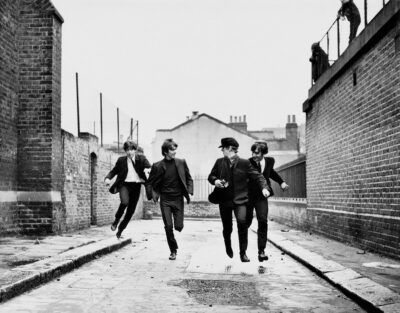
Laemmle Theatres and the Anniversary Classics Series present the 60th anniversary of A HARD DAY’S NIGHT (1964). Starring the Beatles at the height of Beatlemania, we’ll screen this rock ‘n’ roll movie classic on Tuesday, June 25, 7:30 PM at the historic Royal theatre in West Los Angeles. Directed by Richard Lester from an Oscar-nominated original screenplay by Alun Owen, the milestone film was also aptly nominated for musical scoring. (George Martin lost to Andre Previn for My Fair Lady.)

After the Beatles exploded onto the global stage by early 1964, the British pop group (John Lennon, Paul McCartney, George Harrison, Ringo Starr) conquered the American pop music charts with record-breaking domination, and their appearance on the “Ed Sullivan Show” on American television in February that year cemented their phenomenal popularity. A movie starring the quartet was then put into production in England, planned for a summer release. The finished film, A HARD DAY’S NIGHT, portrays 36 hours in the life of the group as they prepare for a televised variety show concert. Director Richard Lester utilizes several techniques in a semi-documentary style, reinforced by Gilbert Taylor’s black-and-white cinematography, all on dazzling display in the high energy musical comedy.

A HARD DAY’S NIGHT 60th Anniversary Screening June 25 with pop music expert Domenic Priore.

Lester’s approach was fully embraced by film critic Andrew Sarris, who wrote in the Village Voice, “A HARD DAY’S NIGHT (is)… the Citizen Kane of jukebox musicals, the brilliant crystallization of such diverse cultural particles as pop music, rock ‘n’ roll, cinema-verite, the nouvelle vague, free cinema, and studied spontaneity.” Roger Ebert was equally impressed, citing it as “one of the great life-affirming landmarks of the movies.” Bosley Crowther of the New York Times, one of the powerful tastemakers of the era, also raved, calling it “a whale of a comedy…a wonderfully lively and altogether good-natured spoof of the juvenile madness called Beatlemania.” Comparing the Beatles’ clowning to the Marx Brothers, Crowther enthusiastically endorsed the movie as “rollicking, madcap fun.”

The film was highly influential, spawning numerous imitators including the pop group the Monkees‘ television series later in the decade, and the advent of music videos in the 1980s. Lester went onto a long career, helming the second Beatles’ film Help, The Knack, A Funny Thing Happened on the Way to the Forum, Petulia, and The Three (and Four) Musketeers among others. The Beatles, of course, became the most influential and innovative pop musicians of the twentieth century, achieving that lofty status in a single decade, the 1960s, before going their separate ways. A HARD DAY’S NIGHT showcases their dynamic music early in their careers, and, as pointed out by TV Guide, “ the strength of their songcraft is stirring.”

Our guest Domenic Priore is an author, pop music historian, and pop culture commentator. He has contributed to several books and is the co-author of “Riot on Sunset Strip: Rock ‘n’ Roll’s Last Stand in Hollywood.”

A HARD DAY’S NIGHT plays one night only Tuesday, June 25, 7:30 PM at the historic Royal Theatre, celebrating its centennial year, operating continuously as a movie theatre since opening in 1924. Our next attractions include The Secret Garden with guest Agnieszka Holland on June 29, and A Summer Place with film music historian Steven C. Smith on July 11.

Leave a Comment Filed Under: Anniversary Classics, Featured Films, Films, Q&A's, Repertory Cinema, Royal, Theater Buzz

FROM RUSSIA WITH LOVE 60th Anniversary Screening May 28 at the Royal.

May 22, 2024 by Jordan Deglise Moore Leave a Comment

Laemmle Theatres and the Anniversary Classics Series present the third in our popular series of James Bond revival screenings. Following the successful showings of the very first Bond picture, ‘Dr. No,’ and the popular third film, ‘Goldfinger,’ we present the second movie in the long-running series, ‘From Russia with Love.’ This screening takes place almost 60 years to the day when the movie enjoyed its wide U.S. release in May 1964.

‘Dr. No’ had been a big hit when it opened a year earlier, and producers Albert R. Broccoli and Harry Saltzman decided to bring Bond back. They chose Ian Fleming’s novel ‘From Russia with Love’ in part because President John F. Kennedy had listed that book as one of his ten all-time favorite books in an article that appeared in Life magazine. The producers doubled the budget from $1 million to $2 million for this second appearance of 007, which turned out to be a modest investment considering that the new movie ended up grossing close to $80 million, approximately $800 million in today’s dollars. Terence Young, who had helmed ‘Dr. No,’ returned to the director’s chair. The screenplay was penned by Richard Maibaum (a frequent Bond screenwriter) and Johanna Harwood.

Sean Connery returned for his second appearance as Bond, along with Bernard Lee as M and Lois Maxwell as Miss Moneypenny. There were some new additions to the cast—Mexican actor Pedro Armandariz, who died before the film was released, and Oscar nominees Robert Shaw and Lotte Lenya as two of the villains. Daniela Banchi played the heroine, a Russian agent who defects to the West as a result of her romance with Bond.

A number of other elements that came to define the Bond series were introduced in ‘From Russia With Love.’ It was the first film to have a pre-title action sequence, and it was also the first picture to have a title song, written by Lionel Bart, the enormously successful composer of ‘Oliver!’ (British singer Matt Monro performed the song.) John Barry wrote his first Bond movie score, embellishing the theme music penned by Monty Norman for ‘Dr. No.’ In addition, this was the first picture in which Bond gets an arsenal of nifty weapons, though far more modest than what his team provided for him in later movies.

This picture also sent Bond to exotic locations—Istanbul and Venice, along with a perilous journey on the famed Orient Express. Other scenes were filmed at Pinewood Studios outside London. There were other novelties. Hollywood’s Production Code had been revised in 1961 to allow discreet treatment of homosexuality for the very first time, and the producers took advantage of this leniency to depict Lenya’s Rosa Klebb as a lesbian with fairly overt designs on the glamorous but naïve Banchi.

Robert Shaw (later to star in such enormous hits as ‘A Man For All Seasons,’ ‘The Sting,’ and ‘Jaws’), with his dyed-blond hair, also has a slightly androgynous quality as the fighter recruited by Klebb to assassinate Bond. The fight scene between Connery and Shaw aboard the Orient Express, regarded as one of the best fight scenes in cinema history, took three weeks to film.

Even though reviews were not crucial to the success of the Bond movies, ‘From Russia With Love’ had some of the best reviews of the entire franchise, currently listed at 97 percent positive on Rotten Tomatoes. At the time, Penelope Gilliatt, writing for The Observer, noted, “The set-pieces are a stunning box of tricks.” Time magazine called the picture “fast, smart, shrewdly directed and capably performed.” Variety praised “a preposterous, skillful slab of hard-hitting, sexy hokum.”

The film continues to be fondly remembered. Sean Connery, later Bond actors Timothy Dalton and Daniel Craig, as well as later Bond producer Barbara Broccoli have all named it as one of their favorite Bond movies.

Our guest Jon Burlingame is the nation’s leading writer on the the subject of music for film and television. He has taught film music history courses at the University of Southern California and has lectured on film and TV music over the past 30 years at locations around the world. Among his several books, he wrote the definitive history of 007 film music, THE MUSIC OF JAMES BOND, in addition to recently co-authoring MUSIC BY JOHN BARRY. He joins us to introduce ‘From Russia With Love‘ for a pre-screening Q & A at the historic Royal Theatre, celebrating its 100th anniversary this year.

Leave a Comment Filed Under: Anniversary Classics, Films, Q&A's, Repertory Cinema, Royal, Theater Buzz

¡Hasta la victoria siempre! THE MOTORCYCLE DIARIES 20th Anniversary Screenings May 15.

May 8, 2024 by Jordan Deglise Moore Leave a Comment

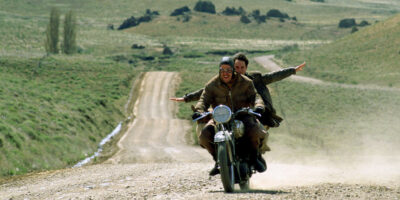
Laemmle Theatres and the Anniversary Classics Series present the next entry in our Anniversary Classics Abroad series, the biopic drama of the early years of Ernesto Che Guevara, The Motorcycle Diaries (2004). The Academy Award-winning film by director Walter Salles (Central Station) will play for one show only on Wednesday, May 15 at 7:00 pm at five Laemmle locations: Claremont, Encino, Glendale, Newhall, and West L.A. In addition to the Oscar for Best Song, “Al Otro Lado Del Rio,” the film was nominated for Best Adapted Screenplay by playwright Jose Rivera, based on Guevara’s memoir.

  ¡Hasta la victoria siempre! THE MOTORCYCLE DIARIES 20th Anniversary Screenings May 15.

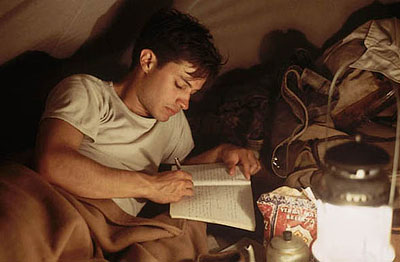
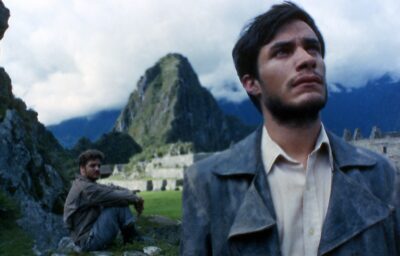
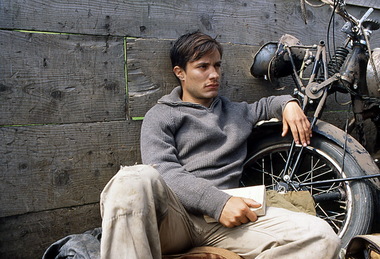
The film recounts the 1952 road trip by 23-year-old medical student Ernesto Guevara de la Serna (Gael Garcia Bernal) and his friend Alberto Granada (Roberto de la Serna) in a more than four-month, 8,700-mile journey across South America, initially by motorcycle. Originally intended as an adventure for fun and frolic, the two friends are exposed to indigenous peoples and cultural differences they had never experienced. These encounters plant the seeds of radicalization that would manifest as Guevara later emerged as a Marxist guerrilla leader and revolutionary, becoming a global countercultural symbol upon his murder at the age of thirty-nine.

¡Hasta la victoria siempre! THE MOTORCYCLE DIARIES 20th Anniversary Screenings May 15.

The film is a notable combination of road movie travelogue and coming-of-age drama, beautifully captured by the lustrous cinematography of Eric Gautier as their odyssey traverses the South American continent. Critics of the day responded to this approach with due appreciation. Carla Meyer of the San Francisco Chronicle called it “a superb film about a physical and spiritual journey taken by a young Che Guevara, whose encounters with the unknown alter and affirm a life.” Peter Travers in Rolling Stone said, “in this wild ride of a movie that is part epic poem and part political provocation, it’s the man who holds the screen as a portent of history.”

¡Hasta la victoria siempre! THE MOTORCYCLE DIARIES 20th Anniversary Screenings May 15.

“Quietly exhilarating, soulful and sincerely romantic.” ~ Terry Lawson, Detroit Free Press

“It’s about the gradual awakening into awareness, the graduation from carefree youth to responsible adulthood.” ~ Steve Murray, Atlanta Journal-Constitution

¡Hasta la victoria siempre! THE MOTORCYCLE DIARIES 20th Anniversary Screenings May 15.

“An involving, lyrical, and visually beautiful cinematic bildungsroman.” ~ Glenn Kenny, Premiere Magazine

“Whether you want to see The Motorcycle Diaries as entirely a personal story or as social and political allegory, it captures a far different and far more vulnerable Ernesto Guevara than the one we think we know.” ~  Andrew O’Hehir, Salon.com

¡Hasta la victoria siempre! THE MOTORCYCLE DIARIES 20th Anniversary Screenings May 15.

“What Bernal and this well-wrought movie convey so well is the charisma that would soon become a part of human history and, yes, T-shirts.” ~ Desson Thomson, Washington Post
*
“You get so caught up in the beauty of the images, and lost in the weathered faces found along the way, you quite forget that you’re traveling with Che Guevara — which is, of course, exactly what the original experience would be.” ~ Moira MacDonald, Seattle Times
*
“Revisits Guevara’s 8,000-mile tour of South America — and the origins of his personal revolution — with humor, exquisite compassion and visual grace.” ~ Carla Meyer, San Francisco Chronicle
*
“It’s got poetry to it — the poetry of humanity.” ~ Steven Rea, Philadelphia Inquirer
*
“Reaches back to the past to suggest that life is full of turning points, some of which we recognize and some we don’t, and that, in a dangerous world, youth and friendship are to be treasured because, like life, they can pass so quickly.” ~ Michael Wilmington, Chicago Tribune
*
“If I was moved despite my ingrained skepticism about Ché Guevara and Castro’s Cuba, you probably will be too.” ~ Andrew Sarris, Observer
*

Coming attractions in the Anniversary Classics Series include Dead Poets Society (May 22), From Russia With Love (May 28), The Lovers, Red Desert, A Sunday in the Country, and the Three Colors trilogy: Red, White, and Blue, among others.

Leave a Comment Filed Under: Anniversary Classics, Claremont 5, Featured Post, Films, Glendale, Newhall, Repertory Cinema, Royal, Theater Buzz, Town Center 5

Patricia Rozema in person for the new 4K director’s cut restoration of her queer classic WHEN NIGHT IS FALLING + screenings of her latest, MOUTHPIECE.

May 1, 2024 by Jordan Deglise Moore Leave a Comment

We’re proud to soon screen two films by Canadian filmmaker Patricia Rozema: her just-restored 1995 romance When Night is Falling (May 7 at the Royal and May 8 at the NoHo) and her most recent film, Mouthpiece (May 13 & 14 at the Town Center, Monica Film Center, Glendale, and Claremont). Rozema will participate in Q&As after the Tuesday, May 7 and 8 screenings of When Night is Falling at the Royal and NoHo. Tracy E. Gilchrist, VP, Executive Producer of Entertainment for equalpride, will moderate the Royal Q&A.

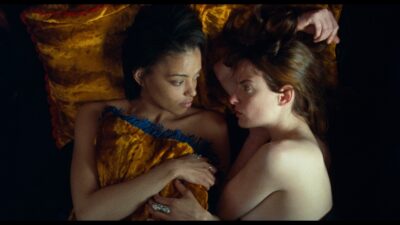
Long considered to be a pivotal entry in the LGTBQ+ canon, When Night is Falling is a sexy, daring and visually resplendent story about the thrilling temptations of passion. Camille, a Christian academic, is engaged to Martin, a fellow theologian. Then she meets Petra, a flamboyant performer in an avant-garde circus. To her surprise, Camille finds herself falling deeply and almost magically in love. Forced to choose between the woman she wants, and the man who loves her, Camille discovers that the only true duty of the soul is desire.

Patricia Rozema in person for the new 4K director’s cut restoration of her queer classic WHEN NIGHT IS FALLING + screenings of her latest, MOUTHPIECE.
From WHEN NIGHT IS FALLING.

A Canadian classic that was in Official Competition at the 1995 Berlin International Film Festival, When Night is Falling tells a lesbian story beautifully photographed by Douglas Koch, catching a romantic, wintry Toronto landscape.

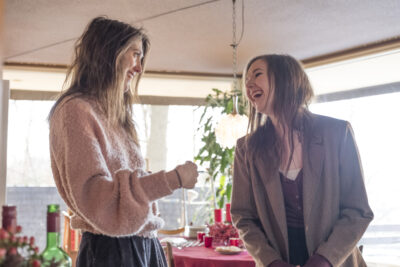
Adapted from the play by Amy Nostbakken and Norah Sadava, Mouthpiece follows Cassandra, an aspiring writer who, while struggling to compose a eulogy after the sudden death of her mother, comes to discover that her own rebelliousness is as much a response to the male gaze as her mother’s conformity. Enacting the two sides of Cassandra’s conflicting inner dialogue, playwright-performers Nostbakken and Sadava create a compelling portrayal of the tension between regression and progress that is often found within women.

Patricia Rozema in person for the new 4K director’s cut restoration of her queer classic WHEN NIGHT IS FALLING + screenings of her latest, MOUTHPIECE.
From MOUTHPIECE

Mark Olson of the L.A. Times just published a good piece about Rozema and her work and also interviewed her, as did Gilchrist for The Advocate:

There’s a scene in Patricia Rozema’s 2018 film Mouthpiece where the main character, Cassandra, is flooded with a memory of her mother, who’s just died. The camera pans the room, lingering on Cassandra’s mother’s books and music. In the frame there appear works by Joni Mitchell, Margaret Atwood, Alice Munro, and the groundbreaking lesbian author, actor, and activist Ann-Marie McDonald, who appeared in Rozema’s first feature, 1987’s I’ve Heard the Mermaids Singing. Through Cassandra’s memories of her mother, Rozema pays tribute to Canada’s great women storytellers, and considering the filmmaker’s body of work, her name belongs among them…Throughout her canon and evident in the restored films is Rozema’s singular poetic film language that includes queer identity, interior monologues, and a duality in her characters or what she refers to as “twoness.” Unburdened by the machine of Hollywood and working from artists’ grants from Canada, Rozema cemented herself as a true auteur out of the gate with I’ve Heard the Mermaids Singing, a self-reflexive and heartfelt comedy about a quirky secretary to a lesbian art gallery owner. The film investigates the nature of art itself, something that Rozema would continue to examine throughout her career.

“But I think I was protecting my ability to make movies, because I was ambitious too. Not for fame or for money but for being able to make movies, which is the best job in the whole fucking world in my mind,” she adds. “I was terrified that I would be shut down. So I was careful, maybe too careful sometimes, so that I think some people wished was different sooner.”

Despite Rozema’s thoughts of being “too careful” at some points, as a progenitor of the Toronto New Wave with the likes of Atom Egoyan and Jeremy Podeswa, her contributions to cinema include making elevated films about queer women with happy or hopeful endings that expanded the notion of fixed sexuality.

“I also spoke quite early about fluidity, a gender continuum, and a sort of orientation continuum,” Rozema says. “At the time, it was very binary: You’re gay or you’re straight. Period. I felt like there’s got to be more colors in this human palette.”

Leave a Comment Filed Under: Featured Post, Claremont 5, Featured Films, Filmmaker in Person, Films, Glendale, NoHo 7, Q&A's, Repertory Cinema, Royal, Santa Monica, Theater Buzz, Town Center 5

“Like discovering a bottle of marvelous French wine,” CLASSE TOUS RISQUE opens May 3 at the Royal.

April 24, 2024 by Jordan Deglise Moore Leave a Comment

Family man and gangster Abel Davos (Lino Ventura), holed up in Italy for over a decade, needs some startup money in order to return to France, where he’s been sentenced to death. With Milan’s Duomo looming in the background (shot on location), he and a crony execute a split-second payroll heist — in broad daylight — then begin a lightning-fast getaway via underground passages, cars, motorcycle, bus, speedboat, and ambulance. Only the beginning of the mounting mayhem.

Bridging argot-rich ’50s masterworks like Dassin’s Rififi and Becker’s Touchez Pas Au Grisbi with Melville’s pared-down thrillers of the ’60s, Classe Tous Risque (referring to a kind of insurance policy, à la Double Indemnity, but also a pun on “tourist class”) is a penetrating study of a tough guy at the end of his rope, drawn from screenwriter and ex-con José Giovanni’s first-hand knowledge of the post-war French underworld.

“Film noir is a French coinage but France’s homegrown crime movies, a staple of the 1950s and early ’60s, seldom get their due in the United States, however first-rate they might be. Case in point: Claude Sautet’s 1960 slam dunk Classe Tous Risque.” — J. Hoberman, The New York Times

“Powerful and timeless.” — John Woo

“As revolutionary as Breathless.” — Bertrand Tavernier

“Like discovering a bottle of marvelous French wine you didn’t remember you had, opening it and finding it every bit as delicious as its reputation promised. That’s how good this classic fatalistic French gangster film is.” — Kenneth Turan, Los Angeles Times

“Never wastes a minute of your time, right up to its abrupt ending: this is condensed, intense story-telling that never once loosens its grip.” — David Gritten, Daily Telegraph

“The young Belmondo alone is worth the price of admission to Classe Tous Risque.” — Andrew Sarris, Observer

“Belmondo is the clincher: He’s got so much jaunty charisma, the screen can barely contain him.” — Jan Stewart, Newsday

Directed with an acute feeling for characterization, this was the first major feature for Sautet (Cesar and Rosalie, Les Choses de la Vie, Original title: Un Coeur en Hiver, etc.) and the first teaming of the two great French cinema icons: former wrestling champ Ventura, here making a career-decisive move into lead roles, and 26-year-old New Wave wunderkind Jean-Paul Belmondo, straight from Godard’s Breathless.

Despite a “Who’s Who” crew and cast — including composer Georges Delerue (Contempt), cinematographer Ghislain Cloquet (Au Hasard Balthazar), and co-stars Marcel Dalio (Grand Illusion, The Rules of the Game, Casablanca) and Sandra Milo (the late star of Fellini’s 8 1/2) — Classe Tous Risque got lost in the New Wave shuffle. In this country, a dubbed version called The Big Risk came and went in drive-ins and grindhouses before disappearing — until Rialto Pictures’ first U.S. release of the complete French language version in 2005.

2024 marks the centennial of director Claude Sautet.

Restored in 4K HDR Dolby Vision by TF1 Studio at Éclair Classics laboratory, from the original camera negative and the French sound negative. Funding provided by the CNC, Coin de Mire Cinéma, and OCS.

Leave a Comment Filed Under: Featured Films, Featured Post, Films, Repertory Cinema, Royal, Theater Buzz

Anniversary Classics in April ~ LA CÉRÉMONIE, WHAT EVER HAPPENED TO BABY JANE?, RIDE THE HIGH COUNTRY & CHOCOLAT.

March 20, 2024 by Jordan Deglise Moore Leave a Comment

Spring forward by looking back at some classic films next month. We’ve got two modern French classics, Claude Chabrol’s dark masterpiece La Cérémonie (April 2 at the Royal with actress Jacqueline Bisset in person for a Q&A, and Chocolat by Claire Denis (April 24 at multiple theaters). We’ll also be screening two quintessential films from the milestone movie year 1962: What Ever Happened to Baby Jane? and Ride the High Country, to coincide with the publication of the paperback edition of Cinema ’62: The Greatest Year at the Movies. The films will have separate screenings at two different Laemmle locations, with What Ever Happened to Baby Jane? only at the NoHo 7 in North Hollywood on April 11, and Ride the High Country only at Newhall in Santa Clarita on April 16. Both films are notably among nine 1962 movies selected by the National Film Registry of the Library of Congress for “historical,  cultural, or aesthetic significance.”

Acclaimed French auteur Claude Chabrol was one of the masters of the French New Wave, along with Francois Truffaut, Jean-Luc Godard, and Eric Rohmer. His acclaimed films of the 1950s, Le Beau Serge and The Cousins, established Chabrol’s reputation as an astute observer of contemporary French society.

Anniversary Classics in April ~ LA CÉRÉMONIE, WHAT EVER HAPPENED TO BABY JANE?, RIDE THE HIGH COUNTRY & CHOCOLAT.
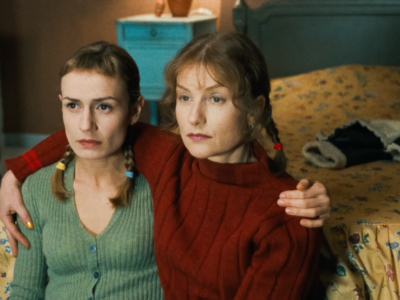
Sandrine Bonnaire and Isabelle Huppert in ‘La Cérémonie.’

He continued to demonstrate satirical gifts in his later films but added an interest in suspense and crime stories with such films as La Femme Infidele, This Man Must Die, Le Boucher, and Violette, starring Isabelle Huppert. His partnership with Huppert continued over several films, including a new adaptation of Flaubert’s Madame Bovary and Story of Women, a bold study of a woman executed for performing illegal abortions during World War II.

Chabrol re-teamed with Huppert, who joined rising actress Sandrine Bonnaire and veterans Jacqueline Bisset and Jean-Pierre Cassel, for La Cérémonie, adapted from the novel by acclaimed mystery writer Ruth Rendell. Bonnaire plays a maid who is hired to work for a wealthy family living in an isolated mansion in Brittany. Eventually she strikes up a friendship with a savvy postal worker living in the nearby town, played by Huppert. The two young women devise a plan to take advantage of Bonnaire’s employers, played by Bisset and Cassel.

Huppert won the Cesar award, France’s equivalent of the Oscar, for her performance, and Bisset earned a nomination for Best Supporting Actress. The Guardian named La Cérémonie as one of the 25 greatest crime films of all time. Craig Williams of the British Film Institute called it “perhaps Chabrol’s greatest achievement.” Both the Los Angeles Film Critics Association and the National Society of Film Critics named it the Best Foreign Language Film of 1995.

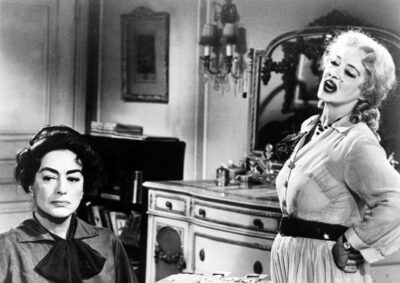
The cult classic What Ever Happened to Baby Jane? stars Bette Davis and Joan Crawford, two screen legends from the Golden Age of Hollywood, who were facing career fadeouts by 1962, the plight of aging actresses both then and now. Studio disinterest and the lack of appropriate roles forced them to seek unorthodox parts, and the screen adaptation of a Henry Farrell novel about the intense psychological rivalry between two reclusive sisters, former actresses holed up in Hollywood obscurity, seemed tailor-made. Producer-director Robert Aldrich hired Lukas Heller to write the screenplay, and the expert mix of black comedy and suspense, along with powerful acting by the cast, made the film a worldwide success. The movie scored a trifecta: a box-office bonanza, pop culture phenomenon, and show business sensation. It also revived the careers of both Davis and Crawford, restoring their places in the Hollywood pantheon, and spawned a genre of Grande Dame Guignol that gave veteran actresses roles for the next decade.

Anniversary Classics in April ~ LA CÉRÉMONIE, WHAT EVER HAPPENED TO BABY JANE?, RIDE THE HIGH COUNTRY & CHOCOLAT.
Joan Crawford and Bette Davis in “What Ever Happened to Baby Jane?’

Part of the appeal of the film was the alleged off-screen rivalry between Davis and Crawford, and that rumored feud fostered high anticipation for both the press and fans of the day. “Feud,” a 2017 miniseries about the rivalry between Davis and Crawford while shooting the movie, sparked the most recent interest in the film. When the film was nominated for five Academy Awards, with Bette Davis among the Best Actress nominees, the feud was putatively exacerbated by the omission of Crawford. It won the Oscar for black-and-white costume design, and among its other nominations were Victor Buono (Best Supporting Actor) in his screen debut, and master cinematographer Ernest Haller (Oscar winner for Gone With the Wind), who had worked with both stars in their 1940s heyday. Among critical reception at the time, the Chicago Daily News saw “…the outlines of a modern Greek tragedy. Yet it is great fun too, because this is pure cinema drama set in a real house of horrors.”

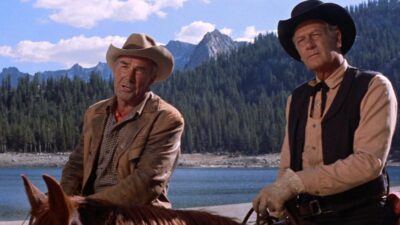
Ride the High Country is now regarded as one of the all-time western classics and was only the second feature film by director Sam Peckinpah, who had honed his writing-directing skills on  television westerns. Peckinpah also had a hand in revising an original screenplay by writer N.B.  Stone, Jr. about two aging former lawmen tasked with a gold delivery from a mining camp at the turn of the twentieth century. Hollywood Golden Age actors Randolph Scott (in his final film) and Joel McCrea portray the venerable gunfighters, appropriate casting for the veteran actors who had extended their careers in post-war screen oaters. The film also features Mariette Hartley in her screen debut and character actors Warren Oates, L. Q. Jones, James Anderson, Edgar Buchanan, and R. G. Armstrong, with expert color cinematography by Lucien Ballard, another Golden Age veteran who became a frequent Peckinpah collaborator.

Anniversary Classics in April ~ LA CÉRÉMONIE, WHAT EVER HAPPENED TO BABY JANE?, RIDE THE HIGH COUNTRY & CHOCOLAT.
Randolph Scott & Joel McCrea in ‘Ride the High Country.’

Ride the High Country’s setting at the twilight of the Old West and its theme of men who have outlived their times but cling to their moral code (for the most part) would be revisited by Peckinpah later in his career, most notably at the end of the decade in The Wild Bunch and into the 1970s in The Ballad of Cable Hogue and Pat Garrett and Billy the Kid. Although The Wild Bunch would ensure his legacy, the underseen Ride the High Country is now considered a seminal film in the western canon and his first masterpiece.

MGM underwent a regime change after the film’s production wrapped and its new president thought so poorly of the film that it was relegated to the neighborhood theater circuits as the lower half of double bills, which effectively killed its U.S. box office. But critics worldwide rescued the film from obscurity and heralded the arrival of a major new talent in Peckinpah. Among the accolades were the Paris Council of Film Critics’ ranking as one of the best films of the year. Newsweek placed it atop their year-end ten best list, and upon its original release exclaimed, “In fact,  everything about this picture has the ring of truth, from the unglamorous settings to the flavorful dialogue and the natural acting, Ride the High Country is pure gold.”

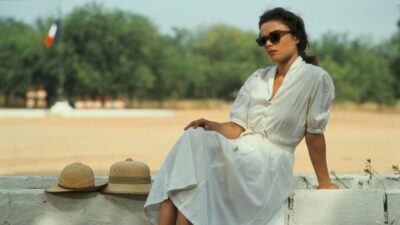
Claire Denis drew on her own childhood experiences growing up in colonial French Africa for Chocolat, her multilayered, languorously absorbing feature debut, which explores many of the themes that would recur throughout her work. Returning to the town where she grew up in Cameroon after many years living in France, a white woman (Mireille Perrier) reflects on her relationship with Protée (Isaach De Bankolé), a Black servant with whom she formed a friendship while not fully grasping the racial divides that governed their worlds. We’ll show Chocolat April 24 at the Claremont, Glendale, Newhall and Royal.

Anniversary Classics in April ~ LA CÉRÉMONIE, WHAT EVER HAPPENED TO BABY JANE?, RIDE THE HIGH COUNTRY & CHOCOLAT.
Mireille Perrier in ‘Chocolat.’


Leave a Comment Filed Under: Anniversary Classics, Actors in Person, Claremont 5, Featured Films, Featured Post, Films, Glendale, Newhall, NoHo 7, Q&A's, Repertory Cinema, Royal, Theater Buzz, Town Center 5

WOMAN IN THE DUNES 60th anniversary screenings March 19.

March 6, 2024 by Jordan Deglise Moore Leave a Comment

Laemmle Theatres and the Anniversary Classics Series present this month’s installment in our Anniversary Classics Abroad Series: Hiroshi Teshigahara’s Oscar-nominated erotic drama, Woman in the Dunes . Actually, the film was nominated in two separate years. In 1964, when it won the Special Jury Prize at the Cannes Film Festival, it was one of the five nominees for Best Foreign Language Film. In 1965, when the film was released in America, Teshigahara earned a nomination for Best Director. This was a milestone because he was the first Asian director ever to win that recognition from the Academy. The great Akira Kurosawa earned his only Best Director nomination a decade later, for his film Ran. Other Asian directors who have earned Oscar nominations and victories in recent years (including Ang Lee and Bong Joon Ho) owe something to Teshigahara for paving the way.

Woman in the Dunes is adapted from a novel by esteemed Japanese novelist Kobo Abe, who also contributed to the screenplay. Eiji Okada (the star of Alain Resnais’ Hiroshima Mon Amour and of Hollywood movies The Ugly American and The Yakuza) portrays an entomologist searching for a rare species of beetle in the sand dunes of a remote part of Japan. When he misses the bus to return home, he spends the night with a widow living in the dunes, portrayed by Kyoko Kishida. Eventually their relationship evolves into a more meaningful connection that transforms the life of the scientist.

The film was highly praised for the atmospheric cinematography by Hiroshi Segawa, which immerses the viewer in the spectacular setting. The film also captivated American audiences because of its frank sexuality, which was a prime attraction of international films during the 1950s and 60s, when Hollywood was still straitjacketed by the censorious Production Code. Writing in the Chicago Tribune, Michael Wilmington declared, “In stunningly composed images by Teshigahara and cinematographer Hiroshi Segawa, that eroticism becomes overwhelming.”

Other critics took note of the film’s eroticism as well as its cinematic achievements and sharp characterizations. As Roger Ebert wrote, “Woman in the Dunes retains its power because it is a perfect union of subject, style and idea.” The New York Times’ Bosley Crowther concurred that the film contains “a bewitching poetry and power.” Kevin Thomas of the Los Angeles Times called the film “a timeless contemplation of life’s essential mystery and a triumph of bold, innovative style.”

We’ll screen Woman in the Dunes at 7 pm on March 19 at our Claremont, Glendale, Santa Clarita, West L.A. and Encino theaters.

“More than almost any other film I can think of, Woman in the Dunes‘ uses visuals to create a tangible texture — of sand, of skin, of water seeping into sand and changing its nature.” ~ Roger Ebert, Chicago Sun-Times

WOMAN IN THE DUNES 60th anniversary screenings March 19.

“The camera work by Hiroshi Segawa is often extraordinary in its ability to make a sheet of sand something mysterious and wonderful.” ~ William J. Nazzaro, Arizona Republic
WOMAN IN THE DUNES 60th anniversary screenings March 19.

“The camera’s power to turn fact into metaphor catches the intent of Kobo Abe’s book perfectly.” ~ Michael Kustow, Sight & Sound

“The couple’s grimly inescapable dilemma becomes hugely complex and terrifyingly resonant — a sexualised version of the Sisyphus myth, recounted with a distinct touch of Buñuelian absurdism.” ~ Jonathan Romney, Independent on Sunday

“Teshigahara’s direction and Segawa’s camera-work often render the mundane startling and new, a claim that only good films can make.” ~ Mark Chalon Smith, Los Angeles Times

“Woman in the Dunes remains a masterpiece, a timeless contemplation of life’s essential mystery and a triumph of bold, innovative style.” ~ Kevin Thomas, Los Angeles Times
*

“Teshigahara’s creative background was in Japan’s avant-garde arts scene, and there’s a powerful expressiveness to the film’s black-and-white cinematography.” ~ Tom Dawson, BBC.com

Leave a Comment Filed Under: Anniversary Classics, Abroad, Claremont 5, Featured Films, Featured Post, Films, Glendale, Newhall, Repertory Cinema, Royal, Theater Buzz, Town Center 5

  • « Previous Page
  • 1
  • 2
  • 3
  • 4
  • 5
  • 6
  • …
  • 27
  • Next Page »

Search

Instagram

☘️ WEAR GREEN ☘️ $AVE GREEN ☘️ $2 OFF your concess ☘️ WEAR GREEN ☘️ $AVE GREEN ☘️ $2 OFF your concessions order!

⭐ St. Patrick's Day! Tuesday March 17th Only!

-Movie ticket purchase not required
-Like and show this post!
🎟️ laemmle.com/discounts
🚀 PROJECT HAIL MARY, AN EPIC PRIZE PACK GIVEAWAY! 🚀 PROJECT HAIL MARY, AN EPIC PRIZE PACK GIVEAWAY!
👉 ENTER in BIO!

#ProjectHailMary — starring Academy Award® nominee Ryan Gosling and directed by Academy Award®-winning filmmakers Phil Lord & Christopher Miller. Based on Andy Weir's New York Times best-selling novel.

🎟️ GET TICKETS in BIO!
For the 21st consecutive year, Laemmle will be scr For the 21st consecutive year, Laemmle will be screening the Oscar-Nominated Short Films, opening on Feb. 20th. Showcasing the best short films from around the world, the 2026 Oscar®-Nominated Shorts includes three feature-length programs, one for each Academy Award® Short Film category: Animated, Documentary and Live Action.

ANIMATED SHORTS: (Estimated Running Time: 83 mins)
The Three Sisters
Forevergreen
The Girl Who Cried Pearls
Butterfly
Retirement Plan
 
LIVE ACTION SHORTS (Estimated Running Time: 119 minutes)
The Singers
A Friend Of Dorothy
Butcher’s Stain
Two People Exchanging Saliva
Jane Austin’s Period Drama

DOCUMENTARY SHORTS (Estimated Running Time: 158 minutes)
Perfectly A Strangeness
The Devil Is Busy
Armed Only With A Camera: The Life And Death Of Brent Renaud
All The  Empty Rooms
Children No More: “Were And Are Gone”

Please note that some films may not be appropriate for audiences under the age of 14 due to gun violence, shootings, language and animated nudity.
❤️ Laemmle be your Valentine ❤️ and enjoy a FREE S ❤️ Laemmle be your Valentine ❤️ and enjoy a FREE Sweet Treat 🍭 on Valentine's Day! Like this post and show at the concessions stand for One Free Candy w/purchase of any combo! (2/14 only)
For Tickets and Locations 🎟️ laemmle.com
Follow on Instagram


Laemmle Theatres

Laemmle Theatres
Tickets: http://laemmle.com/film/artfully-united | Subscribe: http://bit.ly/3b8JTym | ARTFULLY UNITED is a celebration of the power of positivity and a reminder that hope can sometimes grow in the most unlikely of places. As artist Mike Norice creates a series of inspirational murals in under-served neighborhoods in and around Los Angeles, the Artfully United Tour transforms from a simple idea on a wall to a community of artists and activists coming together to heal and uplift a city.

Tickets: http://laemmle.com/film/artfully-united

RELEASE DATE: 10/17/2025
Director: Dave Benner
Cast: Mike Norice

-----
ABOUT LAEMMLE: Since 1938, Laemmle [Theatres] has been showing the finest independent, arthouse, and international films.

Subscribe to Laemmle's E-NEWSLETTER: http://bit.ly/3y1YSTM
Visit Laemmle.com: http://laemmle.com
Like LAEMMLE on FACEBOOK: http://bit.ly/3Qspq7Z
Follow LAEMMLE on TWITTER: http://bit.ly/3O6adYv
Follow LAEMMLE on INSTAGRAM: http://bit.ly/3y2j1cp
Tickets: http://laemmle.com/film/brides | Subscribe: http://bit.ly/3b8JTym | Nadia Fall's compelling debut feature offers a powerful and empathetic look into the lives of two alienated teenage girls, Doe and Muna, who leave the U.K. for Syria in search of purpose and belonging. By humanizing its protagonists and exploring the complex interplay of vulnerability, societal pressures, and digital manipulation, BRIDES challenges simplistic explanations of radicalization.

Tickets: http://laemmle.com/film/brides

RELEASE DATE: 9/24/2025
Director: Nadia Fall

-----
ABOUT LAEMMLE: Since 1938, Laemmle [Theatres] has been showing the finest independent, arthouse, and international films.

Subscribe to Laemmle's E-NEWSLETTER: http://bit.ly/3y1YSTM
Visit Laemmle.com: http://laemmle.com
Like LAEMMLE on FACEBOOK: http://bit.ly/3Qspq7Z
Follow LAEMMLE on TWITTER: http://bit.ly/3O6adYv
Follow LAEMMLE on INSTAGRAM: http://bit.ly/3y2j1cp
Tickets: http://laemmle.com/film/writing-hawa | Subscribe: http://bit.ly/3b8JTym | Afghan documentary maker Najiba Noori offers not only a loving and intimate portrait of her mother Hawa, but also shows in detail how the arduous improvement of the position of women is undone by geopolitical violence. The film follows the fortunes of Noori’s family, who belong to the Hazaras, an ethnic group that has suffered greatly from discrimination and persecution.

Tickets: http://laemmle.com/film/writing-hawa

RELEASE DATE: 10/8/2025

-----
ABOUT LAEMMLE: Since 1938, Laemmle [Theatres] has been showing the finest independent, arthouse, and international films.

Subscribe to Laemmle's E-NEWSLETTER: http://bit.ly/3y1YSTM
Visit Laemmle.com: http://laemmle.com
Like LAEMMLE on FACEBOOK: http://bit.ly/3Qspq7Z
Follow LAEMMLE on TWITTER: http://bit.ly/3O6adYv
Follow LAEMMLE on INSTAGRAM: http://bit.ly/3y2j1cp
Subscribe

Recent Posts

  • Modern Love, Unfiltered: The Bold Charm of ‘Two Women’
  • ‘Our Land’ and the Weight of History
  • All the Right Notes: ‘Two Pianos’ and the Music of Complicated Love

Archive

Featured Posts

An “embrace of what makes us unknowable yet worthy of forgiveness,” A LITTLE PRAYER opens Friday at the Claremont, Newhall, Royal and Town Center.

Leaving Laemmle: A Goodbye from Jordan