The Official Blog of Laemmle Theatres.

Laemmle Theatres

Film Reviews & Previews

  • All
  • Theater Buzz
    • Claremont 5
    • Glendale
    • Newhall
    • NoHo 7
    • Royal
    • Santa Monica
    • Town Center 5
  • Q&A’s
  • Locations & Showtimes
    • Claremont
    • Glendale
    • NewHall
    • North Hollywood
    • Royal (West LA)
    • Santa Monica
    • Town Center (Encino)
  • Film Series
    • Anniversary Classics
    • Culture Vulture
    • Worldwide Wednesdays
  • Facebook
  • Instagram
  • TikTok
  • YouTube

You are here: Home / News

“What I find so touching about [rural people] is the fact that they don’t fall apart when they are grieving…yet in the face of heartbreak, they will be devastated.” French filmmaker Louise Courvoisier on HOLY COW, her sentimental cheese epic.

March 26, 2025 by Jordan Deglise Moore 1 Comment

Born in 1994, Louise Courvoisier grew up in the Jura region of France before studying cinema at the Cinéfabrique in Lyon. Her graduation short, Mano a Mano, won first prize at the Cinéfondation at Cannes in 2019. Vingt dieux (Holy Cow) is her first feature film, a sentimental cheese epic set in the village of her childhood. It follows 18-year-old Totone. After the tragic death of his father, he’s thrust into the unexpected and very adult role of looking after his younger sister and their failing family farm. He assumes even more responsibility when he enters a cash competition for the best Comté cheese made in this western part of the French Alps. A “verité” look at the hardscrabble life of French agriculture, it is simultaneously a pitch-perfect portrait of French teens and an ode to the love of cheese.

We’ll be opening Holy Cow on April 4 at the Royal with additional screenings at the Claremont and Town Center on April 5 and 6. Courvoisier recently spoke about her film with Inside the Arthouse as well as Anne-Claire Cieutat in the following interview:

Q: Your film opens with a rather odd image – a calf in a car – and continues with a long, flamboyant sequence shot. Your short film Mano a mano began with the same cinematic gesture. Is it your own way of saying: “Once upon a time…”?
A: For me, it is a way of taking the viewer behind the scenes of my own world. In Mano a mano, it was the circus world, in which a part of my family is immersed; and Holy Cow explores the rural environment of Jura, where I grew up. The opening sequence shot introduces the main character of the film, Totone, who is dancing on the bar counter.

Q: How did your desire to make films come about? And how did the characters of this first feature film come into being?

A: My desire to make films came about a little by chance. I grew up in Cressia, a small village in Jura. One day, I felt the need to leave, so I chose to take a film class in high school, because it meant I would have to go to boarding school. Little by little, I developed a taste for it, I felt that I had stories to tell, and eventually, this led to film studies at CinéFabrique in Lyon. To create the characters and the story of Holy Cow, I drew inspiration from the community I have been living in and observing since I was a child. Totone and his friends are like my village “colleagues.” Most of them left school early to work on farms with their parents. Many of them are in difficult family situations. I wanted to film these young people who are seldom represented in films, who have had a bumpier start than many others, and to paint a positive and nuanced portrait of them “from the inside.” All in the land of Comté cheese!

Q: How did you write the script, in which every element you introduce reappears at one point or another in the narrative?

A: I let my taste for details guide the writing of my characters and situations. I like it when things seem trivial, when elements all have a purpose, without overemphasizing them or turning the film into a chronicle. I had a real desire for fiction rooted in documentary reality. I wanted to tell my story within a realistic environment. I began to write on my own, starting with the characters, who evolved over time. Then I co-wrote with Théo Abadie, a student in my class at CinéFabrique. And screenwriter Marcia Romano helped us throughout the process.

Q: Your film has a western feel to it – in the way you deal with space, the conquest of territory, adversity – and some of the twists and turns are reminiscent of hopeless yet funny slackers, like the characters in the Pieds nickelés comic book series, which keeps gravitas at bay…
A: Indeed, I have imagined my film as a western, yet without borrowing all the codes of the genre. That is why I chose the ‘scope format. I also liked the idea of filming weathered faces telling tales of a life well lived. The fear of the unknown, the conquest of territory, all this went hand in hand with a certain awkwardness typical of my characters and their behavior. The Pieds nickelés aspect is apparent in the way Totone and his friends act. They try things, and they support each other in the face of adversity. Awkward as it is, their group pushes them forward.

Q: You take a tender look at your characters.
A: I am very fond of Totone, even though he is not a hero and he is full of flaws. I wanted to show his imperfections as much as his strengths. Totone is like a clumsy and overexcited puppy, who may dance half-naked on a bar, or fail to help his father when he needs it, but is sweet and lovable all the same. Totone is also a force of nature, with a unique way of reacting to events, and a sense of community.

Q: There are three courageous female figures in your story: Totone’s little sister, the farmer Marie-Lise, and the cheesemaker.
A: Marie-Lise and the little sister are characters I wrote against the stereotypes of femininity. Marie-Lise isn’t seductive, she is straightforward, which doesn’t stop her from being sexy. I wanted to avoid the cliché of the farmer and put a very capable, confident young woman in that position. For the little sister, we needed to feel her intelligence in her presence and in her eyes, her maturity through such circumstances, and her complicity with her brother, which is a bit clumsy at first and evolves as time goes by. As for the cheesemaker, I didn’t want to make her a too positive mother figure. I wanted her to be very charismatic, and the actress who played her, a woman from my village who works as a prison guard, and whom I know very well, gave her this strength.

Q: Holy Cow is a coming-of-age story.
A: Indeed, Totone is forced into adulthood. The film’s story takes place over several months. It follows the time it takes to make cheese: the maturing period for Comté cheese, but in a way for Totone as well! He manages to cope with his father’s passing without ever talking about it, always keeping his feelings to himself. Growing up in the countryside, I realized that I was much more exposed to death than young people living in the city. Many people had road accidents and died very suddenly. I observed a lot of emotional restraint around me. In the countryside, unlike in the city, it is not common to see a shrink. People lack the tools to analyze their emotions. If their issues are not processed through words and tears, how can they express them? While avoiding a form of pathos that would not suit them, I wanted to show the roughness of my characters, without concealing their sensitivity or their flaws. What I find so touching about them is the fact that they don’t fall apart when they are grieving, for instance. Yet in the face of heartbreak, they will be devastated. I have often noticed this contrast in people around me between their strength, their ability to take a blow, and their fragility when you least expect it.

Q: Movement runs through your film: there is a lot of driving and moped riding; we come across cows and galloping horses; your characters dance… They don’t talk much, but they are really expressive.
A: People move a lot in this rural environment because everything is so vast. And my characters are anything but static. I wrote the script with all the locations in mind. I felt the need to tell the story of this landscape, to film it at specific times of the day, without being engrossed in contemplation either. I wanted viewers to stay focussed on Totone and his story, and not stray into a bucolic film. I needed to strike a balance between a raw, head-on look and a poetic approach, because I didn’t want to be too harsh either. As for bodies, I like to film them because gestures and gaits say a lot about the characters and their inner selves. All the more so as these characters are rather quiet. Besides, I love what is at play in silences, and the discrepancy between words and deeds that is noticeable in some scenes. I also like to see sensuality emerge elsewhere than in love sequences, which are not particularly sensual. In the dance or fight scenes between the boys for instance, sensuality arises because they know each other so well.

Q: You make Comté cheese a character in its own right in the film!
A: It was a real challenge. First of all, we had to make cheese cinegenic. Then, in terms of storytelling, we had to make clear that the characters’ mourning journey was intimately linked to the making of this cheese, which is so central to the region where the story takes place. One of the difficulties was to show the real making of the cheese, including the tricky parts – this is the documentary aspect of the film, which becomes part of fiction. Similarly, the calving sequence also had to be authentic. It was a genuine challenge for the crew, for the actress (even though she is a farmer), and for the veal, as we didn’t want to put it in harm’s way.

Q: Both the cheese-making and the calving contribute to the suspense that runs through your story…
A: It is mainly because we were dealing with living things. We could have recreated things artificially, but it wouldn’t have been congruent with how the scenes were written in the script. We had to feel that life, through looks, gestures, and everything that happens between the characters at those moments. Tension really built up when we shot these scenes, and we made sure it was felt through the editing process.

Q: Another character is the cauldron, this shiny and almost magical pot!
A: Even religious! I like the idea that a seemingly unimportant tool can turn into an object full of promise. In the same way, my characters, whom some might consider misfits, turn out to be beautiful and capable. This is also apparent in their gestures, which are increasingly assured and precise. With my cinematographer, Elio Balézeaux, who studied at CinéFabrique with me, we tried to confer a form of sensuality and solemnity to this cauldron. We cannot really see what is going on inside, until we get close to it. We had to come up with different ways of showing it from one scene to the next, progressively, up to the moment when we discover what is inside.

Q: You use all kinds of camera shots. What were your directorial choices?
A: Elio Balézeaux comes from the Alps, and he also grew up in a rural environment. Together, we worked a lot on contrasts, by alternating between very tight shots and very wide shots. I chose to use mostly sequence shots and to stay as close as possible to my character, to use panoramic shots rather than dolly shots, and to aim at a rather stripped-down style. Sequence shots, such as the one in which Totone is chatting with his friend on the roof of a car, also allowed us to play with silences and build rhythm from within the scenes.

Q: How did you work on light and colors?
A: He wanted an image filled with colors, sunshine, and luminosity. The film had to have a raw yet sensual vibe. We mainly used natural light, even for the interiors, in which the aim was to capture and magnify it without aestheticizing the incoming light.

Q: How did you cast the film and direct your actors?
A: All the actors in the film are non-professionals. We did an open casting call in the Jura region, visiting motocross races, stock-car races, agricultural shows, etc. Clément Faveau, who plays Totone, is eighteen and he works on a poultry farm. I met him at an agricultural high school. It took me a while to convince him, but he eventually came on board. Clément understands everything. He manages to be really convincing without giving the impression that he is acting. His performance is so authentic, it is impressive. He was perfect to embody Totone’s tough and fragile side. For the role of the sister, I met a lot of girls through the casting process, but I chose Luna Garret, who I saw growing up in my village. I think she has a very strong presence and I really wanted to work with her. During the screen tests, she interacted with the boys effortlessly, as she does with her brothers in real life. Maïwène Barthélémy, who plays Marie-Lise, was studying agriculture when she came to audition. In addition to her abilities as a farmer, she immediately showed an ability to fully immerse herself in the character with incredible spontaneousness. She was an obvious choice for the part. I am passionate about directing actors. I drew my inspiration from who they were, how they talked, their looks, their mannerisms. We rehearsed a lot in the sets, and I also spent a lot of time with them individually. Throughout the rehearsing process, I rewrote the scenes so that they sounded as authentic as possible, and so that the actors could feel ready when they arrived on set.

Q: Your sister, Ella Courvoisier, designed the sets.

A: And my brother, Pablo Courvoisier, was construction manager. I love to work with my family, and I need to be surrounded by people I can trust, with whom I can take all the time I need to find what I am looking for. We created and adjusted the sets down to the very last detail for months, thinking about what the interiors said about the characters. All this work contributed greatly to the aesthetics of the film.
In the opening sequence shot, each element was precisely placed. It is not a real party, everything was created from scratch, and the character’s wanderings are precise to a fraction of an inch. The idea was not just to show things, but to make the audience feel them.

Q: As for the editing, what pace were you looking for?

A: I wanted to play with contrasts, between moments that leave time to silences and looks, and moments that speed up. The story is peppered with sequences bursting with life, like those at the dance or at the stock-car race.
Within certain sequences, such as the one with Totone and Marie-Lise in the kitchen, we had to find variations in rhythm to convey the characters’ mixed feelings. This search for the right timing was carried out during editing with Sarah Grosset, another former student of CinéFabrique.

Q: What were your intentions concerning the sound and the music?
A: Sound gives density to landscapes, sometimes even more accurately and precisely than image. The characters’ accents also play a part in the film. So, we made sure to highlight the voices. Each space, each setting had to have its own identity. Even the cheese had to sound right! The cauldron also had to have a precise tone. As for the music, it was written by my other brother and my mother: Charlie and Linda Courvoisier. We searched for sounds together, especially those that are specific to the western genre. I wanted a music that was at once subtle and expressive. My family also performed the music and voices, my parents were professional classical musicians before they became farmers.

Q: Why this title?

A: I chose it when I discovered how to spell the expression “Vingt dieux!” [literally “twenty gods,” an equivalent of “Good God!” or “Holy cow!”], which is so widespread in my region. I really like this reference to the gods at the heart of the rural world!

1 Comment Filed Under: News, Claremont 5, Films, Royal, Theater Buzz, Town Center 5

“The French public’s relationship to movies and movie theaters is ‘almost mystical.'” The New York Times on the resurgence of moviegoing in France.

March 12, 2025 by Jordan Deglise Moore 2 Comments

It says a lot that the grandest French movie theaters are designed by famous architects. (Renzo Piano designed the Pathé Palace in Paris.) Over the weekend, the New York Times published a fascinating glimpse into cinema’s profound place in French culture and how that strength has led to a renaissance of moviegoing. “France was one of the few countries that saw an increase in movie theater attendance last year over 2023, with more than 181 million attendees, an uptick of nearly a million. Brazil, Britain and Turkey also saw an increase.”

One reason is the French version of American exceptionalism: The French people believe their culture is superb. The national government agrees and backs up that conviction with subsidies of tiny cinemas in small towns and supporting schoolchildren’s field trips to movie theaters. “In a statement, the National Center for Film and Moving Images, or CNC, the French government film agency, chalked up the industry’s recovery from the pandemic to ‘the artistic and industrial excellence of our model of cultural exception,’ a reference to national policies meant to promote and protect French culture.”

But the French reverence for cinema is not mere nationalism. Citizens simply feel a “moral obligation to support the arts.” If you go to the Pathé Palace website, you’ll see that right now they’re mostly showing American movies you can see at Laemmle Theatres, and one of the photos accompanying the article shows a theater box office featuring stills from David Lynch films.

You can read the article here.

2 Comments Filed Under: Moviegoing, Claremont 5, Glendale, Newhall, News, NoHo 7, Royal, Santa Monica, Theater Buzz, Town Center 5

Oscars 2025: The ANORA director advocates for movie theaters, and the Academy honors Robert Laemmle. Plus: Oscar Contest winners.

March 5, 2025 by Jordan Deglise Moore 1 Comment

The 2025 Oscars are in the history books. It was a good night, with a funny, skilled host in Conan O’Brien and a fairly equitable distribution of statuettes for some terrific movies. It was also a good night for theatrical exhibition, better known as good, old-fashioned moviegoing. As he did during his speech accepting the Palme d’Or last year in Cannes, Anora filmmaker Sean Baker gave a passionate, trenchant speech in favor of seeing movies as filmmakers have always intended them to be seen, in theaters. After accepting the Oscar for Best Director from filmmaker (and movie theater owner) Quentin Tarantino, Baker said the following to almost 20 million Americans watching live and far more people worldwide:
“I’m going to take this time up here really quick to read something I’m very passionate about…so we’re all here tonight and watching this broadcast because we love movies. Where did we fall in love with the movies? At the movie theater. Watching a film …in the theater with an audience is an experience. We can laugh together, cry together, scream in fright together, perhaps sit in devastated silence together. And in a time in which the world can feel very divided, this is more important than ever. It’s a communal experience you simply don’t get at home, and right now the theatergoing experience is under threat. Movie theaters, especially independently owned theaters, are struggling, and it’s up to us to support them. During the pandemic we lost nearly 1000 screens in the U.S., and we continue to lose them regularly. If we don’t reverse this trend, we’ll be losing a vital part of our culture. This is my battle cry. Filmmakers, keep making films for the big screen. I know I will. Distributors…please focus first and foremost on the theatrical releases of your films. Neon did that for me, and I thank you from the bottom of my heart. Parents…introduce your children to feature films in movie theaters, and you’ll be molding the next generation of movie lovers and filmmakers. And for all of us, when we can, please watch movies in the theater, and let’s keep the great tradition of the moviegoing experience alive and well.”
You can watch his full speech here.
The always moving In Memoriam section of the Oscars broadcast was especially powerful this year. This may have been because the losses of huge talents seemed particularly heavy this year. For us at Laemmle Theatres, of course, we are still grieving the loss of Robert Laemmle, our former president and Greg Laemmle’s father. What an honor for Bob to be the first exhibitor included in the in Memoriam montage.
Finally, we are pleased to announce this year’s winners of the Umpteenth Annual Laemmle Oscar Contest.
FIRST PLACE: Stefan with 18 correct answers.
SECOND PLACE: Joel with 18 correct answers.
TIE for THIRD PLACE: Kelly & Cole with 17 correct answers (plus closest run-time to actual runtime broadcast).
Check out our nifty pie charts to see how our savvy customers divined the Academy members’ choices. Last year our winner correctly guessed 21 categories, so this was a tough year. As predicted, the Best Actress category was one of the trickiest; only 10.7% guessed that Mikey Madison would win for her turn in Anora, defying the conventional wisdom that Demi Moore would win for The Substance, and that Fernanda Torres was the true dark horse for her performance in I’m Still Here. Half of our contestants thought The Wild Robot would take the Best Animated Feature prize, but the acclaimed little Latvian film Flow came out on top. Almost 25% of contestants thought Timothée Chalamet would win for Best Actor for A Complete Unknown, no doubt misled by his Screen Actors Guild Awards victory.
Winners, we will be in touch to get you your movie pass prizes. Congratulations!

1 Comment Filed Under: Director's Statement, Claremont 5, Contests, Featured Post, Filmmaker's Statement, Films, Glendale, Moviegoing, Newhall, News, NoHo 7, Royal, Santa Monica, Theater Buzz, Town Center 5, Tribute

Robert Laemmle: 1935-2025

January 13, 2025 by Mr. King 7 Comments

Robert Laemmle: 1935-2025

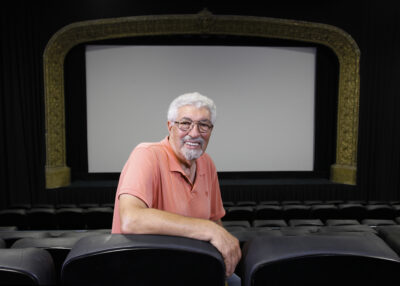
Robert Laemmle, former president of Laemmle Theatres, passed away on Thursday, January 9 in Santa Monica, California, at the age of 89. He is survived by his wife Michelle Laemmle and ex-wife Raquel Shantal, their children Yvonne Ascher & Leonard Laub, Michael & Haidee Ascher, David & Tammy Ascher, Greg & Tish Laemmle, Jessica Laemmle, Carri and Charlie Bisbee, Mitch & Debbie Needelman, Maitland Finley, and Robert Finley, and his sister Mimi Reisbaum and nephews Mark & Jay Reisbaum.

Bob was a kind, generous, happy person who adored his large family. He was also an entrepreneur and film industry trailblazer who lived a classic American immigrant success story. He was born on September 5, 1935 in Paris, France, to Max and Bertha Laemmle. Fleeing the Nazis, they brought him to the United States in 1938, and he lived in the Los Angeles area for the rest of his life. He was a gifted basketball player as a young man, earning All City honors out of Marshall High School during his senior year. He played college basketball at USC, L.A. City College and Cal State L.A. He graduated from Cal State Los Angeles in 1958, later receiving an MBA from UCLA in 1961.

Robert Laemmle: 1935-2025

Founded in 1938 by Robert’s father Max and his uncle Kurt, Laemmle Theatres is a storied exhibitor of foreign and art films in Los Angeles. Bob began working for Laemmle Theatres in 1963 and was instrumental in the rapid expansion of the chain, which he ran until 2004, and ever since has been led by his son Greg. Bob helped redefine the image of an “art house,” programming and innovatively marketing films from around the world while creating brand-new venues for L.A. cinephiles, including the Sunset 5 in West Hollywood, the Monica Film Center in Santa Monica, the Playhouse 7 in Pasadena, the NoHo 7, and the Laemmle Glendale.

Bob was made a Chevalier des Arts et des Lettres, a distinction his father also earned. The highest arts-specific honor conferred by the French government, it is reserved for artists and people who have contributed to the influence of arts in France and throughout the world. It was a testament to the Laemmles’ commitment to and passion for showcasing the best films from around the globe.

Robert Laemmle: 1935-2025

In 2000, the family established the Laemmle Charitable Foundation to give back to the community that has sustained the family business over the decades. Since then, the foundation has awarded over $2.3 million to locally based nonprofits with a focus on social and environmental giving. Past award recipients include Tree People, SOVA, L.A. Family Housing and Food Forward, along with many others.

Funeral services will be held on Monday, January 13 at 10:00 AM at Mount Sinai Memorial Park, located at 5950 Forest Lawn Drive. The family will be receiving visitors at their home in Santa Monica following the burial and will also have open hours in the days to follow.

Donations can be made to the Laemmle Charitable Foundation at www.laemmlefoundation.org or by check mailed to 11523 Santa Monica Boulevard, Los Angeles, CA 90025. Donations should also be made to local charities supporting fire relief efforts.

Recollections regarding Bob Laemmle and Laemmle Theatres are being collected and members of the public are invited to send comments below.

May his memory be for a blessing.

7 Comments Filed Under: News, Greg Laemmle, Press, Tribute

Culture Vulture 2025 ~ more screenings, more places!

December 11, 2024 by Jordan Deglise Moore Leave a Comment

Our eclectic Culture Vulture series returns this weekend. After ten years of screening filmed theater, opera, ballet/dance, gallery/art, and much more at our Town Center/Encino, Glendale, Monica Film Center/Santa Monica, and Claremont 5 theaters, we are now adding our Newhall theater. What’s more, we will now show the films on Saturdays and Sundays at 10:00 A.M. and Mondays at 7:00 P.M. Tickets are now on sale for the first nine films of the new year:
*
February 1-3: Art and Life: The Story of Jim Phillips ~ Embark on the epic ride of Jim Phillips, the genius behind skateboarding and rock culture’s electrifying art. Drawing inspiration from his life in Santa Cruz, California, Jim helped shape the golden era of skateboarding. This documentary explores Jim’s dynamic life and career, showcasing his iconic work that has defined an era and secured his place in modern art history. Jim’s story is a profound narrative of resilience, passion, and enduring artistic vision.
*
February 8-10: Perugino: Eternal Renaissance is a journey to discover Perugino, one of the most revered artists of the 15th Century and to celebrate the 500th Anniversary of his death. Journey through Italy to discover his great masterpieces, from the frescoes of the Sistine Chapel to the two rooms entirely dedicated to him in the National Gallery of Umbria. Spectators will be led on a guided discovery of the artist’s harmonious work: a perfect balance between man and nature, realism and idealism, as seen in paintings such as “The Delivery of the Keys” in the Vatican’s Sistine Chapel, “Lamentation over the Dead Christ” in the Galleria Palatina in Florence, the “Pietà” and “Agony in the Garden” in the Uffizi Gallery.
*
February 22-24: Three-time Olivier Award-winner Sharon D. Clarke is joined by Ncuti Gatwa (Doctor Who; Sex Education) in this joyful reimagining of Oscar Wilde’s most celebrated comedy, The Importance of Being Earnest. While assuming the role of a dutiful guardian in the country, Jack lets loose in town under a false identity. Meanwhile, his friend Algy adopts a similar facade. Hoping to impress two eligible ladies, the gentlemen find themselves caught in a web of lies they must carefully navigate. Max Webster (Life of Pi) directs this hilarious story of identity, impersonation and romance, filmed live at the National Theatre in London.
*
March 1-3: Florence and the Uffizi Gallery is a multi-dimensional journey through the city that was the cradle of the Italian Renaissance. Get an exclusive tour through the most beautiful and representative works of art of the period from Michelangelo and Brunelleschi, to Leonardo and Botticelli, with a detailed central chapter dedicated to the treasure house containing their masterpieces: the Uffizi Gallery.
*
March 8-10: Welcome to Yiddishland offers an upbeat, witty, and timely exploration of a global community of artists rediscovering and revitalizing the endangered Yiddish language through progressive and provocative creative works. As we journey through Yiddishland—not a homeland, but a heartland without borders—we travel across continents, from Melbourne to Berlin, New York to Haifa, meeting a diverse array of individuals who find solace, identity, and inspiration in Yiddish language and culture.
March 15-17: Utilizing the third act motifs of Anton Chekhov’s Three Sisters as a jumping off point, Dmitry Krymov’s Fragment focuses in on Olga (Samanta in this production), the eldest of the three sisters. Like many of Chekhov’s heroes who attempt to overcome fate, she is doomed to fail, but it is in the attempt itself that she becomes so close and dear to the audience. Ultimately, we empathize with and love this very recognizable person who can’t adequately protect herself, her love, or her home.
March 22-24: The Dawn of Impressionism ~ What led to that first groundbreaking Impressionists show 150 years ago? Who were the maverick personalities that wielded their brushes in such a radical and provocative way? The spectacular Musée d’Orsay exhibition brings fresh eyes to this extraordinary tale of passion and rebellion. The story is told not by historians and curators but in the words of those who witnessed the dawn of Impressionism: the artists, press and people of Paris, 1874. See the show that changed everything on the big screen. Made in close collaboration with the Musee d’Orsay and National Gallery of Art, Washington D.C.
March 29-31: Seven-time BAFTA Award-winner Steve Coogan (Alan Partridge, The Trip) plays four roles in the world premiere stage adaptation of Stanley Kubrick’s comedy masterpiece Dr. Strangelove. When a rogue U.S General triggers a nuclear attack, a surreal race takes place, seeing the Government and one eccentric scientist scramble to avert global destruction. This explosively funny satire is led by a world-renowned creative team including Emmy Award-winner Armando Iannucci (The Thick of It, Veep) and Olivier Award-winner Sean Foley (The Upstart Crow, The Play What I Wrote).
*
April 5-7: Far Out: Life On and After the Commune traces fifty years in the lives of a group of New England writers, activists and artists. In 1968, in the middle of a left-wing faction fight, a group of radical journalists left New York City for the country, where they became pioneers in the back-to-the-land and organic farming movement. Blending contemporary interviews and a remarkable trove of original archival footage, Far Out is lively, humorous, inspiring and irreverent. The film is vital, telling the history but hewing to the universal themes of how we grapple–over a lifetime–with politics, relationships, morality, spirituality, civic engagement and finding our home.

Leave a Comment Filed Under: News, Claremont 5, Culture Vulture, Featured Post, Films, Glendale, Newhall, Santa Monica, Theater Buzz, Town Center 5

“A united resistance effort: war balanced by love, bloodshed by beauty.” ~ PORCELAIN WAR opens Friday.

November 27, 2024 by Jordan Deglise Moore Leave a Comment

“Resisting totalitarian aggression is necessary, but holding onto your humanity amid the onslaught is the ultimate pursuit of good. The making of this film — a film full of pathos and violence, porcini and dragonlets — is in and of itself this pursuit.

For its unwavering voice from inside the brutal war in Ukraine calling us to care about those who would sacrifice their lives to defend their humanity and ours, and since at present there is no Sundance Jury Award for best dog, the U.S. Grand Jury Prize: Documentary goes to Porcelain War.” — Sundance Film Festival Jury Statement (2024)

We open Porcelain War this Friday at the Monica Film Center. Co-directors Brendan Bellomo and Slava Leontyev will participate in Q&A’s following the 7:30 PM screenings on November 29 and 30. Film critic Robert Abele will moderate the Saturday Q&A.

“Porcelain War masterfully illustrates the enduring power of art in the face of adversity.” ~ Awards Daily
“A combination of whimsy and devastation.” ~ Wall Street Journal
“This doc’s depiction of Ukraine war horrors will knock you down.” ~ TheWrap
“A united resistance effort: war balanced by love, bloodshed by beauty.” ~ Variety
“A powerful testament to the resilience of the artistic spirit.” ~ Toronto Star
“One more reminder of the vital force that art brings.” ~ RogerEbert.com
“Cinematic essays take many forms: few are as fragile and contemplative as Porcelain War.” ~ Screen Daily

Leave a Comment Filed Under: News

Tickets for THE ROOM NEXT DOOR, Almodóvar’s first English-language film, go on sale on Friday.

November 19, 2024 by Jordan Deglise Moore 1 Comment

On December 20th we are opening Pedro Almodóvar’s first movie in English, The Room Next Door, at the Royal. We’ll bring it to Claremont, Glendale, Newhall, North Hollywood, and Encino in January. Julianne Moore and Tilda Swinton star as two friends who reconnect after decades apart and embark on an unusual new phase of their friendship. Writing in Time Magazine, Stephanie Zacharek describes how “the colors of The Room Next Door are its secret message, a language of pleasure and beauty that reminds us how great it is to be alive. If it’s possible to make a joyful movie about death, Almodóvar has just done it.”

 Tickets for THE ROOM NEXT DOOR, Almodóvar's first English-language film, go on sale on Friday.

“The Room Next Door, as driven by the scalding humanity of Swinton’s performance, lifts you up and delivers a catharsis. The movie is all about death, yet in the unblinking honesty with which it confronts that subject, it’s powerfully on the side of life.” ~ Owen Gleiberman, Variety

“In these intensely moving moments it feels as if the two artists — [James] Joyce and Almodóvar — are connecting across time, desperate to express the ineffable, and keen to capture a creative moment that honours both the living and the dead.” ~ Kevin Maher, Times

Tickets for THE ROOM NEXT DOOR, Almodóvar's first English-language film, go on sale on Friday.

“The Room Next Door turns into something spiky, unnerving, and at times joyously silly.” ~ Leo Robson, New Statesman

Almodóvar, Moore, and Swinton spoke about the film over the weekend at a Deadline Contenders panel discussion. “It’s wonderful. He really honors the female experience,” said Moore. “I think it’s something that he talks about, sitting under the kitchen table when his mother was talking to her friends and absorbing those stories and how powerful they were, and understanding that point of view. I think he’s always in that feminine point of view. Like I said, he honors that world. You feel very, very seen as an actor when you work with Pedro.”

Tickets for THE ROOM NEXT DOOR, Almodóvar's first English-language film, go on sale on Friday.

“I’m a very dull or heady director,” said Almodóvar. “I say to the actors many, many, many things, and what I learned about these two is that perhaps I don’t need to say so much information to the actors. There was one very important [scene of Moore reading] the letter at the end. For me, it was very important. I was almost crying when I talked to her and I said, ‘Well, Julianne, this is what I want for this letter.’ [She] said, ‘Pedro, please let me do it, and after that, you give me all the indications.’ And she was right. When she just read it, I mean, I couldn’t believe it. I didn’t intervene, but it was more than perfect. So I learned by then that perhaps I don’t need to tell them so many things to the actors.”

1 Comment Filed Under: Featured Films, Claremont 5, Films, Glendale, Newhall, News, NoHo 7, Q&A's, Royal, Theater Buzz, Town Center 5

Stephen Bogart and the BOGART: LIFE COMES IN FLASHES filmmakers in person for Q&A’s this week at the Royal and Town Center.

November 13, 2024 by Jordan Deglise Moore Leave a Comment

Bogart: Life Comes in Flashes in-person Q&A’s with director Kathryn Ferguson: Friday, 11/15, 7:20 PM at the Royal, moderated by Grae Drake (Entertainment Journalist and Film Critic, Rotten Tomatoes & MovieFone); Saturday, 11/16, 7:10 PM show at the Town Center, moderated by Claudia Puig (NPR Film Critics/President L.A. Film Critics Association). Stephen Bogart will participate in a Q&A after the Saturday, 11/16, 1:20 PM show at the Royal; Scott Mantz (former Access Hollywood film critic) will moderate.

Leave a Comment Filed Under: News, Featured Films, Filmmaker in Person, Films, Q&A's, Royal, Theater Buzz, Town Center 5

  • « Previous Page
  • 1
  • 2
  • 3
  • 4
  • 5
  • 6
  • …
  • 79
  • Next Page »

Search

Instagram

You heard the man! bazluhrmann says "Go see a movi You heard the man! bazluhrmann says "Go see a movie with theatre owners that care! Go see it at a Laemmle!"

🎟️🎟️
@LaemmleMonicaFilmCenter (Santa Monica)
@Laemmle_Royal (West Los Angeles)
@LaemmleGlendale (Glendale)
@LaemmleNoHo (North Hollywood)
@LaemmleClaremont (Claremont)
@LaemmleNewhall (Newhall)
@LaemmleTownCenter (Encino)
🎟️🎟️

🎬 From the director of Moulin Rouge! and Elvis, Baz Luhrmann has a new documentary: "EPiC: Elvis Presley in Concert." Catch it at a Laemmle Theatre in February!

#laemmlelove #laemmle #arthouse #tishlaemmle @greglaemmle
OG video from TishLaemmle
Part of the #WorldwideWednesday Series! 🎟️ laem.ly Part of the #WorldwideWednesday Series! 🎟️ laem.ly/4lT0rcd
#TheDialoguePolice
In Sweden, people have a right to freedom of expression, and the dialogue police are there to protect that right. Created in the wake of 2001 anti-EU protests in Gothenburg, where police shot three protesters, the unit is tasked with managing relationships with demonstrators to prevent violence (rather than reacting to it) and to de-escalate effectively, when necessary.
Part of the #WorldwideWednesday Series! 🎟️ laem.ly Part of the #WorldwideWednesday Series! 🎟️ laem.ly/3JCaLYV
#UnderTheFlagsTheSun
Unearthed secrets of Stroessner's 35-year Paraguayan reign. Never-before-seen footage exposes a brutal dictatorship's lasting impact.  #documentary #history #Paraguay #dictatorship #Stroessner.
🍿 EXCLUSIVE POPCORN BUCKET GIVEAWAY! 👉 ENTER IN B 🍿 EXCLUSIVE POPCORN BUCKET GIVEAWAY! 
👉 ENTER IN BIO!

Two paths. One epic conclusion. Return to Oz!

🎟️ GET TICKETS:  IN BIO!
Follow on Instagram


Laemmle Theatres

Laemmle Theatres
Tickets: http://laemmle.com/film/artfully-united | Subscribe: http://bit.ly/3b8JTym | ARTFULLY UNITED is a celebration of the power of positivity and a reminder that hope can sometimes grow in the most unlikely of places. As artist Mike Norice creates a series of inspirational murals in under-served neighborhoods in and around Los Angeles, the Artfully United Tour transforms from a simple idea on a wall to a community of artists and activists coming together to heal and uplift a city.

Tickets: http://laemmle.com/film/artfully-united

RELEASE DATE: 10/17/2025
Director: Dave Benner
Cast: Mike Norice

-----
ABOUT LAEMMLE: Since 1938, Laemmle [Theatres] has been showing the finest independent, arthouse, and international films.

Subscribe to Laemmle's E-NEWSLETTER: http://bit.ly/3y1YSTM
Visit Laemmle.com: http://laemmle.com
Like LAEMMLE on FACEBOOK: http://bit.ly/3Qspq7Z
Follow LAEMMLE on TWITTER: http://bit.ly/3O6adYv
Follow LAEMMLE on INSTAGRAM: http://bit.ly/3y2j1cp
Tickets: http://laemmle.com/film/brides | Subscribe: http://bit.ly/3b8JTym | Nadia Fall's compelling debut feature offers a powerful and empathetic look into the lives of two alienated teenage girls, Doe and Muna, who leave the U.K. for Syria in search of purpose and belonging. By humanizing its protagonists and exploring the complex interplay of vulnerability, societal pressures, and digital manipulation, BRIDES challenges simplistic explanations of radicalization.

Tickets: http://laemmle.com/film/brides

RELEASE DATE: 9/24/2025
Director: Nadia Fall

-----
ABOUT LAEMMLE: Since 1938, Laemmle [Theatres] has been showing the finest independent, arthouse, and international films.

Subscribe to Laemmle's E-NEWSLETTER: http://bit.ly/3y1YSTM
Visit Laemmle.com: http://laemmle.com
Like LAEMMLE on FACEBOOK: http://bit.ly/3Qspq7Z
Follow LAEMMLE on TWITTER: http://bit.ly/3O6adYv
Follow LAEMMLE on INSTAGRAM: http://bit.ly/3y2j1cp
Tickets: http://laemmle.com/film/writing-hawa | Subscribe: http://bit.ly/3b8JTym | Afghan documentary maker Najiba Noori offers not only a loving and intimate portrait of her mother Hawa, but also shows in detail how the arduous improvement of the position of women is undone by geopolitical violence. The film follows the fortunes of Noori’s family, who belong to the Hazaras, an ethnic group that has suffered greatly from discrimination and persecution.

Tickets: http://laemmle.com/film/writing-hawa

RELEASE DATE: 10/8/2025

-----
ABOUT LAEMMLE: Since 1938, Laemmle [Theatres] has been showing the finest independent, arthouse, and international films.

Subscribe to Laemmle's E-NEWSLETTER: http://bit.ly/3y1YSTM
Visit Laemmle.com: http://laemmle.com
Like LAEMMLE on FACEBOOK: http://bit.ly/3Qspq7Z
Follow LAEMMLE on TWITTER: http://bit.ly/3O6adYv
Follow LAEMMLE on INSTAGRAM: http://bit.ly/3y2j1cp
Load More... Subscribe

Recent Posts

  • Laemmle Holiday Gifts: Wear Your Love of Cinema (Literally)
  • Resurrection: Inside Bi Gan’s Cinematic Dreamscape
  • Anniversary Classics Presents: Power, Politics, and Passion in Nixon and Doctor Zhivago

Archive

Featured Posts

An “embrace of what makes us unknowable yet worthy of forgiveness,” A LITTLE PRAYER opens Friday at the Claremont, Newhall, Royal and Town Center.

Leaving Laemmle: A Goodbye from Jordan