The Official Blog of Laemmle Theatres.

Laemmle Theatres

Film Reviews & Previews

  • All
  • Theater Buzz
    • Claremont 5
    • Glendale
    • Newhall
    • NoHo 7
    • Royal
    • Santa Monica
    • Town Center 5
  • Q&A’s
  • Locations & Showtimes
    • Claremont
    • Glendale
    • NewHall
    • North Hollywood
    • Royal (West LA)
    • Santa Monica
    • Town Center (Encino)
  • Film Series
    • Anniversary Classics
    • Culture Vulture
    • Worldwide Wednesdays
  • Facebook
  • Instagram
  • TikTok
  • YouTube

You are here: Home / Featured Films

Living With the Volcano: Rosi’s Mesmerizing ‘Pompei: Below the Clouds’

March 4, 2026 by Lamb Laemmle Leave a Comment

Nearly two thousand years after Mount Vesuvius buried Pompeii in ash, the volcano remains, less a relic than a constant, ambient presence. In Pompei: Below the Clouds, director Gianfranco Rosi turns his gaze toward the modern communities that live in Vesuvius’ shadow, culminating in a study of daily life shaped by history, haunted by catastrophe, and suspended between past and present.

Pompei: Below the Clouds

Catch Pompei: Below the Clouds in theaters beginning March 13th at the Laemmle Royal.

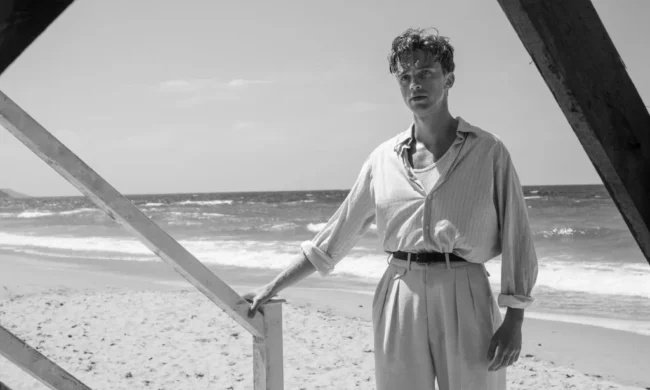
Rosi is no stranger to immersive, place-based filmmaking. The Golden Lion-winning Sacro GRA and the Golden Bear recipient’s Fire at Sea established him as one of contemporary cinema’s greatest observers, an artist whose documentaries feel at once intimate and planetary. Shot over three years in and around Naples, Pompei: Below the Clouds may be among his most humane works, yet it hums with unease. Vesuvius does not dominate the frame; instead, it lingers in the background, a calm but potentially devastating fact of life.

Working in luminous black-and-white cinematography, Rosi captures a Naples veiled in silvery cloud and sea mist. Fumaroles exhale pale steam near the volcano’s summit while, down below, the city exhales its own brands of smoke: industrial plumes, street fires, and the everyday combustion of urban existence. The threat of disaster, natural or human-made, never quite recedes.

Pompei: Below the Clouds

Elsewhere, archaeologists carefully brush dirt from newly unearthed bones in Pompeii’s ruins, while police pursue tomb robbers tunneling through the storied soil. In a museum basement, a curator tends to long-buried statues and fragments as if they were old friends. “Time destroys everything, but it also preserves everything,” one historian reflects, a sentiment that becomes the film’s quiet thesis.

With its spare, tactile soundscape—blending music with the subterranean murmurs of earth and water—Pompei: Below the Clouds listens as much as it observes. Rosi isn’t interested in spectacle; he’s attentive to rhythms, textures, and the fragile balance between endurance and collapse. The film ultimately suggests that living beneath Vesuvius is less about fearing apocalypse than about negotiating coexistence with it. Past and present aren’t opposites here but layers, compacted together like geological strata. In patiently recording how people work, worry, study, remember, and simply pass the time, Rosi masterfully paints a portrait of a community suspended between memory and possibility, where history is not a distant chapter but a daily companion.

“An intensely disquieting, utterly distinctive film and a superb final panel to his [Italy-focused] triptych.” – Peter Bradshaw, The Guardian

“As a filmmaker, Rosi acts as both guide and preservationist, making movies that may one day be uncovered like statues below ground, dug up by future archeologists trying to grasp how we lived.” – Jordan Mintzer, The Hollywood Reporter

“There are many ways to live around an active volcano, and this humming, keen-eyed film is interested in all of them.” – Guy Lodge, Variety

Leave a Comment Filed Under: Featured Films, Royal Tagged With: documentary, Gianfranco Rosi, Italian, Pompei: Below the Clouds

‘Charliebird’: When the Music Doesn’t Fix Everything

March 4, 2026 by Lamb Laemmle Leave a Comment

How do you make space for joy inside a children’s hospital? In Charliebird, winner of the 2025 Tribeca Film Festival’s US Narrative Feature Prize, the answer is neither grand nor sentimental. It’s a ukulele carried from room to room, a pop song request taken seriously, or a willingness to sit beside someone who doesn’t feel like singing.

Samantha Smart in Charliebird

Tune into Inside the Arthouse to hear director Libby Ewing discuss her new hit film with co-hosts Greg Laemmle and Raphael Sbarge, or come see Ewing, lead actors Samantha Smart and Gabrielle Ochoa Perez, and production designer Emily Li participate in live Q&As following the film’s one-night stay at the Laemmle Royal on March 5th, or to kick off its theatrical run at Glendale beginning March 6-8th.

Charliebird centers on Al (Smart), a music therapist working with seriously ill young patients. Her job description ranges from lullabies for restless five-year-olds to tracking down the right track to coax a guarded teenager into cracking a smile. It’s delicate work—sometimes playful, sometimes devastating—yet the film resists any temptation to frame it as miraculous. Music here doesn’t cure; it connects.

That connection proves hardest to forge with Charlie (Perez), a sharp, funny seventeen-year-old who has spent years in and out of hospitals. Convinced that adults are shielding her from the truth about her condition, Charlie has little patience for forced cheer. What unfolds between her and Al is not a tidy inspirational arc but a gradual, hard-earned friendship. They talk about sex and regret, about fear and boredom, about the awkwardness of being young in a body that won’t cooperate. Their conversations are by turns irreverent and raw, sidestepping clichés about generational divides or saintly caregivers.

Samantha Smart in Charliebird

The film’s power lies in that restraint. Rather than building toward sweeping melodrama, Charliebird offers glimpses: a Snow White costume that doesn’t quite land, a hospital corridor that feels too narrow, a moment of laughter that catches both women off guard. Cinematographer Luca Del Puppo shoots in an unusual, vertically compressed frame that at first feels constricted, then intimate, as though we’re being invited into a private space. This visual approach mirrors the story itself: focused, uncluttered, attentive to faces.

Smart’s performance as Al reveals a woman whose devotion to her patients coexists with her own unresolved struggles. Perez, meanwhile, delivers a breakout turn, allowing Charlie’s sarcasm to soften into vulnerability without losing her edge.

Ewing makes bold choices in the film’s second half, embracing ambiguity instead of easy answers. Not every question is resolved. Not every outcome is spelled out. The film trusts its audience to sit with uncertainty—much as its characters must.

Ultimately, Charliebird argues for the value of presence over perfection. It suggests that even when one’s circumstances can’t be changed, a shared joke, an honest confession, or a song played slightly off-key can resonate the longest.

“An emotional roller coaster that will inspire viewers to cherish every day.” – Thomas Duffy, Film Book

“A simple, elegant look at friendship and finality.” – Christian Zilko, IndieWire

Leave a Comment Filed Under: Actors in Person, Featured Films, Filmmaker in Person, Glendale, Royal Tagged With: Charliebird, Gabrielle Ochoa Perez, Greg Laemmle, Inside the Arthouse, Libby Ewing, Raphael Sbarge, Samantha Smart

Roommates, Revolution, and Reverie: Rediscovering Visconti’s ‘Conversation Piece’

February 17, 2026 by Lamb Laemmle Leave a Comment

This month, a revival worth savoring is headed back to the big screen: Conversation Piece, the late-period chamber drama from acclaimed Italian filmmaker Luchino Visconti, returns in a new 4K restoration courtesy of Kino Lorber. If you’ve never encountered this strange, elegant, faintly scandalous film, this theatrical reissue is the ideal way to step inside its rarefied, decaying world.

Roommates, Revolution, and Reverie: Rediscovering Visconti’s 'Conversation Piece'

Catch Conversation Piece in its much-anticipated re-release beginning February 20th at the Laemmle Royal.

Set almost entirely inside a grand Roman apartment—a practical concession to Visconti’s waning health—the film unfolds like a live-in painting: fitting, since its unnamed protagonist, a retired American professor played by Burt Lancaster, specializes in collecting “conversation pieces,” those intimate group portraits of domestic life. His own life, however, is all but sealed off: books, art, routine, and a heavy dose of solitude. That carefully controlled environment is suddenly upended when the Countess Bianca Brumonti (played with Circean glamour by Silvana Mangano) bullies her way into renting the upstairs flat, bringing along her daughter, her daughter’s boyfriend, and her volatile young lover Konrad, portrayed by longtime Visconti muse Helmut Berger.

What follows is less a traditional narrative than an all-out invasion, as noise, sex, politics, emotional turbulence, and generational upheaval flood the professor’s cloistered existence. Renovations begin without permission; parties erupt; strangers roam the halls. The professor protests (albeit mildly), yet inexorably finds himself drawn into their disorder, especially toward Berger’s Konrad, whose swaggering vulgarity and wounded intelligence combine to create a dangerous gravitational pull.

Roommates, Revolution, and Reverie: Rediscovering Visconti’s 'Conversation Piece'

Visconti, working after a debilitating stroke and reportedly directing portions of the film from his wheelchair, turns such limitations into style. The film’s confined setting becomes a pressure cooker of class tension, erotic charge, and ideological debate. At times it plays like tragic farce, at others like philosophical confession, resulting in a tonal high-wire act—stately composition colliding with emotional disarray—that gives the movie its peculiar, lingering power.

Lancaster’s casting is part of the fascination. Long associated with physical dynamism and outward force, here he is turned inward: restrained, observant, aching. Whether you view the performance as daringly subdued or intriguingly misaligned, it’s impossible to look away. Berger, by contrast, is all sharp edges and dangerous charm, strutting and smirking through the film like a beautiful provocation.

Conversation Piece is about aging, envy of youth, sexual politics, class hypocrisy, and the uneasy coexistence of radical ideas with decadent taste. It’s also, not incidentally, wickedly funny in stretches, with Visconti allowing the absurdity of his characters’ self-justifications to show through the gilt frame.

Seeing this film restored in 4K reveals the tactile richness of its interiors—fabrics, paintings, skin, candlelight—while accentuating the painterly intent behind every composition. Like the artworks the professor cherishes, this restoration rewards close viewing and theatrical scale.

In short: a film about people who shouldn’t live together, restored so beautifully that you’ll be very glad they do.

(At least for two hours.)

Leave a Comment Filed Under: Anniversary Classics, Cinematic Classics, Featured Films, Films, Repertory Cinema, Royal Tagged With: Burt Lancaster, Conversation Piece, Luchino Visconti

Fathers, Sons, and a Broken Election: Inside ‘My Father’s Shadow’

February 10, 2026 by Lamb Laemmle Leave a Comment

Akinola Davies Jr.’s My Father’s Shadow, the first-ever Nigerian film to be recognized among the Cannes Film Festival’s Official Selection, plays like a remembered daydream stretched across a political fault line. Set during Nigeria’s fraught 1993 presidential election crisis, the film filters national upheaval through the perspective of two young brothers who’ve been granted a rare day with their mostly absent father. The result is both a coming-of-age story and an act of cinematic reclamation: personal memory reframed as national history.

Fathers, Sons, and a Broken Election: Inside 'My Father’s Shadow'

Catch My Father’s Shadow in theaters beginning February 13th at the Laemmle Royal.

Told from the perspective of eight-year-old Akin and his older brother Remi (played by real-life siblings Godwin Chiemerie and Chibuike Marvelous Egbo), the film begins in a rural village where routine boredom is broken by the sudden return of the boys’ father, Folarin (Sope Dirisu). Charismatic, imposing, and emotionally opaque, he arrives without explanation and impulsively decides to take the boys with him to Lagos. Their mother is absent; the boys readily obey.

Folarin’s mission is simple: collect months of unpaid wages before the country’s political uncertainty curdles into chaos. But the errand swiftly becomes a wandering circuit. The boys encounter men who treat Folarin with peculiar deference, calling him “boss” and “leader.” They are told to show respect to strangers presented as quasi-uncles. Davies smartly keeps exposition thin; political crisis is not explained, but is overheard, glimpsed, felt.

What gives the film its emotional core is the gradual reshaping of the boys’ image of their father. Folarin begins as a near-mythic figure: commanding, sharply dressed, unquestionable. Over the course of the day, however, he becomes both more human and more contradictory. He is strict, evasive, possibly unfaithful, and frequently distracted, yet he is also attentive in bursts, showing them city landmarks, recounting his courtship of their mother, teaching Akin to swim, and bending rules to let them explore forbidden spaces. His philosophy of adulthood—that everything is sacrifice, and one must pray not to sacrifice the wrong thing—lands with tragic force in the context of both family and nation.

Fathers, Sons, and a Broken Election: Inside 'My Father’s Shadow'

The film’s governing question emerges when one of the boys repeats his mother’s strange dictum: that their father’s absence is proof of love, because he is away earning money for them, just as God, who also loves them, remains unseen. Is absence love? The film does not provide an easy answer, but lets the question echo against images of political upheaval, paternal limitation, and inherited memory.

By its end, My Father’s Shadow has outgrown its original container as a story about one family on one day into an ambitious exploration about how children assemble identity from partial knowledge, how nations fracture private lives, and how cinema can serve as an instrument of emotional archaeology. It turns political rupture into family myth—and family myth into something like scripture.

“British-Nigerian film-maker Akinola Davies Jr makes a strong directorial debut with this deft and intriguing tale of an absent father briefly reunited with his two young sons.” – Peter Bradshaw, The Guardian

“Akinola Davies Jr. announces himself as a major cinematic voice.” – Murtada Elfadl, Variety

“The historic crisis [of Nigeria’s annulled 1993 election] makes the personal tale reverberate with an inner immensity.” – Richard Brody, The New Yorker

Leave a Comment Filed Under: Awards, Featured Films, Films, Royal Tagged With: Akinola Davies Jr., Awards, Cannes, International Cinema, My Father's Shadow, Nigeria

Carmen Maura Shines in Maryam Touzani’s Tender ‘Calle Málaga’

February 3, 2026 by Lamb Laemmle Leave a Comment

For generations of moviegoers, Carmen Maura’s face is inseparable from the films of Pedro Almodóvar, beginning with their first collaboration forty-five years ago and continuing across seven defining features of modern Spanish cinema. In Calle Málaga, Maura reminds us why she remains one of the screen’s most expressive and emotionally generous performers, delivering a luminous late-career lead performance that is by turns funny, sensual, stubborn, and deeply moving.

Caren Maura in Calle Malaga

Catch Calle Malaga on the big screen beginning February 13th at the Laemmle Monica and Town Center theaters.

Director Maryam Touzani’s film centers on María Ángeles, an elderly Spanish widow living in Tangier, Morocco, where she has built a comfortable life of routine, friendship, and hard-earned independence. Her days are filled with small but sustaining pleasures: greeting market vendors by name, tending balcony flowers, listening to romantic boleros, and visiting the cemetery where her husband and friends are buried. When her daughter arrives from Madrid with urgent financial troubles and a plan to sell the apartment, María Ángeles is suddenly confronted with the loss not just of her home, but of her autonomy.

The premise may be simple, but its execution is rich in both detail and feeling. Touzani, working from a script co-written with her husband and fellow filmmaker Nabil Ayouch and inspired by her grandmother’s actual experiences, treats domestic space as emotional territory. Rooms, objects, and streets are not background but biography, containers of memory that cannot be easily boxed up and sold. The film understands how profoundly place and identity intertwine, especially later in one’s life.

Maura carries the film with masterful aplomb. The shifts in her inner life register instantly: pride wounded, resolve rekindled, mischief flashing back into her eyes. She never reduces María Ángeles to a stock “feisty elder” archetype, instead grounding her resistance in believable portrayals of dignity and desire. Even moments that do threaten to tip into sentimentality remain anchored by her naturalism and innate charm.

Carmen Maura Shines in Maryam Touzani’s Tender 'Calle Málaga'

The mother-daughter conflict is drawn with melancholy sharpness, capturing how love and resentment can calcify over time. Yet the film makes room for surprise and renewal. After a forced move into assisted living—and a quick, cleverly engineered escape—María Ángeles begins rebuilding her prior life on her own terms, launching a small neighborhood soccer-night and gradually forming an unexpected bond with a local antiques dealer. What follows includes one of the film’s most refreshing elements: a tender, late-life romantic and sexual awakening, portrayed with warmth and wit.

Above all, Calle Málaga stands as a worthy showcase for Carmen Maura, an icon revisiting familiar themes of womanhood, independence, and reinvention, while proving she remains as captivating now as at the zenith of her career.

“A sweet star showcase that belongs unequivocally to the incandescent Maura, whose earthy naturalness, sly humor and tenacious spirit feed a direct link back to her Almodóvarian glory days.” – David Rooney, The Hollywood Reporter

“A bright, light confection about resilience and joie de vivre into old(er) age.” – Boyd van Hoeij, Screen Daily

Leave a Comment Filed Under: Featured Films, Films, Monica Film Center, Santa Monica, Town Center 5 Tagged With: Calle Malaga, Carmen Maura, International Cinema, Maryam Touzani, Pedro Almodóvar

A Poet: A Darkly Comic Fable About Art, Failure, and the Cost of Belief

January 21, 2026 by Lamb Laemmle Leave a Comment

Simón Mesa Soto’s A Poet is a caustic, unexpectedly tender portrait of artistic failure and the uneasy hope that comes with believing in someone else. Set in Medellín, the film follows a middle-aged, alcoholic poet whose early promise has long since calcified into bitterness and artistic paralysis. When he encounters a gifted teenage student from a working-class background, he seizes the chance to reinvent himself as a mentor, projecting his lost ambitions onto her raw natural talent. What unfolds is a sharply observed fable about ego, exploitation, and the uneasy line between nurturing one’s art and using it as a lifeline.

Ubeimar Rios in A Poet

Catch A Poet in theaters beginning January 30th at the Laemmle Royal, or at Glendale beginning February 6th.

Oscar Restrepo (portrayed by newcomer Ubeimar Rios with remarkable authenticity) is introduced as a man at war with the world and himself. He drinks too much, picks arguments about poetry with strangers, and torpedoes rare professional opportunities through self-sabotage and disdain. Yet Soto never treats Oscar as a punchline alone. His failures are rendered with specificity and compassion, revealing a man who grasps the general shape of the life he wanted, even as he proves incapable of living it. Oscar’s volatility is inseparable from his sincerity; his tragedy is not that he lacks talent, but that he cannot reconcile art with adulthood.

The film’s emotional axis shifts when Oscar begins teaching at a public high school and encounters a student, Yurlady (Rebeca Andrade), whose writing displays clarity, intelligence, and an unvarnished sense of voice. Unlike Oscar, she approaches art pragmatically, weighing its value against economic reality and familial obligations. Their relationship is neither inspirational nor redemptive in the traditional sense: Oscar is an erratic, often irresponsible guide, while his protégée resists being molded into a passive, yielding symbol. Their bond is defined less by uplift than by friction, an uneasy negotiation between belief and self-preservation.

Ubeinar Rios and Rebecca Andrade in A Poet

A Poet sharpens its satire as the pair enter elite literary spaces, where well-funded institutions eagerly embrace the young writer as a marketable emblem of authenticity. Here, Soto skewers the art world’s hunger for narratives that flatter its own virtue, exposing a system in which mentorship, patronage, and diversity often function as performance. The film’s critique is pointed but never smug, grounded in lived contradiction rather than broad caricature.

Shot on grainy 16mm, A Poet has a tactile, slightly unmoored quality that suits its blend of farce and melancholy. Bursts of music heighten the absurdity of Oscar’s misadventures while allowing moments of genuine tenderness to land unforced. In charting the gap between artistic idealism and material reality, Soto delivers a film that is funny, bruising, and quietly devastating—a story not about succeeding in art, but about what it costs to keep believing in it at all.

“Rios is so believable as Oscar, you’d think this film was a documentary of his life.” – Murtada Elfadl, Variety

Leave a Comment Filed Under: Featured Films, Films, Glendale, Royal Tagged With: A Poet, Rebeca Andrade, Simón Mesa Soto, Ubeimar Rios

Culture Vulture: Big-Screen Art, Ideas, and Performance at Laemmle

January 13, 2026 by Lamb Laemmle Leave a Comment

Culture Vulture is Laemmle Theatres’ ongoing invitation to experience world-class art, performance, and cultural storytelling on the big screen and with an audience at your side. Curated from across the ballet, opera, theatre, fine art, and documentary landscapes, this series brings exceptional works to the Laemmle Glendale, Monica, and Town Center locations on Saturday and Sunday mornings at 10:00 a.m. and Monday evenings at 7:00 p.m.

Maus by Art Spiegelman

Below are the next five Culture Vulture presentations, each offering a distinct outlook on history, creativity, and human expression:

The Hell of Auschwitz: MAUS by Art Spiegelman (January 24)
Blending humor, rigor, and deep emotional intelligence, this documentary explores Art Spiegelman’s landmark graphic novel Maus, a work that permanently transformed how the Holocaust could be represented. By recounting both his father Vladek’s survival of Auschwitz and their fraught father-son relationship in postwar New York, Spiegelman forged a new artistic language, one that made space for memory, trauma, and inherited silence. Director Pauline Horovitz approaches Maus not just as cultural history, but as a personal reckoning, examining its enduring impact through the lens of the “second generation.”

Accompanied by: EGG CREAM (short)
Screening alongside Maus is this affectionate documentary short about the iconic New York City drink that contains neither egg nor cream. Through family stories, archival material, and neighborhood rituals, “Egg Cream” is a meditation on Jewish-American identity, immigration, and the bittersweet pull of nostalgia—small pleasures standing in for much larger histories.

Hamlet – National Theatre Live (January 31)
Shakespeare’s most enduring tragedy returns in a filmed presentation from London’s National Theatre. This production emphasizes Hamlet’s psychological intimacy and moral uncertainty, bringing fresh immediacy to a timeless play about grief, power, and the impossibility of clean action. Captured live for the screen, it preserves the electricity of theatre while granting audiences an unusually close encounter with one of drama’s greatest roles.

Frida Kahlo self-portrait

Frida: Viva la Vida (February 7)
This vivid documentary portrait of Frida Kahlo draws directly from the artist’s own letters, diaries, and writings to illuminate her life beyond the rich mythology she left behind. Moving seamlessly between themes of art, illness, love, and political commitment, the film illuminates Kahlo as both fiercely self-aware and profoundly vulnerable, tracing how pain and creativity became inseparable forces in her work.

Ain’t No Back to a Merry-Go-Round (February 21)
An urgent and inspiring civil rights documentary, Ain’t No Back to a Merry-Go-Round examines and unpacks the first organized interracial protest in U.S. history. When Black students and white allies joined together in 1960 to desegregate a Maryland amusement park, their sustained picket line became a training ground for future Freedom Riders and a crucible for grassroots activism. Told through immersive storytelling, archival footage, and firsthand accounts, the film expounds upon a pivotal but largely forgotten chapter of American protest history.

Culture Vulture: Big-Screen Art, Ideas, and Performance at Laemmle


Water Lilies of Monet: The Magic of Water and Light (March 7)
This visually sumptuous film immerses viewers in Claude Monet’s lifelong obsession with water, reflection, and light. Moving between art history and sensory experience, it explores how the Water Lilies series redefined modern painting, and how Monet’s garden at Giverny became both subject and sanctuary. Seen on the big screen, the paintings’ scale, texture, and color take on renewed power.

Culture Vulture is an ongoing celebration of art in all possible forms. Whether you’re drawn to history, performance, or visual beauty, these curated screenings offer a rare chance to encounter such landmark works on the big screen, as they were meant to be experienced. Buy your tickets today and prepare to be wowed!

Leave a Comment Filed Under: Culture Vulture, Featured Films, Films, Glendale, Monica Film Center, Santa Monica, Town Center 5 Tagged With: Ain’t No Back to a Merry-Go-Round, Art Spiegelman, Claude Monet, Culture Vulture, Frida Kahlo, Frida: Viva la Vida, Hamlet, The Hell of Auschwitz: MAUS by Art Spiegelman, Water Lilies of Monet: The Magic of Water and Light

Father Mother Sister Brother: Jim Jarmusch’s Quiet Meditation on Family Ties

January 6, 2026 by Lamb Laemmle Leave a Comment

Jim Jarmusch’s Father Mother Sister Brother, winner of the coveted Golden Lion at the 2025 Venice Film Festival, offers a signature turn from one of independent cinema’s most distinctive voices, culminating in a gentle, contemplative triptych that quietly observes the tangled, often unspoken dynamics between children and their parents. Opening January 9th at the Laemmle Monica, Claremont, NoHo, and Glendale theaters, the film invites audiences into three subtly interconnected stories about siblings, aging, and legacy, all rendered with the iconoclastic filmmaker’s characteristic blend of wit, understatement, and emotional precision. Tune into Inside the Arthouse to hear Jarmusch discuss his latest work with co-hosts Greg Laemmle and Raphael Sbarge ahead of its debut.

Vicky Krieps, Cate Blanchett and Charlotte Rampling in Father Mother Sister Brother.

Structured in three chapters set in New Jersey, Dublin, and Paris, Father Mother Sister Brother foregrounds ordinary domestic encounters over flashy, overt drama. In the first story, adult siblings Jeff (Adam Driver) and Emily (Mayim Bialik) make a quiet, tentative journey to visit their widowed father (Tom Waits) at his remote home, negotiating the awkwardness and muted affection that define long years of estrangement. Jarmusch’s direction attends closely to how the three characters move and speak around one another, revealing a lifetime of shared history through pauses, glances, and half-finished thoughts.

The second segment moves to Dublin, where an accomplished novelist (Charlotte Rampling) receives her rarely-seen daughters Timothea (Cate Blanchett) and Lilith (Vicky Krieps) for an annual tea. Here, the emotional choreography is just as rife: politeness, competition, and unspoken disappointment circulate beneath measured exchanges, offering a quietly sharp exploration of how adult relationships with parents can continue to bear the marks of youth.

In the final story, set in Paris, twins Skye (Indya Moore) and Billy (Luka Sabbat) sift through their deceased parents’ belongings, reminiscing and confronting the traces of the lives that shaped them. Minimalist but resonant, this segment emphasizes memory, loss, and the ways shared history lingers in objects and quiet conversations.

Adam Driver and Mayim Bialik in Father Mother Sister Brother

While some viewers may find Jarmusch’s pared-back rhythms and emphasis on silence challenging, the film’s rewards lie in its textured, patient observation of ordinary life and its capacity to reflect shared human experience without forcing tidy resolutions. The cast—a blend of longtime Jarmusch collaborators and fresh faces—brings this world to life with subtle (yet thematically crucial) commonalities, underscoring the film’s unstated hypothesis that, whatever differences may exist between us, family dynamics follow a universal language.

In a cinematic landscape that often equates drama with spectacle, Jarmusch’s latest anthology stands apart as a humane, reflective study of the ties that bind us—sometimes awkwardly, sometimes silently, but always with a strange, persistent tenderness.

“What makes the triptych of thematically connected snapshots memorable is its deftly unfussy observation of the unknowability that can endure among people who share the same bloodlines.” – David Rooney, The Hollywood Reporter

“[The film’s] laid-back, liquid rhythms are a perfect mood-setter for a film that also understands that loving someone doesn’t mean you know them all that well.” – Jessica Kiang, Variety

Leave a Comment Filed Under: Claremont 5, Featured Films, Films, Glendale, Greg Laemmle, Inside the Arthouse, Laemmle Virtual Cinema, Monica Film Center, NoHo 7, Santa Monica Tagged With: Adam Driver, Cate Blanchett, Father Mother Sister Brother, Greg Laemmle, Indya Moore, Inside the Arthouse, Jim Jarmusch, Luka Sabbat, Mayim Bialik, Raphael Sbarge, Tom Waits, Vicky Krieps

  • « Previous Page
  • 1
  • 2
  • 3
  • 4
  • 5
  • …
  • 65
  • Next Page »

Search

Instagram

🚀 STOP! THAT! TRAIN! AN EPIC PRIZE PACK GIVEAWAY! 🚀 STOP! THAT! TRAIN! AN EPIC PRIZE PACK GIVEAWAY!

👉 ENTER in BIO!
#StopThatTrain - A NYT Critic’s Pick! sees RuPaul and many of your favorite DRAG RACE stars in a high speed comedy aboard a locomotive headed for disaster.

⭐️ Starring @rupaulofficial, directed by @adamshankman, produced by @worldofwonder, distributed by @bleeckerstfilms, in association with @unapologeticprojects

🎟️ GET TICKETS: in BIO!
This is the way. 🍿 Exclusive Mandalorian & Grogu p This is the way. 🍿 Exclusive Mandalorian & Grogu popcorn tins and collectible figurines. Yours with a Mando Combo purchase! Very limited supply. 

@LaemmleNewhall & @LaemmleNoHo

🎟️Tickets: laem.ly/4aoKwRb
🖌️Sandwich board art by @mikaelparis_

#StarWars #TheMandalorian #Grogu
☘️ WEAR GREEN ☘️ $AVE GREEN ☘️ $2 OFF your concess ☘️ WEAR GREEN ☘️ $AVE GREEN ☘️ $2 OFF your concessions order!

⭐ St. Patrick's Day! Tuesday March 17th Only!

-Movie ticket purchase not required
-Like and show this post!
🎟️ laemmle.com/discounts
🚀 PROJECT HAIL MARY, AN EPIC PRIZE PACK GIVEAWAY! 🚀 PROJECT HAIL MARY, AN EPIC PRIZE PACK GIVEAWAY!
👉 ENTER in BIO!

#ProjectHailMary — starring Academy Award® nominee Ryan Gosling and directed by Academy Award®-winning filmmakers Phil Lord & Christopher Miller. Based on Andy Weir's New York Times best-selling novel.

🎟️ GET TICKETS in BIO!
Follow on Instagram


Laemmle Theatres

Laemmle Theatres
Tickets: http://laemmle.com/film/artfully-united | Subscribe: http://bit.ly/3b8JTym | ARTFULLY UNITED is a celebration of the power of positivity and a reminder that hope can sometimes grow in the most unlikely of places. As artist Mike Norice creates a series of inspirational murals in under-served neighborhoods in and around Los Angeles, the Artfully United Tour transforms from a simple idea on a wall to a community of artists and activists coming together to heal and uplift a city.

Tickets: http://laemmle.com/film/artfully-united

RELEASE DATE: 10/17/2025
Director: Dave Benner
Cast: Mike Norice

-----
ABOUT LAEMMLE: Since 1938, Laemmle [Theatres] has been showing the finest independent, arthouse, and international films.

Subscribe to Laemmle's E-NEWSLETTER: http://bit.ly/3y1YSTM
Visit Laemmle.com: http://laemmle.com
Like LAEMMLE on FACEBOOK: http://bit.ly/3Qspq7Z
Follow LAEMMLE on TWITTER: http://bit.ly/3O6adYv
Follow LAEMMLE on INSTAGRAM: http://bit.ly/3y2j1cp
Tickets: http://laemmle.com/film/brides | Subscribe: http://bit.ly/3b8JTym | Nadia Fall's compelling debut feature offers a powerful and empathetic look into the lives of two alienated teenage girls, Doe and Muna, who leave the U.K. for Syria in search of purpose and belonging. By humanizing its protagonists and exploring the complex interplay of vulnerability, societal pressures, and digital manipulation, BRIDES challenges simplistic explanations of radicalization.

Tickets: http://laemmle.com/film/brides

RELEASE DATE: 9/24/2025
Director: Nadia Fall

-----
ABOUT LAEMMLE: Since 1938, Laemmle [Theatres] has been showing the finest independent, arthouse, and international films.

Subscribe to Laemmle's E-NEWSLETTER: http://bit.ly/3y1YSTM
Visit Laemmle.com: http://laemmle.com
Like LAEMMLE on FACEBOOK: http://bit.ly/3Qspq7Z
Follow LAEMMLE on TWITTER: http://bit.ly/3O6adYv
Follow LAEMMLE on INSTAGRAM: http://bit.ly/3y2j1cp
Tickets: http://laemmle.com/film/writing-hawa | Subscribe: http://bit.ly/3b8JTym | Afghan documentary maker Najiba Noori offers not only a loving and intimate portrait of her mother Hawa, but also shows in detail how the arduous improvement of the position of women is undone by geopolitical violence. The film follows the fortunes of Noori’s family, who belong to the Hazaras, an ethnic group that has suffered greatly from discrimination and persecution.

Tickets: http://laemmle.com/film/writing-hawa

RELEASE DATE: 10/8/2025

-----
ABOUT LAEMMLE: Since 1938, Laemmle [Theatres] has been showing the finest independent, arthouse, and international films.

Subscribe to Laemmle's E-NEWSLETTER: http://bit.ly/3y1YSTM
Visit Laemmle.com: http://laemmle.com
Like LAEMMLE on FACEBOOK: http://bit.ly/3Qspq7Z
Follow LAEMMLE on TWITTER: http://bit.ly/3O6adYv
Follow LAEMMLE on INSTAGRAM: http://bit.ly/3y2j1cp
Subscribe

Recent Posts

  • It’s Identity vs. Politics in Chase Joynt’s ‘State of Firsts’
  • Daniel Roher’s ‘Tuner’: When the Piano Man Goes Bad
  • ‘Romería’: Carla Simón’s Moving Portrait of Loss, Identity, and Belonging

Archive

Featured Posts

An “embrace of what makes us unknowable yet worthy of forgiveness,” A LITTLE PRAYER opens Friday at the Claremont, Newhall, Royal and Town Center.

Leaving Laemmle: A Goodbye from Jordan