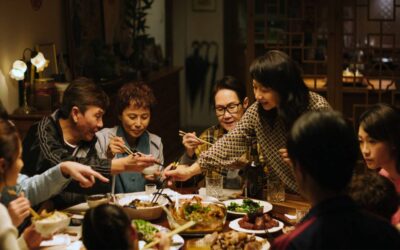
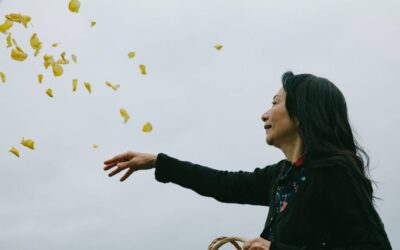
“A full-tilt melodrama with the passionate vehemence of Victor Hugo or Charles Dickens,” KIDNAPPED opens Friday.

“With stately restraint, Bellocchio manages to put the audience in an ever-tightening chokehold of tension and outrage.” ~ Wendy Ide, Observer
*
“The performances, meanwhile, are exemplary, the screenplay powerful, and each scene is lit like high-era Caravaggio.” ~ Kevin Maher, Times
*
“Kidnapped is an expertly paced, gorgeously shot and evocative true story of faith, family, and the power of people coming together to right deeply ingrained wrongs.” ~ Barry Levitt, Empire Magazine
*
FROM RUSSIA WITH LOVE 60th Anniversary Screening May 28 at the Royal.
Laemmle Theatres and the Anniversary Classics Series present the third in our popular series of James Bond revival screenings. Following the successful showings of the very first Bond picture, ‘Dr. No,’ and the popular third film, ‘Goldfinger,’ we present the second movie in the long-running series, ‘From Russia with Love.’ This screening takes place almost 60 years to the day when the movie enjoyed its wide U.S. release in May 1964.
‘Dr. No’ had been a big hit when it opened a year earlier, and producers Albert R. Broccoli and Harry Saltzman decided to bring Bond back. They chose Ian Fleming’s novel ‘From Russia with Love’ in part because President John F. Kennedy had listed that book as one of his ten all-time favorite books in an article that appeared in Life magazine. The producers doubled the budget from $1 million to $2 million for this second appearance of 007, which turned out to be a modest investment considering that the new movie ended up grossing close to $80 million, approximately $800 million in today’s dollars. Terence Young, who had helmed ‘Dr. No,’ returned to the director’s chair. The screenplay was penned by Richard Maibaum (a frequent Bond screenwriter) and Johanna Harwood.
Sean Connery returned for his second appearance as Bond, along with Bernard Lee as M and Lois Maxwell as Miss Moneypenny. There were some new additions to the cast—Mexican actor Pedro Armandariz, who died before the film was released, and Oscar nominees Robert Shaw and Lotte Lenya as two of the villains. Daniela Banchi played the heroine, a Russian agent who defects to the West as a result of her romance with Bond.
A number of other elements that came to define the Bond series were introduced in ‘From Russia With Love.’ It was the first film to have a pre-title action sequence, and it was also the first picture to have a title song, written by Lionel Bart, the enormously successful composer of ‘Oliver!’ (British singer Matt Monro performed the song.) John Barry wrote his first Bond movie score, embellishing the theme music penned by Monty Norman for ‘Dr. No.’ In addition, this was the first picture in which Bond gets an arsenal of nifty weapons, though far more modest than what his team provided for him in later movies.
This picture also sent Bond to exotic locations—Istanbul and Venice, along with a perilous journey on the famed Orient Express. Other scenes were filmed at Pinewood Studios outside London. There were other novelties. Hollywood’s Production Code had been revised in 1961 to allow discreet treatment of homosexuality for the very first time, and the producers took advantage of this leniency to depict Lenya’s Rosa Klebb as a lesbian with fairly overt designs on the glamorous but naïve Banchi.
Robert Shaw (later to star in such enormous hits as ‘A Man For All Seasons,’ ‘The Sting,’ and ‘Jaws’), with his dyed-blond hair, also has a slightly androgynous quality as the fighter recruited by Klebb to assassinate Bond. The fight scene between Connery and Shaw aboard the Orient Express, regarded as one of the best fight scenes in cinema history, took three weeks to film.
Even though reviews were not crucial to the success of the Bond movies, ‘From Russia With Love’ had some of the best reviews of the entire franchise, currently listed at 97 percent positive on Rotten Tomatoes. At the time, Penelope Gilliatt, writing for The Observer, noted, “The set-pieces are a stunning box of tricks.” Time magazine called the picture “fast, smart, shrewdly directed and capably performed.” Variety praised “a preposterous, skillful slab of hard-hitting, sexy hokum.”
The film continues to be fondly remembered. Sean Connery, later Bond actors Timothy Dalton and Daniel Craig, as well as later Bond producer Barbara Broccoli have all named it as one of their favorite Bond movies.
Our guest Jon Burlingame is the nation’s leading writer on the the subject of music for film and television. He has taught film music history courses at the University of Southern California and has lectured on film and TV music over the past 30 years at locations around the world. Among his several books, he wrote the definitive history of 007 film music, THE MUSIC OF JAMES BOND, in addition to recently co-authoring MUSIC BY JOHN BARRY. He joins us to introduce ‘From Russia With Love‘ for a pre-screening Q & A at the historic Royal Theatre, celebrating its 100th anniversary this year.
“This film tells the story of the 1964 Venice Biennale, at a time when State Department officials and a team of unlikely conspirators were joined in their conviction that American democracy was worth the fight.” TAKING VENICE opens May 24.
The new documentary Taking Venice, which we open next week at the Royal in West L.A. and the Town Center in Encino, uncovers the true story behind rumors that the U.S. government and a team of high-placed insiders rigged the 1964 Venice Biennale – the Olympics of art – so their chosen artist, Robert Rauschenberg, could win the Grand Prize. Director Amei Wallach wrote this about her film:
“I grew up during the Cold War when the world seemed as dangerous as it does today. But it also seemed to be filled with possibility, with the actions of people who dreamed big and took big chances. This was especially true of artists, always looking to build something new. I became an art critic, then an author, and now a filmmaker. My goal is to make films about art that leap out of the art world and into a reckoning with what’s relevant in our lives through the stories that they tell.

“This film tells the story of the 1964 Venice Biennale, at a time when State Department officials and a team of unlikely conspirators were joined in their conviction that American democracy was worth the fight. They were determined to harness the audacity of American art to promote what was best about democracy. The artist they chose to represent the U.S. in their race to win the Biennale Grand Prize was Robert Rauschenberg, who was by no means a political artist, then. By the time I met him more than a decade later, he had come to believe that art had a more global responsibility.

“The film builds on a tradition of telling the story of America then through the eyes of now because I want it to reflect how much the world and art have changed. I want there to be moments that sting with what we have lost, and moments that encapsulate what we have gained. The stakes are even higher than they were at that scandal-drenched Biennale, as artists everywhere try to create a way forward.”
FINDING THE MONEY: come out for Q&As with the subject Stephanie Kelton, Harry Shearer, Cory Doctorow, & the filmmaker; see Kelton’s appearance on The Daily Show.
Hope/Good News Alert! Next week we have three screenings of the new documentary Finding the Money. It follows former chief economist to the Senate Budget Committee, Stephanie Kelton, on a journey through Modern Money Theory or “MMT,” to unveil a deeper story about money, injecting new hope and empowering democracies around the world to tackle the biggest challenges of the 21st century: from climate change to inequality.
We’re hosting Q&As 5/14 in Claremont with director Maren Poitras; 5/15 in NoHo with Ms. Kelton, Cory Doctorow, and Ms. Poitras; and 5/16 at the Royal with Ms. Kelton, Harry Shearer, and Ms. Poitras.
Check out Ms. Kelton’s recent appearance on The Daily Show.
¡Hasta la victoria siempre! THE MOTORCYCLE DIARIES 20th Anniversary Screenings May 15.
Laemmle Theatres and the Anniversary Classics Series present the next entry in our Anniversary Classics Abroad series, the biopic drama of the early years of Ernesto Che Guevara, The Motorcycle Diaries (2004). The Academy Award-winning film by director Walter Salles (Central Station) will play for one show only on Wednesday, May 15 at 7:00 pm at five Laemmle locations: Claremont, Encino, Glendale, Newhall, and West L.A. In addition to the Oscar for Best Song, “Al Otro Lado Del Rio,” the film was nominated for Best Adapted Screenplay by playwright Jose Rivera, based on Guevara’s memoir.

The film recounts the 1952 road trip by 23-year-old medical student Ernesto Guevara de la Serna (Gael Garcia Bernal) and his friend Alberto Granada (Roberto de la Serna) in a more than four-month, 8,700-mile journey across South America, initially by motorcycle. Originally intended as an adventure for fun and frolic, the two friends are exposed to indigenous peoples and cultural differences they had never experienced. These encounters plant the seeds of radicalization that would manifest as Guevara later emerged as a Marxist guerrilla leader and revolutionary, becoming a global countercultural symbol upon his murder at the age of thirty-nine.

The film is a notable combination of road movie travelogue and coming-of-age drama, beautifully captured by the lustrous cinematography of Eric Gautier as their odyssey traverses the South American continent. Critics of the day responded to this approach with due appreciation. Carla Meyer of the San Francisco Chronicle called it “a superb film about a physical and spiritual journey taken by a young Che Guevara, whose encounters with the unknown alter and affirm a life.” Peter Travers in Rolling Stone said, “in this wild ride of a movie that is part epic poem and part political provocation, it’s the man who holds the screen as a portent of history.”

“It’s about the gradual awakening into awareness, the graduation from carefree youth to responsible adulthood.” ~ Steve Murray, Atlanta Journal-Constitution

“An involving, lyrical, and visually beautiful cinematic bildungsroman.” ~ Glenn Kenny, Premiere Magazine

Coming attractions in the Anniversary Classics Series include Dead Poets Society (May 22), From Russia With Love (May 28), The Lovers, Red Desert, A Sunday in the Country, and the Three Colors trilogy: Red, White, and Blue, among others.
Patricia Rozema in person for the new 4K director’s cut restoration of her queer classic WHEN NIGHT IS FALLING + screenings of her latest, MOUTHPIECE.
We’re proud to soon screen two films by Canadian filmmaker Patricia Rozema: her just-restored 1995 romance When Night is Falling (May 7 at the Royal and May 8 at the NoHo) and her most recent film, Mouthpiece (May 13 & 14 at the Town Center, Monica Film Center, Glendale, and Claremont). Rozema will participate in Q&As after the Tuesday, May 7 and 8 screenings of When Night is Falling at the Royal and NoHo. Tracy E. Gilchrist, VP, Executive Producer of Entertainment for equalpride, will moderate the Royal Q&A.
Long considered to be a pivotal entry in the LGTBQ+ canon, When Night is Falling is a sexy, daring and visually resplendent story about the thrilling temptations of passion. Camille, a Christian academic, is engaged to Martin, a fellow theologian. Then she meets Petra, a flamboyant performer in an avant-garde circus. To her surprise, Camille finds herself falling deeply and almost magically in love. Forced to choose between the woman she wants, and the man who loves her, Camille discovers that the only true duty of the soul is desire.

A Canadian classic that was in Official Competition at the 1995 Berlin International Film Festival, When Night is Falling tells a lesbian story beautifully photographed by Douglas Koch, catching a romantic, wintry Toronto landscape.
Adapted from the play by Amy Nostbakken and Norah Sadava, Mouthpiece follows Cassandra, an aspiring writer who, while struggling to compose a eulogy after the sudden death of her mother, comes to discover that her own rebelliousness is as much a response to the male gaze as her mother’s conformity. Enacting the two sides of Cassandra’s conflicting inner dialogue, playwright-performers Nostbakken and Sadava create a compelling portrayal of the tension between regression and progress that is often found within women.

Mark Olson of the L.A. Times just published a good piece about Rozema and her work and also interviewed her, as did Gilchrist for The Advocate:
There’s a scene in Patricia Rozema’s 2018 film Mouthpiece where the main character, Cassandra, is flooded with a memory of her mother, who’s just died. The camera pans the room, lingering on Cassandra’s mother’s books and music. In the frame there appear works by Joni Mitchell, Margaret Atwood, Alice Munro, and the groundbreaking lesbian author, actor, and activist Ann-Marie McDonald, who appeared in Rozema’s first feature, 1987’s I’ve Heard the Mermaids Singing. Through Cassandra’s memories of her mother, Rozema pays tribute to Canada’s great women storytellers, and considering the filmmaker’s body of work, her name belongs among them…Throughout her canon and evident in the restored films is Rozema’s singular poetic film language that includes queer identity, interior monologues, and a duality in her characters or what she refers to as “twoness.” Unburdened by the machine of Hollywood and working from artists’ grants from Canada, Rozema cemented herself as a true auteur out of the gate with I’ve Heard the Mermaids Singing, a self-reflexive and heartfelt comedy about a quirky secretary to a lesbian art gallery owner. The film investigates the nature of art itself, something that Rozema would continue to examine throughout her career.
“But I think I was protecting my ability to make movies, because I was ambitious too. Not for fame or for money but for being able to make movies, which is the best job in the whole fucking world in my mind,” she adds. “I was terrified that I would be shut down. So I was careful, maybe too careful sometimes, so that I think some people wished was different sooner.”
Despite Rozema’s thoughts of being “too careful” at some points, as a progenitor of the Toronto New Wave with the likes of Atom Egoyan and Jeremy Podeswa, her contributions to cinema include making elevated films about queer women with happy or hopeful endings that expanded the notion of fixed sexuality.
“I also spoke quite early about fluidity, a gender continuum, and a sort of orientation continuum,” Rozema says. “At the time, it was very binary: You’re gay or you’re straight. Period. I felt like there’s got to be more colors in this human palette.”
Greg Laemmle on the return of the senior moviegoer.
We know that over the past four years, you may have become accustomed to hearing bad news from us. So we are pleased to share some good news. Qualified good news. But still, a sign of improvement.
It appears that older audiences are returning in larger numbers. That’s welcome news for all of us at Laemmle Theatres, and at art houses across the U.S. Before the pandemic, the hand wringing was about the “graying” of the arthouse audience. But since reopening, as arthouses have had success with younger-skewing films, the concern instead has been about how to reconnect with the older audiences that were once weekly guests at our theaters.
Now, we love showing films like HUNDREDS OF BEAVERS and LOVE LIES BLEEDING. But we also love showing the English-language period films (i.e., Merchant Ivory films), foreign-language romantic dramas (pick your prototypical French film) and non-studio American independent films that are aimed at an audience that grew up in a world without cell phones and the internet. And since reopening, while we’ve had some success with films like THE DUKE, THE TASTE OF THINGS and MOVING ON, we can’t help but notice that the numbers are still not where they would have been in the days before COVID.
But starting at the end of 2023, it felt as if things were beginning to turn around a bit. Films like ANATOMY OF A FALL and THE HOLDOVERS made more of a mark at the box office than “comparable” films did in 2021 and 2022. And you also have FALLEN LEAVES doing more business than almost any prior film from director Aki Kaurismäki.
So far this year, and leaving aside films that were part of the Oscar race, films like DRIVING MADELEINE, ONE LIFE, THE OLD OAK, FAREWELL MR. HAFFMANN, COUP DE CHANCE and WICKED LITTLE LETTERS are performing better. In fact, the latter four are hanging around, showing good word-of-mouth. These films are still doing a fraction of the business that they would have done pre-pandemic. But better is good. And hopefully, we and our distributor partners can build on this trend.
“When pandemic restrictions eased, many couldn’t wait to get back to the movie theater,” wrote Jon Keller of CBS last year. “But a new study found older adults are in no rush to return. And that trend is about more than just fear of COVID. Before the pandemic, people over 40 bought 41% of all movie tickets in the U.S. and Canada.”
It’s not COVID rates, which a quick check of the L.A. County Department of Public Health website shows are vanishingly low. And the fact remains that seeing a movie in a theater instead of at home is still 1000% better. (We’ll never tire of quoting the filmmaker Andrey Zvyagintsev, who compared watching a movie at home to reading a novel while skipping every other word.)
According to one of Variety’s recent dispatches from the annual trade show CinemaCon, “the box office hasn’t recaptured its pre-pandemic stride — studios estimate that roughly 15% to 20% of frequent moviegoers have yet to resume their old entertainment habits now that COVID has dissipated. Plus, the labor strikes that consumed the media industry for much of the previous year as actors and writers hit the picket lines resulted in production delays that left theaters with fewer movies to hawk on their marquees.”
Big budget popcorn movies that mostly appeal to younger audiences can be fantastic and we happily screen them at some of our venues, but those kinds of films are not Laemmle Theatres’ popcorn and butter, to alter a phrase. The current drama CIVIL WAR may be a surprise hit because it combines action movie elements with serious subject matter, drawing cinephiles of all ages. But what about films with zero guns which are purely cerebral? If audiences don’t turn out for these films, fewer will get made or picked up for distribution; it’s just supply and demand.
How do we reach older moviegoers when the L.A. Times isn’t running reviews?
We are happy to see some new signs of strength recently. But more would be better. So if you know an older moviegoer who used to attend regularly, but no longer does, we’d like to hear why not. Because the existence of a local movie theater that can show, for example, classic reissues like CLASSE TOUS RISQUE (opening May 3 at the Royal!) or the artful woman-made Senegalese drama BANEL & ADAMA (opening June 14 at the Royal!) is not a given.
- « Previous Page
- 1
- …
- 14
- 15
- 16
- 17
- 18
- …
- 106
- Next Page »