
Over the course of three features, Carla Simón has quietly established herself as one of the most distinctive voices in contemporary European cinema. Following her acclaimed debut Summer 1993 and the Golden Bear-winning Alcarràs, the Spanish filmmaker returns with Romería, a deeply personal coming-of-age drama that continues her exploration of family, memory, and the lingering impact of loss.

Catch Romeria in theaters beginning July 1st at the Laemmle Glendale.
The title translates roughly to “pilgrimage,” an apt description for the journey undertaken by Marina (newcomer Llúcia Garcia), an eighteen-year-old preparing to leave home to study filmmaking. Before she can begin that next chapter, however, she must travel to the Galician city of Vigo in search of documents connected to her late father, whose death years earlier left crucial gaps in her understanding of both her family history and herself.
Raised apart from her father’s relatives, Marina arrives as both an outsider and a blood relation. Her extended family welcomes her warmly enough on the surface, inviting her on boat trips, beach outings, and sprawling family gatherings, yet beneath the hospitality lies a more complicated reality. Old wounds remain unhealed, uncomfortable truths have been buried, and differing accounts of the past begin to challenge everything Marina thought she knew about her parents.
Like Simón’s previous work, Romería unfolds through intimate observations rather than dramatic confrontations. The filmmaker has a remarkable gift for capturing the rhythms of family life: overlapping conversations around crowded tables, casual moments of affection, and the subtle tensions that emerge when multiple generations inhabit the same space. Yet as Marina pieces together fragments of her family’s history, Romería expands beyond a straightforward search for answers. Her mother’s diaries, camcorder recordings, and the stories told by her relatives create a layered portrait of two people she barely knew, as what begins as a realistic family drama gradually opens into something more lyrical and impressionistic. Simón incorporates dreamlike passages and flashes of imagined memory, allowing the boundaries between history, recollection, and personal mythology to blur. These touches of magical realism give emotional shape to experiences that can never be fully recovered, only reimagined.
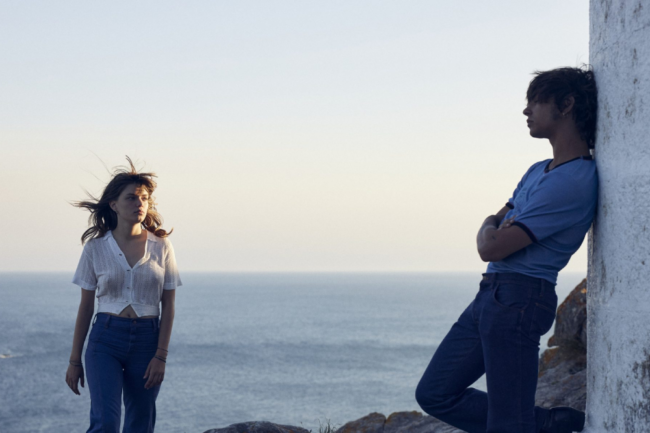
Both tender and quietly heartbreaking, Romería confirms Simón’s status as one of the most exciting filmmakers working today. Drawing from deeply personal material while touching on universal questions of identity and belonging, she has created a film that is at once a family portrait, a coming-of-age story, and a meditation on the subtle ways that each of us carries the residue of our forebearers.
“Carla Simón’s story of a young woman untangling a web of family secrets cements the filmmaker’s aptitude for naturalism while also marking a bold new step towards magical realism.” – Sophia Satchell-Baeza, British Film Institute
“A kind of road movie by sea, journeying in pursuit of some sense of self-completion.” – Guy Lodge, Variety