The Official Blog of Laemmle Theatres.

Laemmle Theatres

Film Reviews & Previews

  • All
  • Theater Buzz
    • Claremont 5
    • Glendale
    • Newhall
    • NoHo 7
    • Royal
    • Santa Monica
    • Town Center 5
  • Q&A’s
  • Locations & Showtimes
    • Claremont
    • Glendale
    • NewHall
    • North Hollywood
    • Royal (West LA)
    • Santa Monica
    • Town Center (Encino)
  • Film Series
    • Anniversary Classics
    • Culture Vulture
    • Worldwide Wednesdays
  • Facebook
  • Instagram
  • TikTok
  • YouTube

You are here: Home / Featured Films

Heroic Young Students Overcome Everything for Education in ON THE WAY TO SCHOOL

February 24, 2015 by Lamb Laemmle

They live in all four corners of the planet and share a thirst for knowledge. Almost instinctively they know that their well-being, indeed their survival, depends on knowledge and education. From the dangerous savannahs of Kenya to the winding trails of the Atlas Mountains in Morocco; from the suffocating heat of southern India to the vast, dizzying plateaus of Patagonia, these children are all united by the same quest, the same dream. Jackson, Zahira, Samuel and Carlito are the heroes of ON THE WAY TO SCHOOL, a film that interweaves portraits of four pupils forced to confront and overcome countless, often dangerous obstacles – enormous distances over treacherous territory, avoiding snakes, elephants, even bandits – on their journey to their classrooms.

We are very pleased to open this documentary, which “quietly reveals these four small stories as epically heroic and timeless journeys” (Village Voice), on Friday, March 6 at the Music Hall and March 7 at the Playhouse.

http://www.vimeo.com/90794633

Heroic Young Students Overcome Everything for Education in ON THE WAY TO SCHOOL


Filed Under: Featured Films, Music Hall 3, Playhouse 7

QUEEN & COUNTRY, John Boorman’s Lovely Sequel to HOPE AND GLORY,

February 17, 2015 by Lamb Laemmle

The hilarious highlight of John Boorman’s HOPE AND GLORY (1987), nominated for five Oscars: 9-year-old Bill Rohan rejoices in the destruction of his school by an errant Luftwaffe bomb. QUEEN & COUNTRY picks up the story nearly a decade later as Bill (Boorman’s alter-ego) begins basic training in the early Fifties, during the Korean War. Bill (played by a charming Callum Turner) is joined by a trouble-making army mate, Percy (Caleb Landry Jones). They never get near Korea, but engage in a constant battle of wits with the Catch-22-worthy Sgt. Major Bradley — the brilliant David Thewlis. Richard E. Grant is their superior, the veddy, veddy, infinitely put-upon, aptly-named Major Cross. A superb ensemble cast limns a wonderfully funny and often moving depiction of a still-recovering postwar England. (Karen Cooper, Director, Film Forum)

We are very pleased to open Mr. Boorman’s QUEEN & COUNTRY on February 27 at the Royal, Playhouse and Town Center. The film has garnered very positive reviews, including a New York Times Critic’s Pick from A.O. Scott, in which he wrote “Mr. Boorman approaches his story in the relaxed and generous manner of a raconteur, charming the audience rather than pushing us through the machinery of a plot…[the film] doesn’t quite have the bittersweet intensity of its precursor. The terrible magic of the war is missing, and so is the heightened, wide-eyed perceptiveness of the child protagonist. A young man is a more pedestrian creature, and the ’50s a quieter decade. Bill’s family, the focus of much of the drama in “Hope and Glory,” is glimpsed here in a few lovely scenes. The update is welcome. And so is the portrait, fleeting yet precisely detailed, of Britain at a time of change. The overt manifestation of that change is the arrival of the sovereign who gives QUEEN & COUNTRY its title, and who inspires cynicism and patriotism in its characters. But as the young Elizabeth II takes the throne, you can feel the ground shifting, and a different Britain coming into view: the one that would give the world angry young playwrights, rock ’n’ roll bands and resourceful, iconoclastic filmmakers like John Boorman.”

http://www.youtube.com/watch?v=_qG1TvckA-Q&feature=youtu.be

QUEEN & COUNTRY, John Boorman's Lovely Sequel to HOPE AND GLORY,

Filed Under: Featured Films, Playhouse 7, Royal, Town Center 5

Indiewire ~ “GETT: THE TRIAL OF VIVIANE AMSALEM: One Film That Could Change the Course of Women’s Rights in Israel”

January 30, 2015 by Lamb Laemmle

An Israeli woman (Ronit Elkabetz) seeking to finalize a divorce (gett) from her estranged husband finds herself effectively put on trial by her country’s religious marriage laws, in GETT: THE TRIAL OF VIVIANE AMSALEM, a powerhouse courtroom drama from sibling directors Shlomi and Ronit Elkabetz. Laemmle Theatres opens the film at the Royal on February 13, the Playhouse, Town Center 5 and Claremont 5 on February 20 and the NoHo 7 on February 27.

In Israel, there is neither civil marriage nor civil divorce; only Orthodox rabbis can legalize a union or its dissolution, which is only possible with the husband’s full consent. Women can’t contact an LA divorce lawyer, for example, to end the marriage it has to be the husband who makes the decision. Trapped in a loveless marriage, Viviane Amsalem has been applying for a divorce for three years but her religiously devout husband Elisha, continually refuses. His cold intransigence, Viviane’s determination to fight for her freedom, and the ambiguous role of the rabbinical judges shape a procedure where tragedy vies with absurdity and everything is brought out into the open for judgment.

What’s more, as reported by Indiewire, the film is having real-world effects in Israel, prompting religious authorities to reevaluate their positions on divorce. Check out this short interview with the filmmakers reacting to the news:

http://www.youtube.com/watch?v=3kL1aL3LFIM#t=110
Indiewire ~ "GETT: THE TRIAL OF VIVIANE AMSALEM: One Film That Could Change the Course of Women's Rights in Israel"
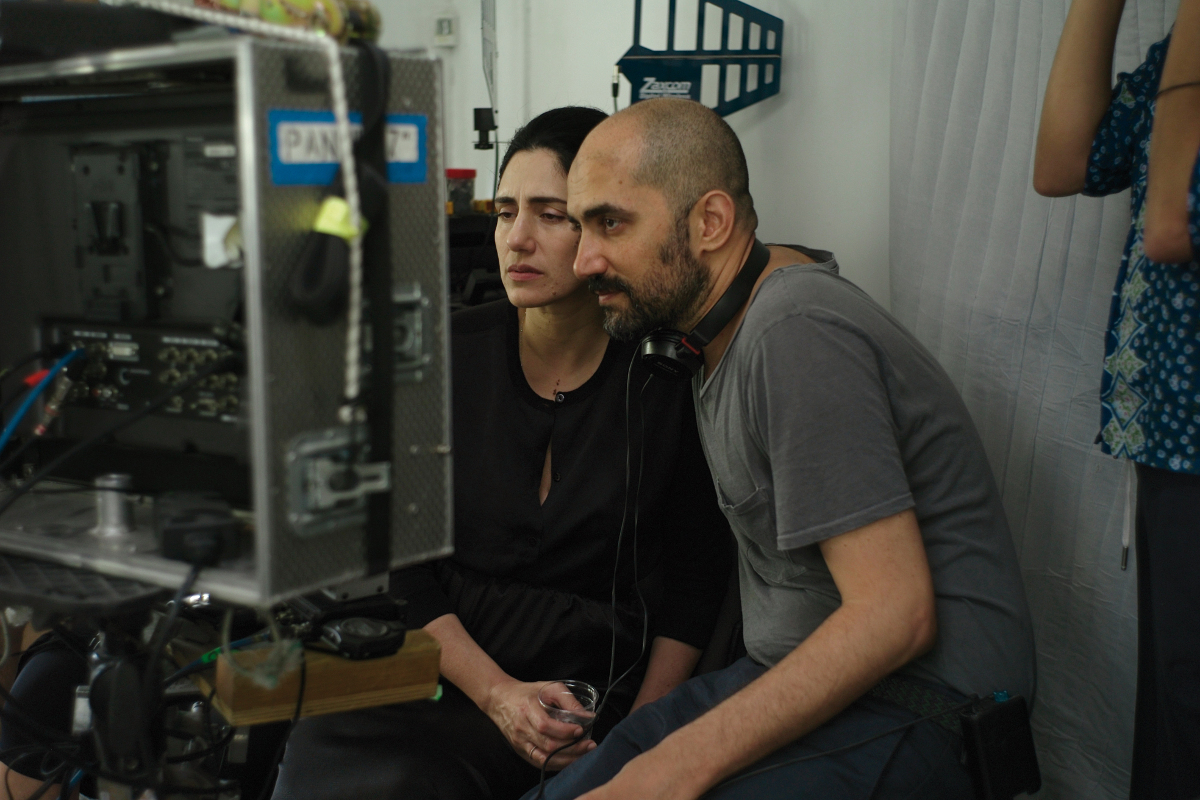
GETT co-directors Ronit Elkabetz and Shlomi Elkabetz.

Filed Under: Claremont 5, Featured Films, News, NoHo 7, Playhouse 7, Royal, Town Center 5

Palme d’Or Winner WINTER SLEEP Opens January 23

January 13, 2015 by Lamb Laemmle

Internationally acclaimed Turkish filmmaker Nuri Bilge Ceylan has won prizes at major film festivals all over the world, but it wasn’t until last May, after being nominated four times, that he finally took home what is probably the topmost prize of all, the Cannes Film Festival’s Palme d’Or. It was for WINTER SLEEP, a “richly engrossing and ravishingly beautiful magnum opus” about Aydin, a former actor who runs a small hotel in central Anatolia with his young wife Nihal and his sister Necla, who is recovering from her recent divorce. “A Chekhovian meditation on a marriage that returns to the mood of the director’s early films like Climates and Clouds of May,” this “patient, beautiful, painful, engrossing film pits husband and wife against each other and their world in a series of extended conversations/confrontations.”

Indiewire’s Eric Kohn recently interviewed Mr. Ceylan and posted this piece:

Turkish director Nuri Bilge Ceylan makes deeply atmospheric movies filled with long pauses and delicate visual schemes, so it’s no surprise that he tends to hold back when talking about his work. That includes “Winter Sleep,” which won the Palme D’Or at Cannes last May and opens in New York this weekend. Asked in a recent e-mail interview if landing the biggest prize in the global film scene felt like a different sort of validation after gathering acclaim for his work for nearly 20 years, Ceylan kept it simple: “I don’t know.”

He used that phrase a lot. Like his films, Ceylan is a mystery who requires a certain amount of scrutiny to appreciate.

The story of “Winter Sleep,” which runs over three hours, finds the director dealing with the travails of greedy landowner Aydin (Haluk Bilginer), who owns a vast plot of land and lords over its impoverished inhabitants while bickering with his younger wife (Melisa Soezen). Over the course of the movie, the Scrooge-like man confronts his shortcomings, both personally and professionally, through a series of extensive monologues punctuated by telling pauses.

That’s typical for Ceylan, whose other acclaimed dramas — which include the slow-burn chronicle of a police investigation, “Once Upon a Time in Anatolia,” and the devastating tale of a crumbling relationship “Climates” — tend to quietly develop narrative through behavior and stunning imagery that harkens back to his roots as a photographer. “Winter Sleep” finds Ayden often gazing out his window at a barren land, an image that has near-biblical ramifications, even as the character’s specific situation has more to do with internal struggles. The approach has its rewards for viewers willing to let the experiential nature of Ceylan’s storytelling wash over them. But that’s obviously a limited crop: Released in the U.S. late in the year by Adopt Films, the movie is a major hidden gem on this year’s release calendar.

Read the rest of the Indiewire piece by clicking here.

http://www.youtube.com/watch?v=ugx-jspM77c&list=UUl7AqKg9-LnQcAFNnY_mybA
Palme d’Or Winner WINTER SLEEP Opens January 23
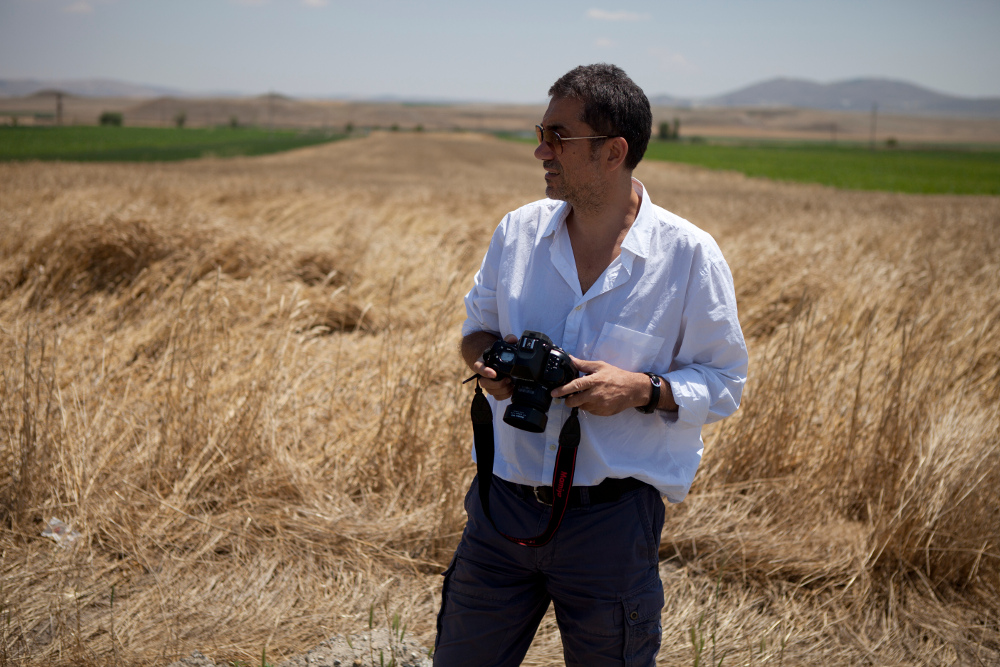
Nuri Bilge Ceylan


Filed Under: Featured Films, Playhouse 7, Royal, Town Center 5

New York Times: “Respect and Awards, but Still No Oscar: The Dardennes Brothers Discuss TWO DAYS, ONE NIGHT”

December 30, 2014 by Lamb Laemmle Leave a Comment

We could not be more thrilled to open Luc and Jean-Pierre Dardenne’s latest movie, TWO DAYS, ONE NIGHT, January 9 at the Royal and January 16 and the Playhouse and Town Center. The Belgian brothers behind L’Enfant and The Kid with a Bike recently spoke with Larry Rohter of the New York Times about their new film, which for the first time features a genuine movie star, Marion Cotillard:

Another Oscar season, another snub for the Dardenne brothers. Their “Two Days, One Night,” Belgium’s submission for the Academy Award for best foreign­ language film, won various festival and critics’ awards, as well as a European Film Award this month for Marion Cotillard’s taut performance as a factory worker whose job is in jeopardy. But the drama did not make the cut for the Oscar shortlist — the fourth time that the Dardennes, two of the most acclaimed European filmmakers, have been passed over by Hollywood.

In “Two Days, One Night,” which opened on Wednesday, Ms. Cotillard plays Sandra, who has been fired from her assembly line job at a small solar panel plant, but has been given a tiny ray of hope: If she can persuade a majority of her fellow workers to forgo the bonus they are to receive upon her dismissal, she will be reinstated. Over a frantic weekend, she visits her coworkers at home or at play, and encounters the most diverse of responses.

“We were working on another screenplay, but then, with the repercussions of the economic crisis that came in 2008 but really started to show up in 2011 and 2012, there were industries that started to shut down, not just in our region, but in France, Spain, Italy, Greece, all over Europe,” said Luc Dardenne, who, at 60, is three years younger than his brother, Jean-Pierre.

“That’s when we said to ourselves, ‘It’s timely to do this film now.’ ”

In October, the Dardennes visited to talk about “Two Days, One Night,” which had its United States premiere at the New York Film Festival and had already been chosen as Belgium’s Oscar entry. In an interview, conducted through an interpreter, they discussed the origins and guiding spirit of the movie, as well as their difficulty in connecting with Oscar voters. Here are edited excerpts from the conversation:

Q. You’re on record as having said you wanted to make this movie for at least a decade. Why?

JEAN­-PIERRE DARDENNE: Ten years ago or so, there was a book edited by Pierre Bourdieu, a series of sociological studies called “The Weight of the World: Social Suffering in Contemporary Society.” The book had probably 15 case studies and 15 analyses, and one of these stories was a worker cast aside because of the influence of managers, who got the other workers to agree to push him aside. This worker was probably a little less productive at his job, and therefore that team was never getting its bonuses. Luc and I talked about this story numerous times, and we just never could get it off the ground. Until other factors tied into it. So it’s that story, which has to do with a lack of solidarity, that got us going.

Q. Part of your usual process is to work with a cast that doesn’t have big international names in it. This time, though, Marion Cotillard is a major figure. Tell me about that decision.

JEAN-­PIERRE: It’s true, at the start, we did want to work with a star.  We wanted to see if it was possible to integrate a star into our family and to see if she would be able to function as a member. We’d seen her in a number of movies, but said we have to meet her. And we had a great excuse: we were co-producers of [her 2012 drama] “Rust and Bone,” so we went to the set, and Luc and I said, “If we feel a connection, then we’ll say to her, ‘We’d like to work with you.’ ” And that was the case. It was cinematic love at first sight. For both of us.

Q. You portray a very European situation in this film. What kind of impact do you think it will have here, where the situation for workers may be even worse?

JEAN­PIERRE: We all live in the same world, and that’s a world in which everyone is pitted against each other constantly. Our society exacerbates the feeling of competition we have with each other. It’s always “You have to be the best, you have to be the strongest.”

LUC DARDENNE: Yes, and Sandra’s problem is not just losing her job, because worse than losing your job is to become isolated, when nobody comes to see you, and you lose your connection with others. That’s a big part of what her issue is. The real thing today is solitude.

Q. You’ve used the word solidarity several times in this interview. But if I remember correctly, nobody in the film ever says the word, do they?

JEAN-­PIERRE: No, they don’t. The words they do use are: “Put yourself in my place. And in my place, what would you do?” The trajectory of the film is not one in which Sandra goes up against a dozen bastards. Really, to be in solidarity is to be able to put yourself in somebody else’s shoes, and what was important to us was to place the same importance on Sandra’s co­workers as on Sandra. We’re hoping that the audience member will identify with the characters and think, “What would I do?” That he’s not going to be sitting there casting judgment on who are the good guys and who are the bad guys.

Q. You’ve had a really good record at Cannes, but with the Oscars, not so much. Have you ever thought about why that might be?

JEAN-­PIERRE: We don’t really know the whole Oscar process, but it’s starting to be more familiar. But we hope that, movie after movie, there is going to be a click. I prefer to have that perspective of hope.

LUC: We knew “Rosetta” [their 1999 film about a teenage girl’s struggle to escape poverty and her alcoholic mother] was not going to go anywhere, because we saw the pre-screenings, and people were walking out. At the end of the movie, there were 10 people in the audience. So we said to Belgium: ‘It’s not worth sending this film. It’s not going to win.’ But they did it because we had won the Palme d’Or.

JEAN­-PIERRE: But we’re good guys. So maybe one day it will work.

New York Times: "Respect and Awards, but Still No Oscar: The Dardennes Brothers Discuss TWO DAYS, ONE NIGHT"
From left: Luc Dardenne, Marion Cotillard, Jean-Pierre Dardennes and producer Denis Freyd. Courtesy of Sundance Selects.


Leave a Comment Filed Under: Featured Films, Playhouse 7, Royal, Town Center 5

New York Times: “Champion of the Lone Russian Everyman In ‘Leviathan,’ Andrey Zvyagintsev Navigates Tricky Terrain”

December 23, 2014 by Lamb Laemmle

With Russia on everyone’s minds more than usual this year, we are thrilled to offer a brilliant cinematic look at this nation with Andrey Zvyagintsev’s LEVIATHAN. The film, winner for Best Screenplay and a nominee for the Palme d’Or at Cannes earlier this year, is a painterly, primordial tale about a proud patriarch fighting to protect his family home from a corrupt local official. Kolia lives in a small fishing town. It “puts contemporary Russia, as up-to-the-minute as Putin and Pussy Riot, under the microscope. LEVIATHAN is a stupendous piece of work that transcends language and borders.” The New York Daily News described the film as “a bleak, beautiful, and bitterly funny parable of post-Soviet Russia.”

Larry Rohter of the New York Times recently spoke to the filmmaker: 

In 2008, the Russian director Andrey Zvyagintsev was in Manhattan shooting a chapter of the anthology film “New York, I Love You,” when he heard the story of an auto-repair shop owner in Colorado who had demolished the town hall and a former mayor’s house with an armored bulldozer after losing a zoning dispute. From that American seed has sprung “Leviathan,” a quintessentially Russian tragedy suffused with political and religious overtones.

“It was what this guy did, protesting against injustice, that impressed me most of all,” Mr. Zvyagintsev (pronounced ZVYA-ghin-tsev) said in an interview while in New York last month to promote “Leviathan,” which opens on Christmas Day. “My first feeling was, ‘Wow, what an amazing story, I absolutely need to do something with this.’ ”

New York Times: "Champion of the Lone Russian Everyman In ‘Leviathan,’ Andrey Zvyagintsev Navigates Tricky Terrain"
Andrey Zvyagintsev

His screenwriting partner, Oleg Negin, initially resisted, arguing, as Mr. Zvyagintsev recalled, that “this is an American story, why would we want this?” But as other influences drawn from the director’s reading made themselves felt — Heinrich von Kleist’s novella “Michael Kohlhaas,” the biblical Book of Job and, after the film already had its name, Hobbes’s treatise on the nature of the social contract — the specifically Russian characteristics of the movie’s story began to emerge.

The main character in “Leviathan” is Nikolai, who runs an auto-repair shop next to the house where he lives with his young wife and teenage son in a dead-end fishing village on the shores of the Arctic Ocean. The mayor wants that land and uses his power to try to force the family out, and when Nikolai resists, the resulting series of events crushes him and those trying to help him.

Diverse as their origins may be, all of Mr. Zvyagintsev’s source materials share a common theme: the resistance of the individual to some arbitrary exercise of authority. That power may be corporate, political or even divine, but in each case, there is “a collision between a little person and a vast structure, the Leviathan,” Mr. Zvyagintsev explained.

“In a country like Russia, all the security, all the protection a member of society gets is from the establishment, police, army, health providers,” he said. “In exchange, people have to give back their freedom. I was overwhelmed with this idea. I saw it as a deal a human being might make with the Devil. Freedom is the main value a human being has, but sometimes, people don’t even notice it is being taken, because they are following the guarantees they were given.”

“Leviathan” thus appears to be an indictment of corruption and cynicism in Vladimir Putin’s increasingly authoritarian Russia. One scene, a brutal shakedown, takes place in the mayor’s office as a portrait of Mr. Putin looks on, and in another, two characters on a picnic excursion shoot up portraits of Soviet leaders from Lenin to Gorbachev and joke about when those now in power might be added to the garbage heap.

“This is how a Russian person treats power, with irony and contempt,” Mr. Zvyagintsev said when asked about that scene’s significance. “If people hold high positions, they should expect to be treated like that, if they have common sense, if they have self-irony.”

It was suggested to him that Mr. Putin lacked both a sense of humor and self-irony. “Yes, it’s a very hard job,” he replied, deadpan, declining to say anything further on the subject.

“Leviathan” has made a splash internationally. It won an award for best screenplay at the Cannes Film Festival last spring, was nominated this month for a Golden Globe for best foreign language film, and, to the surprise of those who thought its audacious subject matter would doom its chances, it is also Russia’s submission for the Oscar in that category. A. O. Scott of The New York Times named it one of the 10 best films of 2014.

Within Russia, “Leviathan,” which was partly financed by a government fund for filmmaking, has been controversial. “It’s talented, but I don’t like it,” the country’s minister of culture, Vladimir Medinsky, said last summer. For a while, until Mr. Zvyagintsev agreed to bleep offending words, it even appeared that the film would fall afoul of a new law that went into effect in July prohibiting obscene language in cultural projects.

But “Leviathan” is not exclusively — or even primarily, if Mr. Zvyagintsev is to be believed — about politics in today’s Russia. As reflected in his three earlier films, including “Elena,” released in the United States in 2012, he is deeply interested in moral and even overtly religious questions and describes Nikolai as “a righteous sufferer, the subject of an experiment.”

Nancy Condee, author of “The Imperial Trace: Recent Russian Cinema” and a specialist in Russian and Soviet cultural politics at the University of Pittsburgh, described Mr. Zvyangintsev as a director “actively and intensely engaged with spiritual issues in an allegorical biblical framework. “He is clearly a deep believer, in a noninstitutional sense,” she continued, and his films are full of “arrows pointing up to the sky, pitching you upward, away from a reality that is debased.”

In the scene that gives the movie its title, Nikolai, drunk and depressed, encounters a Russian Orthodox priest and questions the fate that has befallen him. The priest, a confidant of the mayor, responds by quoting from the Book of Job: “Can you draw out Leviathan with a fishhook, or press down his tongue with a cord? Can you put a rope in his nose, or pierce his jaw with a hook? Will he make many supplications to you? Will he speak to you soft words? Will he make a covenant with you?”

The Russian actor Aleksey Serebryakov, who plays Nikolai, said by telephone this month that “the most complex thing in this role, in my character’s life, is this question: ‘Where are you, merciless God?’ ”

For all its grim subject matter, “Leviathan” is beautiful visually, with one long shot after another conferring a stark beauty on a harsh and barren landscape. In an email, Sitora Alieva, program director of the Kinotavr Open Russian Film Festival in Sochi, said that Mr. Zvyagintsev brings a “unique poetic taste to cinema” and describes him as the most famous Russian film director working today.

But early in his career, Mr. Zvyagintsev, now 50, did not seem a likely candidate for such distinctions. He was born well outside the Moscow-St. Petersburg axis that dominates Russian culture, in the Siberian city of Novosibirsk, and after moving to Moscow struggled for years to find a niche, first as an actor and then as a director. Among his early efforts was a commercial for a furniture store.

“He comes from the provinces, and that is something important to take into consideration,” said Peter Rollberg, the author of “The A to Z of Russian and Soviet Cinema” and a professor of Slavic languages and film studies at George Washington University. “Coming from far away, he brings a freshness of perception.”

Asked about growing pressures on free expression, Mr. Zvyagintsev said that given that he was born in Russia and had lived there his entire life, he hoped to be able to continue making films in his homeland. But Mr. Serebryakov moved his family to Canada three years ago, saying then that he would “like my children to grow up under a fundamentally different ideology” than the system of “coarse intolerance and aggressive behavior” he saw prevailing in Russia. He now returns home only for work on projects like “Leviathan.”

“To tell you the truth, I’d rather speak about the movie,” he said in response to a request to elaborate on those earlier remarks. “I’m not inclined to speak about politics. Yes, it’s a rather complex situation in Russia today, but I really hope it will change.”


Filed Under: Featured Films, Playhouse 7, Royal, Town Center 5

A “Lost-and-Found Delight,” THE KING AND THE MOCKINGBIRD Finally Restored and on U.S. Movie Screens

December 9, 2014 by Lamb Laemmle Leave a Comment

A animated classic, Paul Grimault’s THE KING AND THE MOCKINGBIRD, written by Grimault and legendary poet and screenwriter Jacques Prévert, has been restored and after many decades finally getting a theatrical release in the United States. Based on a Hans Christian Andersen story, this wildly satirical film follows a chimney sweep and shepherdess on the run from a tyrannical king. A masterpiece of traditional hand-drawn cell animation, THE KING AND THE MOCKINGBIRD is credited by celebrated Japanese animators Hayao Miyazaki and Isao Takahata as inspiring the creation of their own studio, the now world-famous Studio Ghibli. Its influence can also be felt in such films as Brad Bird’s The Iron Giant.

Read Ben Kenigsberg’s recent New York Times review of the restoration:

The French animated film “The King and the Mockingbird” has been more influential than known or seeable, at least in the United States. The movie is belatedly opening here in a subtitled restoration, with special dubbed showings for children.

Released in France in the 1950s in a version that the animator Paul Grimault called “an impostor” and completed, after an overhaul, in 1979, “The King and the Mockingbird” is commonly cited as an influence on Studio Ghibli, from Japan. Yet in its humor, its fairy tale origins and the characters’ rounded features, it plays more like a vintage Disney work, only nimbler and freer.

Adapting a Hans Christian Andersen story, Mr. Grimault wrote the screenplay with Jacques Prévert (“Children of Paradise”). The film takes place in Tachycardia, where King Charles XVI — the numbers are tallied aloud whenever his name is spoken — is an avid if inept hunter. That hunting makes him a nemesis of the hero, a showman of a mockingbird.

With its muted rose and yellows, the angular animation is classical but inventive, even surreal. Tachycardia collapses periods, combining an ostensibly medieval setting with a futurist streak. When the king rides a rocket-­shaped elevator to his secret apartment on the 296th floor, you could easily see it as a gag on “The Jetsons.” A giant automaton with spotlight eyes seems the source of the key design in “The Iron Giant.”

Still, a catalog of the movie’s pleasures barely does justice to this lost-­and-found delight.

http://www.youtube.com/watch?v=KMnV6KCfOqQ&feature=youtu.be

Leave a Comment Filed Under: Featured Films, NoHo 7, Playhouse 7, Royal

Italy’s Great Toni Servillo Returns to U.S. Screens in VIVA LA LIBERTA

November 20, 2014 by Lamb Laemmle Leave a Comment

Many U.S. arthouse moviegoers were wowed last year when they were introduced to Toni Servillo, one of Italy’s finest actors, in The Great Beauty. The film went on to win the Oscar for Best Foreign Film. Next Friday the 28th we are excited to open Mr. Servillo’s latest film to make the journey from overseas, VIVA LA LIBERTA. Servillo plays Enrico Oliveri, a politician who realizes that the decline of his party is inevitable and decides to disappear, fleeing to Paris to find peace in the home of his ex-girlfriend Danielle (Valeria Bruni-Tedeschi) while creating a panic within the party. His top aide and his wife decide to contact his twin brother, a genius philosopher suffering from bi-polar disorder and living in a psychiatric institution. The three of them concoct a dangerous plan.

We will open VIVA LA LIBERTA at the Royal, Playhouse and Town Center on Friday, November 21.

http://www.vimeo.com/106627472
Italy's Great Toni Servillo Returns to U.S. Screens in VIVA LA LIBERTA
Toni Servillo

Leave a Comment Filed Under: Featured Films, Films, Playhouse 7, Royal, Town Center 5

  • « Previous Page
  • 1
  • …
  • 56
  • 57
  • 58
  • 59
  • 60
  • …
  • 65
  • Next Page »

Search

Instagram

Maddie's Secret is here, and so is the collector b Maddie's Secret is here, and so is the collector bundle.

😍 Ticket + Tee + Mini Poster, only at Laemmle NoHo. While supplies last.

"An extremely accomplished debut and one of the boldest American movies I have seen in years." Sam Bodrojan, IndieWire

A film by John Early.
#MaddiesSecret #JohnEarly #LaemmleNoHo #NoHo #MagnoliaPictures
🚀 STOP! THAT! TRAIN! AN EPIC PRIZE PACK GIVEAWAY! 🚀 STOP! THAT! TRAIN! AN EPIC PRIZE PACK GIVEAWAY!

👉 ENTER in BIO!
#StopThatTrain - A NYT Critic’s Pick! sees RuPaul and many of your favorite DRAG RACE stars in a high speed comedy aboard a locomotive headed for disaster.

⭐️ Starring @rupaulofficial, directed by @adamshankman, produced by @worldofwonder, distributed by @bleeckerstfilms, in association with @unapologeticprojects

🎟️ GET TICKETS: in BIO!
This is the way. 🍿 Exclusive Mandalorian & Grogu p This is the way. 🍿 Exclusive Mandalorian & Grogu popcorn tins and collectible figurines. Yours with a Mando Combo purchase! Very limited supply. 

@LaemmleNewhall & @LaemmleNoHo

🎟️Tickets: laem.ly/4aoKwRb
🖌️Sandwich board art by @mikaelparis_

#StarWars #TheMandalorian #Grogu
☘️ WEAR GREEN ☘️ $AVE GREEN ☘️ $2 OFF your concess ☘️ WEAR GREEN ☘️ $AVE GREEN ☘️ $2 OFF your concessions order!

⭐ St. Patrick's Day! Tuesday March 17th Only!

-Movie ticket purchase not required
-Like and show this post!
🎟️ laemmle.com/discounts
Follow on Instagram


Laemmle Theatres

Laemmle Theatres
Tickets: http://laemmle.com/film/artfully-united | Subscribe: http://bit.ly/3b8JTym | ARTFULLY UNITED is a celebration of the power of positivity and a reminder that hope can sometimes grow in the most unlikely of places. As artist Mike Norice creates a series of inspirational murals in under-served neighborhoods in and around Los Angeles, the Artfully United Tour transforms from a simple idea on a wall to a community of artists and activists coming together to heal and uplift a city.

Tickets: http://laemmle.com/film/artfully-united

RELEASE DATE: 10/17/2025
Director: Dave Benner
Cast: Mike Norice

-----
ABOUT LAEMMLE: Since 1938, Laemmle [Theatres] has been showing the finest independent, arthouse, and international films.

Subscribe to Laemmle's E-NEWSLETTER: http://bit.ly/3y1YSTM
Visit Laemmle.com: http://laemmle.com
Like LAEMMLE on FACEBOOK: http://bit.ly/3Qspq7Z
Follow LAEMMLE on TWITTER: http://bit.ly/3O6adYv
Follow LAEMMLE on INSTAGRAM: http://bit.ly/3y2j1cp
Tickets: http://laemmle.com/film/brides | Subscribe: http://bit.ly/3b8JTym | Nadia Fall's compelling debut feature offers a powerful and empathetic look into the lives of two alienated teenage girls, Doe and Muna, who leave the U.K. for Syria in search of purpose and belonging. By humanizing its protagonists and exploring the complex interplay of vulnerability, societal pressures, and digital manipulation, BRIDES challenges simplistic explanations of radicalization.

Tickets: http://laemmle.com/film/brides

RELEASE DATE: 9/24/2025
Director: Nadia Fall

-----
ABOUT LAEMMLE: Since 1938, Laemmle [Theatres] has been showing the finest independent, arthouse, and international films.

Subscribe to Laemmle's E-NEWSLETTER: http://bit.ly/3y1YSTM
Visit Laemmle.com: http://laemmle.com
Like LAEMMLE on FACEBOOK: http://bit.ly/3Qspq7Z
Follow LAEMMLE on TWITTER: http://bit.ly/3O6adYv
Follow LAEMMLE on INSTAGRAM: http://bit.ly/3y2j1cp
Tickets: http://laemmle.com/film/writing-hawa | Subscribe: http://bit.ly/3b8JTym | Afghan documentary maker Najiba Noori offers not only a loving and intimate portrait of her mother Hawa, but also shows in detail how the arduous improvement of the position of women is undone by geopolitical violence. The film follows the fortunes of Noori’s family, who belong to the Hazaras, an ethnic group that has suffered greatly from discrimination and persecution.

Tickets: http://laemmle.com/film/writing-hawa

RELEASE DATE: 10/8/2025

-----
ABOUT LAEMMLE: Since 1938, Laemmle [Theatres] has been showing the finest independent, arthouse, and international films.

Subscribe to Laemmle's E-NEWSLETTER: http://bit.ly/3y1YSTM
Visit Laemmle.com: http://laemmle.com
Like LAEMMLE on FACEBOOK: http://bit.ly/3Qspq7Z
Follow LAEMMLE on TWITTER: http://bit.ly/3O6adYv
Follow LAEMMLE on INSTAGRAM: http://bit.ly/3y2j1cp
Subscribe

Recent Posts

  • David Alvarado’s ‘American Pachuco’ Pays Tribute to a Pioneering Director
  • Fifty Years Haven’t Dulled Sidney Lumet’s ‘Network’
  • Ross McElwee Revisits Personal Loss and Cinema in ‘Remake’

Archive

Featured Posts

An “embrace of what makes us unknowable yet worthy of forgiveness,” A LITTLE PRAYER opens Friday at the Claremont, Newhall, Royal and Town Center.

Leaving Laemmle: A Goodbye from Jordan